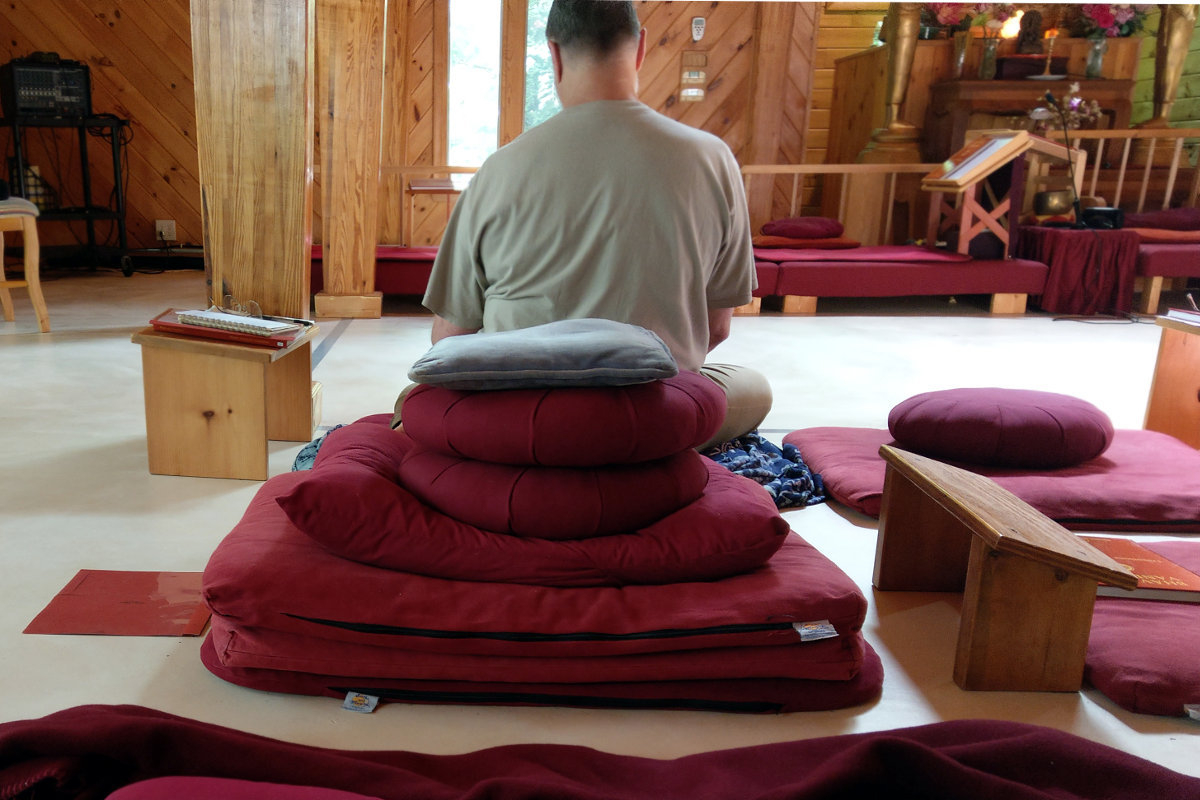
My Austin kyūdō group doesn’t have a teacher; it never has. But we fall under the distant tutelage of a Japanese archery group based in Greenville, South Carolina. The South Carolina Kyūdō Renmei (or SCKR) is run by Blackwell-sensei, one of the most senior kyūdō teachers outside Japan, and his wife Reiko-sensei.

SCKR hold kyūdō seminars a couple times a year, which are attended by local South Carolina practitioners, Austin kyudoka, as well as people from all over North America.

Given my well-documented and very fundamental beginner struggles, I never attended a seminar. I didn’t want to take sensei’s time away from his many advanced students to deal with my remedial problems, and I didn’t want to waste an expensive trip if I wasn’t going to get the attention I need.

However, sensei offered to run a seminar just for us, only open to the comparatively junior members of Austin Kyūdō. It was an irresistible opportunity to get sensei’s help in a way that didn’t feel like I was imposing on other archers. So in September I joined ten other Austinites for a three-day kyūdō intensive.

And “intense” is the right word to describe my experience, from beginning to end. There’s way too much to be able to share it all, but I’ll do my best to briefly share the important parts of where I started, what I went through, some of the things I learned, and where I go from here.

The Honda Prelude

O
O
O&P

Just two weeks before the seminar, I was ready to call off the trip and quit kyūdō entirely. After two and a half futile years enduring consistent failure in stoic silence, I had finally reached my breaking point.

While everyone around me – even complete first-timers! – demonstrated basic competence and increasing proficiency, I simply couldn’t successfully fire a bow without injuring myself or damaging equipment. My arrows would fly through the air sideways and clang off the practice target, or flop feebly to the ground only a few meters downrange. I broke strings, stripped the feathers from arrows, and bruised my forearm. And the months I’d spent trying dozens of different ways to correct it had all been for naught.

In the interest of moving on, I’ll leave it at that for now. But to get a better idea how frustrated I was, I’d encourage you to read the blogpost I wrote eight months ago, entitled “All the Gear and…”. Just take all the anguish in that post and amp it up to eleven.

Ironically, that week I had a promising insight: that I clenched the fingers of my right hand so tightly that they were interfering with my release. That didn’t solve all my problems, but it seemed like a clue: one piece of the puzzle. But I didn’t even have time to put it into practice before the seminar was upon us.

So that was my mental and emotional state going into the trip: off-the-scale frustration, extreme pessimism, and the only thing I wanted out of the seminar was for sensei to fix me… Although I was skeptical whether he would, or could.

It was – if you’ll excuse the pun – “my last shot” at being a kyūdō practitioner.

The Tyranny of Logistics

Bearing so much emotional distress, I wasn’t very tolerant of the usual discomforts of travel. Other than two trips between Pittsburgh and Austin when we were deciding where to move, I hadn’t flown in six years: since before the COVID-19 pandemic. And it was my first time flying Southwest Airlines, whose asinine unassigned seating policy makes boarding a complete free-for-all.

Things didn’t get a lot better once we arrived, either. I had to share a room with another person, which added some more stress. Not only were we going to prepare communal meals, but because no one had bothered to communicate with one another, sensei and his friends had also prepared meals for us too, which was yet another stressor for everyone.

Even the seminar provided some unexpected wrinkles. Sensei vetoed my use of the familiar bow I’d brought. I’d purchased some used zori sandals for outdoor use getting to the dojo and fetching arrows, but those promptly broke, necessitating a special trip to the store to buy replacements. And although the seminar was supposed to be for his Austin students only, we were sporadically joined by 5-10 local practitioners. Despite being able to use the dojo 365 days a year, they took shooting spaces and sensei’s time away from those of us who had traveled from far away for a precious 2½ days with him. And I have to admit I got frustrated by seeing other kyudoka improving much more rapidly than I did.

But the underlying message here is that the seminar was extremely mentally, physically, and emotionally draining. In addition to my already-charged emotional state, I was dealing with lack of sleep, poor and insufficient eating, muscle fatigue, dehydration, headaches and nausea, social stress, and of course the emotional rollercoaster of judging every shot I took.

It was, in short, an incredibly draining experience.

Nana Dan the Sensei

I’m gonna be honest: I felt a lot of trepidation going into my first experience with Blackwell-sensei. In speaking with my friends who had worked with him in the past, my preconception was of a teacher who was willfully terse, irritable, intolerant, and easily offended. But after telling their daunting stories, my friends would always add the postscript: “… but as long as you’re serious about kyūdō, he’s really great!”

During the seminar, Blackwell-sensei was actually very willing to give me the benefit of his time and instruction, and he patiently listened to my observations and needs. Despite my skepticism and obvious frustration, he was able to see the mistakes underlying my problems, and gave me clear strategies for correcting them. And he did so with patience and graciousness.

While fixing my issues will take lots more practice and reinforcement, my shooting did begin to improve by the end of the seminar, thanks to his valuable and generously-offered instruction.

Not that he isn’t surly and cantankerous and all that. But I think it shows up in his interactions with more experienced students, with whom he has higher expectations and more established relationships.

My Threefold Incompetence

So what exactly did I get out of the seminar? Well, there were lots of little, specific learnings, but those will be documented in my kyūdō notebook, rather than here. And as far as I was concerned, the only thing that really mattered was figuring out the cause of my constant misfires.

Over the course of the weekend, we identified three specific issues with my release. I’ll distill them down as briefly as possible.

First, my grip on the bow was incorrect, which was causing the string to slap my wrist and the bow to invert itself. Fixing it requires both holding the bow more loosely, plus making small changes in how my fingers configure themselves on the grip.

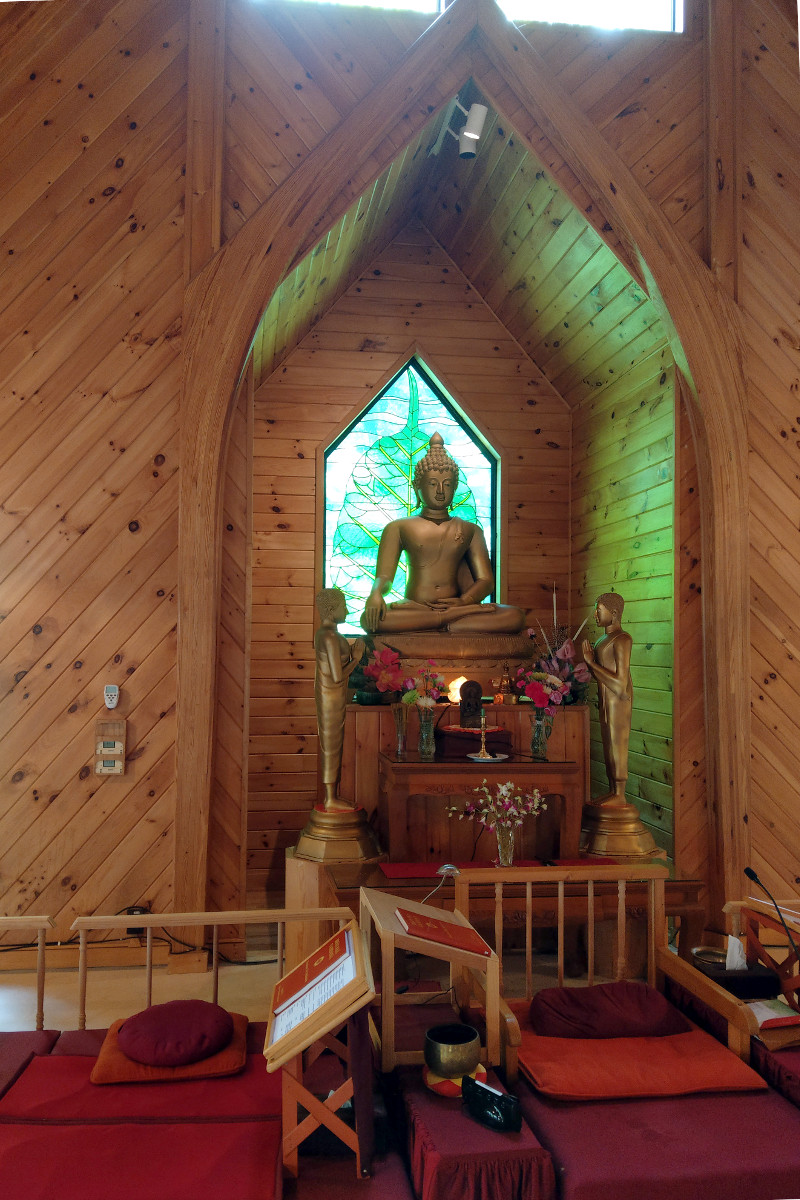
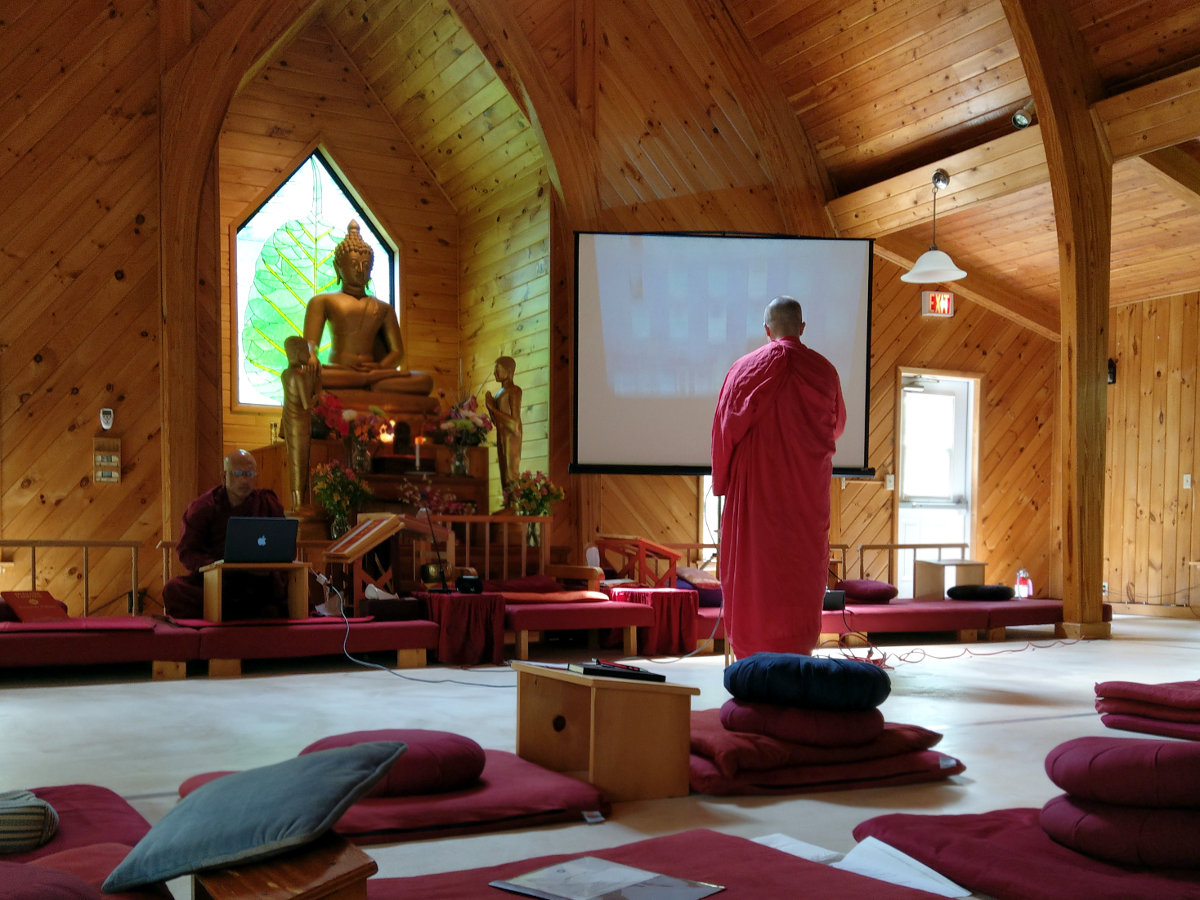
SKCR's kyūdō dojo

My second issue was what I’d identified just before the seminar: by locking my fingers around the string, they interfered with the string when I released it, causing the arrow to fire off-kilter, with very little power, and stripping some of the fletching. Ideally, I wouldn’t lock those fingers at all during my draw, but for the time being I’m simply trying to consciously loosen those fingers before I release the string.

I developed the habit of locking those fingers because the string was prematurely coming out of the groove it’s supposed to sit in within the glove. Sensei gave me several techniques to counteract this tendency during my draw, including: keeping my right hand flat; being careful to keep my thumb level or pointed up, rather than downward; making sure my right elbow comes down and back as I draw; not drawing the arrow all the way down to the chin; and not holding my full draw for very long.

Of course, there’s an immense difference between a conceptual understanding of what one has to fix versus actually physically performing it reliably each time one steps up to shoot. And because I’ve spent two years developing muscle memory of improper techniques, my attempts to correct my form feel completely unnatural and wrong. So even though I know what I should be doing, it’s going to take time and lots of practice to learn new habits.

The Fourth Problem

As chance would have it, our kyūdō trip coincided with two Zoom calls that I wanted to attend, both organized by Cambridge Insight Meditation Center, where I practiced meditation for 12 years, and which has been an important part of my growth for more than two decades. Saturday’s call was in honor of CIMC’s founding teacher, Larry Rosenberg, who is in his nineties and in poor health; and on Sunday we celebrated the 40th anniversary of CIMC’s founding. These were intensely moving for me, and featured several of my dear old friends. A shaved-headed version of Ornoth even showed up in the background in part of the “community reflections” video they shared!

The main reason why I mention these here is because those celebrations included poignant messages about looking at how one relates to the challenges and suffering that arise in one’s life, and to pay close attention to what one is attached to, especially ego-based ideas about who one is and how one wants other people see them.

The applicability of these ideas to my kyūdō practice couldn’t have been clearer, and really put the past couple years into perspective.

To clarify further, here’s a citation from a recent article in Lion’s Roar magazine that stated things rather well:

Often a problem at home or at work isn’t just troubling because of the surface issue that the problem is about. It’s what the problem makes us feel and think about ourselves that is disturbing. Taking the time to examine those feelings and thoughts using our meditative practices often shows us that we have some internal hook by which the external challenge has grabbed us.

[…]

Try answering this self-exploratory journal question: “What is the difference between the actual problem posed by my situation and my perception of and feelings about my situation?”

A neutral observer would see that there’s really nothing objectively painful about my kyūdō practice, other than maybe an occasional abrasion. The towering mountain of anguish I’ve endured is entirely due to the meaning I’ve attached to my practice, specifically my need to be seen as a competent – if not a skilled – archer, both in my own mind as well as in the estimation of others.

My need to be a skilled kyudoka was the source of a great deal of pain: that is the fourth problem with my archery practice.

I would free myself from an immense quantity of suffering if I were able to let go of that need, or at least hold it more lightly. Like changing my shooting technique, that’s easier said than done, but just having that mind-shift cleared some space for me to relate to myself and my struggles with more ease, more compassion, and hopefully a little more freedom.

Since my early days as a tech consultant, I’ve known that I don’t thrive in my “stretch zone”; I thrive in the “comfort zone”. I want to enjoy life as it comes, in accordance with my own values, without unnecessary effort or discomfort. I don’t understand people who fixate on personal growth, always striving for something more, wanting to leave their mark on the world. To me, that sounds like living in a perpetual hamster wheel: lots and lots of effort, achieving nothing of value. Or as Devo sings: “Toil is Stupid”.

I had an exchange with one of the senior kyudoka from South Carolina which was especially discouraging. He told me that he enjoyed having the younger Austin people visit, because they reminded him that practicing kyūdō could actually be fun. If enjoying kyūdō is an alien concept to such a longtime practitioner, that raises a big question about whether I even want to continue. What’s the point, if there is no enjoyment?

Kyūdō challenges my self-image, my attachment to how I am perceived by others, and the basic values I hold toward life. Hopefully I can work through those challenges and find a better way to relate to them, so that I don’t have to suffer as much as I have for the past two years.

Seeking the Target

So where do I stand?

Sensei actually gave me both hope and a number of specific changes that I can incorporate into my shooting technique. It would be logical to make a sincere effort to adopt his suggestions, to see whether they actually improve my shooting or not. That will take time and practice to prove out, but that’s an investment I’m willing to make.

I’m also willing to work on my relationship with kyūdō. It’s important that I learn how to let go of the frustration that comes with identifying as a competent archer, while at the same time asking myself whether kyūdō’s endless self-improvement treadmill is something I am able and willing to tolerate over the long term.

As such, I am not going to quit kyūdō… yet.

But at the same time, I am only suspending judgement long enough to work with sensei’s suggestions. Those changes might not help, and I might still decide that I can’t cope with kyūdō’s perpetual challenges and frustrations.

So we’ll see. The arrow’s journey continues, for the time being.

I’ve always been a little – sometimes a lot – older than the friends I hang around with. So I figure some folks might be wondering how it’s going following my recent stroke… What it’s like to live with the realization that a portion of my brain is, literally, dead.

The most pertinent fact is that my stroke is over. Actually, it was probably over by the time the EMTs showed up, but then there was the whole diagnosis and treatment protocol and investigation and followup plan. But now, six weeks later, that episode is as much a piece of history as my first driving test.

Physically, I’d like to say that I have no lingering aftereffects. Sensation returned to my left hand over the first 48 hours, and that numbness had been the only significant aftereffect.

The psychological impact was more lasting, manifesting in several flavors that’ll fill the balance of this blogpo.

Betrayal

Easily the most prominent emotion has been the feeling that I was betrayed by my body. For sixty years, I knew in my bones that my body could thrive and succeed no matter what outrageous demands I placed on it. Eating like a 14 year old? No problem. Bike 150 miles in a single day? Piece of cake! Going out drinking and nightclubbing until 4am and getting up at 6am to facilitate meetings with Fortune 500 clients? Easy-peasy! Work 80 to 120 hours per week for nine months straight on a death march project? BTDT.

But completely out of the blue one morning, the body I’ve relied upon all my life suddenly betrayed me, with no warning, while doing nothing more strenuous than walking down a staircase, something I do dozens of times every day.

I can’t tell you how much of a shock that was. I’ve been through the classic responses: anger, grief, bargaining. The only one I missed was denial, because it just wasn’t possible to ignore.

Mistrust

Trust, once broken, is difficult to restore.

Even after the hospital sent me home, I didn’t feel that I could just go back to a normal life. Even though that episode was over, I didn’t trust that I wasn’t still in imminent danger. I still felt that I had to stay vigilant, on guard against anything that might come up, even though I know that I’m not in full or direct control of my body’s health. Once bitten, twice shy.

Hyper-awareness

Because of that, I’ve been hyper-aware of every little niggle that arises… and in a 61 year old body, there are plenty of them.

I have developed some neuropathy in my feet, and any time a body part “falls asleep” sets off stroke alarms in my head. And that pain in my armpit: could that be a lymphoma? The stitch in my side kinda feels like a kidney stone, or maybe diverticulitis. The pain in the opposite side is probably pancreatic cancer, or maybe just liver failure. And my chest pains might be a symptom of atrial fibrillation, which is a huge risk factor for stroke.

I’m not normally prone to hypochondria, but nor am I used to waking up one morning and having a stroke. Even after consulting my physician, I can’t say for certain whether all these maladies are complete fiction, or real but minor discomforts, or something far worse.

Fear

What does the future hold? How much longer will I live? The truth is that I have almost no information and very limited influence.

That’s hard. It’s a cause for anxiety, uncertainty, and unease. In a word: fear. Raw existential dread. Not something I’ve ever had to face directly, so it’s one of those unpleasant “learning experiences”.

During the day, there’s enough stuff going on to distract me from all this, but the fears are more insistent at night. Keeping one’s imagination in check is a full-time job!

Living a normal life in this midst of all this is not easy! But then, what’s the alternative?

Fortunately, every morning I get up and notice that I don’t appear to be fatally ill. And after six weeks of evidence to the contrary, my worst fears have weakened to the point where life has started to feel normal again.

Coping

What helps? Good question.

Has my longstanding meditation practice helped? Somewhat. Meditation taught me how to distinguish between skillful thoughts and unskillful thoughts as they arise; that I don’t need to give full credence to everything a fearful mind envisions; and how to short-circuit the mental proliferation that can fuel unnecessary fear about the future. It also allows me to see that my moods and emotions are intensely charged interpretations of one possible future – not reality itself – and that they are essentially both transitory and empty of real substance.

That doesn’t mean that I’m able to dispel all my fears, especially in the dark, lonely silence of a late night, with nothing to think about other than my body, its ephemeral nature, and its treacherous sensations.

The thing that seems to help most is the simple passage of time. As I mentioned above, day after day, the worst case scenario doesn’t seem to happen. And that data has slowly piled up into an irrefutable conclusion that I seem to be mostly okay, at least in this moment.

Not that I feel like I can trust that just yet. But it does seem more and more plausible as each day goes by.

Conclusion

I am subject to aging. I am subject to sickness. I am subject to death.

These irrefutable truths are hard to face, and they’re a rude awakening that every one of us will have to come to terms with, at a time and in a manner we do not control. And this society does a shitty job preparing people for this immense challenge.

I’ve had a conceptual understanding of these truths since my sister died following a stroke fifty years ago. In my life, they’ve been reminders of the preciousness of life. Now they’re more omens about the precariousness of life. My life. My very finite life.

The following text was composed in my hospital room, 72 hours after my episode, and shortly before my discharge home. Be warned that you might not want to read this at night, alone, or if you're prone to existential dread. Sorree!

I had a stroke.

I can't possibly begin to communicate what those four words mean to me.

I used to have an older sister named Martha. When she was 21 years old, she was newly married and a brand new mother. One night, in the middle of the night, she had a stroke and fell into a coma. She was placed on a respirator, and her husband and my parents were in the terrible situation of making the ultimate decision.

At the time I was only nine years old, but the loss of my sister left a deep permanent impression. I can't imagine what it was like for her to wake up in the middle of the night and what she went through. Nor can I imagine what her husband went through that night. Since then, I can’t count how many nights I’ve layed awake, next to my sleeping partner, with the horror of that memory playing through my mind.

I also had a grandmother, who after her stroke was left perfectly lucid, but anytime she tried to speak, all that would come out is, "Beh beh beh beh." Stroke is sudden, unpredictable, and absolutely devastating.

Those fearsome memories come back to me very often both in the day and the dark nights when I'm awake alone. So I've always been highly sensitized about stroke: its symptoms and causes, its devastating effects, and how vanishingly quickly life can change or be entirely snuffed out at complete random.

I can't describe to you the visceral horror that stroke has been throughout my life. It has always been my biggest dread of all.

I had a stroke.

The good news -- that you all want to hear -- is that somehow, miraculously, mine was vanishingly small, and at this very early point in my recovery, it seems likely that I will regain full functionality. So in a sense, I'm okay.

That doesn't mean that I will continue to be okay, or that I can simply resume living my life as if I hadn't had a stroke at all. For the first time I will be on long-term meds: blood thinners and statins, which have unpleasant side effects. And there's going to be a whole battery of follow-up tests and procedures. Although stroke symptoms last a long time, both recovery and the risk of recurrence can last years. It will take time to see if and how I can resume all the activities that I used to do, including cycling and kyūdō. And I'm finally going to have to start eating and hydrating like an adult.

For now, although I appear mostly okay physically, I can't begin to describe the mental and emotional impact on someone who was sensitized to stroke as a child. If you've survived one stroke, you're much more prone to have subsequent ones. That has doubled the dread that I've always felt and tried to manage.

In my meditation practice and in my personal philosophy, I've often referred back to my sister's death as the thing that defined my relationship with life and death. Her passing taught me at a very young age that death is very, very real; that it will take every one of us; and it can come without any warning at any time, no matter how healthily we live. That has been the justification for my attitude of enjoying every day as much as possible, realizing how precious and ephemeral each moment of life truly is. I've always considered it a blessing to have learned that lesson so early in life.

Of course, acknowledging death is a completely different thing when it's happening to you, when the proximity of death is part of your present-moment reality. And now I somehow have to figure out how to cope with this sudden increase in dread for the rest of my days, however many or few remain. It's hard. And it's inescapable. And it’s final.

Of course I'm thankful that for now I'm recovering well. Throughout my life, in many ways I've been incredibly lucky that things always worked out well for me. And I guess I have to thank my luck as well for this dreadfully ominous warning being such a benign episode. My stroke could very, very, very easily have resulted in major disability or death. So I'm incredibly appreciative of my miraculous good fortune... at least this time.

And I have the deepest, most heartfelt gratitude for the caring presence of my life partner Inna. She is the irreplaceable foundation of my life. But I’m also concerned about what'll happen when either one of us dies, since we're so dependent on each other. So to my many friends: if I were ever to predecease her, my dearest desire would be for those of you who care about me to reach out and offer your friendship and support to Inna: the most important person in my life, and the person whose life would be most impacted by my passing.

Having said all that, I don't have much of a way to end this post on a positive note. Facing one's own mortality is grim work. It’s very easy to face toward life and be thankful, joyous, and share as much love as one possibly can. But it's also wise to see, know, and come to terms with what the ultimate future holds for all of us. And now that death has gently tapped me on the shoulder and gotten my attention, it's time to start taking my own mortality very seriously.

With a heart and mind full of love, joy, and dread.

I’ve been burnt out on dhamma books for a number of years, feeling – justifiably – that after a certain point, reading about dhamma has diminishing returns, and what’s truly important is putting what you’ve learned into practice. But circumstances ensured that these five titles made my reading list. Here’s some capsule reviews of my dhamma reading from earlier this year.

Richard Shankman’s “The Experience of Samadhi”

The Experience of Samadhi: An In-depth Exploration of Buddhist Meditation

The jhanas — esoteric states of heightened concentration – have perplexed me since my 2007 reading of the Buddha’s Middle Length Discourses. Although they are emphasized in a huge number of Buddhist suttas, there’s lots of disagreement about what they are, how to achieve them in meditation practice, and how important they are. Shankman’s book was recommended to me by Mariposa Sangha teacher Carolyn Kelley. The first half summarizes what the original Pali texts say about jhana, contrasting that with the radically different reformulations that derive from the Visuddhimagga, a commentary written 900 years later.

The latter half of the book contains statements — also frequently at odds with one another – from well-respected modern teachers, both lay and monastic, including Jack Kornfield, Bhante G, and Ajahn Brahm.

My takeaway is that it’s futile to strive to find a “real answer” to those questions about the jhanas, because the disagreements have persisted for centuries. The best thing to do is to concentrate (pun intended) on your own practice, ignoring all the furor over what the jhanas are, whether they actually exist, how important they are, and how to achieve them. From Shankman’s introduction:

“Dharma practice is not a matter of finding the one ‘true and correct’ interpretation of the doctrine and practice that is out there waiting for us to discover, if only we could find it, but instead, it’s the ability to examine ourselves honestly, recognizing our strengths and limitations so that we may apply our efforts in the most fruitful directions.”

Robert Pantano’s “The Art of Living a Meaningless Existence”

The Art of Living a Meaningless Existence: Ideas from Philosophy That Change the Way You Think

I’m a sucker for these kinds of brutally honest titles: this one by the creator of the philosophical “Pursuit of Wonder” YouTube video series. This book is basically an encapsulation of the author’s version of the quest I undertook 25 years ago: to revisit the philosophical and ethical alternatives to religion, as well as my own personal beliefs. Then – given those beliefs – how to find the best way I can to live in accordance with my values.

Pantano pulls from all the major Western superstars, including Schopenhauer, Nietzsche, Jung, Emerson, Bukowski, as well as my biggest influences: Sartre, Camus, and Alan Watts. He doesn’t spend much time evaluating Buddhism, but — like many kids these days – gets positively juicy about Seneca and Stoicism.

Ironically, when alphabetized by author, this book sits on my shelf directly adjacent to the “Philosophy For Dummies” book that I kicked off my inquiry with back in 2002 (blogpo)! I found it enjoyable going back over some of the intellectual paths I trod over two decades ago and hearing what someone in a similar situation made of it. From his summary of Ernest Becker’s work:

“What’s worse than living a life knowing that one will die is living a life knowing that one will die without having lived as many moments as one can properly relishing in the fact that they have not yet died.”

CIMC’s “Teachings to Live By”

Teachings to Live By: Reflections from Cambridge Insight Meditation Center

I received this privately self-published book as a benefit for being a longtime member and supporter of the Cambridge Insight Meditation Center. It is a compilation of reflections that were sent out by email during the Covid-19 pandemic lockdown, authored by several CIMC teachers, including Larry Rosenberg, Narayan Liebenson, the late Ron Denhardt, Madeline Klyne, and longtime dhamma friends Zeenat Potia and Matthew Hepburn.

This book reminded me of so many things about CIMC that I hold precious, even a decade after last setting foot in that building. One of those treasures is the center’s unwavering dedication to ensuring that practice isn’t an esoteric, intellectual exercise, but visibly transforms our mundane, everyday lives.

I think that’s summed up best in the following citation from one of Narayan’s sections, entitled “Begin Again”. I’ve already read this in one of my dhamma talks, and will no doubt continue to share it with other practitioners.

Remember that meditation is not sitting. Sitting is a form and meditation is the love of awareness (whatever posture the body may be in). And sitting is an invaluable form in which to cultivate the love of awareness and the capacity to bring our practice to the entirety of our lives, not just to the cushion.

Larry Rosenberg’s “Three Steps to Awakening”

Three Steps to Awakening: A Practice for Bringing Mindfulness to Life

Cambridge Insight’s eminently practical view of meditation practice derives largely from CIMC’s founder, Larry Rosenberg. I studied with Larry for twelve years, and nowhere is his understanding of the dhamma more compellingly articulated than in this book, plainly subtitled “A Practice for Bringing Mindfulness to Life”. I heartily recommend it to anyone interested in meditation’s value in learning how to live.

Larry has distilled a lifetime of dhamma practice into three steps that anyone can perform. In my own words, those are: finding calm by maintaining awareness of the sensations throughout the body that arise with breathing (shamatha); using awareness of the breath to identify less with habitual discursive thought (vipassana); and transitioning awareness from the breath to the silence that underlies all the happenings in our daily lives (choiceless awareness).

That sounds pretty esoteric, but Larry is always practical, down-to-earth, and immediate.

Don’t put your faith in a “future you” who will evolve over a number of retreats and sittings. Of course you will reap byproducts down the road. But you do not have to wait, because meditation is a never-ending process of learning how to skillfully relate to everything daily life presents. Confirmation and verification occur right here and now!

Actually, this seeming passive activity sets in motion a dynamic energy that does move you in a wonderful direction. But don’t divide your attention with a preoccupation to improve. In our approach, you’re not attaining specific stages of wakefulness, or life goals, but rather taking care of each moment, whether on the cushion or at home or in school. This is why you are encouraged to not separate practice and daily life.

The Buddha is considered a fully awakened human being. He is offering you help to join him. Each moment of awareness is a small moment of Buddha mind. As the wakefulness matures by applying it to every occurrence in life, off and on the cushion, you will see the by-products of the learning that comes from this enhanced awareness. You are learning how to live skillfully in every moment, whether on retreat or at home with your family, at work with colleagues, or with strangers on the bus.

Narayan Liebenson’s “The Magnanimous Heart”

The Magnanimous Heart: Compassion and Love, Loss and Grief, Joy and Liberation

Narayan is a co-founder of Cambridge Insight and Larry’s longtime partner in teaching at CIMC. I also received her new (well, 2018) book as a thank-you gift for my support of the center. Amusingly, it was the first work selected by the new book club at Mariposa Sangha, my new meditation center in Austin.

The book is her very personal response following a period of tremendous loss, grief, and trauma in her life, and she confronts these topics head-on, without denial, distraction, or avoidance. It’s an unvarnished sharing of how an experienced meditator met some of life’s most painful challenges, which may be of value to others going through similar difficulties.

Fortunately, my life has been largely free of trauma, so for me the book was more like an evocative, frank, heart-opening account from a dear friend.

Is there any moment other than now that is more worth being awake in? We would have to answer no to the question, given that now is the only moment in which life can be lived. There is nothing to be gained by looking forward to future events that seem better than this boring moment right now. This boring moment right now is our life, and everything else is just thought. When we make contact with the sparkling nature of right now, the specific content we encounter in this moment matters less. Ultimately, being present for whatever is going on is more important than whatever is going on.

Twelve days in Austin. It was the best of times; it was the worst of times. Our goal was to secure housing, so let’s see how that went…

Prologue

When I left Boston in 2015, my goal was – after fifty New England winters – to move somewhere beyond the clutches of the Snow Miser. The reason behind my temporary stopover in Pittsburgh was to test whether Inna and I could make a partnership work (which we happily have done, for the past seven years).

Between our differing requirements and a lengthy delay due to the Covid-19 pandemic, we took years to decide where we’d like to relocate to. But after a visit this past April, we finally found a location we could both agree on: Austin, Texas.

The next step was a followup trip to look for an apartment. When Inna’s Austin-based Circling community scheduled a four-day workshop for mid-November, we decided to extend that visit to two weeks, spending the balance of our time house-hunting, then flying back to Pittsburgh on Thanksgiving Day.

Walking the Path

Walking the Path

Q2 Stadium

Q2 Stadium

360 Bridge from Mt. Bonnell

360 Bridge from Mt. Bonnell

Mt. Bonnell NOTICE

Mt. Bonnell NOTICE

Wendel Interior

Wendel Interior

Wendel Interior

Wendel Interior

Wendel Backyard

Wendel Backyard

Wendel Brook

Wendel Brook

Sat November 12: Travel

Our flights down (via O’Hare) were fine, with only minor drama when our motel prematurely charged Inna’s credit card for our entire stay before we’d even arrived!

Wanting to be as central as possible, the motel we booked was located right underneath the main I-35 expressway. It was a dark, musty affair that was pleasantly inexpensive, except for the day of the University of Texas football game, when the daily rate jumped from $80 to $300!

Meanwhile, Google Maps did its best to keep us on our toes by insisting we take “Exit 236: Dean Keeton Thirty-Second Minus Thirty-Eight and a Half Street”. I’m not sure but I think that would be “Negative Six and a Halfth Street.”

After pizza at Love Supreme, we made supply runs to Dollar General and Trader Joe’s.

The evening was completed by the Pan-Mass Challenge announcing this year’s fundraising total: $69 million. That is the single biggest donation that the Dana-Farber Cancer Institute has ever received. But it raised questions in my mind about how and whether I will be able participate in the event an 18th time next year, after our relocation to Texas.

Sun November 13: House-Hunting Day 1

Sunday was surprisingly cold (-2°C). We would have a few nice days in Austin, and a few showery ones, but temperatures were mostly a bit cooler than normal.

We headed to our first house appointment and met up with Alexandria, the awesome real estate agent we were using as our point person. We visited four units (4801 Ave. H, 1700 Perez St., 2200 Spring Creek, and 8607 Dawnridge Cir.), and accidentally checked out another from the outside (1126 Hollow Creek). Three were clear “nos”. Perez felt dark and a bit small but was a maybe, and Dawnridge wasn’t bad except it was quite a ways out of town.

After the shortest “30-minute wait” we’d ever experienced, we had lunch a the Bouldin Creek Cafe followed by a relaxing stroll down the bike path along Barton Creek. Then back to the motel to look at tomorrow’s itinerary.

Dinner was Chinese from TSO, a strip mall take-out joint where the door surprisingly opened directly into the kitchen, with no real pretense at a commercial “front”.

Mon November 14: House-Hunting Day 2

We hit three houses on a rainy Monday. 1309 Corona was cheap, dark, and claustrophobic. 11633 River Oaks was just way too far out, and next to a future development project…

And 3510 Wendel Cove. After two days of everything being on the flat, its hilly neighborhood was a bit of a surprise. After seven years cycling in insanely hilly Pittsburgh, I jokingly cried, “Veto!” when we encountered a short but steep rise on Hart Drive on the way in. But it only got worse, as the house was at the bottom of a very steep cul-de-sac. In spite of that, I really liked the house. Inna was a little more skeptical, since it felt a little dark and awkward, but we put it on our list of possibilities. More about that later.

With house-hunting wrapped up, we lunched at Clay Pit, our favorite Indian place, then stopped at the Book People bookstore. Unfortunately, Inna slipped and injured her ankle in the wet parking lot, so we spent some extra time coming down from that. I took the opportunity to pick up Sayadaw U Tejaniya’s “When Awareness Becomes Natural”, plus volume one of the “Cat Massage Therapy” manga as a gift for our tireless catsitters back home. I quickly read the latter in-store while Inna rested.

Inna requested a quick trip to Amy’s Ice Cream, then we stopped at the H-E-B grocery for an ace bandage and two frozen peas “ice packs”. We returned to the motel and let Inna rest and treat her painful ankle while researching more houses to visit.

Tue November 15: House-Hunting Day 3

On Tuesday morning, Inna’s foot was extremely painful and wouldn’t bear weight, so our first order of business was buying her a walking cane at CVS.

We only saw two places that day, because our third (on Blueberry Trail, aka “Blubbery Troll”) had been taken off the market that very morning. 1403 Springdale (aka the Pizza Hut) was decrepit due to being designated a historical property, and thus highly regulated. And 5202 Downs was an interesting but cheap and idiosyncratic modern unit (with 6-foot ceilings upstairs!) that someone had plunked down in their backyard as a cash grab. I bumped my head three times during the viewing!

Then, with the rain having passed overnight, Inna wanted to go back to Wendel Cove to check it out on a sunnier day, since it seemed to be our reluctant top pick. We spent a lot of time hanging around and thinking it through before coming to the conclusion that it was probably our top choice so far. Our showing agent, Alexandria, was incredibly patient and helpful, as she’d been all week.

I captured and showed Inna a video of the little stream that runs through the backyard that reminded me of my childhood home back in Maine. Coincidentally, Inna had also received a video: her mother had sent one of Pittsburgh enduring its first snowfall of the year. The timing of the contrasting videos made a silent but persuasive point.

As we left, we drove down a tiny private road off the cul-de-sac with another five houses (one displaying a Buddha statue). There were three deer hanging out in the road, and they showed absolutely zero fear as we drove up and turned around. That probably means no vegetable garden for us!

Then we drove around to get a feel for the area. We stumbled into a very shishi neighborhood called North Cat Mountain, and randomly drove up a street called Ladera Norte that was extremely reminiscent of Pittsburgh’s infamous Dirty Dozen hills. In fact, it features in Austin’sTour das Hugel, a 200 KM bike ride that includes 3,600 meters of climbing, which took place a week before we arrived.

We ate lunch at the Galaxy Cafe on Mesa Drive, then ice cream at the Amy’s in the Arboretum. Then we test-drove from Wendel Cove to Hyde Park, where Inna’s Circling studio and my meditation group are located, which was shockingly quick and easy.

We chose to spend the rest of the day at the motel, to give Inna’s foot a rest. We considered filing an application to lease Wendel Cove that night, but held off after Alexandria told us there wouldn’t be any benefit to being the first applicant. Instead, we both spent time scouring Google Maps and adding interesting features to our map of the neighborhood. At this point, I felt pretty good about where we were in the process.

Wed November 16: The Bad Day

Inna had a terrible night, so I let her sleep in late. Her foot was still bad, we were running out of house rentals in our price range, and the anxiety of making such an important decision was weighing on her.

We did look at one owner-listed place – 5113 Stone Gate – but it was a little run-down. We drove around Hyde Park a little bit, but Inna remained somewhat anxious, so I decided to bring her up to Mount Bonnell, a wonderful overlook that I’d been to a couple times, but was new to her. Being outside and seeing the expansive vista over the Colorado River seemed to ground her again.

Unfortunately, things went poorly from there. We tried to get dinner at one Ethiopian place, only to find it permanently closed. And a second one – in a windowless trailer – looked like an abandoned strip club. We finally stopped for dinner at the Oakmont Cafe on 38th, where we paid $60 for absolutely terrible food.

After that, we gave up and drove back to the motel. Inna called and messaged friends for support, which helped a little bit. But aside from Mount Bonnell, it had been an exhausting and emotional day.

But our trials weren’t over. At 2AM we were jolted awake by a group of four men slamming doors and screaming their lungs out in a foreign language outside our door and in the room next to ours. It was intensely aggressive and went on for more than an hour. It was so terrifying that I got out of bed, hid our computers, got dressed, and sat up with Inna’s cane in my hands in case I needed to defend us. Needless to say, we were both sleep-deprived and nerve-shattered.

Thu November 17: Solo Wandering & Mariposa Sit

After four days of house-hunting, we switched gears. I dropped Inna off at her Circling studio for the first day of a four-day workshop. So I had four days on my own, and my own list of things I wanted to accomplish.

My first stop was Wendel, where I walked up Wendel Cove and down Hart Lane and back, just to experience the hills. There were some people outside, a grey and white cat loped across the yard, and a cyclist passed me after coming down the next street over (Westside Drive).

Next I drove 5 miles up to Q2 Stadium, where Austin FC, the local MLS team, play. I stopped in their team shop and picked up a tee shirt and a magnet, feeling uncomfortably unfaithful to my beloved New England Revolution.

Two miles over, I checked out the Trek store on Research Boulevard, where Nathan and Dino gave me some great information about local rides, and even other shops! They suggested I also peek into the Specialized shop that had apparently sprung up in the Domain® pedestrian mall since our previous scouting trip six months ago. I got a good vibe from the place, and hope to join the group rides they run every other Saturday.

Another two-mile drive brought me to the Domain®, which was really difficult to park in. The Specialized store was tiny, but serves as a corporate anchor while they look for a larger space for a full-service shop, since Trek had bought out the shop that was their former Austin HQ. They too offered lots of awesome ride pointers, and specifically recommended the Hill Country Randonneurs.

Then it was time to meet Inna, because we were going to use her lunch hour to visit one last house – the intriguing 5308 Sendero Hills – which had repeatedly put us off due to “renovations”. It was indeed just as bizarre as we’d thought, with its very own palm tree, a big unbroken wall facing the street, chicken coops, exposed cinder blocks in the interior, and the residue of shattered windows in one bedroom! But it was both too far out of town, too expensive, and way too much space for us.

After returning Inna back to her workshop, I checked out the Anime Pop shop, which had the usual manga plus a wall full of figurines. Then the H-E-B in Allandale and early dinner from Sap’s Thai. It’s worth noting for future reference that half of Austin’s Thai restaurants serve entrees that are meat-only, and half serve the expected meat/veg mix; I’ll have to memorize which.

I went to Mariposa Sangha’s Thursday evening meditation and dhamma talk, which – like the one I attended in April – was led by Paul Schlaud, who remembered me from that visit after prompting. The topic was gratitude, and – as in April – I once again got the last comment of the night in.

Afterward, I picked up Inna and we headed back to the motel. Our neighbors were still there, as evinced by the stench of pot, but they were a little bit quieter this night.

Fri November 18: Day Off & Applying Ourselves

I dropped Inna off at the studio again. After a couple days to think it through, she seemed ready to file an application for Wendel Cove.

I spent the day hanging around, cleaning up the motel room and delighting in reports of heavy snow squalls in Pittsburgh. I enjoyed having no errands, no driving, and no rushing around. It was nice and quiet for a time after our neighbors moved out, until they were replaced by some anime girls playing loud rap music that triggered a throbbing headache.

I picked Inna up in the evening and made a quick stop at the Central Market before going back to the motel. Inna told off the neighbors and I made to turn in before she hauled me back out of bed to complete the frustratingly-long online lease application process, which was so invasive that it even required us to supply our body weights! Then the secondary application for our cat, which required both front- and side-view photographs, as well as proof of vaccinations, which was stored at home, 2,300 kilometers away. Frustrating and insulting!

Then it was my turn to have a restless, anxious night. At least the neighbors didn’t blast their tunes when they came home in the middle of the night…

Sat November 19: Half-Day Retreat

After surviving the night, my morning highlight was finding an active infestation of ants in our bathroom. At least it wasn’t bedbugs…

After a visit to the motel office, I dropped Inna off at the Circling studio early and headed off to Mariposa, where I’d signed up to join their monthly half-day retreat, which in this case was on cultivating kindness. In my emotional state, five hours of meditation was either exactly what I needed or the worst thing I could do to myself.

When I arrived, I met Carolyn Kelley – their lead teacher – for the first time, which was pleasant. Although I didn’t really know any attendees, they seemed to comprise a mix of all levels of meditation experience. During the periods of walking meditation, I chose to do standing meditation, which Carolyn asked me to explain in the end-of-day discussion. My response was that for me, being in an unfamiliar building with unfamiliar people would have been awfully distracting, pulling me out of a meditative mindset. Overall it went well, and it was great to finally touch base with Carolyn.

Afterward I picked up a pen at “Paper Place” to replace the Pilot G-2 I’d lost somewhere along the line, and some food at Central Market.

Returning to the motel, I noted that no one had fulfilled our morning request to spray the room for ants, so I chased down a staffmember and stood over him while he sprayed. Fortunately, the insecticide they used wasn’t too stinky…

While Inna spent the evening at karaoke with her Circling friends, I ate my “cowboy casserole” – a mediocre dish of pasta, chicken, and picante sauce – and figured out my plan for Sunday. Then Inna returned and we enjoyed a blissfully quiet night after Inna had skillfully negotiated with the motel staff to not put anyone in the neighboring room for a couple nights.

Sun November 20: Anime Austin

After dropping Inna off for her final workshop day, I made a quick run to Book People to see if they carried the Barron’s financial newspaper (nope).

Then it was out to a Holiday Inn to check out the last day of the Anime Austin convention. It being 10:45am on a Sunday, there were very few people around, and most of the vendors weren’t there yet, so I just wandered around the tables, seeing what was available. It was mostly just acrylic charms and artwork, and the tee shirts were the only thing that I might consider picking up for myself. The panel discussions weren’t really of interest, so after browsing the area I decided to leave. It was a waste of my admission fee, but I don’t mind spending the money to support the hobby.

Next stop was the Barnes & Noble at the Arboretum, where I finally found a Barron’s (they were stored behind the cashiers). I sought out a Circle K convenience store to fill the rental car with gas, but had to find a second one when the first one had apparently closed.

Then a quick stop at Randall’s, which appears to be H-E-B’s main competitor, before hitting up Panda Express for lunch. But the Panda Express didn’t have my preferred dish (black pepper chicken), so I punted and stopped at Fire Bowl Cafe, which offers fresh stir-fry with your choice of carb, meat, veggies, and sauce. It was a delight to finally get some vegetables into my system.

I spent the afternoon at the motel before meeting Inna at the Circling Studio, where I briefly went inside to be exhibited to her friends. Then “dinner” at Amy’s Ice Cream and back to the motel, where a new set of neighbors’ television kept us awake late into the night.

Mon November 21: World Cup & Rest Day

While Inna slept in, I woke up at 7am to watch the first World Cup footy match in Group B: England vs. Iran, which was a 6-2 blowout.

We had pretty much exhausted both the local rental listings and our stamina, and there wouldn’t be many new listings showing up on Thanksgiving week. And with an application already filed for Wendel Cove, we essentially suspended our house hunt. So we had three full days left to fill before our flights home.

At 1pm I watched USA give up a disappointing draw to Wales in their first game. They would eventually advance from the group stage but be eliminated in the “round of sixteen”.

When I taunted Inna with the prospect of visiting Austin without hitting up her favorite Mexican restaurant, the inevitable happened, and we wound up having a huge and delicious dinner at Lupe’s just off Mopac.

During our meal we received our first of several followup information requests regarding our application; this one asking for my drivers’ license, a second month of pay stubs from Inna, and clarification that she wasn’t switching jobs. Inna aborted her evening plans (meeting up with Steven and a Circling session) in order to respond.

Around 11pm a woman started screaming her head off in one of the nearby units, but that thankfully lasted only about 45 minutes before quieting down.

Tue November 22: Killing Time

We woke to another information request: this time for a note from Inna’s boss on company letterhead, confirming that they would let Inna keep her job. The already-frustrating application process was truly out of control.

Having done most of the running around I wanted to do, I let Inna drive the day’s agenda. With limited parking downtown, I dropped Inna off to visit her employer’s local office. It was three floors with a very open street-level entrance, with kombucha on tap and many social and friendly people, which was an improvement over what we’ve seen in other cities.

We stopped at the Vegan Nom food truck in East Austin, then crossed the river to visit the Cosmic Cafe and Beer Garden and Summer Moon Cafe. Then back to the motel for an afternoon nap.

At 7pm I drove her to the Circling Studio for an evening session, while I picked up pad cashew from the Pad Thai restaurant. Then fetched Inna, a quick stop for Mozarts at Central Market, and home.

Wed November 23: Last Day

Although it was quiet overnight, it was my turn for an anxiety-filled night, which wasn’t helped by yet another information request from the leasing agent, requiring us to enter our online banking usernames and passwords! What the fuck? What an incredibly worrying, exhausting, invasive, and demeaning experience.

Inna’s plan was to visit two Circling friends, so I dropped her at the first and went back to the motel. Then I picked her up and dropped her at the second, planning to have lunch and visit a local comics/game store.

My first stop was Thai Fresh, which was inexplicably closed. My second stop was Shake Shack on Lamar, but there was no parking nearby. What’s a guy gotta do to get a meal in this town?

I punted and drove down to Tribe Comics, but spied Jersey Mike’s Subs in the same strip mall, so picked up a chipotle cheese steak before responding to yet another information request; this time verifying our intended lease date. Meanwhile, Tribe Comics seemed like a pretty good and friendly game store, although it saddens me that strategy games and miniatures have almost completely disappeared.

After picking up Inna, we gassed up the car in preparation for tomorrow’s departure and made a final dinner out of the “safety provisions” we’d bought days earlier.

And around 5:30pm we received an email from Wendel Cove’s management company saying “CONGRATULATIONS! YOU ARE APPROVED!” Of course we didn’t have a lease – that would be a lengthy and equally exhausting next step – but we were well on our way to taking up residence in a brand new home in Austin!

And it was a wonderful and ecstatic moment to end our trip on.

Thu November 24: Thanksgiving Homecoming

Between Inna’s still-painful foot, it being Thanksgiving Day, and Austin-Bergstrom’s reputation for long lines, we packed up early and made our way to the airport, doing our usual dance of dropping Inna at the Departures curb with luggage while I circled back around to return the car and hoof it back to the terminal.

Despite both of us getting spot-checked by the TSA, we got our gate 2½ hours early, so we grabbed morning snacks and I went and checked out the terminal’s outdoor patio.

Our layover was in Washington Dulles, where we had to walk from one terminal to another. Inna’s foot held up well; she declined a passing people mover, but we were still glad she’d brought her cane along. I “enjoyed” a Thanksgiving dinner of a Terminal C Pizza Hut personal cheese.

The flight into PIT was short, I retrieved the car, and we made our way home to an enthusiastic reception from the Biggie. But an hour later one of our electrical breakers decided the Thanksgiving holiday would be a great day for a fatal failure, leaving us without power except for some jerry-rigged measures taking advantage of our current apartment’s unbelievably random electrical system. Patchwork repairs would take four days to be fully completed.

That, too, was kind of a poignant way to punctuate our trip.

3510 Wendel Cove

With the trip covered, let me tell you a little about the new place.

First, the basics. 2 bedroom 2 bath 2 floors, 1,530’, built in 1986, 2-car garage. Rent is appreciably less than the other houses we looked at, which is a big bonus coming from the very inexpensive place we currently occupy.

It’s a somewhat modern, idiosyncratic, open layout, with a fireplace and a bizarre towerlike second-floor “flex room” overlooking the open living area below, and which will probably serve as someone’s office. One bedroom, bath, and the flex room are all on the second floor. The somewhat dated kitchen is a little segregated from the open space, which is good for my sensitivity to cooking smells. Lots of big windows and natural light, but shaded by a number of trees. A small deck, back yard, and a brook that runs behind the property.

Other little bonuses are that there are windows (that open!) in both showers, and the only wall we share with the other half of the house is the back wall of the garage. It seems safe and free of the animal and insect problems that one has to consider when living in Texas.

It’s very close to the Mopac expressway, but quiet because it’s in a cul-de-sac, with a sizable hill in-between. It’s very near our desired destinations, and there are lots of nearby attractions, including shopping, library, groceries, post office, medical and vet.

It’s in a neighborhood labelled as “Highland Hills”, between the better-known Allandale and the Northwest Hills. It really feels like a suburban oasis, while being within an easy couple miles of everything you might need in the city. And it’s about a 8 KM bike ride to my meditation center, or about 11 KM to downtown, using the Shoal Creek trail.

The only minuses I could list would be that the interior is almost unbroken beige; one of the shower windows was very poorly and amateurishly painted over; and we’re going to have to figure out how we can set up the space to provide the kind of together-but-apart work spaces we’re used to in our current place. And I should also mention the rather absurd hill, which presents a minor psychological obstacle in leaving home.

Epilogue

So there were some real challenges this trip, especially the noisy motel we stayed at and the insanely invasive and humiliating lease application process. There was also Inna’s painful foot injury, which ironically paralleled my slicing my finger open on a broken glass in the middle of our earlier visit last April.

But in the end, our quest to find an acceptable place to land in Austin was successful. I outright love the house, and despite Inna’s initial skepticism, it has grown on her, too.

As of this writing, we’ve only just gotten the lease signed – which was a whole separate story – and is only the first of a huge number of massive to-dos before we are finally settled in. But it’s still an immense step on our way to new lives in a new city. We’re excited to make a home of it!

Last month Inna & I spent eight days in Austin. She was headed there for a four-day workshop, and it made sense for me to tag along and extend our trip, so that we could check it out as a possible place to relocate to.

Austin Skyline

Austin Skyline

Inna enjoying her palapa

Inna enjoying her palapa

Sparky Park

Sparky Park

Austin Boardwalk

Austin Boardwalk

Craft

Craft

Couple under a palapa

Couple under a palapa

Couple at Clay Pit

Couple at Clay Pit

Couple at Lupe's Tex-Mex

Couple at Lupe's Tex-Mex

Mt. Bonnell Sunset

Mt. Bonnell Sunset

Prologue

This was my first trip out of Pennsylvania since the Covid-19 pandemic hit; my first time sleeping anywhere other than my own bed since 2019. With the pandemic winding down, it was a nervous, awkward person who finally emerged from his cave after 2½ years of hibernation.

Leading up to the trip, I wasn’t able to muster much motivation to do the advanced research I needed to be well-prepared. I wasn’t big on the idea of living in Texas, and my previous visits to Austin (in 1994, 2003, and 2004) had left me with the impression that it was a cycling-unfriendly area. On top of that, I had some trepidation about the reasons behind Inna’s sudden enthusiasm for moving to such a scorchingly hot location.

I should also point out that I just wasn’t in a very positive place emotionally, which colored my experience of Austin and thereby this account of our travels. So please discount the “grumpy old man” factor that you’ll encounter below.

Here’s my day-by-day account, but if you’re only interested in the bottom line, you can skip ahead to the Epilogue.

Wed April 20: Travel

Arriving at the Pittsburgh airport, I dropped Inna near the terminal, drove out to long-term parking, and made the long walk back. Only to discover that Inna had forgotten to leave her winter coat in the car, so I offered to schlep it back out to the car and repeat my inbound hike. We breezed through security thanks to TSA PreCheck. Breakfast from McDonalds. Unlike ourselves, only 10% of people were masked up.

Our two-stage flight went well. I used the flight time to practice Japanese on Duolingo. At our connection in Detroit, our outbound flight to Austin was the same gate and aircraft we’d arrived in from Pittsburgh, which happily obviated the entire hectic connecting-flight dependency chain.

Grabbed our rental car from Enterprise, where they were much too friendly. Drove across town and checked into our hotel, right on the I-35 highway access road. Seeing Captain Benny’s seafood restaurant with outdoor seating and palapas right next to the hotel, Inna was delighted by the reminder of our time in the Caribbean, so we immediately had a light outdoor dinner there.

The weather – as it would be all week long – was very windy and heavy overcast that would occasionally burn off to reveal the sun. Days ranged from 20-30° and nights from 10-20°. Inna found it delightful, and it was quite an improvement over Pittsburgh, where it had snowed all day the day before we left.

Afterward, we went straight to the Atown local souvenir shop, checked out “Sparky Park” (a former electrical substation decorated with pretty and sparkly and delightful junk), and got supplies at the local H-E-B (Howard E. Butt) grocery, which included some interesting “double chocolate” Lindt truffles.

Had some challenges navigating the Texan highway access road system, Austin’s half streets (e.g. East 38½ Street), and the mystery of why anyone would name a residential street “Speedway”. Returned to the hotel very tired and spent some time catching up on stuff before turning in.

Thu April 21: Level Up Circling & Mariposa

After a breakfast of OJ and cookies, I dropped Inna off at the modest ranch house where her four-day Circle Anywhere workshop was held. My plan for Day 1 was to shower, settle in, and attend an evening meditation group at Mariposa Sangha.

My contact there had proposed meeting up beforehand, but never replied to my response, so I had dinner on my own: an idiosyncratic Panang curry at Thai Kitchen, where I got instant service, being the only customer who was dining in. Dessert was a Mexican vanilla milkshake at Amy’s Ice Cream up the street, after being asked by the staff whether I was able to fix their “waffle dough pump”.

Then to Mariposa, a small peer-led Vipassana meditation group, held in a Methodist church chapel, which was still filled with Easter lilies. Met Paul Schlaud, who was leading the evening sitting and dhamma talk, covering the Buddhist precept against misusing sexuality. I contributed during the Q&A, and chatted with Paul afterward. It seemed comparable to our sitting group in Pittsburgh: pretty small and informal, where I’d be equally welcome to teach as well as be taught.

My session ended just as Inna’s post-workshop dinner broke up, so I swung by the Italian restaurant to pick her up and drive back to the hotel.

Fri April 22: Bike Shops

After dropping Inna off, I began my cycling-focused day with a stop at TJ’s Cycle, where I got a lot of good pointers, despite them being mostly an MTB shop.

The guy there pointed me to a new shop nearby called Bicycle House ATX, where I gathered a little more info.

Then downtown, where I stopped at REI to get an independent opinion. I picked up a hardcopy Austin bike map and chatted with a couple friendly locals. Then the nearby Rapha store, which was predictably pretentious but helpful.

My final downtown stop was Mellow Johnny’s, the store founded by cycling pariah Lance Armstrong. It is a hub of the local cycling community, and had dozens of workers manning the store, but to me it seemed both tackily self-promoting and thoroughly unfriendly.

My final stop was Trek Bicycle Lamar. The former center of Austin’s cycling scene, it had been known as the Bicycle Sport Shop before a corporate buyout. I spoke briefly to an attendant who had once lived in Pittsburgh. The shop had a whole wall full of suggested rides, which I captured for future reference.

By the end of the afternoon, I had gathered way more information about the Austin cycling scene than needs to be recorded here, but my impression was that cycling was popular enough to support for several bike shops and group rides. And although I couldn’t find evidence of any centuries or major events (other than the Hill Country Randonneurs), people sounded confident in riding out beyond the city limits into Texas proper. Austin seemed to pass my cycling sniff test.

I’d planned to walk around the corner to visit Peter Pan Mini Golf, which I’d visited with my DargonZine pals in 2003, but by then I was so tired that it slipped my mind in my desire to get back to the comfort of the hotel.

After meeting up with Inna, dinner was a pound of pork ribs at Rudy’s BBQ. As we entered the building, the wind was so strong that it blew down a renovator’s ladder, which nearly fell on top of me!

For dessert I took Inna to Amy’s Ice Cream. She’d had a challenging day at her workshop, and I let her talk it out and relax in the outdoor seating. We were both beat and headed back to the hotel to crash.

Sat April 23: Kyūdō & Newspaper Quest

After taking Inna to Day 3 of her workshop, I went back to the hotel to shower, which for this one day was swarmed with dozens of college students. Then it was back into town to pick up some Excedrin and the day’s main event.

I stepped into the Rising Sun Aikido studio, where people from Austin Kyūdō were assembling for practice. When the leader introduced herself to me, I heard her name as “VHS”, which she subsequently corrected to “Beatrice” (Haven). I also met Helen Febrie, whom I’d exchanged emails with to schedule my visit.

I have two main takeaways from their practice. One is that they’re an ANKF/IKYF group, rather than the Zenko/Heki-ryu Bishu Chikurin-ha lineage of kyūdō that I studied back in Boston. That means they put less emphasis on the mental and meditative aspect of kyūdō, and like other martial arts they give formal ranks to practitioners. There are also some tiny differences in their technique, such as using the two-arrow form, not smoothing the arrow feathers, emphasis on coordinated team practice, less ritualized arrow retrieval, and permission to use bows made of materials other than bamboo. It also means they’re on good terms with American bowmaker Don Symanski, which could someday prove valuable. But I’m agnostic about which school of kyūdō I’m involved with, and find that petty rivalry to be shortsighted, given how tiny the pastime is here in the U.S..

My other takeaway is that it’s a small group with friendly, approachable members. They’re a small offshoot of the IKYF South Carolina Kyūdō Renmei based near Greenville, SC. They’re not unfriendly with the remnants of the dormant Austin Shambhala kyūdō group, as well as Zenko, and they sometime cross paths. It seemed like a nice, supportive group, although requiring an immense 1,800 KM trip to SC to get instruction and support from an experienced teacher.

I stayed for the full 2-hour indoor practice, occasionally chatting but mostly enjoying the beauty of the form and teasing out the differences in technique.

It being Saturday, I wanted to pick up a Barron’s financial newspaper, since I’d suspended my home delivery for the week. Long story short, I had no luck, despite hitting a CVS drugstore, Barnes & Noble bookstore, Kinokuniya Japanese bookstore, and 7-Eleven and Valero convenience stores all across town.

Frustrated, I went back to the hotel and spent the night eating snacks and watching soccer. I was too tired to go out, find a big meal, and fight the Saturday night crowds. Inna found her own dinner and eventually Ubered home.

Sun April 24: Terrible, Horrible, No Good, Very Bad Hotel Day

Day Four in Austin, and for the third day I woke up headachey and nauseous. The weather was continued overcast, which certainly was preferable to Texas heat, but weighed on my mood.

Despite fulfilling major criteria like cycling, meditation, and kyūdō, much of Austin felt like America at its worst: soulless highway car culture and chain store strip mall hell. The city has become ridiculously expensive and its overtaxed infrastructure can’t handle the explosive population growth it has experienced.

Although I’d brought all my cycling gear and hoped to enjoy some cycling around Austin – especially the Veloway and bike night at the Circuit of the Americas – logistical difficulties had made it impossible. I was disappointed and depressed.

After dropping Inna off at her final workshop session, I wanted to fetch drinks and a Barron’s, but had no luck at Circle-K, the H-E-B grocery, or Target. Then I went back to the hotel to regroup and figure out my plan for the day.

While brushing my teeth, I dropped a hotel glass in the bathroom sink, smashing it and cutting up my hands, especially my right ring finger, which began bleeding profusely. It took two hours of constant direct pressure to get the bleeding under control, and another hour before it stopped enough to be able to stick a bandage on it. The white facecloth I’d used was crimson and completely soaked with blood. Getting that under control pretty much took up my whole day. By evening, I was able to gingerly drive myself to another nearby Thai restaurant, Pad Thai, for takeout.

Meanwhile, Inna had decided to spend the evening with her workshop cohort, going wading in Barton Springs before getting a late ride back to the hotel.

From my perspective, it had been another shitty day and I just wanted nothing other than to go home.

Mon April 25: Storms & Hotel Swap

Monday wasn’t much of a day either, washed out by thunderstorms and off-and-on rain. Inna spent her first non-workshop morning recovering needed work files that her teammates had mistakenly deleted. Then we packed up and checked out of our north-of-town hotel. Although we’ve usually stayed at B&Bs, Inna had found exceptional deals at standard hotels, and changing hotels allowed us to explore different parts of the city with less travel time in the car.

With time to kill before our check-in time at the next, south-of-town hotel, we drove around town looking at houses that were for sale. They were mostly ranches, of course, and the residential neighborhoods only varied in how recently they’d been developed. Prices were high but not completely insane.

After an unenthusiastic debate, we opted for a late lunch at the Clay Pit, a downtown Indian restaurant that I had visited during the 2003 DargonZine Summit meetup, and where I’d left behind (and then fetched) a digital camera. The food was surprisingly good.

Our new hotel was located right in the middle of a massive highway interchange in a more industrial section of town. Inna was delighted that the new room — unlike the old one – had a safe, until I pointed out that it was actually a microwave oven, and she probably didn’t want to store her work computer in there!

We spent the rainy afternoon relaxing. Inna napped, and then practiced her Hebrew on Duolingo, which she’d picked up after I’d started using it over Xmas to learn Japanese. Then we went to H-E-B for supplies before calling it a day.

Tue April 26: Grumpy Goes Downtown

By Tuesday, it had all caught up with me: the gloomy weather, my headaches, bad eating, inability to do any cycling, and injuring my hand, all on top of longstanding background dissatisfaction with aging and cardiac health. First thing after waking up, Inna patiently sat through one of my rare emotional dumps.

She then equally patiently helped me shower and wash my hair, since I still couldn’t use my right hand. Afterward, I replaced the bandage for the first time, and happily noted that my fingers looked much better than they had two days earlier.

Focusing on what she could control (my diet), Inna directed us to breakfast at the Magnolia Cafe, where I demolished Eggs Zapata, which amounted to scrambled eggs on english with sausage and spicy queso.

Next stop was “Austin Art Garage”, but we arrived before opening, so killed time in a nearby Indian shoppe. Returning, we scoped out the gallery, and I was amused by their 1980s vintage Tron arcade game console.

Heading downtown, we stopped at the Austin Visitor Center, which provided a transit map and just two brochures, only one of which was Austin-specific. Worthless.

With the day turning warm and sunny, Inna directed us to the mile-long Lady Bird Lake Boardwalk that’s part of the bike trail along the south side of the Colorado River. We took up residence in some Adirondack chairs left on a riverside dock and enjoyed the sun and the skyline view for a while, and watched a couple guys fooling around on e-foils. On the walk back, Inna greeted a young black woman who had brought her cat down to the river.

The rest of the day was haphazard. Another Amy’s Ice Cream, followed by Uncommon Objects, a big antiques (junk) store with most of its wares displayed by color. I dropped Inna off to meet a friend for a food truck dinner, then went back to the hotel, where I waited until 10:30pm to hear whether she needed me for a return ride or not.

Wed April 27: Lupes & More Circling

We (well, Inna) slept in until lunchtime. After hitting CVS, we stopped to admire Casa Neverlandia, a creatively-decorated private house that reminded me of Pittsburgh’s Randyland.

Lunch was a long-anticipated stop on the 360 at Lupe’s Tex-Mex restaurant, an Inna favorite since her first business trip to Houston, having heard it reviewed by a co-worker back when she was in Kuala Lumpur. It being my first time, I was pleased with the fajitas we got. I’m not sure it lived up to the years of hype I’d heard – and it was stunningly expensive! – but it was good to finally try the place for myself.

After yet another Amy’s Ice Cream, we stopped for a brief rest at the small Govalle Neighborhood Park at the Southern Walnut Creek trailhead.

Then Inna navigated us to Craft, a big DIY crafting warehouse. After a quick tour, we settled in and gave it a try. Inna produced one of her typical paint-and-collage compositions, and I stayed true to form with a bold abstract paint-based thing. Nothing noteworthy, but it was a nice activity, and something to do as a couple other than sitting around the hotel or eating.

Although Inna’s weekend workshop was over, she wanted to go to Circle Anywhere’s regular weekly evening session, so I dropped her off and went to kill time at the Kinokunia Japanese bookstore. I browsed for 45 minutes without finding anything that jumped out at me, so I moseyed on to the Daiso Japanese housewares store next door.

Bored with that, I consulted my map to find a nearby park to hang out in for the 90 minutes until Inna’s session ended. Covert Park at Mount Bonnell was nearby and looked like it would have a view overlooking the river, so I drove there.

I’d forgotten that Mount Bonnell is a favorite semi-touristy spot to watch the sunsets from atop a high bluff over the river. I’d arrived just in time, and spent a few minutes scouting out the walking paths, looking for an unoccupied vantage point. It reminded me a lot of the “overlooks” back in Pittsburgh. I relaxed, watched the sun set, and took a couple selfies and panoramas. I also enjoyed the modern convenience of using a 5G phone connection to check Inna and I into our upcoming flights home.

Inna’s workshop session had been unsatisfying, so we chatted about it on the way back to the hotel, where we started packing up while watching another soccer game.

Thu April 28: Killing Time til We Can Go Home

Our last day in Austin began as you’d expect: packing up and checking out of our hotel.

Then we made our way to the Buzz Mill cafe, where we met up with Inna’s friend Sarah Ness, a former Pittsburgher who had founded Authentic Revolution, one of Austin’s other “circling” groups. She was pleasant and interested and energetic, and had lots of positive things to say about Austin.

When Sarah left, Inna and I went next door to a Dairy Queen, where I ordered the traditional Dilly Bar. Then we literally drove around the block before Inna proposed that we go back and hang out at the Buzz Mill until it was time to head to the airport.

The car was dropped off in seconds, our TSA PreCheck got us through security in no time, and Inna disappeared into a massage booth while I finally found a copy of Barron’s at an airport newsstand. Inna stopped at “Salvation Pizza” and spent $7.50 a slice for some greasy pizza that they stacked such that each slice was stuck to the paper plate of the one above it. Did we still eat it? Yeah, you can’t be choosy when eating in the airport.

By the time our 7pm flight was boarding, even Inna just wanted to be home. Happily, like our previous connection in Detroit, our transfer in Atlanta was also back onto the same aircraft at the same gate we arrived at, which made for the best Hartsfield experience either of us have ever had. We shared a laugh when the PA announcer sounds like he asked passengers to please make sure everyone in your party had their body parts for boarding.

Although it wasn’t objectively long, our journey home felt like it took forever. The flight, the trek to the intra-terminal shuttle, waiting at baggage claim (we’d been forced to gate-check our carry-ons), the trudge out to the car, paying for long-term parking, and the 45-minute drive home. There – despite it being 2:30am — I jumped straight into trash, recycling, and cleaning out the cat’s litterbox and put everything out for pickup later that morning. But the cat was happy to see us, and we were very glad to climb into bed shortly before the sun rose.

Epilogue

Recalling that this was my first major trip post-Covid, since late 2019, I am delighted that we made it through without either of us getting sick. We were masked and careful at the airports and during flights, but less so in Austin, where we – like everyone else – went mostly mask-free in stores and restaurants. Although we weren’t especially stringent, we didn’t have any problems at all, even though our immune systems haven’t been exercised in 2½ years.

As for the prospects for relocating, that remains a bit unclear, although after numerous false starts, Austin’s the first place that we both agree has real potential.

For me, the positive side of the ledger includes Inna’s willingness to move there, an active cycling community, the presence of a kyūdō dojo, an MLS team, and no city or state income taxes. Although I’ll repeat how disappointed I am that I wasn’t able to do any cycling during this trip, either solo or in the company of locals.

The list of Austin’s negatives includes the cost of living, the traffic, the highways, the endless expanse of character-less strip malls. Higher property and sales taxes. No casino. Poisonous snakes, spiders, fire ants, scorpions, and lots of other creepy-crawlies. And no matter how reasonable Austinites might seem, it’s a tenuous island of approximate sanity amid Texas’ vast and frightening brand of crazy.

As for mixed blessings… This trip’s weather notwithstanding, there’s the heat. Although I would certainly be leaving New England winters far behind, even a sun-worshipper like myself am intimidated at the prospect of living with Texas’ infamous heat, even if Inna is resigned to being uncomfortable no matter where we go.

And the meditation scene also counts as a mixed blessing. There aren’t any longstanding teachers, nor any retreat centers anywhere nearby. The community is small and led by a group of peer leaders. While that’s much like my situation here in Pittsburgh and would allow me to continue to develop my role as a teacher, I would have even less experienced support in my own personal practice than I already have here.

So that leaves me with mixed feelings. Austin seems to have almost all of the things I want in a home, and Inna seems willing to commit. If it wasn’t Texas, it might be an easy decision to make. But I can’t escape the fact that it is Texas, and living there would require an immense adjustment, as compared to moving somewhere a little more temperate and with a more familiar East Coast culture.

Making another scouting trip would make a lot of sense, to become more confident about our decision, whatever that winds up being. There’s just so much that we haven’t looked at, including Inna’s employer’s local office, and that dreaded summertime heat.

So that’s where I wound up. As a vacation, it wasn’t a very good trip for me; and as a relocation spot, Austin has a lot of potential, although there are lots of plusses and minuses for us still to weigh.

Mt. Bonnell Sunset Pano

Mt. Bonnell Sunset Pano

This is a question that has followed me for most of my life. From the college employer who had no idea what I did for him; to Inna’s family and friends who wonder how I spend my copious free time, since I don’t work. It’s a question even Inna herself can’t answer, despite having lived with me for six years!

What do you wanna do with your life?

That question – what do you do? – confuses me, because I make no secret of it; there’s evidence plastered all over my social media.

I suspect that people are confused because I don’t push myself and my interests forward in verbal conversations. I’m more of a listener, allowing others to guide the conversation, and will only talk about myself after people express interest in what I’m up to; although most people will naturally direct conversations toward their own interests.

And then some of my closer friends avoid delving into my interests because they know that once I do get that implicit permission, I’ll talk about them enthusiastically and at length. Kinda like when you open up one of my blogposts… There’s a reason why my writers’ group always cautioned new members with, “That’s Orny… Don’t encourage him.”

On a side note, my interests tend to be very long in duration and deep in nature. It might take a while before I commit myself to something, but when I decide to do it, I insist on doing it well and thoroughly. I will not half-ass anything I do; this is one of my core values as a person.

So let me attempt to answer that eternal question: what does Orny do, anyways?

Number one: cycling. I ride up to 10 or 20 hours a week, either solo, group rides, or major events, both outdoors as well as on the indoor trainer through the winter. And that doesn’t include time spent on bike cleaning, maintenance, repairs, and performance analysis. Cycling is my passion.

Number two: meditation. I spend 2-4 hours a week in meditation, and another couple hours listening to dhamma talks. About twice a month I lead two different meditation groups, and must put time into researching, developing, practicing, and delivering my own dhamma talks. Sometimes I’ll go off on weeklong silent retreats, and I’ve always got plenty of dhamma reading to do. The philosophy and practices behind Buddhism are a central part of who I am.

Number three: investing. My former employment at Sapient gave me enough capital to consider living free of the working world. However, that means my “full-time job” is to invest my finances wisely and safely, and provide financial advice to Inna. So I devote a ton of time to reading financial news and books about investing. I keep tabs on the market daily, both because I want to be aware of my opportunities and, frankly, I enjoy monitoring my success. Financial self-sufficiency and independence are life goals that were drilled into me by my parents.

Number four: the Pan-Mass Challenge. I’ve ridden this annual fundraiser for the Dana-Farber Cancer Institute sixteen times and raised $119,000 for cancer research. You have no idea how much time that fundraising effort requires: the countless emails, tracking contacts (and writing my own database to manage it), chasing down corporate matching gifts, et cetera. For many years, it alone was a full time job from May through August. But this has been one of the most fulfilling things I have done.

Number five: learning Japanese. This winter I’ve put 10-15 hours a week into this newest intellectual challenge I’ve committed to. Characteristically, I’ve attacked it with energy and dedication. Academic learning and developing new skills are lifelong pleasures, and this is their current form. There’ll probably be a separate blogpost on this sometime later.

Number six: my relationship with Inna. It should go without saying that a lot of time goes into sharing our lives together and helping one another out. Partnership and family have always been a challenge for an introvert and loner like myself, so this is where a lot of work needs to happen.

So those are the big things.

Now fill in the remaining gaps with some of my more episodic background interests. Between my general and cycling blogs I write two or three dozen posts per year. I devote time to artistic interests in both photography and videography. I find time to enjoy a number of simulcast anime series and follow MLS soccer and the New England Revolution as well as the US national team.

And there’s always plenty of household duties. I’m fairly fastidious about my living conditions, and my responsibilities include vacuuming, laundry, garbage & recycling, car maintenance, computer maintenance, and cat feeding, grooming, litterbox, and exercise (if you only knew!). Plus grocery shopping and cooking for myself every day. And then in the background is researching our future move away from Pittsburgh.

That’s my life every day. If you ask me, I think the question shouldn’t be “What does Orny do?” but more like “How does Orny possibly do all that?”

“No matter how much I meditate, I’ll never become Enlightened, whatever that is.” So said an experienced practitioner during one of my meditation groups’ Q&A periods.

I had a strong and immediate reaction, because her understanding of Enlightenment is based on a frustratingly common misconception, and her despairing attitude is completely unnecessary.

The Seven Factors of Enlightenment

To be fair, most Buddhist texts do an awful job explaining Enlightenment (aka Nirvana, Nibbana, arahantship). It’s usually described as a one-time, life-changing accomplishment that completely and permanently obliterates our greed, hatred, delusion, and all the doubts and dissatisfactions of normal life.

That’s a great goal to aspire to, especially if it motivates you to meditate. But there are three big drawbacks.

The first problem is that greed, hatred, delusion, and doubt are an unavoidable part of life, and no human being can fully eradicate them. Chasing such an unattainable goal engenders a whole spectrum of painful, destructive mental states that conflict with the growth of wisdom: insufficiency, striving, comparing oneself to others, frustration, self-doubt, and ultimately failure.

The second problem is that the idea of Enlightenment as a permanent state contradicts the Buddhist belief that everything is impermanent. As described, Enlightenment is a specific mental state, and all things—especially all mind-states—are temporary, ephemeral, and guaranteed to change. Enlightenment as a one-time, irrevocable transformation just doesn’t jibe.

And finally, in my experience Enlightenment simply doesn’t exist. I have never met any meditator—lay or monastic, teacher or student, male or female—who claimed to be Enlightened, or who claimed to have met someone who was.

So much for the formal, upper-case noun “Enlightenment” as described in the suttas and as envisioned in popular culture. But let’s draw a distinction between formal “Enlightenment” and the lower-case adjective “enlightened”.

The former implies a mythical, permanent, once in a lifetime achievement. But if we use “enlightened” to describe a particular action, or a momentary mind-state which may come and go over time, we come much closer to something useful: an action or state of mind that any human being could achieve, if only for a brief time.

What is an enlightened action? It arises from a mind-state of intimacy and connection with all living beings that struggle with suffering. Enlightened acts exhibit love, compassion, delight, and stability, and are free from self-referentialism.

While most of us don’t think that way most of the time, we can and do experience those ah-ha! satori moments of insight when we can see a different, more enlightened way of being. And our practice is to recognize those moments, allow them to guide our actions in the world, examine the results of those actions, and cultivate more such enlightened moments.

This is something everyone can experience and aspire to, without incurring all the striving, comparisons, and failure of chasing some grandiose vision of permanent “Enlightenment”. And when we view enlightened mind-states as temporary, they do not conflict with the law of impermanence. And most importantly, this ”momentary enlightenment” is eminently achievable.

And if you somehow still believe in that permanent state of “Enlightenment”, in practice that's still nothing more than consecutive moments of enlightened behavior.

So let me summarize my view of Enlightenment:

  • Enlightenment is not what you’ve been told. Enlightenment is simply stringing together enlightened mind-states and actions more and more frequently.
  • At first, this may not be quickly or easily achieved. But early results produce confidence and progress that gradually accelerates.
  • Enlightenment is definitely not a permanent, one-and-done accomplishment. It’s something that requires diligence, effort, and commitment over time.
  • It’s unrealistic to expect Enlightenment to erase all the complexities, doubts, and selfishness of normal life, but it will greatly reduce them.
  • Letting enlightened moments motivate our behavior still results in the same radically transformed way of thinking about, relating to, and responding to normal life, enabling us to minimize our own suffering, and that of all living beings.

So don’t tell me you’ll never be Enlightened. The real-world possibility of Enlightenment is as close as the very next action you take.

Meditation teachers will often refer to scientific studies on the effects of meditation, such as the Dalai Lama’s well-publicized cooperation with western neuroscientists, which goes back more than 30 years.

As a garden-variety practitioner, I never imagined my brainwaves would be of interest to the scientific community.

EEG!

However, when our Wednesday evening meditation group leader forwarded an email from the CMU Brain-Computer Interaction lab recruiting experienced meditators as subjects, I decided to sign up. After all, I had the requisite background, ample free time, a modicum of curiosity, and willingness to pocket some easy cash.

The experiment’s primary question: “Does meditation help you learn how to control a computer with just your mind?”

This is part of their larger investigation into decoding a user’s mental intent solely through neural signals, to enable patients with a variety of neurological dysfunctions, such as stroke, ALS, and spinal cord injuries to control devices such as robotic arms, quadcopters, and so forth. There are explanatory videos on the lab’s web page.

And we won’t mention the obvious military and espionage applications of this technology, except perhaps to highlight its applicability for control of huge Gundam-style mecha-robots!

Over the past month, I went to the lab for five identical two-hour sessions. Each session began with the lengthy task of fitting and wiring up an EEG cap with about six dozen electrodes. Then the actual experiment, followed by calibrating the cap and washing gobs of electro-conductive gel out of my hair.

The experiment comprised a series of tasks wherein I controlled the movement of a dot on a computer screen on one axis (left/right), then another axis (up/down), and then both dimensions at once. To move the dot required only that I think about moving my left hand, my right hand, both hands, or neither.

That “neither” is a “gotcha” for most people, because how do you go from concentrating on your hands to not thinking about them? It’s a direct example of psychology’s “ironic rebound”, whereby deliberate attempts to suppress a thought actually makes it more likely (e.g. don’t think about a pink elephant).

It was wondrous seeing such thought processes play out on screen. I’d move my attention from right hand to left, but if the subtlest attempt to not think about the right hand crept into my mind, the cursor would stubbornly swerve in that direction.

However, an experienced meditator knows that we have only crude control over our minds, and quickly recognizes that “gotcha” because they've experienced it thousands of times. They’ve learned strategies for sidestepping it, such as dropping all thought by focusing on other sense input, or redirection (e.g. mentally reciting the list of prime numbers). So a meditative background was very beneficial for me.

After starting at a modest level, over time my accuracy and performance improved. And importantly for me, the amount of mental strain and fatigue I experienced fell away, too.

The experiments also confirmed my perceived pattern of learning and proficiency. In nearly any new field (with a few well-known exceptions), I’ll display remarkable initial aptitude, then gain basic proficiency steadily and quickly. However, not long after, I become complacent and my skill level plateaus, while others who started at a lower level of proficiency catch up and potentially surpass me. That was my experience in graphic design school, and it was confirmed by the lead researcher in these brain-computer interface experiments.

The CMU study called for six visits doing the same experiment, followed by a seventh that would feature a different set of tasks. Unfortunately, this was taking place while the COVID-19 pandemic was spreading into the US, causing universities like CMU to send students home; so out of an abundance of caution I regretfully cancelled the final two experiments. I was kinda looking forward to that final session, and the extra $160 that I forwent.

But now I can officially say that my brain was the subject of scientific inquiry and experimentation, and that I’ve contributed to the growing body of scientific knowledge about the effectiveness of meditation. And having done a proof-of-concept that I can control a computer with my mind, the next step will be total world domination!

Although due to concern over the spread of COVID-19, right now I’m focusing all my efforts on opening doorknobs using my mind, rather than my hands...

So we have a global health crisis on our hands. The COVID-19 virus has eluded even our harshest attempts at containment, and there’s no prospect of either a preventative or treatment, other than for associated diagnoses such as pneumonia.

With an unknown number of infectious but asymptomatic carriers wandering around, Inna and I have taken the only measure anyone can do, which is complete social self-isolation.

No more Monday or Wednesday meditation groups, and I prematurely ended my brief stint as a CMU brain research subject. Inna has cancelled a business trip, two seminars in Austin, and plans to take the salt cave women’s group she leads online.

We don’t plan on leaving our apartment except for safely isolated outdoor activities like hikes, or emergency grocery runs. We’re pretty well stocked with supplies, having each made major trips before our lockdown.

Thankfully, cycling will still be a good option for me, although I’ll curtail rides of more than two hours, rather than replenish at the usual convenience store.

It’s very reminiscent of the widespread lockdowns following the 2001 World Trade Center attacks, and the shelter-in-place order that followed the Boston Marathon bombing in 2013. It’s the same scope of disruption, and the same sense of separation from general society.

In the meantime, the stock market—which had been on a tear so far this year—has experienced unprecedented volatility. Like a good long-term investor, I’ve sat tight and gritted my teeth, and even made one opportunistic buy, but it’s nerve-wracking watching your money vaporize. Where I had been crowing about my growing wealth in February, in little more than two weeks I’ve experienced massive losses that bewilder the imagination.

Between the stock market’s gyrations, the fear of illness, the social isolation, the wholesale cancellation of all group activity, and the drama surrounding the Presidential primary elections, there’s been a surfeit of emotion to process, even for someone as stolid as myself.

No one likes uncertainty, and no one likes anxiety, but the situation is unlikely to change for several weeks, if not months. Rather than venting that discomfort in random ways (like a completely pointless run on bottled water), it’s important that each person discover how to accept their anxiety and be okay with it.

For me, my meditation practice provides a reassuring guide: acknowledge my feelings and my fears about the future, then take refuge in what’s happening at the present moment, because none of those fears have manifested in my present-day, lived experience. Life really isn’t that bad, so long as you have the mental discipline to stop the mind from fabricating and getting lost in wild doomsday scenarios.

And I’m blessed to be sharing my space with a partner who also manages her internal state with great insight and wisdom. Viewed from a less fretful perspective, this is an opportunity to deepen our relationship while also getting some goddamned housecleaning done!

Be well, my friends.

The long-delayed writeup of last March’s weeklong excursion to Raleigh/Durham and Charlotte, North Carolina. Added here more to complete our set of scouting reports than to provide anything of interest to readers.

Thu March 14: Travel

We left on the warmest early spring day Pittsburgh had seen thus far in 2019, although we still passed snow in the Laurel Highlands. As we drove south beyond Richmond VA, we came across dogwoods and magnolia trees in blossom, and a surprising amount of mixed forest. It was a long but bearable 8 hour drive, and traffic wasn't intolerable.

Arriving in Durham, we checked into our AirBnB before a mediocre dinner at Bull City Burger, decent ice cream at Parlour, and grocs at Food Lion.

Raleigh City Market

Raleigh City Market

I&O @ Duke Gardens

I&O @ Duke Gardens

Orn @ Duke Gardens

Orn @ Duke Gardens

Inna @ Duke Gardens

Inna @ Duke Gardens

At Duke Gardens

At Duke Gardens

Fri March 15: Raleigh

After the usual preliminaries, we spent the day checking out Raleigh.

On the way into town, we visited the suburban local office of Inna's employer, which was small and focused on client-specific project work, which isn’t ideal for Inna.

We drove to Raleigh's surprisingly small downtown, checking out their visitors' bureau and a cool co-op called Artspace. We walked through City Market, picked up lunch (pizza & salad and ziti arrabiata) at Vic's Ristorante, got a toy for Begemot at a pet store called Unleashed, and chatted with Melinda, the proprietor of the Devilish Egg art studio and store and owner of Rollo the Maine Coon.

Then we drove around at random, scoping out the surrounding neighborhoods. I chatted with a guy at the Oak City Cycling Project about local events and riding conditions. On the way back to Durham, I stopped by the Raleigh storefront of Bicycle Chain (a Specialized and Cannondale dealer) and met Steve, their local road cycling guru.

After ice cream at Ben & Jerry's at NSCU, we had dinner (shrimp & grits and chicken fingers) at Tyler's Taproom in Durham's old American Tobacco factory, right across from the unavoidable Durham Bulls' baseball park.

After finding the AirBnB's antique bed painfully soft, Inna dragged out a futon and slept on that. After two days of delightful temps in the 70s, a cold front passed through overnight, and the rest of our stay would feature chillier high temps around 50°.

Sat March 16: Kyudo, Durham

Saturday morning Inna stayed home while I drove down toward Apex to visit Meishin Kyudojo, a kyudo practice facility run by Dan DeProspero, a well-known teacher and author of "Kyudo: The Essence and Practice of Japanese Archery", which remains virtually the only English-language history and instruction manual for kyudo.

Dan and his half-dozen hakama-wearing practitioners gave me a warm welcome before beginning their outdoor practice in the 40° cold. The group seemed friendly, personable, and serious about the kyudo form and taking time getting people started with it. After three years in Pittsburgh without any kyudo, it was a delight to see people practicing, and I left the dojo feeling energized.

I had hoped to drop in on a practice session by Triangle Taiko, but they hadn't replied to my earlier email. Instead, I drove toward bland, manicured suburb Cary and stopped at Cycling Spoken Here, which turned out to be the local Trek bike dealer, where another guy described the local road scene.

Returning to the house, I picked up Inna, who wanted to crash a book club Meetup to chat with random people. So we went to the New World Cafe in a strip mall off Glenwood in Raleigh, where we met a handful of people and asked them questions about how they liked the area.

Afterward, we drove around the surrounding neighborhoods, then more residential areas around Durham before lunch at Maverick's Taproom. Then window shopping around Brightleaf Square and a stop at Durham Cycles, where the guy mentioned talking earlier in the day to another couple of Pittsburghers who were also looking to move south.

After three full days of driving, walking, planning, and comparing notes, we were drained and headed home for a quiet evening.

Sun March 17: Chapel Hill & Carrboro

Sunday's plan was Chapel Hill and Carrboro. We parked right at the main square and walked down Franklin Street, the four-lane main drag filled with newish retail buildings.

Passing into Carrboro, the streetscape became more shabby, with a small-town feel. We stopped at a couple artsy shops, the Clean Machine bike shop, and caught a local cover band playing a Daft Punk cover outside a BBQ joint. On the way back to the car, we stopped at Carolina Brewery, a generic sports bar where I had an interesting potato chip “nachos" with jalapenos on top.

Then we drove through the surrounding residential neighborhoods and UNC. We hit a grocery store and got makings for supper, but returned to the Parlour in Durham for pre-dinner dessert (where I was double-charged for our ice cream).

Mon March 18: Triangle Insight & Durham

Despite fatigue, I was up before 6am Monday for a morning meditation at Triangle Insight. I walked into the Duke Episcopal Center early and had to turn on the lights and wait for the organizers to show up.

Naturally, a 7am weekday sitting only drew a handful of people, but the leader—Ron Vereen—said their evening sessions draw 40-50 people. It’s an active community with Kalyana Mitta groups and connections with the Eno River Buddhist Community and New Hope Sangha. Ron had studied with familiar teachers including CIMC's Narayan and Rodney Smith. After a hectic few days, it was nice to just sit for 45 minutes.

On the way home, I refueled the car at an unexpectedly familiar convenience store: a Western Pennsylvania-based Sheetz.

Our next outing was checking out Research Triangle Park, which was underwhelming. Most of it was inaccessible due to security, but what we saw looked like any other suburban office park.

Then we went back to the Duke campus to walk the Duke Gardens, especially their asiatic arboretum, where the sakura blossoms were out. That reminded me that a year earlier I’d been at Tokyo’s Narita airport, where the runways had been lined with blossoming cherry trees. That in turn reminded me that Dan DeProspero had established his kyudo dojo in Raleigh because it was the closest he could get in the US to Tokyo’s climate. It felt like spring, as the park’s ducks demonstrated in flagrante delicto.

In downtown Durham we checked out a couple co-working spaces, including cause célèbre WeWork. Then a brief tour of artsy Hotel 21C Museum before unpretentious food at Elmo's Diner. Then home to run a laundry and prepare for the following day.

Tue March 19: To Charlotte

Packed up, closed the AirBNB, and began the 2½-hour drive to Charlotte.

Partway there, we decided to spend some unplanned time in Greensboro to avoid a 90-minute backup on I-85. We hit a Gabe’s discount store, then a bad lunch at Friday’s.

Got back on the highway and into our small NoDa AirBNB with no delays. We checked out a couple shops on Davidson Street, then grabbed groceries and had a quiet evening settling in.

Wed March 20: Charlotte

Began the day walking to the Smelly Cat Coffee House to meet up with Daniel, a local cyclist I knew from the online community on Zwift, to pick his brain about Charlotte.

His take was that it’s a small city that’s growing quickly, absorbing transplants that cause suburban sprawl and property rates to go up, and crowding out its former eclectic quality. The financial industry are the dominant employers. He said point-blank he hated living there.

We wandered around Uptown, checking the visitors’ center and Inna’s employer’s office. Then around the residential neighborhoods, poking into artsy shops like Paper Skyscraper, where I bought the book “Mindful Thoughts for Cyclists”. A few cycling questions at Uptown Cycles, a meatball sub at Pizza Peel, and back to the house.

I left Inna and drove to a Baptist church in Myers Park to check out the Insight Meditation Community of Charlotte. I sat in on an orientation with three newcomers, led by teacher Debbie George, another former student of CIMC’s Larry Rosenberg. Then joined 50 people for a sitting and dhamma talk about wise speech and lovingkindness. Afterward, I connected with their treasurer, Adrienne Price, who had—like me—studied at the Bhavana Society, and was headed for a retreat at the nearby Southern Dharma Retreat Center. I again enjoyed connecting with people based on common friends and frames of reference.

Thu March 21: Home!

We packed and left the house at 10:30am, but made a lengthy and agreeable stop at Amelie's patisserie for macarons and a ham & gruyere croissant.

The more-inland drive from sunny North Carolina back into the March gloom of Western Pennsylvania was hillier and more scenic than our previous coastal route, with less traffic and fewer towns. We landed weary and happy to be home, catching our cat-sitting friends at the house when we arrived. Job done!

Overall Impressions

My general impression of the area was positive. So far as I could tell from a brief visit, the climate seems wonderful, and the people seemed intelligent, friendly, and enthusiastically welcoming.

Triangle Insight seemed like a well-established group, and the presence of a long-running kyudo dojo is a big plus. Although I didn’t get a feel for the local roads, there seem to be plenty of cycling organizations and events.

The job market is a big questionmark, and in such a widely-dispersed area we’d need two cars, although those are concerns anywhere we'd consider moving.

The area is booming, with lots of transplants fleeing the cold. That comes with downsides like increasing housing costs, and the towns haven’t planned or created the infrastructure to cope with such growth.

A big concern was Inna’s reaction; having mostly grown up in the northeast, she'd expected a more walkable and multicultural urban feel, rather than strip malls and suburban neighborhoods of detached single-family homes. Disappointingly, that’s pretty common in the absence of any natural constraints on sprawl.

Looking at the individual towns, Raleigh had a slightly artsy feel and enthusiastically friendly people, but a tiny central business district surrounded by nondescript residential developments. It felt more like a small town than a big city.

Durham is a reluctantly gentrifying working-class ghetto, with boarded-up buildings and a run-down, abandoned feel. While there were a couple small, funky-feeling areas that we felt comfortable in, even our AirBNB had reviews from renters who had felt unsafe in the ratty town.

Then there’s Chapel Hill, a college town that’s home to UNC. A spacious, affluent commercial drag with the usual soulless upscale chain stores, and again immediately backed up by suburban-style neighborhoods.

And separately, Charlotte, which had a more familiar urban center and funky mixed-use neighborhoods such as our temporary home in NoDa. But it seemed to lack character or much to recommend it beyond its rep as a big banking hub.

So from a scouting standpoint, we returned to Pittsburgh frustrated and disillusioned: Inna because she’d expected something very different, and me because of her feelings. It’s unfortunate and saddens me, because the area seems to meet my requirements well. But our challenge is to figure out how to maximize happiness for both of us, despite our conflicting preferences.

Rows City

Nov. 5th, 2019 09:43 pm

With the end of cycling’s high season, I was free to spend a week with Inna checking out Portland. Not the familiar largest city in Maine, where I lived for eight years, but its namesake, the largest city in the state of Oregon.

Although we’d both visited before, neither of us had experienced much of the city itself. My 2004 visit was based an hour east of Portland, at Timberline Lodge on the slopes of Mt. Hood; and in 2008 my second visit was even farther away in coastal Astoria and Seaside. Inna’s only visit had been for a brief convention. So Portland was a new city to us. But we had pretty high hopes, based on its reputation and several friends’ experiences.

Wed 2 October

Inna framed by the Columbia River at Vista House

Inna framed by the Columbia River at Vista House

Travel day, flying Pittsburgh to Chicago to Portland. Upon arriving at O’Hare, we had to wait for another aircraft to vacate our gate; and a long delay because the jetbridge at the gate wouldn’t work. The second leg was no better: a delay on the taxiway, and the paid in-flight WiFi internet service was broken. That’s four strikes against United Airlines.

It didn’t get much better at Enterprise car rental, which had a line about 40 people long waiting for customer reps, followed by another dozen in line at the vehicle pool. At the counter Inna confirmed that she had premium status, so we’ll know to cut the line next time.

Finally we were on the road for the four-mile drive to the AirBNB Inna had reserved. We got into the cute and modern over-garage studio unit with no problem. It would provide a comfortable base and refuge for our time in town.

Still midafternoon, we went on a walking tour up and down nearby Alberta Street, one of Portland’s more “artsy” neighborhoods. At Melville Books I picked up “The Essential Dogen” and Jack Kornfield’s “The Buddha Is Still Teaching”. At cat shop Roar I picked up a tee shirt, sticker, and a krinkle toy for Begemot. Stuck my head in Gladys Bikes and got the local scoop while Inna hit the herbalist next door. Stopped at haute coiffure (sic) Salt & Straw ice cream for a malted shake, which was forgettable; Inna tossed most of her coffee-chocolate, which was disappointingly over-salted. Then dinner at Cha Ba Thai, which I’m pretty certain I visited back in 2008.

All that walking was hard for me due to an achilles injury I picked up in late August. But over the course of the week it would improve, despite the ton of walking we did.

Drooping, we headed home, catching one of our hosts on the way in. We admired the little kitty solarium built into the side of their house—although there were very few kitty sightings—and an apple left by a squirrel atop a high wooden fence between the neighbors.

We unpacked and were in bed around 8:30pm, tho to be fair, that’s nearly midnight Eastern time...

Thu 3 October

After a very satisfying shower, we had an expensive breakfast at Vita Cafe on Alberta, then visited Inna’s employer’s local office. As a satellite for the Seattle office, it wound up being little more than two guys in a suburban office park conference room.

Then a stop at Powell’s Books at Cedar Crossing. Inna was overwhelmed by choice, and I chose poorly, getting two books by my former meditation teacher Larry Rosenberg (one of which I later learned I already own), and a tiny book entitled “Rebirth Explained”. Thinking it was written by Bhavana Society founder Bhante G., it was only later that I realized that the author wasn’t H. Gunaratana, but V.F. Gunaratna. At least I'd only spent $1.95 on it! While browsing the manga section, I was amused to find “the life-changing manga of tidying up: a magical story” (sic) by cleaning (but apparently not grammar) guru marie kondo (sic).

Heading downtown, a quick but fruitless peek into Western Bikeworks was followed by a stop at Eb & Bean frozen yogurt; I had vanilla with chopped hazelnuts and white chocolate bits, which was serviceable but unremarkable, tho Inna enjoyed her ginger with streusel topping. Then the city visitors’ center, where the singleminded attendant piled us high with neighborhood-level brochures when we repeatedly asked for a city-wide map.

The most productive stop of the day was at West End Bikes, where I talked to a very forthcoming guy about the local road scene before it turned—horror movie style—into a mad soliloquy about sedentary car drivers being sheep and the desperate imperative of eating healthy.

After freeing myself, Inna and I hit Powell’s flagship downtown store, but by that point we were both too overstimulated to fight the crowds. We headed back to our home base, where we had another brief chat with the other half of our host couple. Then a stockpiling trip to the grocery store and a frozen pizza for dinner.

Fri 4 October

Orny & Inna after dinner at Kachka

Orny & Inna after dinner at Kachka

Panoramic view of the hiking trail in Forest Park

Panoramic view of the hiking trail in Forest Park

The view upriver from Vista House

The view upriver from Vista House

Multnomah Falls

Multnomah Falls

Pond & bridge @ Japanese Garden

Pond & bridge @ Japanese Garden

Sand & stone garden

Sand & stone garden

Tortured treelimbs

Tortured treelimbs

Pavilion and foliage

Pavilion and foliage

Full Portland Photoset

Fatigued, we took most of Friday off. While Inna slept, I turned in accumulated reward points for a timely $500 credit on my Visa card.

We stopped at an herb shop on Alberta, but for the second time found them closed. I gained nothing from checking into both River City Cycles locations.

Then dinner at Kachka, a restaurant founded by a second-generation Russian immigrant, and whose cookbook (of the same name) Inna enjoyed… although the fake Cyrillic font constantly misleads both of us to read the name as “Kdsnkd”. Inna's initial excitement wore off the more she ate; whereas I received a chicken leg and overcooked potatoes, which—due to my skepticism and narrow palate—I considered a culinary victory until I received the check.

Friday evening Inna dropped me off at the Portland Friends of the Dhamma meditation group. It seemed like a nice, friendly, focused group of a dozen experienced practitioners. We chanted the refuges in Pali, sat for 45 minutes, and participated in their ongoing discussion of the Vitakkasanthana Sutta (MN 20).

Afterward, I walked through a neighborhood full of bread factories and delivery trucks to where Inna had simultaneously attended a regular Portland Authentic Relating Meetup, where she’d met a new local friend named Lauren. We compared experiences on the drive back to our lodgings.

Sat 5 October

Saturday morning, Inna bounced out of bed like a Muppet in order to get to the big Portland Farmers’ Market at Portland State University, which we verified upon seeing dorm windows with My Little Pony drapery.

With such an abundance of agricultural crops in the Pacific Northwest, the market’s nearly 200 stalls were indeed impressive, including tons of fresh flowers, live pepper charring, and Mexican food fried on huge, round grills, but surprisingly no ice cream. Inna picked up mushrooms, chard, tempeh, and a rice ball, while I came away with chocolate-covered hazelnuts and cayenne kettle popcorn.

From there, we drove over to peruse the art offerings at the riverside Portland Saturday Market. Inna acquired some baseball cap technology, some tiles featuring chickadee artworks, and a “purrmaid” card from Whatif Creations for our catsitters, and I picked up a Bike Portland tee from Local922. We stopped to enjoy the sun, a burrito and ice cream, and watch people on a suicide prevention walk-a-thon along the river.

After an abortive attempt to park at the Portland Japanese Garden, we drove up into the hills and walked one of the trails through Portland’s wooded Forest Park. Although it was true all week long, this is a good time to mention that our visit coincided with some striking autumnal foliage, to Inna’s constant delight.

Some neighborhood exploring led Inna to another herb shop, while I scouted around and discovered Ruby Jewel, an ice cream shop with an unwelcoming, boarded up door, but which immediately won me over by playing Devo background music.

With weary legs, we turned back toward our local grocery store, where I picked up ravioli and alfredo sauce to cook at home, while Inna fried up her marketplace haul.

Sun 6 October

Sunday it was my turn to get up early, leaving Inna to sleep in while I drove to a 9am orientation group at the Portland Insight Meditation Community. The founding teacher, Robert Beatty, arrived late due to the Portland Marathon running through town. I spent the extra time staring out the window at the cats in the neighbor’s yard.

Eventually he arrived and asked myself and the seven women who’d showed up to introduce ourselves and say what question brought us there; my question was whether he knew the cats’ names. Then Robert provided a very eloquent summary of Vipassana meditation, punctuated by a squirrel pausing on a fence inches outside the window and staring in. Then it was time for the 10am sitting in the main hall.

PIMC owns a large former church, and around 90 people attended the sitting. They sung (not chanted) the Three Refuges in English (not Pali), accompanied by Robert on guitar, and the unexpected aura of American folk spirituality jangled my nerves. Then a 45-minute lightly guided meditation, followed by 10 minutes of qigong movements that I declined. Then Robert gave a rambling dhamma talk on afflictive emotions like anger. The group seemed to have the same basic lineage and connections as Portland Friends of the Dhamma, but more diluted and Americanized.

I made my way back to the house to catch a soccer game. Inna was out having brunch with her new friend Lauren, whom she subsequently brought over for a brief visit.

Other than that, we mostly hung around all day, taking it easy. I noticed that—with respect to my achilles injury—my heel felt better than it had in weeks, but for some reason my calf had begun hurting more.

Mon 7 October

After another aborted plan to hit the Japanese Garden, I offered to take Inna on the old scenic highway along the Columbia River Gorge, since she hadn’t seen the river yet. With some fall colors, the drive was very picturesque.

Our first stop was at Vista House, which I’d visited in 2005 with my DargonZine authors. As you’d infer, the little observation tower perched on a high bluff provides a great viewpoint up and down the great river.

Next we continued on to Multnomah Falls, which I’d also visited back in ’05. Despite it being a Monday morning, the limited parking area produced a real traffic jam, which we luckily avoided by having someone pull out of a parking spot directly in front of us as we inched along. We admired the staggeringly high falls, and climbed up to the footbridge perched between the upper and lower cascades.

I was headachey and the crowd was getting to both of us, so we turned back homeward. Inna picked a food joint along the way. McMenamin’s Edgefield turned out to be a huge 74-acre complex that began life as the county “poor farm”, but their restaurant fulfilled our needs.

After resting at home, we went to NEPO 42, a local pub, for burgers, and had a lengthy and enjoyable conversation with Lauren, who met us there.

Tue 8 October

Our final morning in Portland saw us pack up and leave the AirBNB at 11am, but we had all day (and evening) to kill before our midnight flight.

While a heavy rain passed, we took up residence at Cool Moon Ice Cream, which we both agreed was our best ice cream experience in Portland.

After the rain departed, we made our final, successful trip to the Portland Japanese Garden, which was wonderful and would have been amazing in better weather. The pictures do it more justice than any writeup.

A brief stop at The Meadow—a shop selling literally “Salt - Chocolate - Bitters - Flowers”—was followed by a terrible snack at The Fireside gastropub. Then off to the Game Knight Lounge, a gaming cafe where we killed a plateful of nachos and a few hours playing different games.

Then the usual dance of gassing up the rental car, dropping it off at the airport, getting through security, and finding our gate. True to form, our flight—which had only an 8 percent on-time record—was late arriving, which delayed our departure. And then...

Wed 9 October

The redeye flight was painful for me thanks to United’s ludicrous and Scroogian definition of “legroom”, and Inna was so uncomfortable that she barely got any sleep. When we arrived at our intermediate stop in Newark, they threw us another curveball by moving our outbound flight to a completely different terminal, necessitating a hurried shuttle bus ride. We hustled along as quickly as we could, and managed to make our tight connection just as they began boarding.

Then—let me be clear which airline this was—United hit us with a final insult by announcing that our flight was at least twentieth in line for takeoff, and they were multiplexing one runway for both takeoffs and landings, so we’d be delayed another 30 minutes. Fortunately, we didn’t have to worry about any further connections and could relax. Following the flight: the drive home, and an enthusiastic welcome home by the resident house-tiger. Job done!

Overall Impressions

Thinking about Portland as a possible place to live, let’s start with the positives. Like the other cities we’ve visited, it does meet much of our absolute baseline criteria. In addition, it doesn’t really snow in Portland. And for an outdoorsman, the environment is amazing: ocean, rivers, nice flat areas, hills, mountains, and even volcanos and hot springs, and woodland everywhere! It’s incredibly scenic and great for an outdoorsy person.

Unfortunately, that’s kinda it. In contrast, there are a pile of less-than-desirable features.

The climate is cooler, overcast, and drizzly, especially in winter. Not the nice, warm oasis I’m hoping for.

The entire town felt shabby, underdeveloped, run-down… even what passed for a central business district. Lots of boarded-up buildings. It didn’t show any signs of the vibrance and growth I’d been led to expect. It left me concerned about the tech job market. And despite—or perhaps because of—the drivers being extraordinarily timid, it was surprisingly slow/difficult to get around by car.

I didn’t get any sense that Portland has distinctive neighborhoods; there were no obviously affluent sections and no lower-income hoods, just an endless, undifferentiated mass of bland urban standalones amid strips of half-occupied, depressed-looking commercial buildings.

In the same way, also I found none of the ethnic diversity you’d expect in a thriving city. Just a lot of nondescript middle-class white people doing your average mainstream white people things.

Portland would also make it difficult for us to travel. The small airport has limited direct flights, necessitating connections on United at O’Hare, Newark, or Denver (and if you’ve read this far, you’ll already appreciate my feelings toward United). And it’s pretty prohibitively far from our preferred travel destinations: Pittsburgh, Albany, the Caribbean, Europe, and (potentially for Inna) Israel.

There’s also no kyudo in the city at all; the nearest group is three hours away in Seattle. And no casinos nearby.

So on balance, Portland doesn’t seem like the place I would pick if I had the unimpeded opportunity to choose where I want to live… and I do.

The Big Picture

This was the third expedition on our tour of places we might want to live, and the last of our “first tier” options, having hit Boulder & Denver in July, and Raleigh/Durham/Chapel Hill & Charlotte (no writeup yet; hopefully forthcoming) way back in March.

At this point, the routine is getting awfully tedious: making arrangements, traveling back and forth, trying to feed ourselves, driving around residential neighborhoods, interrogating the locals, asking the same questions. It’s a big expense and a lot of physical, mental, and emotional effort.

We have yet to hammer out our conclusions, but all these cities have their own advantages and disadvantages, which are different for the two of us. It would be silly to think we’d find any place that was absolutely perfect for either of us; and we’ve long known that—due to our perpetually mismatched preferences—no city could ever be ideal for both of us.

With that in mind, there’s no clear and obvious winner among our candidate cities. So our next step is to sit down and decide what compromises we can each live with, and whether it makes any sense to satisfice” or incur additional delay to look beyond our initial top picks for something else.

New meditators often struggle with the idea of sitting still. One of the inevitable first questions asked at a beginners’ sitting is whether one must remain 100% perfectly still, or whether it’s okay to shift, scratch, and so forth.

While some traditions like zen are fairly strict in this regard, vipassana is less rigid: one should make a reasonable effort to remain still, bringing such impulses to conscious awareness, then making a considered decision about whether the movement is necessary or not.

But whether it is strictly enforced or not, the underlying rationale is the same in both schools of thought.

In our daily lives, the overwhelming majority of our actions are ruled by habit: if your nose itches, you scratch it; your knee hurts, you change your position. This is a great evolutionary advantage, because it frees your conscious mind from spending time thinking about trivial matters, so that you can pay attention to more important things.

But nature applies this ability too broadly, and acting unthinkingly out of habit also causes harm and gets us into unexpected trouble. Habit isn’t guided by wisdom or compassion or empathy, and it negates our freedom to react to the events of our lives in a well-considered way.

In meditation, one of the benefits of sitting still is gradually developing the ability to insert a little wedge of time between itch and scratch, between ache and move, or in general between any stimulus and our habitual response. By simply watching the itch rather than scratching it, we become a little less reactionary; we regain the freedom to choose how we respond and the opportunity to choose actions which are more wise, compassionate, and beneficial.

At first, this requires spending a lot of time in your head, and lots of effort trying to observe, interrupt, and override your previously unexamined habits. But you begin to see real-world benefits, and with practice you gradually become less reactionary by default… and also a kinder, wiser, and more compassionate person.

At some point you realize that being vigilant about your habitual behaviors is less effort now than when you first started. It no longer feels like you’re overriding your natural habits; it feels like you’re simply responding naturally. You’ve developed the skill, seen the real-world benefits, and broken the yoke of your old habits, at the low cost of some hours spent sitting around not scratching yourself!

This is one of the benefits of meditation, and why most schools of Buddhism emphasize being physically still while meditating.


Sitting still can also relate to an even more fundamental Buddhist idea: how much of our behavior is driven by desire and aversion.

During sitting meditation, the impulse to move is generally a manifestation of aversion. We perceive a sensation in the body such as an itch or an ache, and we want that sensation to stop.

But Buddhists see desire and aversion as the ultimate causes of human suffering. We want the world—and our experience of it—to be something other than how it is, which makes us dissatisfied and unhappy. Ultimately, the Buddhist philosophy addresses how to acknowledge, accept, and embrace this disconnect between what we want and what the world can provide.

Part of that is learning how to accept conditions we don’t want, but are powerless to change. This is where sitting still comes in: by not scratching that itchy nose—no matter how badly we want to—we are practicing and building up the patience, forbearance, and equanimity that will be needed when we face much greater challenges, such as our own aging, sickness, and unavoidable death.

It was in the midst of this aspect of sitting still that I began considering one particular insight that I’d like to share.

If one takes this orientation toward accepting the world as it is to an extreme, Buddhist philosophy might imply a kind of universal acceptance of life’s conditions, even to the extent of complete passivity: “This is how things are, and any attempt to change things is an act of aversion that ultimately leads to suffering.”

While that’s not really the Buddhist mindset, I found it an interesting object for consideration. And when I applied it to sitting practice, I came upon the idea that all volitional movement of the body must be a manifestation of dissatisfaction. Because if there is no desire or aversion, there is no need to change one’s circumstances, no motivation to move. What reason would there be for a being—freed of all desire and aversion—to move in any way?

Obviously, that’s a theoretical question, since no one is truly free of aversion; we all have itches, get hungry, go to the toilet, and fear aging, sickness, and death. But the idea that dissatisfaction underlies all movement has been a fruitful idea to turn over in my head, and has provided a new way to consider my bodily movements and the motivations behind them.

Playing with that concept has made sitting still during meditation a more active and engaging activity. It has also made it much easier to be physically still during sits!

If brevity is the soul of wit, I’m surely both soulless and witless, because I find it impossible to write a travelogue of anything less than “War and Peace” proportions. Let’s see if I can tighten up the tale of our recent week in Boulder and Denver...

Boulder Flatirons

Boulder Flatirons

Orny & Inna @ Boulder Creek

Orny & Inna @ Boulder Creek

Boulder Creek

Boulder Creek

Zenko Kyudojo

Zenko Kyudojo

Liberty Puzzle

Liberty Puzzle

Red Rocks

Red Rocks

Denver From Red Rocks

Denver From Red Rocks

Red Rocks Amphiteater

Red Rocks Amphiteater

DIA 4am Monkey Dance

DIA 4am Monkey Dance


Wed 17 July

Travel day. First time flying Southwest.

Having just gotten approved for the TSA’s Global Entry, this was my first time using the TSA Pre✓ benefit. But even with Pre✓, I was delayed for a wipe-down search of my laptop and cell phone.

Inna and I arrived in the evening to find Denver in the middle of a heat wave.

Got our rental SUV and drove 45m to Boulder. At speed on the highway, the hood started flapping upward; the rental outfit (Enterprise) hadn’t properly closed it.

Arrived at family friend Valentina’s house and sacked out.

Thu 18 July

Breakfast at Dunkin followed by wandering Pearl Street—Boulder’s downtown pedestrian mall—in dry 100° weather. Inna bought a Liberty Puzzle, and I got a Motawi Tileworks and a book by Ajahn Sumedo at Lighthouse Bookstore. Other stops included the tourist info center, Häagen-Dazs, and University Bicycles, which was nothing special.

Returned to the SUV to find a parking ticket; I’d used ParkMobile, but had forgotten to change the plate number from our car to the rental's. Ticket was eventually waived upon appeal.

Scoped out residential neighborhoods, which seemed fine.

Finished with an excellent meal at Aloy Thai followed by chatting with our gregarious hosts. I was amused to learn that our Jewish intellectual hostess’ main concern about potentially changing her name would be how to get it updated on her old diplomas.

Fri 19 July

Breakfast with hosts before scoping out outlying neighborhoods like Table Mesa and Bloomfield. Followed that up with a very pleasant drive up Boulder Canyon into the mountains, stopping at 6,666 feet of elevation to rest and admire Boulder Creek.

Despite obvious coolness, as a small town we felt that we already had a pretty good understanding of what Boulder is like, so we hung out for a while in Barnes & Noble, where I picked up a manga volume.

Dinner al fresco with hosts featured a lot of talk about religion (Judaism, Buddhism), meditation, and finding meaning in life.

Sat 20 July

Our last morning in Boulder began with checking out the Pearl Street Arts Fest, which included playing cards under a canopy provided by Elevations Credit Union that featured cooling spray misters, and a return engagement at Häagen-Dazs.

Mid-morning I visited a beginners’ practice session by Boulder Taiko. Teacher Julia seems to have an active community. Amusingly, one of the students was a former kyūdō teacher who had just moved to Boulder from Georgia!

Leaving Boulder, we drove down to Denver and checked into our AirBNB, narrowly avoiding getting dumped on by a brief afternoon thunderstorm.

Having planned dinner with friends Max & Jenn, we synced up and made our way straight over to Colorado+ Brew Pub. Conversation was lively and informative while a violent thunderstorm swept through, repeatedly triggering all the cell phones in the building to blare emergency weather alerts.

Inna and I stayed up a bit too late into the evening working on putting her puzzle together.

Sun 21 July

While Inna slept in, I’d planned a full morning of activities back in Boulder, so I was up very early to make an 8:30am meditation group.

With the normal leader (Terry Ray) on retreat, they had a substitute leader and an abnormally small group (a total of four of us). The hour-long session was held in a sunroom in Ms. Ray’s home, the last house at the top of the foothills above town. With the sliding glass doors open to the morning sun, it was a nice, peaceful setting.

After a brief final chat, I hoofed it across town to the Zenko Kyudojo, the national headquarters for the school of kyūdō that I practiced with back in Boston. I was welcomed by Aki, the late founder’s granddaughter, who runs the Boulder dojo. We joined about a dozen others for a two-hour practice. They were very friendly, and it was a pleasure to chat and observe their form. As usual, the weather was gorgeous, to the point where people were actually excited at the prospect of coming rain! I found the practice very inspiring and it reminded me how much I enjoyed and miss kyūdō.

A couple tidbits: Practice was interrupted a couple times thanks to a rabbit whose warren was in the backstop behind the outdoor targets. I also learned that the standard draw is 90cm, but mine is about 100cm, and that you add 1kg of draw weight for every 5cm beyond 90.

A bit after noon I drove back to our Denver BNB. Although we only had three days in Denver and a lot of ground to cover, we weren’t up for sightseeing and took a down day: Inna napping while I walked to a solo lunch at Swing Thai before doing more work on her puzzle. Then we hit up High Point Creamery, the local ice cream shop, before I realized it was time for another meditation group.

This group, nominally led by the also-absent Lloyd Burton, was attended by about fifty aging white people in folding chairs in the basement of a church. The sitting and dhamma talk were provided by monastic woman Ayya Dhammadhira.

Afterward, Inna and I made a quick trip to the grocery store for supplies before staying up to complete her puzzle.

Mon 22 July

With a new day we went straight to Denver’s uninspiring downtown, hitting the visitors' center, their 16th Street pedestrian mall, and a quick tour of the local Accenture office.

Next we drove all over town, checking out residential neighborhoods, which all looked good, absent much information about home prices. Lunch was burritos at Illegal Pete’s, followed by ice cream at Häagen-Dazs.

Tiring of looking at the urban jungle, Inna wanted to do more sightseeing up in the mountains. We canceled lunch with my college roommate Ric and drove out to the spectacular Red Rocks park and amphitheater. We crawled around a bit, while Inna got her first experience with shortness of breath at altitude. We also took a scenic drive up into the hills to Kittredge and Evergreen, maxing out above 7,800 feet.

After a brief stop at Tattered Cover Books, Inna and I both attended another meditation group. This was another small group of about ten people, mostly beginners.

Then it was back to our BNB to pack up for the trip home.

Tue 23 July

3:35am. Yeah, that’s what time I wanna get up.

Trip back to the airport was easy, except when passing the notably odiferous Purina Cat Chow factory, where Inna loudly bemoaned, “It’s like we’re in Bigi’s mouth!!!”

Denver’s parting shot was that we couldn’t find our airline; it was like living in a real-life nightmare, where every airline on the planet had a ticketing area except Southwest. Just what you need at 4am on a Tuesday morning... But we eventually found it in a completely different part of the airport and successfully made our flight home.

Overall Impressions

Denver and Boulder claim to have tons of bright sunshine, more than just about any other temperate city. It’s true; the term “high desert” really does seem to fit, as it’s bone dry, but not devoid of tress and normal plant life. Boulder especially reminded me of California: sunny and very expensive, and expatriates love it; but without California's pretentious people, the job competition, and not imminently sinking into the ocean...

For such a large metropolitan area, insight meditation is surprisingly decentralized, with individual teachers doing their own thing, with their own small followings. I didn’t get any impression there’s a big retreat center nearby, either.

While I didn’t hit any bike shops in Denver, the ones in Boulder were all pretty lame: very little selection of road bikes, no real local maps or information about group rides, events, or clubs. There might be some shops that cater to roadies, but I didn’t find any.

Two things I feared really never materialized. Although there's a little bit of a western vibe, it's not particularly bad. At the same time there's very little ethnic diversity. And the drug culture is annoying, but it’s not quite as in-your-face as I feared. On the other hand, last week several events and venues were shut down after prairie dogs were discovered bearing fleas infected with (literally) The Plague, which apparently is a regular occurrence!

Aside from that, the biggest drawback to living there is exorbitant real estate prices, due to Denver’s growth and Boulder’s unique self-imposed limitation on sprawl. Ironically, Boulder’s limits on expansion haven’t resulted in any increase in population density; there’s no real urban core, as it’s smaller and less populous than Manchester, NH! Boulder in particular seems like any bland small town. There's great support for my interests (cycling, meditation, kyūdō, taiko...) but it just doesn't seem to have very much character.

Denver’s certainly more urban and diverse and has more employment opportunities, and is somewhat more affordable.

In the end, I’m sure I could enjoy living in the area, although as with any other city, there are trade-offs that must be weighed.

Red Rocks Pano

As it spread across Asia and the rest of the globe, Buddhism changed and adapted to the local cultures it encountered; however, Buddhism’s core goal—freedom from suffering—and its core method—contemplative meditation—have perforce remained constant… until recently.

Thus it’s understandable that the 20th Century Westerners who went to Asia would come back with a unique version of Buddhist practice that ought to work better for those of us brought up in the West than the original article. The hybrid Buddhism that we inherited from them had been distilled down to the essentials that would most appeal to educated middle class White people like themselves.

That meant discarding inconvenient concepts and practices such as reincarnation, myths & deities, miracles & supernatural powers, ritual & chanting, merit-making, the more esoteric states of concentration practice, karma, renunciation, non-duality, and non-self. That’s how American Buddhism became divorced from Asian, and enabled a diminished “secular meditation” with all the uncomfortable bits filed off.

Triple productivity after 4 days of meditation!!!

That decision made some sense, as several parts of devotional Buddhism are at odds with our Christian heritage or directly contradict universally-accepted scientific laws. But the stylized meditation techniques that have gained such popularity in the American mainstream have also lost sight of the actual purpose and point of meditation practice.

The most facile example of the trendy “Mindfulness Movement” is Jon Kabat-Zinn’s Mindfulness-Based Stress Reduction program. Obviously, learning tools to cope with stress is a Good Thing, but I can’t help but be saddened by how much got lost when the goal of meditation was reduced from the “eradication of the root cause of human suffering” to “just help me get through my day”.

It’s as if everyone in Asia had been inoculated with a one-time permanent cure for diabetes, but we Americans have shortsightedly continued carrying blood testing kits and syringes filled with insulin, only treating the symptoms of the chronic disease as they arise day after day.

Another painful example is how big business and professional sports have co-opted meditation as a cheap tactic for “guaranteed career success” and “enhancing peak performance”, promoted by well-heeled management consultants and wealthy athletes like Kobe Bryant, LeBron James, and Derek Jeter.

I’ve participated in several sittings and talks run by prominent performance-oriented meditation gurus, and always felt deeply uncomfortable. Because at their core, these programs and prescriptions are diametrically opposed to what Buddhist meditation is all about. Whether it’s vanquishing your business or athletic rivals, these techniques are designed to promote selfish desires and goals which reinforce the ego.

In contrast, Buddhism guides the meditator toward the understanding that no worldly attainments can ever provide deep or lasting satisfaction; toward relinquishment of personal desires; and toward freedom from our unexamined enslavement to the insecure demands of the ego.

All too frequently, I hear proclamations from people publicly known as meditation experts that completely set my nerves on edge. In their own literal words, meditation can: lower stress levels, help you drop all distractions that may interfere with winning, enhance peak performance, aid in the reduction of how chronic pain affects the mind, help you cope with the aftermath of a disappointing performance, strengthen your drive, boost your belief in yourself and your ability, build your athletic identity, improve sleep patterns, speed recovery time, enhance endurance, aid in proper fueling, and help control oxygen.

I’m sorry George, but the Buddha had a far more important and fulfilling goal than “speeding recovery time”, “building his athletic identity”, and “controlling oxygen”.

Through tireless self-aggrandizement and promotion, many of these business and sports meditation gurus have grown rich and famous as a result of dispensing their advice. I’m going to leave that contradiction aside however, as it’s too obviously hypocritical to waste time discussing.

Attending these completely secularized meditative self-gratification programs is kind of like taking classes at a prestigious cooking school, but disregarding everything except how to microwave a frozen burrito. It’s such a waste! Buddhism has a larger mission and so much more to offer than empty self-affirmations and greed-reinforcing self-talk.

I’ve also observed that when teachers introduce meditation practices to naïve Westerners, most of the reported short-term benefit is due to peer pressure or the placebo effect. For the practitioners I’ve known, their initial months of meditation were uncomfortable and challenging before things settled down and the practice started producing its slow, gentle results. But Americans have been sold a persistent fable that meditation will produce immediate and noticeable relief; so that’s what people report, after just a few minutes alone with their unruly internal dialogue.

For all these reasons, the majority of Americans think of—and relate to—meditation as if it were just another self-improvement project: a way to be a far more powerful, unshakeable, invincible you.

While there are undeniable positive side effects of long-term meditation practice, it’s not about building up, improving, or perfecting the self; it’s about letting go of the self, and liberation from the tyranny of the ego.

And the ultimate goal of Buddhist meditation—which the Western mindfulness movement has completely forgotten—is the freedom and well-being that results from the eradication of suffering in our lives: something many self-proclaimed “meditation experts” have a vested interest in perpetuating and profiting from.

In their recent marketing communications, the Cambridge Insight Meditation Center has published brief interviews with some of their regular practitioners as a kind of “get to know you” feature.

Although I haven’t made an appearance at CIMC in years, I thought it’d be fun to answer some of those questions myself, especially since today marks the 15th anniversary of my first visit to CIMC (or any meditation center).

CIMC meditation hall

CIMC meditation hall

CIMC: Tell us about yourself.

I discovered Buddhism around age 40, while seeking a way to live in closer accord with my inner values after a divorce, moving, and changing jobs. The teachings resonated with me, and I found CIMC’s non-sectarian method pleasantly approachable.

I was a CIMC regular and volunteer for eleven years, during which time my practice matured rapidly. In 2015 I moved to Pittsburgh, where I now support and occasionally teach two vipassana sitting groups.

CIMC: How did you learn about CIMC? When did you come to CIMC for the first time? And what program did you attend?

I first checked out a Tuesday night Beginners’ Drop-In sitting in April 2004, and followed up with a two-day Beginners’ Workshop with Maddy Klyne the following month. After that, I started going to all the Wednesday evening sitting & dhamma talks—enthusiastically absorbing everything I could—then joined some standing practice groups; formed a kalyana mitta “spiritual friends” group; and undertook retreats at CIMC, IMS, and the Bhavana Society to begin putting all those teachings into practice.

CIMC: How has CIMC or a teacher transformed or benefitted your life?

More than any single teacher, I benefited from the unbelievable diversity and expertise of the guest teachers CIMC brought in to lead weekly Wednesday night sittings and dhamma talks. In addition to our own esteemed guiding teachers, CIMC provided a rare and precious opportunity to learn from many of the most respected teachers in the world.

I knew almost nothing about Buddhism when I arrived at CIMC. The teachings I received there—combined with my own meditation practice and independent study—have transformed how I relate to every element of my life, thereby addressing my original desire to live in harmony with my values, and gave me the confidence and depth of knowledge to begin advising and teaching others.

CIMC: Are you a member? If yes, why?

Although I left Boston in 2015, I am still a member at CIMC. The urban center has immense capability to bring the Buddhist mindset to a mainstream audience who would never engage with this path of wisdom otherwise. Having received so much benefit from CIMC, maintaining my membership is how I continue to support the center, the teachers, and the mission of offering the dhamma to others.

CIMC: What’s your favorite way of supporting or engaging with the CIMC community?

I always used to stay for tea after the Wednesday evening dhamma talks, having detailed discussions about practice in the dining room with other attendees right up to (and sometimes well beyond) the center’s official 10pm closing time. The conversations were always thought-provoking, and helped me feel like an integral part of the center and supported by a community of engaged, like-minded practitioners.

For more than a decade, CIMC was one of the most important elements of my life, and I continue to benefit from the time I spent there, even though I’m no longer a familiar face at the center.

Beyond that, there isn’t a lot for me to say in observance of today’s 15th anniversary of practice; I covered most of it in my 10th anniversary blogpost.

In the five years since I wrote that post, there have been two major developments in my practice.

The most obvious has been establishing my practice here in Pittsburgh, where I have been fortunate to find two local sitting groups, and was able to sit a retreat with venerable Bhante G. at the Bhavana Society in nearby West Virginia. These have provided regular prompting for my sitting practice, as well as the continued support of like-minded practitioners.

In addition, on several occasions I have led sittings and dhamma talks for these two groups, which has been a major change from how I practiced in Boston. After a decade and a half, I now find my practice transitioning from absorbing and practicing the dhamma to sharing it with others and offering instruction. This has been a major shift, and—as I mentioned above—one I would not have undertaken without the confidence and depth of knowledge I gained during my time at CIMC.

On my recent trip to North Carolina, I was able to sit with two large, thriving groups: the Triangle Insight Meditation Community in Durham and the Insight Meditation Community of Charlotte. Unexpectedly, the leaders of both sittings claim CIMC’s founders as their primary teachers.

That experience prompted me to drop a note to CIMC’s guiding teachers, wherein I shared the following. Speaking about the teachers I met during my trip:

They provided very visible examples of how important CIMC’s teachers have been in spreading vipassana practice throughout the US. It’s a noble legacy that will persist for decades and impact thousands of lives.

This experience was an unexpected reminder of how indebted I am and how much I miss CIMC. Now, as my practice transitions from absorbing the dhamma to sharing it with others, I realize how blessed I was to have spent so many years at CIMC and learned so much from such eminent teachers.

Over the solstice, I attended an 8-day silent meditation retreat with Bhante Gunaratana at his Bhavana Society retreat center in West Virginia.

Bhavana Buddha

Buddha in Bhavana's main hall

Bhavana Buddy

Bhavana Buddies

Dhamma Talk?

Is this a dhamma talk?

My Kuti

My Kuti

What Eighth Precept?

What Eighth Precept?

Bhante G. is a well-known Sri Lankan Buddhist monk, the author of the widely-read manual “Mindfulness in Plain English”. To be honest, I didn’t know he was located so close. When I learned that Bhavana is a three and a half hour drive from Pittsburgh, I was immediately motivated to go do a retreat, especially since I wouldn’t be inconveniencing Inna, who has been out of town for months on business. And at 90 years old, Bhante G.’s advancing age gave me an added sense of urgency.

Last spring, when I looked at the Bhavana Society’s schedule, one event immediately stood out: a jhana retreat planned for the end of June.

What’s “jhana”? Jhana is an intensive concentration meditation practice which predated the Buddha, which presumably leads to four increasingly subtle and esoteric mental states.

The jhanas comprise Right Concentration: the eighth component of the Buddha’s Noble Eightfold Path leading toward the ultimate goal of practice: the cessation of suffering. Once you have developed a high degree of equanimity through the jhanic concentration practice, you can use it (and the impermanence of those states) as a tool in Vipassana practice: the development of insight/wisdom through the internalization of the Three Characteristics of Existence (impermanence, unsatisfactoriness, and non-self).

That sequence—practice concentration, then use it to develop wisdom—is one of two ways that people approach Buddhist practice. The other approach, called “dry” or “pure” Vipassana practice, does it the other way around: meditators work directly to realize the Three Characteristics, and let their concentration skills develop as needed. Meditating on the Three Characteristics through Vipassana meditation comprises the seventh element of the Noble Eightfold Path: Right Mindfulness.

Virtually all modern western Insight Meditation centers go the latter route, teaching Vipassana meditation exclusively. They rarely talk about the jhanas, and often discourage jhana practice, believing that the preoccupation with mental attainments is an unnecessary diversion from the development of wisdom… if those presumed attainments even exist at all! Having “grown up” in that Insight tradition, I dismissed jhana practice for years as little more than legacy Asian mysticism.

But ten years ago I decided to read some of the original Buddhist suttas, specifically the Majjhima Nikaya: the Middle-Length Discourses (my 2007 blogpost). There I discovered that there’s a passage describing how a skilled meditator enters the jhanas as a preliminary part of practice. Moreover, that standardized passage is repeated in a lot of suttas: about 30 percent of them, IIRC. Appearing so frequently, it was clearly something the Buddha considered extremely important. From then on, I knew I couldn’t simply dismiss jhana practice; I needed to give it a fair and openminded trial.

I bought books and did online research, but couldn’t get past my confusion. On one hand, the “jhana factors” that arise are familiar to me: applied thought, sustained thought, single-pointedness, happiness, bliss, and equanimity. But on the other hand, the four jhanic states are subtle and difficult to judge, and I certainly hadn’t experienced any of the mental imagery (nimitta) or magical powers that supposedly precede them. Were they merely metaphorical? As an avowed empiricist, I had difficulty reconciling the presumed importance of these concentration practices with the mystical bullshit that accompanied them.

As a followup to his best seller, Bhante G. also wrote a book about the jhanas called “Beyond Mindfulness in Plain English: An Introductory Guide to Deeper States of Meditation”, which I also read. So when I learned his center was nearby and that he’d be leading a jhana retreat, I figured the time was right to go and try to resolve my longstanding confusion. That’s why—due to an unfortunate scheduling coincidence—I decided to stay home at our Tuscan villa on the day the Giro d’Italia bike race came by: so that I could guarantee my spot in Bhante G.’s jhana retreat as soon as they opened online registration.

To conserve Bhante G.’s strength, activities like dhamma talks, Q&A, and teacher interviews were shared, with three different monks taking responsibility for two days each. As a result, my understanding of the jhanas changed and evolved over the course of the week.

The first two days we were in the care of Bhante Jayasara, a young American novice. He addressed the groundwork for jhana practice: specifically, suppressing the negative mental states called the Five Hindrances: a straightforward and familiar practice.

During his Q&A, he shared his personal experience of a nimitta: a sign of deep concentration that’s often perceived as a bright light. I found his sharing informative and inspiring, especially his confirmation that the nimitta is not a visual perception, but a purely mental one.

Interestingly, he could only share this with us because he’s not yet a fully-ordained monk, since the Vinaya—the Buddhist monastic rules—forbids monks from contradicting the canon or discussing their own personal experiences and attainments. So if you’re looking for practical advice based on personal experience, don’t bother asking a monastic!

During his Q&A, I asked which of the Five Hindrances compulsive planning fell under and how to practice with it. Of course, the answer was somewhat nuanced. Planning is often useful, but could also be an expression of anxiety and discomfort with uncertainty. In the moment when the compulsion comes up, one should consider three things: what is the appeal of planning, how it might be problematic, and how to reframe one’s habits of mind to avoid following that pattern out of compulsion. As Bhante Jay summarized: “The gratification, the danger, and the escape.”

After that, the middle two days were handled by Bhante Seelananda, a middle-aged monk who was born in Sri Lanka and became a monk at age eleven. As a lifelong academic scholar, he has exceptional knowledge of the Pali canon (the Buddhist scriptures).

His talks covered Buddhist academic theory relating to the jhanas in unrestrained detail, reciting a litany of passages in Pali and lists of theoretical esoteric mental states. Less of a dhamma talk and more of a collegiate lecture, it was the first dhamma talk I’ve ever attended that included a slide deck presented with an overhead projector and laser pointer!

With a straight face, he reported the magical powers the canon associates with the jhanas: the abilities to fly, read minds, recall past lives, and clairaudience.

At no time did he share any personal reflections or practical advice, limiting himself to reporting the content of the Pali canon as if it were literal truth. I’m not sure whether that was because the monastic rules prohibited him from contradicting the Buddhist writings, or whether his childhood upbringing within the monastic community rendered him an indoctrinated faith believer incapable of critical thought.

In either case, he had zero practical advice to share that would have benefited his audience of lay practitioners. As you might imagine, his circular reasoning and arguments from false authority didn’t sit well with an objective materialist like me.

After coming into the retreat with an open mind and specifically looking for practical help, I was getting discouraged and felt that I was wasting my time. I was ready to conclude that the jhanas are simply not a useful concept. Sure, concentration practice is important in habituating oneself to meta-thinking; the Five Hindrances are things we can all relate to; even the “jhana factors” I listed earlier make sense in the context of quiescing the discursive mind. But the four jhana states themselves sound like abstract, magical mumbo-jumbo.

And even if they are real, someone has got to find a better way to teach them. One doesn’t learn how to whistle by being told “Just blow long enough, and it’ll happen”; and one doesn’t learn how to swim by being told “Keep splashing around on your own and one day you’ll magically become a master swimmer”. You need someone to directly show you the techniques of how to whistle, how to swim… and how to meditate, achieve, and recognize these abstract, theoretical mental states.

For me, no matter how much of the official doctrine Bhante Seela cited, the jhanas simply don’t pass the Kalama test. In the Pali canon’s Kalama Sutta, the Buddha tells the Kalama tribe to accept as true only those teachings that one has personally verified are skillful, blameless, praiseworthy, and conducive to happiness; and to expressly reject teachings that derive from blind faith, dogmatism, and belief spawned from specious reasoning. And the jhanas demand a whole lot of the latter.

After Bhante Seela’s academic theorizing, the final two days’ talks were given by Bhante G., and I was eager to hear how he would follow up. Thankfully, as a non-academic, Bhante G. is more personable and more encouraging than Bhante Seela, which was reassuring in itself.

In the meditations he led, he ended each sitting by reciting verse 372 of the Dhammapada, one of the earliest Buddhist texts:

There is no concentration without wisdom,
Nor wisdom without concentration.
One who has both wisdom and concentration
Is close to peace and emancipation.

This is the central theme of his teaching. Here “concentration” is a reference to jhana practice, and “wisdom” is shorthand for Insight or Vipassana practice. While the two are often considered completely separate practices, Bhante G. says they are parallel roads, different but complementary ways of reaching the same destination. After all, Vipassana constitutes Right Mindfulness, the seventh element of the Buddha’s Noble Eightfold Path, while Right Concentration (the jhanas) comprises the eighth. That helped me put concentration practice into a better perspective.

But where I most benefited from Bhante G.’s wisdom was in the group interview I attended, where I was able to ask “How can you tell you’ve reached a jhana state if you don’t experience something as unmistakable as those bright-light nimittas?” His answer was packed with insightful nuggets.

First, one should look at those factors that co-arise with jhana: applied thought, sustained thought, single-pointedness, happiness, bliss, and equanimity. Those are a lot more concrete than the four abstract jhana levels. He said that entering the first jhana isn’t that hard to do for an experienced practitioner, but it’s a subtle and difficult thing to see. He said I might have achieved it many times, but who can say? You just have to judge for yourself. The important thing is to just practice. Concern yourself with your own mind, not the esoteric theories about signs and levels.

His advice was personal, immediate, practical, and encouraging… way more useful than any of the infographics Bhante Seela had presented. I’m so glad that I got into this retreat and had the opportunity to have an exchange with him, while he is still well enough to teach. It was touching when, on the last day of the retreat, I ran into him on his daily walk and we exchanged smiles.

So where did I wind up as far as jhana practice? While I didn’t get confirmation that jhanas exist or not, I did get a degree of practical clarity. Taking Bhante G.’s words to heart, I’m not going to pay a lot of attention to the jhanas. I’ll continue to practice meditation of various flavors (Vipassana/Insight, concentration, and samatha/calmness), with the main focus on evolving my relationship to desire, aversion, impermanence, ethics, and renunciation.

With that, let’s dump all this philosophy. “How was it?” I hear you asking. Well, lemme tellya…

Long retreats hurt. Despite their obvious benefit, I dread them. Even though I use a meditation bench, long periods of sitting hurt both my knees and back, and my knee pain turned severe this time. On top of that, my yogi job was washing dishes, and their sinks are definitely not at a height for normal-sized humans.

There’s also an odd kind of discomfort associated with heightened mindfulness. I would spend all day building up my mindfulness, only to find it difficult to relax and fall asleep at night, because I was so busy noticing and observing everything. Once you’re in that mental state, you can’t simply shut it off, which in my experience leads to a particular kind of retreat fatigue. I find that far more uncomfortable than the more-frequently reported discomfort returning to mainstream society following a long retreat.

Rather than being put up in a dormatory, for the first time ever I got my very own kuti, a tiny one-person cabin off on its own, used as a living space by monastics. It was little more than an uninsulated wooden shed, with a twin mattress and just enough space to squeeze around it on three sides. No electricity, but two windows. I guess it fit the modern idea of a “tiny house”. Thankfully, there weren’t too many insects inside, though I was still glad to have brought bug repellent. I was assigned the cabin named “Panna”, which is Pali for “wisdom”.

The weather. The first three days were hot and sunny, which I enjoyed, despite the lack of aircon. Although the heat was supposed to hold all week, the weather turned very rainy and cold from Wednesday through Sunday. Several times so much rain fell that the short, grassy downhill path to my kuti spontaneously turned into a rushing brook!

Flora and fauna everywhere. Poison ivy. Fireflies. A deer outside my kuti one morning. Termites or something loudly trying to bore into the kuti all day and night long until the rains came and drove them off. Ridiculously loud and annoying tree frogs that trilled back and forth to one another from 8pm to 11pm, sounding for all the world like dueling car alarms. Great for practicing equanimity, but not so great for actually sleeping.

And Buddy. We were told that we’d see Buddy, their tabby cat, who might come and sit in your lap. Monday evening, during a ten-minute break between sittings, I ran into him outside the main building, introduced myself, and made friends. I sat cross-legged in the driveway, and he climbed into my lap and promptly fell asleep. I saw him a couple more times, but he too disappeared once the rain started. I mused that although I hadn’t experienced the Buddhist concept of “no-self”, I did understand “no-Buddy” (nobody).

Other oddities, for your amusement…

Bhavana’s retreat FAQ suggests bringing earplugs, and those were key! I’ve already mentioned the nightly amphibian car alarm chorus and the termites or whatever was chewing its way into my shack. On top of that, the kuti came with a battery-powered clock whose second hand ticked louder than its built-in alarm; I yanked its batteries on the second day. Then the pounding rain on the kuti’s roof topped it all off. Without my earplugs I wouldn’t have gotten any sleep at all.

There’s always one… Normally people claim a spot in the meditation hall and have one zabuton (mat) and one zafu (a tall cushion) or meditation bench. One guy sitting a couple rows in front of me built and sat atop a ziggurat composed of no less than three zabutons, a square cushion, two zafus, and another square cushion, with a bench nearby, just in case. He was perched more than two feet off the floor! Which I think is a violation of the vow we took on the first day to uphold the Eight Precepts, specifically the vow to refrain from using high or luxurious beds and seats. Ridiculous!

The food. Normal people always crow about how great retreat food is; I’m too finicky for that, but I found everything surprisingly palatable. Plus there were a couple treats, such as Nutella, Gatorade, and one day we got orange juice. They also provided Sriracha sauce, which I found helped many dishes, except loading up on it wasn’t always the best idea, since I usually didn’t fetch anything to drink with my meal! Still, when the retreat ended, I made a quick stop at Dairy Queen for a Dilly Bar, then grabbed a cola and potato chips to enjoy on the drive home.

My yogi job washing dishes provided some entertainment. I’m used to turning dishwashing gloves inside-out to dry, which is difficult to do unless you know this secret: blow into them like a balloon to reverse the fingers. But somehow I managed to explode two gloves by blowing too hard into them! They blew up with impressively loud bangs during an otherwise silent retreat!

At one point (for some unknown reason) the cook pulled me aside to tell me he thought I looked like Frank Zappa. “Maybe it’s the ponytail?” That’s a new one on me. In the past I’ve drawn comparisons to David Beckham, Steven Seagal, Fabio Lanzoni, and (in a swipe from the ex-wife) Star Trek’s emotionless Mr. Spock.

Even with all this zaniness, it was a good and productive retreat, although three weeks later my knees are still recovering. I was able to meet and practice with Bhante Gunaratana, a cherished teacher whose career is nearing its conclusion; and I gained some clarity about how to practice with and relate to the jhanas (or not). It gave me what my practice needed, and was quite a memorable experience.

Upon coming home, I felt a huge sense of relief. Not because of the retreat, but because I had concluded four months of frequent travel: two weeks gallivanting around Asia in March, a week in Italy in May, and another week on retreat in West Virginia in June. It’s nice to visit new places, but home will always be home, and I was eager to hole up for a while in a familiar place. I wouldn’t mind if there were a few less-eventful weeks in store for me now!

When the philosophy behind Vipassan⁠meditation started to resonate for me, I went through a phase of hoovering up as much as of the dhamma as I could get my paws on. Not content with my meditation center’s weekly dhamma talk, I subscribed to podcasts from teachers like Gil Fronsdal and Ajahn Brahm and drank deeply from the resulting firehose of teachings. Once new meditators find the dhamma, it’s not uncommon for them to go through an intense period of curiosity and enthusiasm like that.

I recently gave a talk about the importance of learning about the dhamma. Although I provided a verbal list of resources to help meditators self-educate, I have assembled this blogpost for easier and more permanent reference.

Although there are many flavors of Buddhism, this list focuses on Vipassan⁠or Insight Meditation, which has become popular in the US, as evinced by the success of the meditation centers and teachers listed below. So my most fundamental pointer is to seek out anything that claims to belong to the Vipassan⁠/ Insight Meditation heritage, as there are a ton of resources beyond the few items I can list here.

Audio & Video Resources

Why list audio resources first? Because the dhamma has traditionally been shared via “dhamma talks”, but also because it’s a much more personal experience, allowing the listener to really connect with and get a feel for the teacher and the teachings. I truly believe that the experience of listening to the dhamma is the best way to learn about it (and preferably in-person, when possible).

DharmaSeed
This website contains an ever-growing collection of tens of thousands of high-quality audio recordings of dhamma talks by hundreds of amazing teachers, collected over a period of more than 30 years. It is an absolutely incomparable resource that I cannot recommend highly enough.

Audio Dharma
Gil Fronsdal is perhaps my favorite teacher, and this site offers recordings of dhamma talks given by Gil and other teachers at his Insight Meditation Center in California. While most dhamma talks are about 45 minutes long, this site also has shorter talks they call “darmettes”.

Buddhist Society of Western Australia
Ajahn Brahm, the Spiritual Director of BSWA, is a monk in the Thai Forest tradition of Ajahn Chah. A Londoner by birth, his sense of humor has made him a widely-sought-out speaker. The BWSA Teachings web page links to a rich collection of both audio and video dhamma talks. Ajahn Brahm is also the author of several very readable dhamma books.

Amaravati Monastery
Located in south-eastern England, Amaravati is another monastery in the Thai Forest tradition. The Teachings section of their web site contains lots of dhamma talks by respected teachers as well as a handful of videos.

Recommended Reading Lists

Before I dive into my own suggestions, here are some excellent reading lists compiled by major Insight Meditation centers.

Insight Meditation Society, Barre MA
The very successful first American Insight Meditation center has a definitive list of the best books around, sorted both by author and topic.

Cambridge Insight Meditation Society, Cambridge MA
Boston’s CIMC provides a slightly more succinct list, with lots of overlap with the IMS list.

Insight Meditation Center, Redwood City CA
IMC’s list naturally focuses on Gil Fronsdal’s books, but also includes many others, organized by topic.

Bhavana Society, High View WV
The list at Sri Lankan monk Bhante G.’s center naturally focuses on his works, which span the entire spectrum from beginner to expert.

My Book Recommendations

Although there are lots of commercially available books on Insight Meditation, you don’t have to spend a ton of money on them. Borrow books from your library or your fellow practitioners. And you can also usually find free books at your local meditation centers, because the dhamma has traditionally always been offered free-of-charge.

Also, before you spend money on a book, check to be sure its tone and texture is right for you. Meditation books tend to fall into two camps: really dense, esoteric, academic books for the advanced practitioner; and down-to-earth books that are more approachable and suitable for the rest of us. Although there are exceptions to every generalization, often the former are written by monastics or Asians for whom Buddhist philosophy and the Pali language were part of their upbringing. In contrast, most of us will be more comfortable with the westernized material written by Americans who studied in Asia.

Having said that, here are some of my specific recommendations:

Although I don’t have specific books in mind, I also highly recommend books and talks by any of the following teachers:

  • Jack Kornfield
  • Sharon Salzberg
  • Joseph Goldstein
  • Tara Brach
  • Sylvia Boorstein
  • Cristina Feldman

Pali Canon Suttas

Finally, I would be remiss if I didn’t mention the Access to Insight web site. Although it’s not something a beginner would curl up with in front of the fire on a cold winter night, it is nonetheless an excellent repository of the original suttas that comprise the Theravadan Buddhist canon. If someone mentions a sutta that sounds interesting, or if you just want to explore the source material, this is your best online resource. The most fundamental discourses for Vipassan⁠practitioners are:

And another very similar site is SuttaCentral.

May your exploration of the dhamma be fruitful and rewarding!

My meditation practice has been in maintenance mode since moving to Pittsburgh in 2015. But helping establish a new group and delivering my first dhamma talk has injected some energy.

The new group that’s starting up is organized by two women whose backgrounds include Thich Nhat Hanh, IMS, and Tara Brach. They sent out feelers looking for like-minded Vipassana practitioners, and got enough response to form a small practice group. Typically eight to ten people show up from a total pool of a couple dozen. I think we’d all like to see it grow into something more substantial, but that’ll take time and effort. And none of us are authorized dhamma teachers, so right now it feels very reminiscent of my old kalyana mitta (spiritual friends) group back in Boston.

CIMC meditation hall

CIMC meditation hall

A fair number of us—myself included—have long attended a Wednesday evening meditation group led by Rhonda Rosen. So far the two groups seem to be complementary, in that Rhonda focuses on Goenka’s guided meditations and Q&A about practice, while the new group seems more philosophical and a bit less secular.

At the first meeting, we talked about our individual goals for the group, and I think I summarized mine pretty effectively. What I am looking for is the opportunity to learn from other local meditators, the chance to invite distant dhamma teachers to visit Pittsburgh as guests and learn from them, the opportunity to share the learnings from my own practice with others, and to help build a venue where all of that can happen. And I emphasized that for me, the biggest thing I’ve missed since moving to Pittsburgh has been dhamma talks, where experienced teachers expound on the philosophical teachings of the Buddha.

Thereafter, we’ve met weekly for brief meditations—both sitting and walking—followed by some kind of dhamma talk and discussion.

As I said earlier, our biggest challenge is that none of us are teachers. So we’re sharing the responsibility of preparing material to present, whether it’s readings or recordings or original thoughts. Predictably, we began with the central tenets of Buddhism: the Four Noble Truths. I was asked to lead an evening discussing the Second Noble Truth: the Origin/Source/Cause of Suffering.

Treating this as my first proper dhamma talk, I spent some time gathering notes, and found that although the subject was far-ranging, everything fell together nicely with obvious segues. I put together an outline and ran through it a couple times in my head. Ample client facilitation experience as a consultant, plus the sessions I’ve led in my old kalyana mitta group, all gave me confidence and kept any nerves at bay.

Unfortunately, I set myself a very ambitious task: explaining how the sequence of events in the Buddhist psychology of Dependent Origination give rise to the pain of desires that ultimately cannot be fulfilled, along the way touching on kamma, ignorance, the Three Characteristics of Existence, the Four Divine Messengers, the Five Recollections, and the Eight Worldly Winds (Buddhism is *all* about lists), then closing by revealing the often-unexplained link of why silent meditation is the chosen tool to reach the goal of alleviating suffering. It was pretty much the Grand Unified Theory of Buddhism According to Ornoth.

Although ambitious, I think the idea was really worthy; but with so much ground to cover, the execution wound up being a bit strained.

After the talk, the verbal feedback I received was all very positive. The two founders were both effusive in praise, as was one of the new practitioners who admitted an intellectual inclination. But two longtime practitioners and the three new practitioners were all silent during the Q&A, which tells me that my own impressions about overreaching myself were probably correct.

Specifically, I tried to plow through way too much material for a single dhamma talk. I didn’t need to go into quite so much detail, nor be so technical. The delivery wound up being a lot more intellectual than I had hoped, and I think I lost some of the attendees as a result. Although that probably happens at every dhamma talk to one extent or another. Still, I should tighten up my material and make more effort to keep people engaged in future talks.

Giving such a long talk—40 minutes plus a few minutes of Q&A—was surprisingly tiring. But I’m really proud of the ideas I presented, especially explaining the mechanics of how and why Buddhists use silent meditation to address the suffering we all experience.

Preparing and delivering my first dhamma talk was novel and fun. But more importantly, I found it deeply rewarding to share some of my insights in hopes that they might help others along the path—whether experienced practitioners or relative newcomers. It was very satisfying, despite my inexperience in a teaching role.

Of course, the one thing that cures inexperience is practice. So it’ll be interesting to see whether I will enjoy and grow in proficiency in that teaching role, and to what degree my knowledge and experience can be of meaningful value to others. I look forward to that exploration.

It wouldn’t be the most entertaining use of your time, but if you’re truly curious, I’ve shared a written transcript of the talk. And if you’re truly masochistic, here's the 44-minute audio MP3, although be forewarned that the audio quality is low.

Although it’s a completely arbitrary marker, this is the time of year when people look back and take stock, with the aspiration that things might be different from this point forward.

I am entertaining that same hope this year, because the past 18 months have been pretty brutal. There have been a number of really great things, but also a hell of a lot of adversity to overcome.

I’ve already described much of it in the pages of this journal, so I don’t need to get into the details. Instead, I just wanted to list them out in bullet points… To preserve the big picture, and to share this impression of all the challenges, failures, and victories I’ve faced.

With that as introduction, here’s a list of the major stressors and changes that have come about for me in the past 18 months. They’re color coded: green is good, red is bad, and yellow is something in-between.

  • Had a bike crash trying to avoid a car that ignored a stop sign. Ensuing physical recuperation, plus medical expenses and bike repair costs.
  • Surpassed $100,000 in lifetime fundraising for the PMC, earning a lifetime achievement award.
  • My job ended quietly after my employer being bought out. Although I did get to have another year-long sabbatical.
  • Grew my hair out to normal length after 10 years clean-shaven.
  • Turned 50 years old.
  • Spent that birthday on a tiny Caribbean island I’d long dreamed of visiting. Some stress from the tiny eight-person commuter flight from San Juan, and a bit of loneliness that I had no one to share it with.
  • Had a big misunderstanding with a friend that caused a lasting rift between me and my Kalyana Mitta spiritual friends group.
  • Very emotionally intense 10-day meditation retreat at IMS, including having someone barge into my room while I was sleeping the night after they announced that a thief had broken into people’s rooms.
  • Started a promising friendship and potential relationship only to have it explode in flames in my face.
  • Lost my mentor, benefactor, and hero Bobby Mac to cancer.
  • Stopped a ten-year hobby of tracking my spending at Where’s George.
  • Committed to trying to make a relationship work with my best friend Inna.
  • Survived a frigid 51st New England winter. Working on number 52 now.
  • Committed to moving south, out of New England, where I’ve lived my entire life.
  • Started an expensive new hobby in kyūdō, traditional Japanese archery martial art.
  • Celebrated ten years of meditation practice.
  • Put a lot of energy into a big project to reach out to others socially, with limited results.
  • Another bike crash resulting in a mild concussion, plus another round of medical expenses and bike repair costs.
  • The ER nurse botched an IV insertion so badly that a hematoma covered my entire arm, and I was unable to move it or ride for six weeks thereafter.
  • Participated in my final Pan-Mass Challenge ride.
  • Left my Kalyana Mitta spiritual friends support group with significantly mixed feelings.
  • Pretty much ended all involvement at my meditation center, including the longstanding Experienced Practitioners group, the annual Sandwich Retreat, and my volunteering to MC the regular Wednesday night dhamma talks.
  • Put my meditation practice on long-term hold.
  • Took my beloved cat for vaccinations which he had a severe reaction to. Just as he seemed to be recovering, the hospital called and I was forced to tell them to let him die.
  • I developed abdominal pain which took a long time and considerable expense to diagnose and treat, resulting in gall bladder removal: the first surgery of my life.
  • Began renovating my condo with a goal of putting it on the market, finally undertaking several repairs I’d put off for years.
  • While doing renovation, discovered that the living room drywall needed to be replaced, and there was a gaping 12-inch diameter hole from the bedroom to the outside that should have been bricked up and insulated.
  • Major financial issues as a result of unemployment, mortgage, medical bills, and home renovations.
  • Raided my 401k in order to fund renovations and medical bills.
  • The usual self-questioning during my job hunt.
  • Started a new job at Buildium, which will require me to learn quickly and prove myself again without any direct mentoring.
  • Discovered that gall bladder removal didn’t address my abdominal symptoms, so will begin 2015 back on the restrictive diet and undergoing further diagnostic work, while hoping it’s not something serious.

So as you can see, I’ve had a lot to deal with, including quite a bit of negative stuff, which is happily atypical for me. It’s definitely taxed my energy, morale, and coping resources.

While my health problem is front and center, and there are more big challenges to come in the next couple years, I’m hoping that things will start going a little more smoothly. Although I don’t believe that changing the calendar has any meaningful impact, it would be nice if things started getting back on track again.

After all, I’m not used to life being quite this difficult and exhausting.

Frequent topics