New meditators often struggle with the idea of sitting still. One of the inevitable first questions asked at a beginners’ sitting is whether one must remain 100% perfectly still, or whether it’s okay to shift, scratch, and so forth.
While some traditions like zen are fairly strict in this regard, vipassana is less rigid: one should make a reasonable effort to remain still, bringing such impulses to conscious awareness, then making a considered decision about whether the movement is necessary or not.

But whether it is strictly enforced or not, the underlying rationale is the same in both schools of thought.

In our daily lives, the overwhelming majority of our actions are ruled by habit: if your nose itches, you scratch it; your knee hurts, you change your position. This is a great evolutionary advantage, because it frees your conscious mind from spending time thinking about trivial matters, so that you can pay attention to more important things.

But nature applies this ability too broadly, and acting unthinkingly out of habit also causes harm and gets us into unexpected trouble. Habit isn’t guided by wisdom or compassion or empathy, and it negates our freedom to react to the events of our lives in a well-considered way.

In meditation, one of the benefits of sitting still is gradually developing the ability to insert a little wedge of time between itch and scratch, between ache and move, or in general between any stimulus and our habitual response. By simply watching the itch rather than scratching it, we become a little less reactionary; we regain the freedom to choose how we respond and the opportunity to choose actions which are more wise, compassionate, and beneficial.

At first, this requires spending a lot of time in your head, and lots of effort trying to observe, interrupt, and override your previously unexamined habits. But you begin to see real-world benefits, and with practice you gradually become less reactionary by default… and also a kinder, wiser, and more compassionate person.

At some point you realize that being vigilant about your habitual behaviors is less effort now than when you first started. It no longer feels like you’re overriding your natural habits; it feels like you’re simply responding naturally. You’ve developed the skill, seen the real-world benefits, and broken the yoke of your old habits, at the low cost of some hours spent sitting around not scratching yourself!

This is one of the benefits of meditation, and why most schools of Buddhism emphasize being physically still while meditating.


Sitting still can also relate to an even more fundamental Buddhist idea: how much of our behavior is driven by desire and aversion.

During sitting meditation, the impulse to move is generally a manifestation of aversion. We perceive a sensation in the body such as an itch or an ache, and we want that sensation to stop.

But Buddhists see desire and aversion as the ultimate causes of human suffering. We want the world—and our experience of it—to be something other than how it is, which makes us dissatisfied and unhappy. Ultimately, the Buddhist philosophy addresses how to acknowledge, accept, and embrace this disconnect between what we want and what the world can provide.

Part of that is learning how to accept conditions we don’t want, but are powerless to change. This is where sitting still comes in: by not scratching that itchy nose—no matter how badly we want to—we are practicing and building up the patience, forbearance, and equanimity that will be needed when we face much greater challenges, such as our own aging, sickness, and unavoidable death.

It was in the midst of this aspect of sitting still that I began considering one particular insight that I’d like to share.

If one takes this orientation toward accepting the world as it is to an extreme, Buddhist philosophy might imply a kind of universal acceptance of life’s conditions, even to the extent of complete passivity: “This is how things are, and any attempt to change things is an act of aversion that ultimately leads to suffering.”

While that’s not really the Buddhist mindset, I found it an interesting object for consideration. And when I applied it to sitting practice, I came upon the idea that all volitional movement of the body must be a manifestation of dissatisfaction. Because if there is no desire or aversion, there is no need to change one’s circumstances, no motivation to move. What reason would there be for a being—freed of all desire and aversion—to move in any way?

Obviously, that’s a theoretical question, since no one is truly free of aversion; we all have itches, get hungry, go to the toilet, and fear aging, sickness, and death. But the idea that dissatisfaction underlies all movement has been a fruitful idea to turn over in my head, and has provided a new way to consider my bodily movements and the motivations behind them.

Playing with that concept has made sitting still during meditation a more active and engaging activity. It has also made it much easier to be physically still during sits!

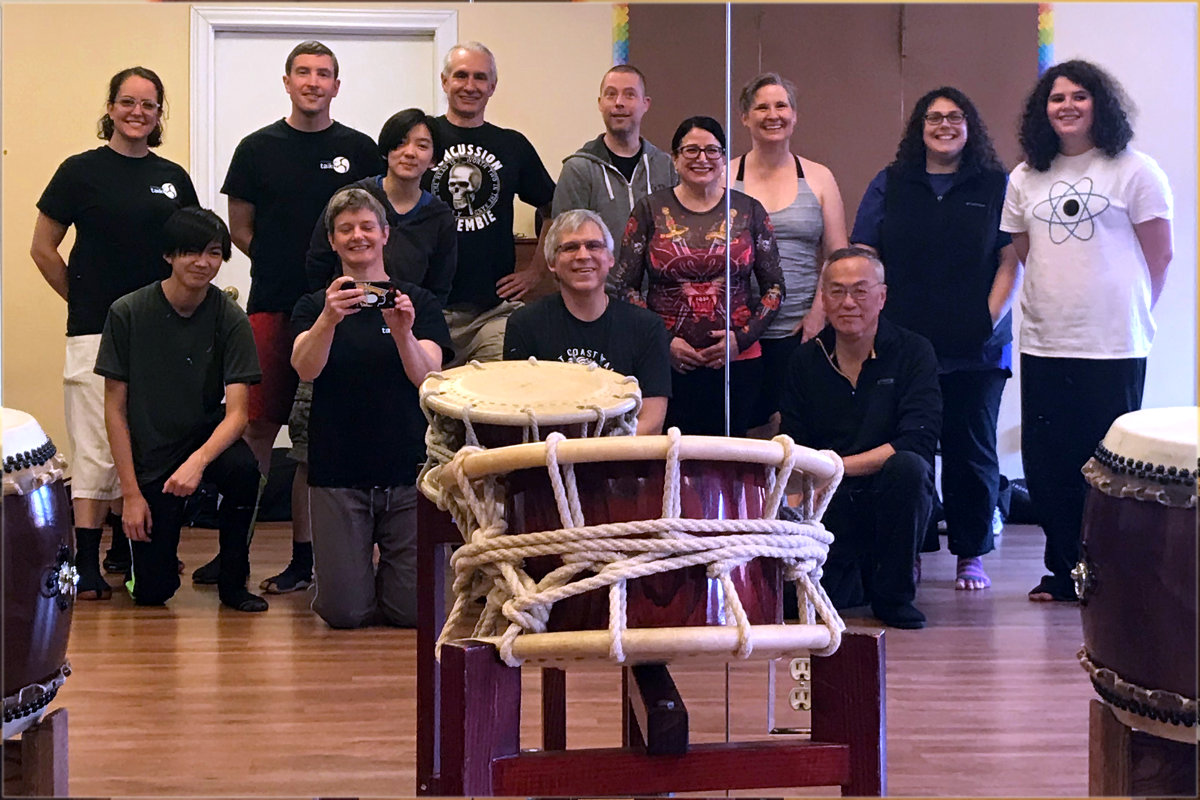
Four days after returning from Asia via Tokyo, I undertook a new adventure: Japanese ritual drumming—or taiko—in the form of a four-week beginner’s workshop offered by local group Pittsburgh Taiko.

Big drums have been used in Japan for centuries in religious rituals and to inspire troops in battle. However, kumi-daiko—the current style and form of performing in ensembles—wasn’t established until 1951 by an inventive Japanese jazz drummer.

Taiko Beginners Workshop

Taiko Beginners Workshop

My first exposure was seeing the local group Pittsburgh Taiko perform at the local lunar new year celebration back in 2016. A month later, Inna and I went to see them perform alongside Japanese-American taiko master Kenny Endo.

I’ve always been a fan of percussion (except for vibraphone, which hardly qualifies). I’ve done my share of playing around, including both West African hand drumming as well as rock kit, so I was intrigued.

When that local group offered a beginners workshop in the fall of 2016, Inna and I registered. However, when it rolled around, I was in Maine to caretake my dying mother, and in my absence Inna, who is also into drumming but has no affection for things Japanese, opted to sneak out halfway through the first session.

However, a year and a half later, I saw them again at this year’s lunar new year, and learned they were going to offer another beginners workshop, which I was finally able to attend. We had 10-12 students, which matched the approximate number of people in their performance group.

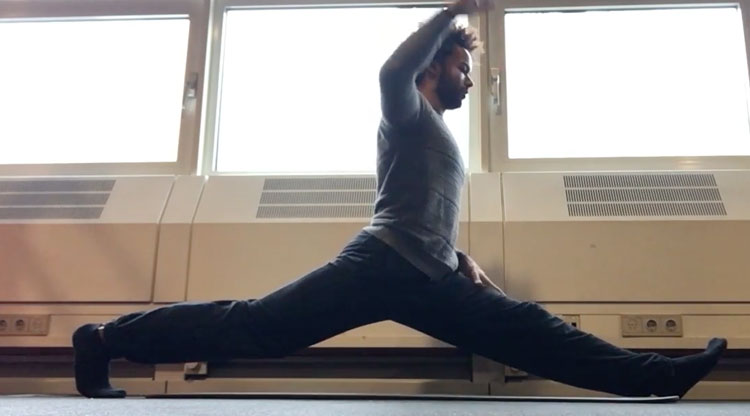
The first sessions were painful. One of the first things I learned is that your stance is supposed to result in your hips being at about the same height as the barrel-like chudaiko drumhead. Since that isn’t much more than two feet off the ground—and impossible to adjust—it resulted in my essentially having to play while performing a front split. Neither comfortable nor stable for someone of my height! That was reinforced by four days of severe DOMS that followed the session, thanks to my woefully underdeveloped cyclist’s arm muscles.

Week two started with even more pain. Although the group does some warmup exercises before playing, they illogically start with ballistic exercises like jumping jacks, and only do gentle muscle stretches afterward, which is backwards and dangerous. Going from a cold start straight into an exercise that involved simultaneous hopping and kicking caused me to severely pull a calf muscle. Initially that injury made even walking difficult, and kept me off the bike for two full weeks.

We started making progress in that session, when we were introduced to the first two lines of the standard practice piece called “Renshuu”. However, after staying to watch the experienced group prepare for an upcoming performance, I noticed the discouraging ring of tinnitus.

In week three we learned most of the rest of Renshuu, and we took the opportunity to record video of the teachers playing it, so that we could practice at home, which was helpful.

Things started coming together for the fourth and final class. We spent some time going around the room round-robin style, giving everyone a chance to play improvisational one-measure solos. I can’t say mine were particularly great, given my lack of familiarity with the instrument and its playing style.

We also played Renshuu through a couple times before the teachers sat down and had us (as a group) play it for them in formal performance style. As you would expect of any Japanese art form, taiko isn’t simply about making music as a group; it’s also about synchronized and choreographed movement, elegance, and visual appeal. Our first “performance” went reasonably well, and marked an emotional peak for the class.

Beyond the drumming, one of the things that appealed to me about taiko was its potential as an exercise in mindful movement, much like my kyūdō (Japanese archery) practice did back in Boston. In that respect, it was half successful. At first, I was too busy trying to understand the rhythms and use the correct hand; but the more familiar I became with each piece, the more attention I could spare to focus on my body, my stance, and the timing and expressiveness of each movement. It might become a meditative exercise at some point much further down the road to proficiency.

Which brings up the obvious question about whether I will continue with it. Taiko would suffer with the same limitation as kyūdō: it’s not a core priority. When we talked about the possibility of a followup workshop, I found myself reciting a litany of dates I couldn’t make: two weekends in Italy with Inna’s family, two more for a meditation retreat, and that doesn’t even include all my summertime cycling events! I’d like to continue and will make an effort, but I won’t have much success until the end of the busy summer season.

Of course, continuing would also raise the question of public performance, which isn’t something I’m particularly comfortable with, either. A nice idea, but realistically my lack of any inherent musical ability will out, and I’d rather that not happen in front of a knowledgeable audience.

All the same, it was an interesting experiment and experience, and hopefully something I can make room for during months that are a little less packed with more important “interesting experiences”!

One the many lessons of meditation practice is impulse control. I don’t like that itch or that knee pain, but I’m trying to stay still right now. Can I relinquish the need to scratch or to adjust my position? What happens if I try?

In meditation, the underlying motives behind such movements—even these trivial ones—are brought into conscious awareness and examined.

And for me, these examinations have led me toward an interesting idea: that the root cause of almost all our movement is dissatisfaction with life as it is, and desire for things to be otherwise.

Humans—perhaps even all living organisms—are programmed to seek out pleasure and avoid the unpleasant.

From infancy, every movement we make is either to move toward and grab something we want, or to move away from or throw away something we don’t want. All because we have been programmed to believe that we’ll have the best life experience if we get what we want and avoid what we don’t.

And to a large degree, that works pretty well for us. We gravitate toward the people, the foods, and the music we like, and do our best to avoid those we dislike. And whether we’re infants or adolescents or adults, we usually do our damnedest to get what we want, or avoid enduring what we don’t want.

This drive is so basic and unexamined that the vast majority of what we do in life is in the service of this particular concept of “making things better”. We go through life wedded to the idea that perhaps someday we will reach some magical place where we are “happy”, needing nothing more to be fulfilled.

Few people actually think about what true happiness would look like. If we were truly happy, all that infantile want-based grabbing and throwing away behavior would be unnecessary. What would it be like to be truly happy? Wouldn’t all that motion which is impelled by desire and aversion simply cease?

And that’s what I’d like to talk about now: the idea that every volitional movement we make is an expression (or a manifestation) of our dissatisfaction with the way things are.

That in itself is an interesting insight that few people ever investigate. But if one were to take that idea seriously and allow it to actually inform our decisions, it would result in a life that is structured very differently than most of us experience and pursue in modern America.

I suppose it’s becoming a familiar trope that we cannot find happiness in the never-ending quest to change our world to better suit us, and that peace can only come through internal growth, so that our happiness isn’t dependent on forcing external circumstances to be “just right”.

But what that might look like is not so obvious at first.

So that’s one hypothesis: that if we were truly happy and at peace with life as it is, all that extraneous movement would simply stop. But that’s a very linear, American way of looking at it. What if we turned the underlying cause and effect relationship on its head?

One of the more useful techniques in modern psychology is cognitive-behavioral therapy, which is often summarized as “fake it till you make it”. Patients are asked to model attributes and practice behaviors they wish to manifest—such as confidence, strength, or independence—even if they don’t necessarily feel that way internally. The idea is that maintaining the appearance of a desired effect can be part of the cause that eventually makes the effect feel “real”.

If we approached the question of happiness and movement in the same manner, we flip the idea that “happiness causes motionlessness” idea on its head, and come up with a new hypothesis: “motionlessness creates happiness”.

Preposterous, right? Sure, the idea that sitting still might make us happier sounds ludicrous to most of us at first, but it’s actually the basis of many meditation practices. The benefits of silence and physical and mental stillness underlie the Buddhist samatha practice of calming the mind, as well as most yogic and Western derivatives.

Just ask the average Joe off the street to describe what meditation is and he’ll say ”sitting still and being quiet“. Ask him what it’s supposed to accomplish, and he’ll use words like: relaxation, stillness, calmness, tranquility, and peacefulness. The idea that stillness can somehow contribute to happiness is not as alien as our instincts tell us. In fact, it’s been around for centuries.

Practicing and strengthening our ability to be motionless can lead us toward a deeper understanding that all our grabbing what we want and throwing away what we don’t cannot make us happy. And that perhaps our best route to happiness is to practice quelling the impulses that underlie all that grabbing and throwing: learning how to relate mindfully to our desires and aversions, rather than be mindlessly ruled by them.

The hard-bitten Americans in the audience will have an instinctive reaction to this. What, do we just stop moving, then? That won’t make me any happier! Do you expect us to just give up all hope of making this a better world for ourselves and our children?

No, progress inevitably march on. But it’s vital to see that the things American culture has told us lead to happiness simply have not and will never work. We don’t have to give up on progress and development, but we do have to accept that despite how much the conditions of our lives have improved, we aren’t significantly happier people, nor will our children be.

There’s a very real limit to what scientific progress has done (or can do) for us and our species in our quest for happiness. It’s about time we tried something else! Your happiness is what’s at stake.

I challenge you to put serious effort into exploring these kinds of alternatives, rather than blindly believing the illusion that getting what we want will someday make us “happy”. If more people did so, not only would we be significantly happier with our lives, but it would constitute meaningful progress, too: arguably the greatest advancement in human social and ethical development in two thousand years!

Frequent topics