When I heard that a tour featuring Devo and the B-52s was going to visit Austin, I knew it was a must-see. Both bands’ songs can be hit-or-miss, but their best ones are exceptional. From the moment I saw them play on the Merv Griffin show on October 16, 1980, Devo – for whatever reason – were a formative part of my adolescence. But opportunities to see them have been extremely rare; I had to wait 28 years before I finally managed to catch them headlining a Boston show in 2008… And I’ve waited nearly two more decades for my next opportunity!

B-52s Love Shack

B-52s Love Shack

Devo Jocko Homo

Devo Jocko Homo

Devo Going Under

Devo Going Under

The timing wasn’t great, tho. The Austin show was on Saturday November 1, the night before the Livestrong Challenge: a 100-mile bike ride I was signed up for. I started the day of the show by laying out all my ride gear, then made my way to a photoshoot at Livestrong headquarters with my Team Kermit friends. Then an early dinner of takeout Thai food, which was accompanied by ominous thunder.

With threatening weather surrounding Austin, I took hope from a rainbow I saw on the drive to the Circuit of the Americas Formula 1 racetrack where the open-air show was being held. I got there really early to score good parking, but was “asked” to stay in the car due to lightning in the area.

I promptly ignored that “request” and walked the kilometer to queue up at the main entry gate, along with the most disappointing selection of humanity I’ve seen in a long time. It was 6pm: about an hour before the gates opened, and two hours before showtime.

By 7pm there were obvious lightning bolts and thunder, and the skies opened up for about 20 minutes, absolutely soaking everyone. Security told people to take cover in their cars or a distant parking garage, but I obstinately hovered nearby and waited.

After having stood around idly for two hours as the storm abated, we finally were let into the venue at 8pm – the original show time – and were told the performers would go on at 9pm. I grabbed some paper napkins from a vendor to dry off my soaking wet seat and waited: chilly, damp, and shivering.

They dispensed with the opening act – Lene Lovitch – and the B-52s came on at 9pm, which would have been their normal time slot. I like the band, and am especially fond of lead man Fred Schneider’s distinctive vocals and quirky lyrics. Their set included the upbeat “Cosmic Thing”, plus several of their less distinctive, melodic songs that I tend to ignore, and I was disappointed that they passed over the edgier “Channel Z”. And it would have been nice to include something from Fred’s solo career, like “Monster” or even “Coconut”. Overall, they put on a passable show. I’m glad I got to see them once.

I’ll mention here that a couple, seated two rows in front of me, decided to stand through the entire set, which meant I had to do so as well, if I wanted to see anything. So between the wait outside the venue and the concert, I stood in place for an agonizing 4½ hours… on the evening before a 100-mile bike ride!

After the stage was rearranged, Devo came on and also played for an hour. I had low expectations, since they’re known for never changing their setlist or show, but they’d updated some of their visuals and delivered the songs with more energy than you’d expect if you thought of them as a one-hit wonder from four and a half decades ago. They played personal favorite “Going Under”, but not the newer “Mind Games”, and they did not perform “Beautiful World” or their cover of “Satisfaction”. Despite my concerns, they delivered a fast-paced, very satisfying show.

After the bad weather and delays, I was delighted that both headliners were able to take the stage and perform their full sets without having to truncate the show. Scratching the opener was the ideal response to the weather situation.

The Germania Amphitheater at the Circuit of the Americas has a reputation as a horrible place to see a show, mostly because of the long walk between parking and the entry gate, how far it is out of town, and how much of a cluster it is to get into and out of. I found it tolerable, and I somehow managed to get out pretty easily after the show.

Getting home and ready for bed around 1am left me just four hours to sleep before my pre-ride wakeup alarm. And even the bonus hour of sleep I’d get from the autumnal time change that night meant that Sunday was gonna be a grim day in the saddle. But that’s a story for another blogpo

Although it didn’t start out that way, I guess this qualifies as a “memorabilia” post, given that it deals with stuff I’ve kept for the past 33 years…

Everyone has their own way of relating to significant purchases like a car, computer, television, camera, or stereo. Some people love buying new stuff when it’s on sale. Others pride themselves on getting a bargain by buying used. My M.O. has always been to buy the absolute best I can find, mostly irrespective of cost, then making it last as long as humanly possible… often long after newer, better things have made it obsolete. I take pride in having top-quality stuff and keeping it forever, and because of that I often form an emotional attachment to the objects I’ve acquired.

I can’t say that my first stereo was one of those things. It wasn’t very noteworthy, but it provided a lot of pleasure during my high school and college days.

But as I graduated college, got married, and moved into the workforce, digital audio arrived in the form of compact discs, and in 1992 my cheap high-school era stereo was decidedly worn out and in need of replacement. And my first job after college provided the necessary cash to splurge on something nice.

As fortune would have it, my then-spouse was working at a local electronics specialty store called Leiser and could get top-quality stereo components at cost. We wound up buying a hand-picked ensemble, spending around $1,500 on equipment that would have retailed for around $3,200 (which translates to about $7,000 in 2024 dollars).

I really loved that system, and was always proud to show it off. I’ll say more about that in a bit, but first let’s follow its history.

The majority of that system stayed with me following our divorce and my half-dozen subsequent moves, although I used it less and less over time, and the remaining components spent the last decade-plus stored away in their boxes…

Until recently. While noodling around YouTube I stumbled onto a tiny product that is essentially nothing more than a Bluetooth audio receiver with stereo outputs that could be hooked up directly to the auxiliary input of a traditional preamp. Such a device would allow Inna & I to stream any audio from our computers or smartphones directly through my audiophile rig. That was enough to spur me to finally dig up my beloved 33 year-old components and set them up for our enjoyment in 2025.

Of course, a couple of the old pieces are gone. The CD player that we received as a group wedding present from several university friends eventually self-destructed, and there wasn’t any point in keeping the old cassette tape player from my high school stereo. And I’d tossed my huge trunk-sized Infinity 7 Kappa speakers when the cones had dry rotted. I’d also discarded my old speaker cable and patch cords, but those were easy to replace.

But the most important three core pieces of my system were still there – my preamp, equalizer, and power amp – which needed little more than a thorough dusting. Lemme do a little show-and-tell about those, because I still hold a lot of affection for these three components.

Let’s start with my graphic equalizer. An EQ is useful to boost or cut specific frequency ranges in an audio signal. Got speakers that sound tinny? Use the sliders to boost bass and midtones. Don’t want to wake the baby on the other side of the house? You might quiet the bass a little while leaving everything else normal. Got a room where one speaker has to be placed in a back corner? Boost the left channel or reduce the right.

My 12-channel Denon DE70 graphic equalizer is a quality and useful piece of equipment. It’s always provided great service, and I find its lit bank of 24 faders visually appealing. It’s a bit unique in that the faders for the left and right channels are interleaved as paired green and yellow LEDS, rather than the more common setup that uses two physically separate banks of sliders. And there’s my little Bluetooth receiver perched at top left:

Denon DE70 graphic equalizer

Next, the crown jewel: my power amplifier. A power amp has just one job: take a microwatt “line level” audio signal and boost it to the tens or hundreds of Watts necessary to drive one’s chosen loudspeakers. It’s the final device in the audio processing sequence, connecting to and controlling the output from your speakers.

My power amp was manufactured by Carver, which comes with a bit of backstory.

Bob Carver was a legendary audiophile engineer, especially known for his innovative and impressively powerful amplifiers. I was first introduced to his work in high school, when my friend Paul showed me his brother’s stereo, which included Carver’s M400 old-school vacuum tube power amp, a radical-looking 7-inch square black cube that could pump out 200 Watts per channel: a ridiculous amount of power for a home system at that time. It made quite an impression on me!

The Carver TFM-4.0 power amp that I bought in 1992 is one of Carver’s followup models, offering a ludicrous 375 Watts per channel. It’s a great amp by a great engineer, but because Carver only produced this model for one year, it’s a rare and collectable component even within Carver’s exclusive lineup. Like the M400 that Paul showed me back in 1981, its only display is six sets of LEDs to show the power level of the signal it’s sending to the speakers; and in all the years I’ve owned it, no matter how high I pumped up the volume, I’ve never been able to light any but the first, lowest power level LEDs. The thing is a 23-pound workhorse!

Carver TFM-4.0 power amp

That just leaves my preamplifier, which is like the central conductor of a stereo system, orchestrating inputs from various sources (e.g. CD player, radio tuner, turntable, tape deck, microphone, and now even Bluetooth devices), sending a normalized signal out to the EQ and back, and then downstream to the power amp and speakers.

Like my EQ, my preamp is a decent piece of equipment. Being a CT-17 preamp/tuner made by Carver, it matches my power amp, but doesn’t have anywhere near the same cachet as his power amps. But the built-in radio receiver is a convenient combination.

Carver CT-17 preamp/tuner

Which brings me to the final, missing piece of the puzzle, the thing that kept me from setting up my stereo over the past decade-plus: the lack of speakers.

A good stereo is worthless without good speakers, and for a long time I wasn’t able to justify spending a lot of money on a set that would do justice to my other components. But I finally found a set of bookshelf speakers with positive reviews, that wasn’t too exorbitant, and which – if I bought them refurbished – would fit neatly within the credit card rewards bucks I was about to liquidate.

So let me introduce you to my one brand-new component: a set of Polk Audio R200 bookshelf loudspeakers. While I haven’t had them long enough to form a strong opinion of them (or bond with them), they seem to be doing a good job so far. They’re noteworthy in having a very flat response, which means considerably less tweaking of the frequency curve on the equalizer than I’m used to. I only wish I could move them a little farther from the wall, to better distribute the bass.

Polk Audio Reserve R200 speakerPolk Audio Reserve R200 speaker

Although this didn’t start out as one of my official “memorabilia” posts, overall I’m delighted to have my old components back in service again. Despite being 33 years old, they still deliver great sound quality, and it’s really nice having a Bluetooth connection to stream music at will from any of Inna’s and my laptops and phones. I’m really glad I lugged this equipment around with me for all these years!

Today, kids grow up with their entire lives digitized and at their fingertips, but those of us over sixty rarely get a high-fidelity look back into our childhoods.

Sure, there might be some faded Polaroids or 35mm slides from major holidays, but those aren’t particularly vivid or easily shared. A majority of our lives—who we were and everything we experienced—exists only in brief flickers of increasingly fragile human memory, ultimately unsharable except as tediously repetitive verbal anecdotes, like those our grandparents told us when we were kids.

So when one uncovers an item that triggers lots of childhood memories and emotions, it’s worth expending some effort to preserve it. In this case, a 40-year-old cassette tape bearing a very special song, which I recently digitized.

Therindel and Daeron cover

Therindel and Daeron cover

Therindel and Daeron On Ravenhill cassette

Therindel and Daeron On Ravenhill cassette

In 1978 I was only fourteen years old and about to start high school. I’d recently devoured J.R.R. Tolkien’s “The Hobbit” and “The Lord of the Rings” trilogy, and had gotten in touch with a handful of other young fans to found the New England Tolkien Society.

NETS had two publications: I produced a big annual called “MAZAR BALINŪ” (The Book of Balin) that featured art, poetry, fiction, and such (read more about that here); but our regular newsletter was a monthly called “Ravenhill”, named after a fortified spur of the Dwarves’ Lonely Mountain, which was the ultimate goal of Bilbo & Co.’s quest in The Hobbit.

Our Tolkien fan group’s meetings were infrequent, because we were spread out all over the northeast, but we made up for it with enthusiasm, taking on Hobbit or Elven or Dwarven personae, dressing up in costumes, having period feasts, hosting Tolkien trivia contests, and the all-important mushroom-rolling race (using only one’s nose, of course).

Those events were always uproarious fun. Contrary to my home life as a very strong introvert, under my Hobbit persona I surprisingly found myself loosening up and expressing a fun-loving, impulsive side at our gatherings. For me, they were incredibly important experiments in my adolescent social and emotional growth.

It was in that context where, at one of our very earliest meetings, we were joined by a local musician named Tom Osborne, who went by the name “Dæron”, after a minstrel mentioned in Tolkien’s works. He played guitar and sang a folk song he’d composed around a poem written by Marthe Benedict (aka Therindel), a Tolkien fan of international renown.

The song, “On Ravenhill: Gimli’s Song of Parting”, is a poignant one. You may or may not recall that Gimli was the Dwarf who joined the Fellowship of the Ring to help Frodo bring the One Ring to Mordor. Tom’s song takes place long after the conclusion of the War of the Ring, as Gimli says farewell to the Lonely Mountain and Middle-earth, before joining his Elvish friend Legolas in sailing to the Undying Lands: something no Dwarf had ever been permitted to do.

Between the stirring words, so wonderfully performed, and the direct connection to our newsletter “Ravenhill”, everyone who heard it at that early gathering was near tears, despite the fact that we were mostly teenaged boys. There was something about Tolkien’s works that had touched each of us—the sense of wonder, the magnificence of nature, the freshness of youth, the sentimentality and romanticism—and Tom’s music and Therindel’s words captured all of that perfectly. It’s no exaggeration to say it resonated in my heart and lodged itself permanently in my memory.

The version I have on cassette… Over the past 42 years I never played it very often, but—knowing that it was important to me—I hung onto it through my many moves and all the changing roles and circumstances of my life. I’m happy that after so many years, it’s still in adequate condition for digitizing and posting (here’s the MP3), even if the quality isn’t up to modern standards.

Now, like Gimli, in old age I find myself looking back upon an astonishingly diverse, full, and fulfilling life with immense appreciation. I’m not quite ready to depart for the Undying Lands, but I can look back at the many treasures I have found, and savor precious memories such as those evoked by this deeply meaningful song of parting.

Far down the Lonely Mountain’s southern arm
I stand on the grey rocky height
Whence oft of old was sounded the alarm
And winged messengers soared in urgent flight.

(BEGIN CHORUS)
Only on Ravenhill—can you believe it still?
Looking across the green lands;
Mining the metals we shaped with our hands each day
Under the mountain where mystery lay.
(END CHORUS)

Here sun and wind and rain shaped the stone;
Here blood of kinsmen slain have soaked the clay;
And here I stand bent by the years I’ve known
To hear the echoes of a fading yesterday.

CHORUS

I am a living part of all this land—
Each standing stone, each tree a treasured friend,
Each glint of the sun a gem within my hand—
And yet beneath the sun all things must have an end.

CHORUS

I will surrender all I held as worth
And take the westward road across the sea.
A Dwarf of Durin’s race, a son of the earth,
Who dared to crave the lofty Elvish destiny.

CHORUS

So here I forfeit all my mortal right,
And here I render up my earthly will.
I shall leave it all to seek the light,
For I have bid the past farewell.

CHORUS x3

Twenty-two years ago, I was just minding my own business.

At the consulting company where I worked, I had just finished developing BankBoston’s HomeLink & OfficeLink banking applications, and was about to roll onto a new project for a local startup.

Inna & Orny at the Warhol Museum, 2000

I received an email from some new hire who was moving our (land-line!) telephones to the new team area. As you might expect, she ended by saying that anyone having concerns should call her at extension 1366.

Just one problem there: x1366 was my phone number!

I immediately emailed her back and discovered that she’d accidentally typed my extension (1366) by transposing the digits of her own (1633). Not an auspicious first impression for a new hire fresh out of college, whom I was going to have to work with on my next project!

And that’s how I met your mother...

Despite starting off in decidedly bizarre fashion, once I met Inna in person, I decided to cultivate a friendship. At work I orchestrated time together under the pretenses of tutoring her on web design and speaking to my coworkers individually about team morale.

I charmed her with hair down to my hips and bizarre boyish antics. I ran the team’s junk food fund—known as “SnackLand”—and wrote a web app so the team could vote on what they wanted to buy. When I ordered a new bicycle, I had it shipped to work in a box, assembled it, and rode it around the office space in my consultant’s white shirt & tie, despite bikes not being allowed inside the building. The security guards freaked out when I eventually brought it down to the ground floor to ride home!

But with Inna, the deal was sealed when I persuaded her to come to my place after work to meet my cat Puggle: the fluffiest longhaired creamsicle you could ever meet. From that point forward, we were an item.

Not a public one, mind you. We kept our romantic involvement strictly a secret at work for some time, only exchanging furtive kisses when we were alone in the elevator between floors. It wasn’t something we wanted people to know at first, but we’d eventually let the proverbial cat out of the bag.

In the meantime, we spent a lot of time together. I was still into Boston’s local music scene, and we went to countless live music shows.

One of our early dates will always stand out in particular. We were having dinner at Brown Sugar Cafe, a neighborhood Thai place, looking for something to do for the evening. I was lamenting that there were no good bands playing, only some stupid punk band calling themselves “The Damned”.

Little did I know, but The Damned were Inna’s teenage idol band, an aging English group whom she’d been following for more than a decade, but had never seen live. It was as if I’d waved a magic wand and made her dreams come true by turning three Fenway rats into her favorite brooding goth heartthrob singer Dave Vanian, drunk buttocks-exhibiting glam guitarist “Captain Sensible”, and (perhaps least of a transformation) a back-alley waste product drummer called “Rat Scabies”.

Needless to say, within a couple hours we were off to Axis for an evening of noise, profanity, and unsolicited exposure to middle-aged man-butt.

In those early days, neither of us made particularly desirable partners, and our relationship was very off-and-on for the next seven years, until Inna moved back to Pittsburgh. We remained best friends—with occasional benefits—for another ten years while we both matured into adults capable of tolerance, compromise, and forgiveness.

When the obscene Hell-spawned winter of 2014-2015 prompted me to leave my beloved Boston, Inna suggested I come to Pittsburgh to see if we could stand living with one another.

With four years of cohab now under our belts, we’ve settled in to a stable, lasting partnership. The future’s a bit up in the air right now due to the Corona virus, but we’re confident and comfortable facing whatever comes up together.

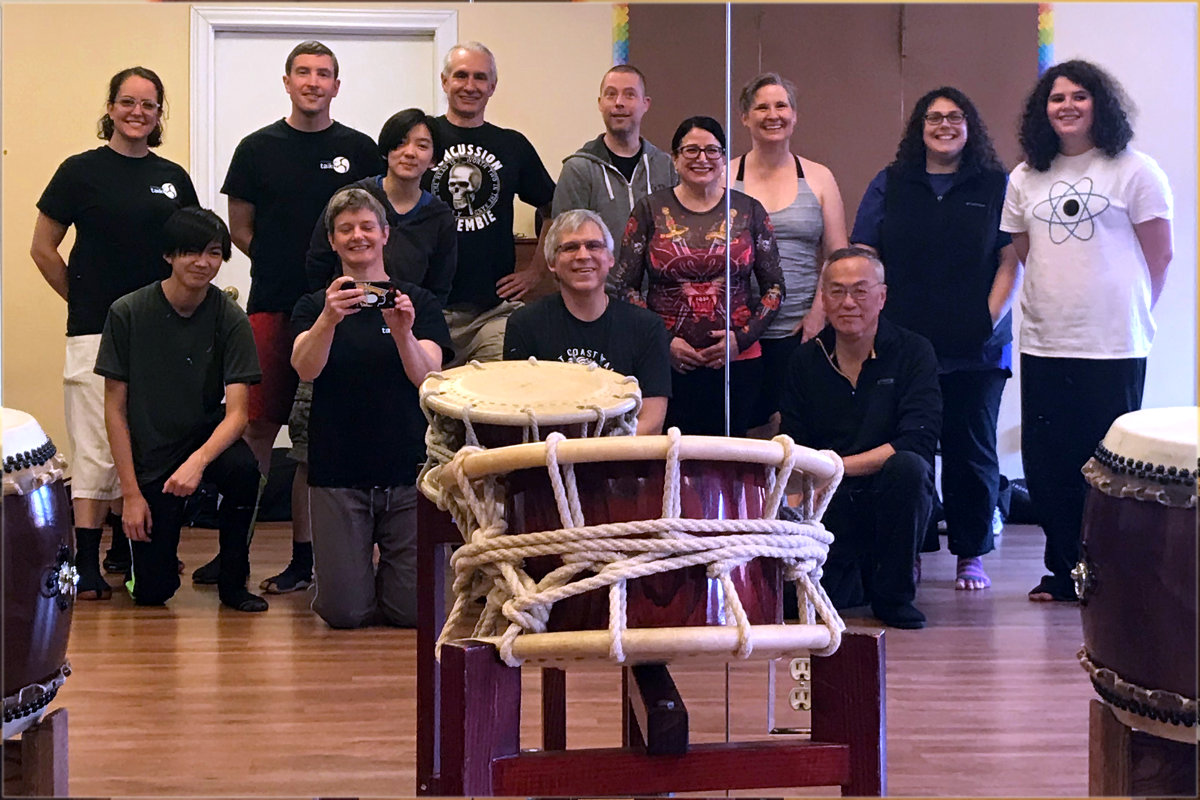
Four days after returning from Asia via Tokyo, I undertook a new adventure: Japanese ritual drumming—or taiko—in the form of a four-week beginner’s workshop offered by local group Pittsburgh Taiko.

Big drums have been used in Japan for centuries in religious rituals and to inspire troops in battle. However, kumi-daiko—the current style and form of performing in ensembles—wasn’t established until 1951 by an inventive Japanese jazz drummer.

Taiko Beginners Workshop

Taiko Beginners Workshop

My first exposure was seeing the local group Pittsburgh Taiko perform at the local lunar new year celebration back in 2016. A month later, Inna and I went to see them perform alongside Japanese-American taiko master Kenny Endo.

I’ve always been a fan of percussion (except for vibraphone, which hardly qualifies). I’ve done my share of playing around, including both West African hand drumming as well as rock kit, so I was intrigued.

When that local group offered a beginners workshop in the fall of 2016, Inna and I registered. However, when it rolled around, I was in Maine to caretake my dying mother, and in my absence Inna, who is also into drumming but has no affection for things Japanese, opted to sneak out halfway through the first session.

However, a year and a half later, I saw them again at this year’s lunar new year, and learned they were going to offer another beginners workshop, which I was finally able to attend. We had 10-12 students, which matched the approximate number of people in their performance group.

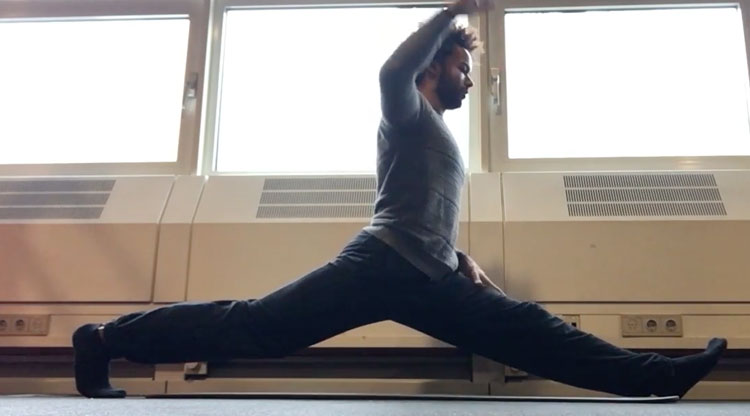
The first sessions were painful. One of the first things I learned is that your stance is supposed to result in your hips being at about the same height as the barrel-like chudaiko drumhead. Since that isn’t much more than two feet off the ground—and impossible to adjust—it resulted in my essentially having to play while performing a front split. Neither comfortable nor stable for someone of my height! That was reinforced by four days of severe DOMS that followed the session, thanks to my woefully underdeveloped cyclist’s arm muscles.

Week two started with even more pain. Although the group does some warmup exercises before playing, they illogically start with ballistic exercises like jumping jacks, and only do gentle muscle stretches afterward, which is backwards and dangerous. Going from a cold start straight into an exercise that involved simultaneous hopping and kicking caused me to severely pull a calf muscle. Initially that injury made even walking difficult, and kept me off the bike for two full weeks.

We started making progress in that session, when we were introduced to the first two lines of the standard practice piece called “Renshuu”. However, after staying to watch the experienced group prepare for an upcoming performance, I noticed the discouraging ring of tinnitus.

In week three we learned most of the rest of Renshuu, and we took the opportunity to record video of the teachers playing it, so that we could practice at home, which was helpful.

Things started coming together for the fourth and final class. We spent some time going around the room round-robin style, giving everyone a chance to play improvisational one-measure solos. I can’t say mine were particularly great, given my lack of familiarity with the instrument and its playing style.

We also played Renshuu through a couple times before the teachers sat down and had us (as a group) play it for them in formal performance style. As you would expect of any Japanese art form, taiko isn’t simply about making music as a group; it’s also about synchronized and choreographed movement, elegance, and visual appeal. Our first “performance” went reasonably well, and marked an emotional peak for the class.

Beyond the drumming, one of the things that appealed to me about taiko was its potential as an exercise in mindful movement, much like my kyūdō (Japanese archery) practice did back in Boston. In that respect, it was half successful. At first, I was too busy trying to understand the rhythms and use the correct hand; but the more familiar I became with each piece, the more attention I could spare to focus on my body, my stance, and the timing and expressiveness of each movement. It might become a meditative exercise at some point much further down the road to proficiency.

Which brings up the obvious question about whether I will continue with it. Taiko would suffer with the same limitation as kyūdō: it’s not a core priority. When we talked about the possibility of a followup workshop, I found myself reciting a litany of dates I couldn’t make: two weekends in Italy with Inna’s family, two more for a meditation retreat, and that doesn’t even include all my summertime cycling events! I’d like to continue and will make an effort, but I won’t have much success until the end of the busy summer season.

Of course, continuing would also raise the question of public performance, which isn’t something I’m particularly comfortable with, either. A nice idea, but realistically my lack of any inherent musical ability will out, and I’d rather that not happen in front of a knowledgeable audience.

All the same, it was an interesting experiment and experience, and hopefully something I can make room for during months that are a little less packed with more important “interesting experiences”!

Reflecting back on the hundreds—if not thousands—of concerts I've been to, there are a couple that stand out as tremendously disappointing, and they have quite a bit in common.

Yes 9012Live shirt

In September 1984 I saw Yes in Portland ME, touring in support of their immensely popular 90125 album. My date and I wound up leaving toward the end of the show when she freaked out after losing a treasured piece of jewelry.

A year later, my future wife and I were at the very first show in Rush's Power Windows tour, coincidentally also at the Portland civic center. We were at the edge of the stage when—during their single "Big Money"—fake dollars bearing the band's portraits rained down from the rafters above us.

These were both widely-known and unquestionably talented groups near the height of their popularity, with a huge back catalog of hits, videos in constant rotation on MTV, and deep-pocketed promoters. So why did these shows suck so badly?

Some of the problem stems from the collision between high expectations and a very pedestrian reality. But beyond that, in both cases the band members simply stood there and played their stuff, with no movement, no emotion, no stage presence, and no connection with the audience whatsoever. Despite their immense reputations, they just phoned it in.

It doesn't help that the albums were heavily overproduced, very characteristic of the mid-1980s. The early use of sound samples reduced much of the performance to triggering pre-recorded bits in sync with a click-track. That left damned little room for improvisation, spontaneity, or even variation.

I know some people see a band to hear them perform their repertoire in a familiar way. But I don’t see any point to a live, in-person performance when the band’s involvement is reduced to mechanistically playing a note-for-note reproduction of what appeared on the album. The music was obviously incredibly tedious for the bands to play, which sucked all the energy and excitement out of the crowd.

The best thing I can say about those shows is that they both had cool concert tee shirts. The kind you’d wear around to show everyone that you’d seen this really cool tour… Even though it had been about the most disappointing show you’d ever seen.

Neil Peart money

If I were to choose the destination for a birthday trip, I probably wouldn’t choose Cleveland. However, that’s what Inna wanted. At least it’s easily accessible from home. Here’s a quick trip report.

I & O @ R&R HoF
O @ R&R HoF
The Damned @ HoB
I with Beers

The Rock and Roll Hall of Fame: I wouldn’t call it disappointing, but it was spotty. A third of the building was closed and under construction. The layout was chaotic and confusing, so we probably missed some of the exhibits, but we saw nothing from numerous major acts like the Who, Michael Jackson, Kiss, the Bee Gees, Abba, Pink Floyd, Duran Duran... While entire walls were devoted to some acts, superstars like Elton John and Madonna were represented by one item each. But then what would you expect from an institution that is only now getting around to inducting Joan Baez, ELO, Journey, and Yes? Overall I give it a C+.

Spent a lot of time around Market Square. Ice cream at Mitchell’s was awesome. Killed time playing Codename Pictures and Forbidden Island at the Tabletop Board Game Cafe. Had a good dinner at the Great Lakes Brewpub, where Inna ordered and mostly stared at their flight/sampler of twelve five-ounce beers. Salivated a lot while browsing the huge West Side Market meat and produce stalls, where Inna (after some tribulation) eventually fulfilled her quest for a slab of strawberry cassatta from Cake Royale.

Returned downtown and checked into our hotel before the main event: a punk concert at the House of Blues by Inna’s adolescent idols, the Damned. They seemed tighter than previous performances, and overall it was a good show despite an iffy mixing job. Not so good was the rain-soaked walk back to the hotel afterward, nor the 3am fire alarm and building evacuation later that night.

After a decent hotel breakfast, we stopped by a mall in Mayfield Heights to hit the World Market (an internationally-focused grocery store) with an unplanned bonus bra shopping expedition.

Other than Inna’s desire to see the Damned, nothing about Cleveland was a must-see by any stretch of the imagination; however, we enjoyed the trip, got a nice break from our regular daily routine, and had fun together.

Then, after a night’s sleep, we got up and hit Pittsburgh’s amateur Art All Night exhibit, which we both found engaging, then enjoyed a damned savory lunch at Salem Halal on the Strip and a lovely walk around the Highland Park reservoir.

Nice weekend with the little woman.

Hair Today

Jun. 14th, 2015 05:56 pm

It’s been a long time since I had a normal men’s haircut.

I first grew my hair out long in 1991, soon after my wife left, and wore it long—sometimes down to my hips—for the next ten years. I was buying Pantene in two-liter jugs, but it was worth it. All the girls loved it, and the inevitable offers to brush it out or braid it were welcome at a time when I really needed some affirming attention. It was like discovering I had a hidden super-power!

The years passed, and my first grey hairs began to appear. They came in much coarser and wiry, and it didn’t make any sense to keep it long that way. I wasn’t even getting the girls anymore! So I figured it was time to get rid of it.

But before I did, I had one trick left that I wanted to try: I went and bleached the whole mane blond. It was ridiculously expensive and looked pretty terrible, but it was something I’d never be able to do again, so I went for it. To my friends’ consternation, it lasted about six months before I finally cut it down.

Naturally, I went from one extreme to the other, opting to keep my head close-shaved for the ten years that followed. Fortunately, my skull seems to be pretty reasonably shaped, so that look worked well for a long time, and it did a good job hiding the advancing grey.

Last summer, I decided to finally let my hair grow back out to a normal men’s length, so that I could get through the awkward intermediate-length stage while I was between jobs. I was finally beyond the point of trying to convince anyone of my youth, and I figured the grey would look “distinguished”, as my family have told me since childhood.

I grew up with the story that my father’s hair had gone grey by the time he graduated high school, and I’ve never known any adult on my father’s side of the family whose hair was anything but completely white. To me, it’s more surprising that my brother and I haven’t followed suit, staying salt-and-pepper the whole way. So although it wasn’t the greatest thing in the world, my going grey wasn’t any big, emotional trauma.

Ornoths hair

But growing it out last summer still presented a problem: it had been over twenty years since I’d had a normal men’s hair style. I had no idea what to do with normal hair, nor what my hair would do once it grew out!

So I kicked around ideas and experimented a little. I don’t want to have it long, because long grey hair looks horrible and ratty and sad, rather than distinguished. Think Riff Raff from Rocky Horror: not the image I want to cultivate! But I don’t want it too short either, because where’s the fun in that? Maybe I’d keep it short, except let it get a little longer in back, like a mullet? I dunno…

It was during one of those internal debates that I decided to look at the back of my head for the first time since I stopped shaving it. And that’s when I saw the great big thin patch on the top. Even after my hair has grown out very fully, I could still see my scalp! While I’m not bald (at this point!), there’s no arguing with the evidence that my hair has thinned. A lot!

If there’s one thing that doesn’t run in my family, it’s baldness. Although I did have two bald uncles, both of them married into the family and thus were not blood relations at all. The only cueball anywhere in my family tree was my maternal grandfather, Albert, whose name I inherited after he died a few months before my birth. I never even met the guy, yet I may have inherited his barren skull! Now that *would* be grounds for big, emotional trauma!

Is thinning hair that big an issue? Plenty of men wind up balding or with thinning hair, after all. And it’s not even a practical concern, because I just finished ten happy years with a shaved head, and I’d have no problem going back to that look.

Part of why it shocked me was that it was a sudden discovery, rather than a gradual one; I really hadn’t looked at my own artful dome since I stopped shaving it, so it was pretty disturbing to see it poking through the hair I’ve spent a year growing out.

And, of course, it’s another big chunk of undeniable (and sadly irreversible) evidence that I’m aging. Is aging such a bad thing? Well, I’ve spent most of my adult life taking pride in looking and acting as young as—if not younger than—my coworkers and friends. It’s been a big part of my self-image. But going bald really does put the lie to the saying that “You’re only as old as you feel”.

And writing about it doesn’t really help, either. This isn’t the kind of topic that you’d expect to read about if you visited a young man’s blog! And it’s not something I’d ever expected to write about, either…

I find that pretty ironic, because for me, aging feels a lot more like puberty than my teenage years ever did. As a teen, I was given several mysterious books full of frustratingly vague warnings of the confusing changes ahead for “our bodies”. I never did learn what all the fuss was about. Somehow, getting through adolescence never seemed like that big a deal, while the changes I’m going through now—dry skin, deteriorating eyesight, thinning hair, failing organs, ear and nose hair, skin tags, and other delights—are much more disconcerting than puberty ever was!

There’s one last little needling bit of irony, too. Years before the divorce and my accompanying decision to grow my hair long, my college friends got together and bought me my first CD player as a wedding gift.

Weeks earlier, in anticipation of that present, I’d gone into a CD store and bought my very first compact disc. Although CDs are old technology now, they were the big, exotic new audiophile thing back then. The store had the same bleeding-edge cachet as a 3-D printer “maker” shop might elicit today.

The album that had my attention at that time was an oldie even back then, but newly remastered and released on CD: Rush’s 1975 album, “Caress of Steel”. The memory of buying my first CD was burned into my mind during the two weeks I spent just staring at it while I waited to receive the gift I could use to actually play it!

One of my favorite tracks on the album… Well, Geddy Lee begins and ends it something like this:

I looked in the mirror today;
My eyes just didn’t seem so bright.
I’ve lost a few more hairs.
I think I’m… I’m going bald.
I think I’m going bald!

My life is slipping away.
I’m aging every day!
But even when I am grey.
I’ll still be grey my way, yeah!

It’s official: in six weeks TT the Bears will shutter and disappear, leaving Central Square that much more normal.

Right next door to the Middle East, TT’s booked bands that would have struggled in that larger venue. But that gave TT’s the freedom to feature all kinds of unknown but enjoyable acts.

Greg Hawkes

And the tiny size of the club made the concertgoing experience that much more intimate, whether you wanted it or not! You couldn’t physically get more than about 30 feet from the stage.

I can’t say I was a regular at TT’s, but I did see my share of shows. My buddy Bob Corsaro will be glad to know that I was there to see his ska band, the Brass Monkeys, play no less than four times. Multiple shows by Boston ska royalty the Allstonians and Beat Soup. Inspecter 7. Dow Jones & the Industrials.

One of the more memorable shows I enjoyed was Mono Puff, a bizarre alt-rock collage orchestrated by John Flansburgh of They Might Be Giants fame. As they might tell you themselves, “It was totally rockin’!”

But the most unforgettable moment was the night I met Greg Hawkes, the original keyboardist for the Cars. He was the only band member who showed up at a 2005 show celebrating the release of a Cars tribute album by a collection of Boston-based bands.

I was introduced to Mr. Hawkes by show organizer Andrea Kremer, and actually got to sit with him and chat before he took the stage as guest performer for “Just What I Needed”. It remains one of the most cherished memories of my time in the scene. You can read more about that show and see my other photos in my blogpost, “Life’s the same, except for my shoes…”

Now TT’s becomes another in a long list of legendary Boston music clubs that can only be spoken of in the past tense. But these memories remain.

With everything else that’s going on, I figured I’d kill some time with a more spontaneous, stream of consciousness post.

It’s purely conjecture, but one of the things I think people enjoy about my blog is when I relate stories about experiences that might be a little uncommon. And since most of my friends and readers are younger than I, one way to do that is to talk about when I was young. Here’s one such story.

I suppose everybody can probably identify with the experience of hearing a particular song for the first time and knowing that from that point forward, everything would be different. I have been fortunate to live through several such episodes, but one that happened back in middle school in the early 1970s has always stuck with me.

Imagine, if you will, a time long before music used computers and digital signal processors. Beyond that, imagine a time before synth-pop, before synthesizers had even been invented. A time when “keyboards” meant only one of two things: a piano or a harpsichord.

It was a time when music was looking for a new direction. Led by the Beatles, the protest music of the 1960s had given way to a muddy, directionless jumble of drug-addled metal, drug-addled glam, and inane balladic mainstream pap like “Hey Jude” and “Let It Be”. Even the Beatles lost their vision, gave up, and went off in separate directions, seeking the elusive new sound that would appeal to an increasingly disaffected audience.

That’s what music was like in the 70s, when I was in grammar school: Elton John against Black Sabbath. ABBA versus Alice Cooper. Hall & Oates and Kiss. The BeeGees and Judas Priest.

It was in that environment that I went off to school one morning and got pulled aside by Burd, one of the class delinquents. He was playing a recording for a group of kids: Edgar Winter Group’s “Frankenstein”.

It was heavy. Ridiculously massive guitar hooks, topped by a funky sax solo as well as a call-and-response drum solo. It was crazy heavy, but melodic, upbeat, and emotional. But featured on top of it all was this strange new wonky sound I’d never heard used this way before: the synth.

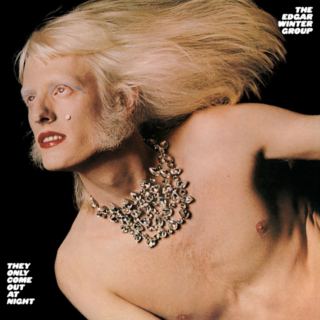
The frontman—albino musical prodigy Edgar Winter—penned the track to specifically highlight the potential of the synthesizer as the lead instrument in a composition, a role it had never previously been used for. He was the first person to strap a synth around his neck for use on stage, which would eventually lead to the development of the keytar.

As soon as I heard “Frankenstein”, I knew music had changed. The synth was so different and so plastic, at one time being an incredibly flexible artistic tool, but also capturing the increasingly sterile, dehumanized nature of life in America. The fact that I’m writing about that song today—more than forty years later—is an indicator for how powerfully it affected me.

Within a few short years, artists around the globe picked up the synth: Kraftwerk, OMD, Gary Numan, Brian Eno, the Cars, Ultravox, Devo, and of course the Buggles. By the end of the 70s, the synthesizer had done what the Beatles couldn’t. It had finally given music a new identity: New Wave synth-pop; a new medium: the music video; and a new channel: MTV.

I might not have foreseen all that hanging around before class that morning, but I knew that song represented a major change in the musical landscape. And I wanted more. Thankfully, lots of people felt similarly, and the synth became the signature instrument of the 80s.

Listening to “Frankenstein” today, I’m just as moved as I was as a child. Sure, camp has accreted on the outfits, the hair, and the symphonic style of the 1970s. But the composition and execution still retain most of their original energy and power.

If it doesn’t seem quite that impressive to you today, that’s probably because musicians have been following in Edgar Winter’s footsteps for the past forty years. But trust me, back then, this was fresh, innovative, and unlike anything we’d ever heard before.

So that’s one of the things I remember…

Want to feel old? Just take a look behind you…

I’ve been blogging long enough now to post the third installment in my series of posts remembering people, places, and things that Boston has lost since I moved in.

Nostalgia. Memorabilia. Whatever synonym you use, it’s likely to evoke the same bittersweet morose feeling of loss. So many good times, so many memories, all gone to seed.

At the same time, a city—or at least a living one—needs to change, grow, and evolve to stay interesting and vital. Still, it’s hard to feel as sanguine about new, unfamiliar places as the comfortable, memory-filled things they replace.

This week provided a particularly sad example, in the sudden shuttering of the venerable Boston Phoenix, a free alternative tabloid newspaper that guided two and a half generations of young adults through the vibrant if chaotic maelstrom of Boston youth culture.

The Phoenix was the heart of my Boston experience through my 20s, 30s, and 40s. Clubs, bands, restaurants, classical concerts, lectures, readings, exhibits… If it was worth doing—even if it was way too outré for the mainstream media to touch—you’d find it listed in the Phoenix.

Although I’ve aged and my life has become more mainstream, losing the Phoenix is no less painful. If nothing else, it represented a connection, and sense of continuity with the person I used to be. It was one of the threads that still connected me with that other Ornoth, the younger, more social, and more visceral one whom I grew out of.

But it’s just the most recent example of the Buddhist law of impermanence. Here are a few others, just to remind you that nothing lasts forever, and the great danger of binding your happiness to something impermanent.

Restaurants
Bouchée French restaurant on Newbury
Brown Sugar Cafe in Fenway
Bombay Club in Harvard Square
The Greenhouse in Harvard Square
Pomme Frites in Harvard Square
Brigham’s Ice Cream
Tealuxe on Newbury
Geoffrey's Cafe
Cottonwood Cafe on Berkeley
Herrell’s ice cream in Allston and Harvard Square
J.P. Licks ice cream on Newbury Street
Carberry’s Bakery in Central
Allston’s Sports Depot
Anthony’s Pier 4
The Otherside Cafe
Bhindi Bazaar
Island Hopper
Morton’s Steakhouse
Locke-Ober restaurant
Upper Crust pizzeria
Hard Rock Cafe in Back Bay
Ronnarong Thai restaurant in Union Square
Club Casablanca in Harvard Square
Joe’s American Bar & Grille on Dartmouth (relocated to Exeter)
Papa Razzi Italian restaurant (relocated to Newbury from Dartmouth)
Nightlife
The Kells
TC’s Lounge
Harpers Ferry
Businesses
Pearl Arts & Crafts in Central
Bowl & Board
HMV
Judi Rotenburg Gallery
Nora’s convenience store on Newbury Street
Compleat Strategist on Mass Ave.
Globe Corner Bookstore
Borders bookstores in DTC and Back Bay
Mcintyre & Moore used books in Porter
Copley Flair
Daddy’s Junky Music
Filene’s Basement
Anthropologie
Best Buy at Newbury & Mass Ave.
Fung Wah Chinatown bus to New York
Louis Boston (relocated to Southie)
Bob Slate Stationers (temporarily?)
Media
WBCN
WFNX
Stuff Magazine
The Boston Phoenix
People
Ted Kennedy
Charles Sarkis and the Back Bay Restaurant Group
Government
Massachusetts Turnpike Authority
Metropolitcan District Commission
FastLane

If you’re interested in other stuff that Boston has lost, check out the previous posts in this series: one from 2009 and another from 2005.

Updates: All Asia Cafe, Cambridgeport Saloon, Thailand Cafe, Charley's restaurant on Newbury Street, Crossroads Irish Pub, Bostone Pizza, An Tua Nua pub, Anthony's Pier 4, the Purple Shamrock, Hilltop Steak House in Saugus, Hi-Fi Pizza in Central, Calumet Photo, Steve's Greek restaurant on Newbury Street, Daisy Buchanan's on Newbury Street, India Samraat, Cactus Club, J. Pace & Son North End grocery, Amtrak's ticket office in Back Bay station, Louis Boston, Louie the Tricycle Guy, International Bike in Brighton & Newton, Forum restaurant on Boylston, Bayside Expo Center, MakerBot on Newbury Street, TT the Bears nightclub, Tedeschi convenience stores, the entire food court at the Prudential mall, Berk's shoes in Harvard Square, Church nightclub (formerly Linwood Grill), Scissors & Pie pretentious pizza hovel. Impending closures: Johnny D's, Medieval Manor.

These days, it’s not so outré to live without a car, or a television, or to not bother going to the movies. But tell people that you’re giving up music, and you’ll be surprised at how strongly people react.

Music obviously has a great rep. It’s the stuff of life, it’s how you share emotions, it’s something you need in order to get through the day.

Meditation is all about watching your mind, and after seven years of practice, it’s pretty obvious to me that in addition to all that, music also has some negative aspects.

One is obvious to anyone who has taken mass transit or visited a school in the past five years: for most people, music is how they escape the unbearable tedium of whatever’s happening right now. All they need to do is stuff a pair of ear buds in, and they can avoid interacting with other people, escape being alone with their thoughts, and avert their attention from the present.

As you can infer from my language, I don’t consider those positive attributes. Without social interaction, life is bland and featureless. Without solitude and introspection, life lacks depth and self-knowledge. And living for some other moment than the present is an outright denial of life itself.

“But,” you say, “not everyone’s so desperately trying to avoid life. It’s possible for me to enjoy music in moderation, right?” Let me tell you what I’ve observed.

We’ve all experienced the phenomenon known as an “ear-worm”, a song you can’t get out of your head. Sometimes it’s a song you really like; sometimes it’s a song you really hate. But there’s a reason why we say some songs are “catchy” and have “a hook”.

What I’ve observed is that after you listen to it, every song echoes inside your head for a while, bouncing around at random. In addition to this short-term resonance, a verse can lie forgotten for decades, but has the power to interrupt your thoughts, leaping into the present from some vaguely-remembered childhood exposure. From Barney the Dinosaur to Pink Floyd, from Bach’s Brandenburg concertos to Einstürzende Neubauten, and from ABBA to ZZ Top, music resonates in our minds like nothing else.

That isn’t necessarily a bad thing until you look at it with the perspective of a meditator. Meditation is about developing sufficient concentration to examine one’s sensory input and thought processes in detail, and the steadiness and equanimity to accept everything that this process of self-examination unearths. Meditators value attributes like stillness, calmness, and peacefulness of mind, and they seek to avoid mental states of agitation and distraction.

I’ve gone through long periods of my life that were filled with music and equally long spaces when it just wasn’t important to me. In my meditation practice, I’ve taken the time to examine my mind and how it operates when I’ve been exposed to music and when I’ve gone without, and the difference is clear. Music agitates the mind, interrupts concentration, and causes one’s thought patterns to return to the tune over and over again. But one doesn’t need to be a yogi to understand that an ear-worm interferes with calmness and steadiness of mind.

Interestingly, music never got much attention in the Buddhist literature I’ve read. However, I was intrigued to find the following passage while reading Bhante G’s “Mindfulness in Plain English”. While he is discussing storytelling, music clearly produces the same kind of energy for similar reasons.

Mental images are powerful entities. They can remain in the mind for long periods. All of the storytelling arts are direct manipulation of such material, and if the writer has done his job well, the characters and images presented will have a powerful and lingering effect on the mind. If you have been to the best movie of the year, the meditation that follows is going to be full of those images. If you are halfway through the scariest horror novel you ever read, your meditation is going to be full of monsters. So switch the order of events. Do your meditation first. Then read or go to the movies.

So I’ve gradually reduced the amount of music I am exposed to, and for me it has been a net positive. Naturally, there’s both benefits and drawbacks to this approach, and there’s clearly a middle way: a path of wisdom and balance to be found that allows one to integrate music into one’s life in a way that doesn’t agitate the mind nor encourage withdrawal from the real world.

Although I don’t consider myself particularly deprived by this action, I’ve been surprised by the visceral reactions people have when I mention it, as if music were the absolute last thing they would consider letting go.

I used to spend my free time hanging out in the Boston club scene, seeing live music nearly every day. In those years, I saw a lot of noteworthy shows, some of which are cherished memories.

But those days peaked about sixteen years ago. I really don’t go clubbing anymore, and don’t really listen to much music at all. But I keep my eyes peeled, and once in a while I see a show that’s too compelling to pass up.

The last time that happened was three years ago, when Devo came out of retirement to record their first album in 20 years. Being a huge fanboi, there was no way I was going to miss their first live show in New England in more than two decades. And it was, as they say, an electric performance.

Recently, a remarkably similar series of events took place. Another of my absolute favorite bands from the 80s—The Cars—got back together after a twenty-year hiatus and put out a new album and a handful of concert dates to support it. I made damn sure I was there when they took the stage at the House of Blues last week.

It was my first time in the new House of Blues on Lansdowne Street, which consolidated the space formerly occupied Avalon and Axis. Not bad, but not as intimate as those smaller clubs, and absolutely nothing like the old, original HoB location in Harvard Square. I took up a position above the stage, near the mezzanine rail (echoes of Paradise), and settled in for the show.

It was gratifying that despite their advancing years, the band played pretty tight. Ric’s voice is still a perfect match for Greg Hawkes’ awesome synth work, and Eliot executed his guitar solos with energy and precision. They put on a really good show.

The setlist featured a handful of okay new songs, several of the obligatory classics, and a generous number of their slightly more obscure songs. I was especially gratified that “Moving in Stereo” was the first song played for their encore.

The Cars are a Boston band, and they appeared to remember it fondly, making reference to the Rat, and telling the crowd it was “nice to be home”. Seeing them on Lansdowne Street, the row of clubs behind Fenway Park’s “Green Monster”, then walking home and stopping to get some ice cream at JP Licks on trendy Newbury Street… it was a quintessentially “Boston” evening.

Although I haven’t picked it up yet, I will probably acquire the new album sometime in the near future. Looking forward to that, too, although like the new Devo album, it’ll probably be a mixed bag, with some hits and some real misses.

But all in all, a new Cars album makes me happy, and finally having an opportunity to see them play live was ridiculously cool. Although I did get to meet Greg Hawkes and see him perform a couple Cars tunes at the tribute show at TT’s a few years ago, as described here. That was ridiculously cool, too.

Rock on!

The essential Boston experience. Come sit with me ’neath the old Brain Tree…

Let’s meme a meme.

Time?
14:06 EST
Can you fill this out without lying?
I try my best to never lie, so lying would be more difficult for me than being truthful.
What was the last thing you put in your mouth?
A homemade chicken quesadilla, followed by two 400 IU Vitamin D-3, washed down with 3 cups of Langers Berry Punch fruit juice cut 1:1 with water.
Have you ever kissed anyone named Scott?
Not that I recall.
Where was your profile picture taken?
On Rock Harbor Road going through the salt marsh in Orleans, Massachusetts during the 2010 Pan-Mass Challenge. Approximately (41.797871, -69.99278).
Can you play guitar hero?
I have never tried.
Name someone that made you laugh today?
Probably Inna.
How late did you stay up last night and why?
I went to bed early last night, shortly after 10pm, because I've underslept the past several days and can only make that deficit up on the front side.
If you could move somewhere else, would you?
I would retain my current residence, but I would also maintain a summer home on Cape Cod and a winter residence in the Caribbean.
Ever been kissed under fireworks?
Probably. Ailsa and Inna are the most likely culprits.
Which of your friends lives closest to you?
Probably Roopa.
Do you believe ex's can be friends?
I am friendly with nearly all of my exes, and it's highly probable that they would be friendly to one another, as well.
How do you feel about Dr Pepper?
Like any soft drink, it's terribly unhealthy for you.
When was the last time you cried really hard?
I don't recall.
Where are you right now?
Home, at desk.
Who took your profile picture?
An official Pan-Mass Challenge event photographer.
Who was the last person you took a picture of?
Aside from my cat Grady, I shot someone's handbag; I think it was Kaela's. And before that, someone's feet; that might have been Zeenat. And before that, Ranjeev.
Was yesterday better than today?
Today's pretty good, but it would be difficult to beat the day I had yesterday, which featured a major life development.
Can you live a day without TV?
I have lived over 16 years without a television. I'll go out to a pub to watch the NBA playoffs if the Celtics are in contention, but that's about it.
Are you upset about anything?
Being upset is an indicator of emotional immaturity and denial of responsibility for one's internal state.
Do you think relationships are ever really worth it?
They probably are, but I tend to prefer relationships which are easygoing and undemanding. Most relationships aren’t worth a lot of drama.
Are you a bad influence?
I wouldn't be the right person to ask.
Night out or night in?
Usually in. Out can be fun, with the right small group of people.
What items could you not go without during the day?
There aren't any particular items that I require every day.
Who was the last person you visited in the hospital?
Possibly Inna or maybe an uncle.
What does the last text message in your inbox say?
"up?????"
How do you feel about your life right now?
Generally quite satisfied at the strategic level, although the aging process is a bit of a challenge. At the tactical level, there's some tension, as I'm in the middle of a transition period.
Do you hate anyone?
I try not to.
If we were to look in your facebook inbox, what would we find?
Messages from recruiters. Spam. Anke's recipe for aloo mutter. A thank-you note.
Say you were given a drug test right now, would you pass?
Drug have never been part of my life, and I haven't touched alcohol in three years.
Ever been arrested?
No.
Has anyone ever called you perfect before?
Many times. I do my best to live up to that expectation.
What song is stuck in your head?
None. I've taken to avoiding music recently for precisely that reason. Although I did recently receive a pointer to Madness' "Night Boat to Cairo" video, and Madness is one of my two worst bands in the world for earworms (the other being Bim Skala Bim).
Someone knocks on your window at 2am, who do you want it to be?
Ed McMahon, with a very large check.
Wanna have grandkids before you’re 50?
Not in ten thousand years.
Name something you have to do tomorrow?
Test my bike out by doing a workout on the indoor trainer, since I just lowered my handlebars. Bring my bike down to the LBS for its five-year overhaul. Reserve a car for a Foxwoods trip. Register for the Old Ironsides 4th of July turnaround cruise lottery. Let the maintenance staff into the condo to test the fire alarms. Run the monthly backup and defrag jobs on my laptop.
Do you think too much or too little?
I find it unlikely that you'll be able to convince me that there is such a thing as too much thought.
Do you smile a lot?
A whole lot more than I used to, that's for sure.
Who was your last missed call on your Mobile phone?
Inna.
Is there something you always wear?
During the summer, I usually wear sandals, and I'm always wearing my cycling sandals while riding. I also usually wear my PMC wristband during the summer.
What were you doing 30 minutes ago?
Flipping the stem on my bike's handlebars, in order to lower them.
Did you have an exciting last weekend?
Not bad. Dhamma book club was good, and hanging out with Jay was good, too, although I probably shouldn't have eaten that entire calzone.
Have you ever crawled through a window?
Numerous times.
Have you ever dyed your hair?
Blue, red, blond.
Are you wearing a necklace?
No.
Are you an emotional person?
What are these emotions you speak of?
What's something that can always make you feel better?
Bike, ice cream, sunbeams, kitteh, money.
Will this weekend be a good one?
Probably. Dinner with Carla, and my Kalyana Mitta group, at minimum.
What do you want right now?
Wanting is a self-destructive behavior. The less wanting you do, the more satisfied you will find yourself.
Have you ever worn the opposite sex's clothing?
Of course.
Have you ever worked in a food place?
Several.
Does anyone know your facebook password?
No. Even *I* don't know my F*c*book password, as all my passwords are maintained by a password safe, and you have to go to special lengths to view them. And even if I did see it, it's unlikely I'd remember it, since it's a meaningless random string of several dozen characters and symbols.

Four years ago I made a post entitled “What a Pillar of Salt Sees”, which enumerated dozens of Boston landmarks that had disappeared. As time went on and more things changed, I added a paragraph of addendum.

At this point, that list has grown long enough to justify another whole new list to note the people, places, and things that are no longer part of the city’s fabric.

That said, here’s some of what’s changed since 2005:

Bands
Bim Skala Bim
Clubs
Man Ray
the Plough & Stars (since returned)
the Linwood Grill
the Littlest Bar
Avalon
Axis
Restaurants
Thornton's Fenway Grill
El Pelón Taquería
Rod-Dee Thai Cuisine Fenway
Sorrento's Italian Gourmet
the Cambridgeside Galleria Panda Express
Friday's on Newbury Street
Newbury Pizza
the Linwood Grill
James Hook Lobster Co.
Rangoli Indian Restaurant
the Friendly Eating Place
Cafechina
Commonwealth Brewery
Businesses
Baybank
Bank of Boston
BankBoston
Fleet Bank
FleetBoston
Sugar Heaven
Trani Ice Cream n-jectibles
Allston Beat
Krispy Kreme
Gargoyles Grotesques and Chimeras on Newbury Street
Grand Opening
Quantum Books
Marty's Liquors in Coolidge Corner
Martignetti's liquors
Coolidge Corner Barnes & Noble
Virgin Megastores Newbury
Tower Records on Newbury Street
Tweeter Etc.
Media
Boston Globe's Calendar and City Weekly sections
People
Red Auerbach
Miscellaneous
the “Partisans” statue from the Boston Common
the DuBarry mural
T tokens

More recent updates can be seen at this post from 2013.

Forty albums that influenced me meme, huh? Okay, I’ll play along with this one.

Rather than try to order them by some subjective ranking of how big an influence each was, I think I’ll do my best to set them down in as close to a chronological order as I can. Hopefully that’ll give you an idea what my road has been like.

  1. Abba: Greatest Hits Vol. 2
  2. Elton John: Captain Fantastic
  3. Sweet: Desolation Boulevard
  4. Aerosmith: Toys in the Attic
  5. Devo: Freedom of Choice
  6. The Cars: The Cars
  7. Various: Heavy Metal: The Motion Picture Soundtrack
  8. Soft Cell: Non-Stop Erotic Caberet
  9. Aldo Nova: Aldo Nova
  10. Loverboy: Get Lucky
  11. Billy Squier: Emotions in Motion
  12. Def Leppard: Pyromania
  13. Fleetwood Mac: Tusk
  14. Nik Kershaw: The Riddle
  15. Wall of Voodoo: Call of the West
  16. Art of Noise: (Who’s Afraid of) the Art of Noise
  17. Rush: Caress of Steel
  18. They Might Be Giants: They Might Be Giants
  19. Negativland: Escape From Noise
  20. Moby: Moby
  21. H.W.A.: Livin’ in a Hoe House
  22. Laibach: Opus Dei
  23. Ministry: The Mind is a Terrible Thing to Taste
  24. Kraftwerk: Electric Cafe
  25. KMFDM: Nihil
  26. KLF: The White Room
  27. EMF: Schubert Dip
  28. Bentmen: Magicroom
  29. Emergency Broadcast Network: Behavior Modification / We Will Rock You
  30. Concussion Ensemble: Stampede
  31. Shriekback: Go Bang!
  32. Robert Plant: Now and Zen
  33. Stan Ridgway: Mosquitos
  34. Various: Mashin’ Up the Nation Vols. 1 and 2
  35. Madness: Complete Madness
  36. Dance Hall Crashers: Lockjaw
  37. Toasters: Dub 56
  38. Beat Soup: Start From Scratch
  39. Gangster Fun: Pure Amphetamines
  40. Pressure Cooker: Pressure Cooker

Song title Q&A meme: DEVO!

  1. Are you male or female:
    Post-Post-Modern Man
  2. Describe yourself:
    Happy Guy
  3. How do you feel about yourself:
    Through Being Cool
  4. Describe your ex boyfriend/girlfriend:
    Soft Things
  5. Describe your current boy/girl situation:
    Shrivel-Up
  6. Describe your current location:
    Wiggly World
  7. Describe where you want to be:
    The Satisfied Mind
  8. Your best friend is:
    Swelling Itching Brain
  9. Your favorite color is:
    Pink Pussycat
  10. You know that:
    A Change is Gonna Cum
  11. What’s the weather like:
    Beautiful World
  12. If your life was a television show what would it be called?
    Time Out For Fun
  13. What is life to you:
    Freedom of Choice
  14. What is the best advice you have to give:
    Whip It
  15. If you could change your name what would you change it to:
    Mr. DNA

Submitted for your approval:

The year is 1968; a 42 year old Florentine composer named Piero Umiliani pens several tracks for a sexually titillating Italian language pseudo-documentary about Sweden entitled “Svezia, Inferno e Paradiso”: Sweden, Heaven and Hell.

One of those tracks, which accompanies an all-girl sauna scene, charts internationally, reaching number 55 on the American Billboard Hot 100, despite having no more lyrics than a series of nonsense syllables, in similar vein to scat singing.

A little more than a year later, the song is performed by Jim Henson’s Muppets on the 14th episode of Sesame Street, as well as the Ed Sullivan Show. The rest, as they say, is history.

But if you’re not familiar with this story, you might be amused to view the song in its original context in this scene from “Svezia, Inferno e Paradiso”.

I’ve been thinking lately about the music of my childhood, those very early songs, barely remembered, but which leave an indelible image upon one’s impressionable youthful brane.

At first I thought I’d track some of these beauts down via torrent and stuff them in my iPod, but that’s rather a lot of work, and I actually found most of them readily to hand on YouTube. And this way I can share the pain!

My list comes from two sources: memories I retain of specific songs, or my recollection of 45s that I had (mostly shoplifted) before I started high school.

The people I hang around with these days are younger, and tend to think of the Eighties as having really idiosyncratic music, with the big hair and synths and abundant blow. But having been a kid at the time, I think the Seventies trump the Eighties in terms of sheer eccentricity, from disco’s Italian horns, open sexuality, afros, and androgyny to orchestral-backed pomposity and LSD-addled psychedelia.

So I’ve collected some noteworthy examples into a video playlist, which follows. In watching some of these vids, even I was left in slack-jawed, gaping horror. It’s an utter and complete Seventies trainwreck… I hope you enjoy it, or at least feel a little of the amusement and horror that I felt looking back on these sparkling gems.

Frequent topics