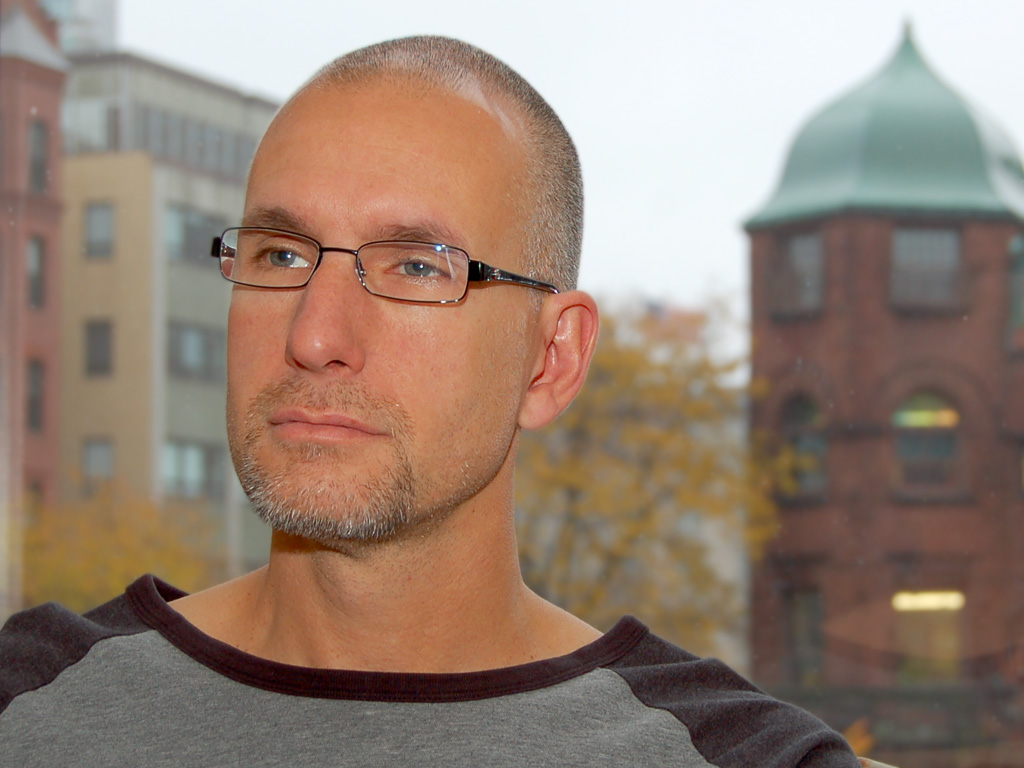
It’s been five months since my stroke, and four months since my last blogpo about it. But Friday was another big milestone, and well worth another update.

It’s been a long road getting here. My stroke required a four-day hospital stay, and since my discharge, I’ve:

The Amplatzer Talisman Patent Foramen Ovale Occluder!!!

The Amplatzer Talisman Patent Foramen Ovale Occluder!!!

  • Visited my PCP twice and consulted with him online once
  • Visited my cardiologist twice
  • Visited my neurologist once
  • Visited my hematologist once
  • Had two lab blood draws and work-ups
  • Wore a heart monitoring device for a month
  • Consulted with a nutritionist three times
  • Had my cardiologist perform an in-hospital procedure called a “TEE test” where a camera was sent down my esophagus to observe the condition of my heart
  • Had an in-hospital radiologist perform an ultrasound to examine my legs for evidence of blood clots

At least that’s the ones I remember, and that doesn’t include another dozen-odd phone calls and emails, plus lots of wrangling with my insurance company over coverage and claims. Fun times!

All that work was intended to determine why my stroke occurred. But it didn’t.

In cases where there’s no smoking gun, cardiologists look at a specific feature of the heart called the foramen ovale. That’s a small hole between the heart’s two atria that allows blood to bypass going to the lungs before a unborn child begins breathing on its own. After birth, that opening usually closes and fuses shut.

But for one in four adults, that opening doesn’t fully close, which allows a small amount of unoxygenated blood returning to the heart through the veins to bypass the lungs and go straight back into the blood stream to the rest of the body. For most people, this isn’t a problem, but if a blood clot sneaks through that side door and travels to the brain, it can cause a stroke. So it’s one of the things that cardiologists look for when an otherwise healthy person has an unexplainable stroke.

Needless to say, that TEE test I had confirmed that hole in my heart, called a “patent foramen ovale”, or PFO. Ideally, if one could seal that opening between two chambers of the heart, it would prevent any possibility of that defect causing another stroke.

Amazingly, not only is PFO closure something modern medicine can actually do, but it’s considered low-risk and pretty routine. A thin catheter is inserted into the major femoral vein in the groin and up that vein directly into the heart itself. A collapsable metal device – it kind of reminds me of a mesh kitchen strainer – is sent through the catheter and deployed inside that hole, sealing it shut. Visually, it’s like a disc the size of a dime on one side of the opening, and another the size of a quarter on the other side, connected by a very short rod in the middle. See the goddamned photo (it’s not my favorite thing to look at, I’m afraid).

In order to ensure this all goes well, a second catheter – this one bearing a microscopic camera – is threaded up the femoral vein on the other side of the groin. And in my case I think a second camera was sent in through my arm, as well. Throw in an IV for fluids and anesthesia, and that’s a whole lotta jabs!

As I say, this is now considered pretty low-risk and routine. Patients are usually walking and sent home a couple hours later, and I was apparently the third PFO closure that my cardiologist had scheduled that day.

But from the patient’s (my) point of view, having a chunk of metal surgically implanted permanently inside my heart isn’t something I’d consider “routine”!

So leading up to Friday’s procedure, I had a fair share of anxiety about heart surgery and metal implants. It sounded like a whole lot of expense and effort just to reduce my chances of a stroke, especially when there was no clear evidence that this is what caused mine. I’ve been blessed to have never relied on the medical industry very much, so my nerves were pretty highly activated in the lead-up to my surgery.

Fortunately, I had my partner Inna to lean on, plus a number of friends who took an interest and expressed empathy and compassion, including but certainly not limited to Carolyn, Helen, Sally, Robie, Rhonda, Ben, and some of my PMC riding buddies. I might be going through some medical trauma, but I didn’t feel like I was doing it all alone, and that made a huge difference.

Happily, the procedure seems to have gone well, at least from the perspective of a couple days post-op. So now my concerns and preoccupations are focused primarily on the somewhat-involved process of recuperation.

Short-term, I’ve got some annoying restrictions, mostly so I don’t rip open those incisions into major veins. That means no driving, no flying, no lifting, and virtually no exercise. Those restrictions will ease over the coming weeks, but this will curtail and require a major reset for both my cycling and my kyūdō practice. For more on how this operation will impact my cycling, see the companion post on my cycling blog.

So for now I’ll be getting back some free time, which will be put to use catching up on some low-priority projects that I’ve deferred for ages: things like revising several bits of old computer code I rely on, cleaning up my personal online archives, and the like.

From a cardiac perspective, the most important short-term concern is to rabidly guard against any possible infections that might lead to endocarditis. Not only does that mean frequent washing with antibacterial soap, but more aggressive precautions. I’m literally not allowed to see a dentist for at least 6 months, and will need to take antibiotics before every dental appointment – even just cleanings! – for the rest of my life!

And of course there’ll be more medical followups. At minimum there’ll be another cardiac ultrasound to verify the work, plus followup meetings with my cardiologist and PCP.

But things seem under control at the moment, and hopefully I’ll be making a full recovery, after giving things a month or two (or six) to properly heal. And now I look forward to getting back to posting some less dramatic and more typical content!

I’ve always been a little – sometimes a lot – older than the friends I hang around with. So I figure some folks might be wondering how it’s going following my recent stroke… What it’s like to live with the realization that a portion of my brain is, literally, dead.

The most pertinent fact is that my stroke is over. Actually, it was probably over by the time the EMTs showed up, but then there was the whole diagnosis and treatment protocol and investigation and followup plan. But now, six weeks later, that episode is as much a piece of history as my first driving test.

Physically, I’d like to say that I have no lingering aftereffects. Sensation returned to my left hand over the first 48 hours, and that numbness had been the only significant aftereffect.

The psychological impact was more lasting, manifesting in several flavors that’ll fill the balance of this blogpo.

Betrayal

Easily the most prominent emotion has been the feeling that I was betrayed by my body. For sixty years, I knew in my bones that my body could thrive and succeed no matter what outrageous demands I placed on it. Eating like a 14 year old? No problem. Bike 150 miles in a single day? Piece of cake! Going out drinking and nightclubbing until 4am and getting up at 6am to facilitate meetings with Fortune 500 clients? Easy-peasy! Work 80 to 120 hours per week for nine months straight on a death march project? BTDT.

But completely out of the blue one morning, the body I’ve relied upon all my life suddenly betrayed me, with no warning, while doing nothing more strenuous than walking down a staircase, something I do dozens of times every day.

I can’t tell you how much of a shock that was. I’ve been through the classic responses: anger, grief, bargaining. The only one I missed was denial, because it just wasn’t possible to ignore.

Mistrust

Trust, once broken, is difficult to restore.

Even after the hospital sent me home, I didn’t feel that I could just go back to a normal life. Even though that episode was over, I didn’t trust that I wasn’t still in imminent danger. I still felt that I had to stay vigilant, on guard against anything that might come up, even though I know that I’m not in full or direct control of my body’s health. Once bitten, twice shy.

Hyper-awareness

Because of that, I’ve been hyper-aware of every little niggle that arises… and in a 61 year old body, there are plenty of them.

I have developed some neuropathy in my feet, and any time a body part “falls asleep” sets off stroke alarms in my head. And that pain in my armpit: could that be a lymphoma? The stitch in my side kinda feels like a kidney stone, or maybe diverticulitis. The pain in the opposite side is probably pancreatic cancer, or maybe just liver failure. And my chest pains might be a symptom of atrial fibrillation, which is a huge risk factor for stroke.

I’m not normally prone to hypochondria, but nor am I used to waking up one morning and having a stroke. Even after consulting my physician, I can’t say for certain whether all these maladies are complete fiction, or real but minor discomforts, or something far worse.

Fear

What does the future hold? How much longer will I live? The truth is that I have almost no information and very limited influence.

That’s hard. It’s a cause for anxiety, uncertainty, and unease. In a word: fear. Raw existential dread. Not something I’ve ever had to face directly, so it’s one of those unpleasant “learning experiences”.

During the day, there’s enough stuff going on to distract me from all this, but the fears are more insistent at night. Keeping one’s imagination in check is a full-time job!

Living a normal life in this midst of all this is not easy! But then, what’s the alternative?

Fortunately, every morning I get up and notice that I don’t appear to be fatally ill. And after six weeks of evidence to the contrary, my worst fears have weakened to the point where life has started to feel normal again.

Coping

What helps? Good question.

Has my longstanding meditation practice helped? Somewhat. Meditation taught me how to distinguish between skillful thoughts and unskillful thoughts as they arise; that I don’t need to give full credence to everything a fearful mind envisions; and how to short-circuit the mental proliferation that can fuel unnecessary fear about the future. It also allows me to see that my moods and emotions are intensely charged interpretations of one possible future – not reality itself – and that they are essentially both transitory and empty of real substance.

That doesn’t mean that I’m able to dispel all my fears, especially in the dark, lonely silence of a late night, with nothing to think about other than my body, its ephemeral nature, and its treacherous sensations.

The thing that seems to help most is the simple passage of time. As I mentioned above, day after day, the worst case scenario doesn’t seem to happen. And that data has slowly piled up into an irrefutable conclusion that I seem to be mostly okay, at least in this moment.

Not that I feel like I can trust that just yet. But it does seem more and more plausible as each day goes by.

Conclusion

I am subject to aging. I am subject to sickness. I am subject to death.

These irrefutable truths are hard to face, and they’re a rude awakening that every one of us will have to come to terms with, at a time and in a manner we do not control. And this society does a shitty job preparing people for this immense challenge.

I’ve had a conceptual understanding of these truths since my sister died following a stroke fifty years ago. In my life, they’ve been reminders of the preciousness of life. Now they’re more omens about the precariousness of life. My life. My very finite life.

Some very predictable reflections and expressions of gratitude on turning sixty years of age.

First observation: I don’t feel that old. Quelle surprise, right?

I seem to be blessed with better health and fitness at this age than many of my peers, and I credit most of that to my active lifestyle, especially my cycling.

In my experience, happiness comes from surprisingly basic, mundane pleasures: wind and sunshine, being outside in nature, physical activities like cycling and kyūdō that keep me in my body, delicious food, the companionship of other people and pets, and the comfort and security of a stable home.

Despite having had my share of wealth, accomplishments, and experiences, I don’t think those are a reliable foundation for a satisfying life. They are pleasant ways to assuage the ego, but one’s ego is a completely untrustworthy guide. I’ve been most satisfied when I’ve been of service to others, whether I found that through nurturing aspiring writers, writing software to improve medical outcomes, raising money for cancer research, or helping others find the transformative insights that come with a productive meditation practice.

I’ve been very fortunate to enjoy a life that was mostly free of struggle, trauma, illness, and pain. So many things came easily to me. My life has been blessed, relatively easeful, successful, and enjoyable. I’ll retire with a heart absolutely overflowing with gratitude and treasured memories.

There’s very little I would change. I have surprisingly few regrets and little shame. I should have done a better job with dental hygiene and my dietary choices. But my only source of deep regret is my relationships. Relationships are hard, and I’ve caused more hurt through selfishness or unskillfulness than I would have liked. If you were on the receiving end of any of that, please accept my sincerest apologies.

For whatever role you have played in my life, thank you. I’m especially grateful to anyone who chose to keep me company for an extended duration of time. And my deepest thanks and recognition to Inna, my life companion for 25 years and counting.

Be well, all!

Gone Viral

Mar. 22nd, 2021 12:17 pm

I haven’t posted anything about the Covid-19 pandemic other than one brief update at its onset. Now that our lockdown has spanned a full year, I should probably document how it’s been.

Our active social life

Our active social life

Although it’s not as if I haven’t written about it… When the virus was two months old, I had an update ready to publish; but with the pandemic story continuing to evolve each week, we never reached a good point to stop and summarize.

Six months in, I revisited that draft and added a framing story, showing how our lives had evolved from pre-Covid, to onset, and then to longer-term steady-state. But that too never saw the light of day.

Now it’s been a year, and I still don’t feel I can do the subject justice. On one hand, what little I have to say seems like the mundane, everyday trivialities of spending a year as a shut-in.

On the other hand, it’s difficult to put the stress and unease into words that convey what it’s been like, knowing that outside our 1,200-square-foot apartment a quarter billion people have contracted this novel, insidious disease, leaving 3 million people dead in its still-reverberating wake.

So let me guide you through a year of life under the pandemic, chronologically, step by step. I apologize in advance for any repetitiveness.

For the full experience, you might choose to begin with my initial March 2020 blogpost entitled “Miles Away From Ordinary,” which describes our outlook at the time of the initial lockdown.

Two months later, in mid-May 2000, I wrote the following:

We’re now ten weeks into our Coronavirus quarantine. How has it gone?

Over two months, I’ve gone outside for one grocery run, three long walks, three short walks, and that’s about it. Outdoor cycling hasn’t happened at all, save for one brief excursion to observe the Ride of Silence. We haven’t picked up restaurant food or had any delivered. I’ve had to defer my plan to recreate my family’s spaghetti sauce due to ingredient shortages and lack of freezer space, but have happily added burritos to my cooking repertoire.

After taking a 10 percent hit to my net worth, I’m about 50% recovered financially. I’m surprised that the stock market bounced back so readily and hasn’t re-tested its March lows. Aside from stocks, I’ve happily got a couple CDs earning a healthy 2.2% and 2.8% that don’t mature for another year; a rare victory over interest rates which have dropped to zero.

Given the widespread economic damage done during the lockdown, I fully expect more pain to come, and a drawn-out recovery, with some sectors (e.g. retail, restaurants, live sports & entertainment, travel & tourism) having to make radical changes before consumers will return.

There’s growing calls to end the lockdown and allow businesses to open, which doesn’t make any sense to me. Two thousand Americans are dying every day due to Covid-19. The virus has killed more Americans in the past two months than all U.S. casualties in the entire Vietnam War. And the death toll is projected to increase to 3,000 Americans per day by June.

Everyone is relieved that we have managed to “flatten the curve”, ensuring that peak simultaneous cases don’t overwhelm our medical capacity and giving researchers time to work on a vaccine. But no one seems to have picked up that flattening the curve also means extending its duration, lengthening the period of time it might take for the overall population to become exposed to the virus and develop herd immunity.

The basic scenario hasn’t changed one bit in the past two months. There are more than a million carriers walking around our country — with thirty thousand more infected every day — and those are only the ones with obvious symptoms! We still have no treatment and are months-to-years away from a preventative vaccine, and we’re only testing a microscopic subset of the population. We have no idea whether individuals who survive gain future immunity to Covid-19, but there's anecdotal evidence that people can indeed become re-infected.

Yet people seem to think the danger has passed and we should relax the restrictions that have successfully limited the virus’ spread so far. I don’t care if you’re dipping into your savings or feeling “quarantine fatigue”; why did we order people to stay at home in the first place if we’re just going to turn around and rescind that order at the precise moment when the infection rate and death count are both at their peak?

To those protesting against our nation’s efforts to reduce the impact of the pandemic, I say: Every generation of Americans has had to make sacrifices to defend this country; but today’s prima donna “patriots” are so soft and self-absorbed that they can't even handle being asked to go home and sit tight for a few weeks. To those clamoring for bars and restaurants to re-open I say: you people are shortsighted, selfish, and pathetic.

Irrespective of what our government advises, I plan on being extremely conservative in resuming normal life. I’m not itching to hit the local restaurants, visit friends and relatives, see any shows, or travel. While I miss biking outdoors, I don’t want to ride anywhere near other people, especially anyone who hasn’t taken the danger seriously.

My goal, more than anything, is to avoid this virus as long as I can, in hopes that eventually progress will be made toward detection, treatment, and prevention. But that hasn’t happened yet, and I’m not willing to wager my life that the danger has passed, especially when evidence clearly shows quite the opposite.

As you can see, I was pretty skeptical about our American exceptionalism right from the start. Back in the early days when grocery stores couldn’t stock toilet paper, ginger, baking flour, or yeast, and when meat purchases were rationed.

That was in mid-May. Time passed, but the six-month anniversary of the outbreak prompted me to revisit the topic. So I wrote the following fragment in late August and early September:

In May I wrote — but never shared — a little blogpo about how things were going two months into the Covid-19 lockdown. Now here we are six months into a pandemic, and the situation has evolved slowly. Perhaps now it’s time to actually share my thoughts, before the whole episode blows over and is forgotten.

The initial phase went pretty well for the most part. Being fully locked down actually wasn’t a huge change from our normal winter lifestyle. Inna stopped her already-rare visits to her downtown office, restaurant food was declared off-limits, and our grocery trips became less frequent, meticulously planned, and considerably more expensive. I added burritos to my cooking repertoire.

Our social lives have been limited to a tiny number of masked porch visits with friends. The two local meditation groups I sometimes lead both went online, and my former Kalyana Mitta (spiritual friends) group from Boston — who are now spread all across the United States — reconstituted itself on Zoom.

Through the end of May, cycling was 98% indoors, but I got outside more over the summer, though only for short rides. With all my cycling events cancelled, I’ve mimicked most of them indoors, on Zwift. You can read all the details about how that’s gone on my cycling blog. And I even registered as a virtual rider on this year’s Pan-Mass Challenge!

Financially, we’ve been fine. Inna’s job remains secure. Savings and investments took an initial 10% hit, but have more than fully recovered. With interest rates pegged at zero, I’m very happy to have a chunk of cash earning 2-3% in CDs; but I’ll need to figure out what to do next spring when they mature.

By then my lack of faith in Americans was fully proven out, leaving no need to make further dire predictions. I was mostly occupied with Inna and my domestic situation, which had reached a sustained level of quote-normalcy-closequote.

Which brings us to March 2021, the anniversary of our Covid-19 lockdown. What is there to say now?

Winter was hard. No social contact with anyone. No outdoor cycling at all, not even occasional walks. Just a solid five months of staring at these same unchanging apartment walls.

As if the pandemic itself weren’t enough to deal with, 2020 also brought us the murder of George Floyd and subsequent Black Lives Matter protests and rioting, severe Australian bushfires, Prince Harry renounced membership in the British royal family, there was the sudden appearance of murder hornets, the horrific Beirut explosion, an economic war with China, Brexit finally happened, a major Russian cyberattack, oil prices crashed and actually went negative, the stock market pulled back, fanatical right-wing lockdown protestors stormed the Michigan state capitol, and the historic Aricebo radio telescope collapsed. Oh, and notable deaths included Kobe Bryant, Little Richard, Alex Trebek, Ruth Bader Ginsberg, and John Lewis.

American “exceptionalism” was on full display. Over the winter holidays, infections soared and the body counts rose to 3,000… then 4,000… then 5,000 per day (and 880,000 per day globally). And still people disregarded pleas to wear face masks in public and called for businesses and schools to re-open.

The sitting President of the United States was impeached for asking the Ukraine to investigate his opponent, then got Covid himself, and had protestors at a church teargassed so he could pose for a photo op, blasphemously holding a Bible.

America’s Presidential election was pathetic and terrifying. We had the most divisive, violent election in 50 years, followed by open insurrection and the occupation of the US Capitol by domestic terrorists incited by an openly lying lame duck President in direct violation of his Constitutional oath. But despite all this, he was vociferously defended by his morally bankrupt political party. My country: the shitshow.

Following the overdue removal of our virus- and election-results denying “leader,” we are finally producing one conventional and two novel messenger RNA vaccines which are presumably extremely effective. We’re still in the early days of distribution, but people are getting inoculated, which is the thread of hope that we’ve all been clinging to since this ordeal began.

So after a long, hard, dreary, stressful winter, the impending return of spring comes with some long-awaited, tender shoots of hope.

Inna will be fully vaccinated this month. Unfortunately I'll have a much longer wait, because I don’t meet any special age, co-morbidity, or career role qualifications.

And the weather should start permitting properly-masked and -distanced social contact, as well as solo outdoor cycling... although don’t ask about my bike and the continuing complete unavailability of both new and replacement parts!

So there’s a little bit of hope that this spring we might be turning the corner. It’s still overshadowed by the knowledge that even fully vaccinated it’ll be another year before life gets back to anything “normal”.

It’s still hard to write about. For an entire year, our lives have been reduced to the most mundane, uneventful commonalities, which makes for a pretty boring read.

And it’s still just as hard to articulate the lingering, perpetual stress, discomfort, and unease of living with this pandemic. Getting a haircut or an eye exam and new glasses still seem like remote, almost inconceivable luxuries. And bike parts… well, as I said, don’t get me started about that.

And still, we endure. Be well!

After eight years of reliable service, it was time to replace my primary laptop, a 2012 MacBook Pro. It had been my first non-work Mac, and I gave it a lengthy review after buying it.

Back then, I luckily bought the last model before Apple made numerous user-hostile changes to their laptops, such as their unreliable butterfly keyboard, sub-par graphics, eliminating all user-serviceable or upgradeable components, and many other revisions I’ll mention below.

2020 MacBook Pro

So having avoided those pain points, I wasn’t predisposed against ordering another MBP when the old one wilted. And rather than go back to a Windows machine, I opted to replace like with like.

Let me start my review with the machine’s good points. They’re quickly enumerated:

  • A 16" screen in the same form factor as my old machine’s 15” display (smaller bezels). And my first Retina display.
  • After more than five years, but Apple begrudgingly reverted from that fragile butterfly keyboard back to their older scissor-switch keyboard.
  • Touch ID: a dedicated fingerprint reader as an option for user authentication.
  • Graphics performance has improved, which is good for Zwifting.

And that’s it. That’s all the improvements Apple made to their flagship laptop over the past eight years.

Now on to all the bad points. That'll take a lot more time to cover...

  • The machine has no external ports but the uncommon USB-C. No ethernet port, no standard USB-A, Mini USB, or Micro USB ports, no SD card or MicroSD card readers, no MiniDisplay port, no HDMI port. If you want to connect anything, you have to buy a separate adapter for each peripheral, all of which are obscenely overpriced.
  • I had a ton of problems setting up my external monitors. The first problem was that I got the wrong dongle, because although Thunderbolt and Mini DisplayPort are incompatible, they both use the exact same connector! Oh and Apple doesn’t sell a Mini DisplayPort dongle anyways. Once I purchased the right dongle from a third party, my other monitor still wouldn’t work until I replaced its previously-functional Mini DisplayPort cable with an HDMI cable.
  • On top of that, the MBP has a documented overheating problem when driving external monitors. That’s awesome!
  • No DVD reader or writer. Another separate expense… plus another dongle.
  • The power cord now comes in three pieces sold individually, and the machine only ships with two of them. The cord extension is another separate expense. With all three pieces, a spare power cord will now run you an extortionate $133. Plus it no longer uses the excellent MagSafe connector, so there’s no longer any light to visually indicate that the machine is connected to power and whether it’s fully charged or not.
  • Matte screens are no longer available. Glare, reflections, and fingerprints come standard, thanks to Apple’s “design” team.
  • Apple has removed the entire row of dedicated function keys and replaced them with a flat LCD with virtualized buttons. No, you can’t have them back. And although Apple says you can force virtual Fkeys to appear on an app-by-app basis, of course that doesn’t work with Zwift or VirtualBox: the two apps where I use Fkeys the most.
  • The laptop camera is still limited to a myopic 720p, no improvement over pre-2010 webcams.
  • Thanks to the timing rather than any fault of Apple, I’ll be missing out on several upcoming enhancements to the MBP, including the migration to Apple silicon, MiniLED displays, Wifi 6, 5G, Face ID, and touchscreens. On the other hand, that’s a lot of new features that Apple will probably completely fuck up. My previous laptop was also the model before major changes, and in the end that was a fortuitous thing.
  • Migration Assistant, which supposedly easily moves your old stuff onto your new machine simply doesn’t work. Twice I connected the two machines via wifi, and both times the process hung within the first few minutes. Then I tried running it from a USB hard drive containing my last Time Machine backup, and that hung. In fact, it hung so badly that the machine wouldn’t even boot afterward! I had to boot in emergency recovery mode, reformat the SSD drive, and waste several hours reinstalling the entire operating system from scratch! I eventually succeeded in transferring a few basic settings from the TM backup, but still had to move the overwhelming majority of my old data manually.
  • Similar story with moving my Time Machine backups from my old backup drive to the new one. Theoretically, you should just be able to copy the files over and resume backups. However, the MacOS file manager (the cutesy-named “Finder”) cannot handle large numbers of files, and aborted 8 hours into a copy operation. So I fell back to the commandline utility “rsync”, which similarly failed, this time after running for 14 hours. Like the Migration Assistant, these are dedicated programs that cannot do the one thing they exist to perform.

So much for the vaunted tagline “It’s Apple; it just works”. I could just have a apoplectic fit and die from the irony of that statement.

On the plus side, I’ve finally settled in and the machine is mostly working. But due to Apple’s unnecessarily lengthy order fulfillment, user-hostile hardware, and bug-ridden software it took me three weeks to get up and running on my new machine. That’s simply not acceptable.

I’m skeptical whether I’ll ever buy another Apple product. Their machines, which were once the best on the market, are handicapped by bug-ridden software and shortsighted, petty tactics to drive short-term sales at the cost of flexibility, maintainability, ease of use, overall cost, and (ultimately) user satisfaction.

As a young upstart back in 1984, Apple took on the faceless behemoth of IBM and eventually defeated them. But Apple became the exact thing they once denigrated so vociferously: a hard-to-use, bug-ridden, closed computing environment managed by a greedy, shortsighted, soulless company that exists solely to redistribute wealth from their unfortunate users to their shareholders.

Fuck Apple!

Now, with all that off my chest, there’s been a bunch of other technological developments over recent months that I’d like to mention. And all of them were more pleasant experiences than dealing with Apple!

Perhaps the most important one is getting a free license of Windows 10 running inside a VirtualBox VM on the new laptop. It seems like an excellent opportunity to begin migrating applications from MacOS back to Windows.

Along with the MacBook (plus four dongles, an additional power brick, a port expander, and two new cables), I also bought a new 10TB backup drive. TEN TERABYTES! In a device the size of a trade paperback (if you remember what those were)! Back in the day, I had to knock down office walls to create a machine room large enough to house eight refrigerator-sized IBM 3380Ds, just to get 20GB of storage: 1/500th the capacity of this little box I’m holding in one hand!

In addition to a couple free Alexa Dot voice assistants, I’ve added several voice-activated smart outlets around the house. The biggest win has been the ability to turn on (or off, I suppose) my big exercise fan without getting off the indoor bike. However, I ought to upgrade those soon, as they’re the only thing limiting our home wifi to 2.4GHz rather than 5GHz.

And although I’ve been tracking my weight, body composition, hydration, blood pressure, and resting heart rate for a decade, I’ve recently upgraded my health data collection. A new wifi-connected scale also collects BMI, bone and muscle mass, and should update my weight in Zwift automatically. And I’ve also purchased a thermometer and pulse oximeter to store temp and O2 saturation (a useful thing for an asthmatic).

So it’s been an interesting year on the tech front. I’m hesitant to jinx it, but hopefully the new laptop will last as long as my well-used old MacBook, which served me very well for eight long years.

So we have a global health crisis on our hands. The COVID-19 virus has eluded even our harshest attempts at containment, and there’s no prospect of either a preventative or treatment, other than for associated diagnoses such as pneumonia.

With an unknown number of infectious but asymptomatic carriers wandering around, Inna and I have taken the only measure anyone can do, which is complete social self-isolation.

No more Monday or Wednesday meditation groups, and I prematurely ended my brief stint as a CMU brain research subject. Inna has cancelled a business trip, two seminars in Austin, and plans to take the salt cave women’s group she leads online.

We don’t plan on leaving our apartment except for safely isolated outdoor activities like hikes, or emergency grocery runs. We’re pretty well stocked with supplies, having each made major trips before our lockdown.

Thankfully, cycling will still be a good option for me, although I’ll curtail rides of more than two hours, rather than replenish at the usual convenience store.

It’s very reminiscent of the widespread lockdowns following the 2001 World Trade Center attacks, and the shelter-in-place order that followed the Boston Marathon bombing in 2013. It’s the same scope of disruption, and the same sense of separation from general society.

In the meantime, the stock market—which had been on a tear so far this year—has experienced unprecedented volatility. Like a good long-term investor, I’ve sat tight and gritted my teeth, and even made one opportunistic buy, but it’s nerve-wracking watching your money vaporize. Where I had been crowing about my growing wealth in February, in little more than two weeks I’ve experienced massive losses that bewilder the imagination.

Between the stock market’s gyrations, the fear of illness, the social isolation, the wholesale cancellation of all group activity, and the drama surrounding the Presidential primary elections, there’s been a surfeit of emotion to process, even for someone as stolid as myself.

No one likes uncertainty, and no one likes anxiety, but the situation is unlikely to change for several weeks, if not months. Rather than venting that discomfort in random ways (like a completely pointless run on bottled water), it’s important that each person discover how to accept their anxiety and be okay with it.

For me, my meditation practice provides a reassuring guide: acknowledge my feelings and my fears about the future, then take refuge in what’s happening at the present moment, because none of those fears have manifested in my present-day, lived experience. Life really isn’t that bad, so long as you have the mental discipline to stop the mind from fabricating and getting lost in wild doomsday scenarios.

And I’m blessed to be sharing my space with a partner who also manages her internal state with great insight and wisdom. Viewed from a less fretful perspective, this is an opportunity to deepen our relationship while also getting some goddamned housecleaning done!

Be well, my friends.

Enough stuff has happened in the past two months that it’s time for another aggregated life update.

Health issues remain inconclusive. After surgery in December, I had another attack of abdominal pain around New Years, which prompted another visit to the GP and a followup CT scan. That detected nothing, so I’m back to eating a regular diet and taking a wait-and-see attitude. Meanwhile, I’ve taken the lull in proceedings to catch up on dental and eye stuff, get a new pair of glasses, and a haircut.

Watched the Super Bowl, since the Patriots were in it, and it proved to be a remarkably exciting finish. Whatever. I would rather the Revs have won.

Last month I observed the one-year anniversary of my kyūdō First Shot training. I also started learning hitote, which is a more involved form involving two shots and repeated kneeling down and getting up. It’s nice to have something new to think about and work on.

In January I made a long-overdue four-day visit to Pittsburgh, which was extended by two days due to Boston’s first huge blizzard disabling air travel. Pittsburgh wasn’t very eventful, but it was a nice visit.

Since then, Boston has been pounded by huge snowstorms one after another, causing daily gridlock, forcing the transit system to shut down for days at a time, and setting numerous all-time records for snowfall, wind, and cold temperatures. A sampler:

  • For the entire winter up to January 23rd, Boston only had 5.5 inches of snow. In the next three weeks, it would receive an additional 90.2 inches (over 7.5 feet)!
  • February broke the record for Boston’s snowiest month ever, and did it by the 15th of the month!
  • By the end of the month, Boston had received five and a half feet of snow, beating the old record by 50 percent.
  • Boston set the 4th snowiest 30-day period anywhere in American National Weather Service records.
  • It snowed on 20 out of 28 days in February.
  • Boston set its all-time record for greatest snow depth.
  • This has been Boston’s 2nd snowiest winter on record. We’re less than two inches away from setting a new record (9 feet of snowfall), and we typically get about 8 inches of snow in March.
  • An avalanche off the roof of a skating rink hit four people, burying one. Two of them had to be hospitalized.
  • Boston cyclists built a 40-foot-long “underground” snow tunnel for commuting.
  • In many cases, cars were so deeply buried that owners had to put cardboard signs on them warn snow removers not to plow there.
  • An MBTA ferry and a Coast Guard icebreaker both got stuck in the sea ice in Massachusetts Bay.
  • Blocks of sea ice more than 7 feet thick came ashore on Cape Cod.
  • During one of our blizzards, Mt. Washington recorded the highest wind gust it has experienced in seven years.
  • February was 12.7 degrees below normal temperature.
  • It was the 2nd coldest February on record
  • For the whole month of February, we only had one day where we reached the day’s average high temperature.
  • At 15 days, we fell one day short of setting the record for consecutive days below freezing.
  • At 43 days, this was the longest consecutive time that Boston has ever stayed below 40 degrees, beating the old record by 8 days.

I could go on at length, but it’s an experience that honestly is best forgotten. I will say that it has unambiguously strengthened my commitment to moving to a warmer climate.

Out of utter frustration with the weather, I set up and started using the indoor cycling trainer, which I didn’t use at all last winter. As a result, I’ve already earned $66 as a paid cyclist, thanks to my company’s health benefit…

And I’ve now been working at Buildium for 100 days. The money is happy, the atmosphere is friendly, and we’ve added yet another old Sapient (and Business Innovation) coworker. I’ve been doing a lot of Javascript, Knockout, and Angular work, which is enjoyable (mostly).

Thanks to the snow, I worked from home several days, and enjoyed an empty office when I made the trek in. I’ve made three satisfying lunch expeditions for Thai from Lanta (formerly Rock Sugar). Our company recently announced our first acquisition, and it looks like the two businesses complement each other well. And I hope to hear news about improvements to our office space.

While there, I’ve enjoyed rebuilding my foosball skills, and have been alpha testing a new version of my foosball ranking site. I’ve optimized the UI for mobile devices, made it more interactive by porting it to the Angular Javascript framework, and made it behave more like a single-page application by burying all the data requests in behind-the-scenes JSON AJAX requests. After talking it up to my coworkers, I’m excited to open it up to general use! I’ve even played with the Web Speech API and hope to incorporate speech recognition into it soon.

Otherwise I think things are quiet. Like that thrice-damned groundhog, I’ve been holed-up, waiting for the mountains of snow to recede before venturing back out into the world.

Although it’s a completely arbitrary marker, this is the time of year when people look back and take stock, with the aspiration that things might be different from this point forward.

I am entertaining that same hope this year, because the past 18 months have been pretty brutal. There have been a number of really great things, but also a hell of a lot of adversity to overcome.

I’ve already described much of it in the pages of this journal, so I don’t need to get into the details. Instead, I just wanted to list them out in bullet points… To preserve the big picture, and to share this impression of all the challenges, failures, and victories I’ve faced.

With that as introduction, here’s a list of the major stressors and changes that have come about for me in the past 18 months. They’re color coded: green is good, red is bad, and yellow is something in-between.

  • Had a bike crash trying to avoid a car that ignored a stop sign. Ensuing physical recuperation, plus medical expenses and bike repair costs.
  • Surpassed $100,000 in lifetime fundraising for the PMC, earning a lifetime achievement award.
  • My job ended quietly after my employer being bought out. Although I did get to have another year-long sabbatical.
  • Grew my hair out to normal length after 10 years clean-shaven.
  • Turned 50 years old.
  • Spent that birthday on a tiny Caribbean island I’d long dreamed of visiting. Some stress from the tiny eight-person commuter flight from San Juan, and a bit of loneliness that I had no one to share it with.
  • Had a big misunderstanding with a friend that caused a lasting rift between me and my Kalyana Mitta spiritual friends group.
  • Very emotionally intense 10-day meditation retreat at IMS, including having someone barge into my room while I was sleeping the night after they announced that a thief had broken into people’s rooms.
  • Started a promising friendship and potential relationship only to have it explode in flames in my face.
  • Lost my mentor, benefactor, and hero Bobby Mac to cancer.
  • Stopped a ten-year hobby of tracking my spending at Where’s George.
  • Committed to trying to make a relationship work with my best friend Inna.
  • Survived a frigid 51st New England winter. Working on number 52 now.
  • Committed to moving south, out of New England, where I’ve lived my entire life.
  • Started an expensive new hobby in kyūdō, traditional Japanese archery martial art.
  • Celebrated ten years of meditation practice.
  • Put a lot of energy into a big project to reach out to others socially, with limited results.
  • Another bike crash resulting in a mild concussion, plus another round of medical expenses and bike repair costs.
  • The ER nurse botched an IV insertion so badly that a hematoma covered my entire arm, and I was unable to move it or ride for six weeks thereafter.
  • Participated in my final Pan-Mass Challenge ride.
  • Left my Kalyana Mitta spiritual friends support group with significantly mixed feelings.
  • Pretty much ended all involvement at my meditation center, including the longstanding Experienced Practitioners group, the annual Sandwich Retreat, and my volunteering to MC the regular Wednesday night dhamma talks.
  • Put my meditation practice on long-term hold.
  • Took my beloved cat for vaccinations which he had a severe reaction to. Just as he seemed to be recovering, the hospital called and I was forced to tell them to let him die.
  • I developed abdominal pain which took a long time and considerable expense to diagnose and treat, resulting in gall bladder removal: the first surgery of my life.
  • Began renovating my condo with a goal of putting it on the market, finally undertaking several repairs I’d put off for years.
  • While doing renovation, discovered that the living room drywall needed to be replaced, and there was a gaping 12-inch diameter hole from the bedroom to the outside that should have been bricked up and insulated.
  • Major financial issues as a result of unemployment, mortgage, medical bills, and home renovations.
  • Raided my 401k in order to fund renovations and medical bills.
  • The usual self-questioning during my job hunt.
  • Started a new job at Buildium, which will require me to learn quickly and prove myself again without any direct mentoring.
  • Discovered that gall bladder removal didn’t address my abdominal symptoms, so will begin 2015 back on the restrictive diet and undergoing further diagnostic work, while hoping it’s not something serious.

So as you can see, I’ve had a lot to deal with, including quite a bit of negative stuff, which is happily atypical for me. It’s definitely taxed my energy, morale, and coping resources.

While my health problem is front and center, and there are more big challenges to come in the next couple years, I’m hoping that things will start going a little more smoothly. Although I don’t believe that changing the calendar has any meaningful impact, it would be nice if things started getting back on track again.

After all, I’m not used to life being quite this difficult and exhausting.

I can’t say that I’m a big fan of losing a body part that has been with me since birth.

The first time I consciously noted the discomfort in my abdomen was in August, after I finished the Pan-Mass Challenge. I didn’t really pay much attention to it. It came and went, but eventually it became clear that it wasn’t just going to go away. By the end of September, it became prominent enough that I scheduled a visit to the doctor.

After describing my symptoms, the differential diagnosis was gall bladder, which was later confirmed by ultrasound. It made sense that my discomfort presented after the PMC; the gall bladder is involved in the digestion of fat, and PMC weekend typically marks the celebratory end of my training diet, when I finally allow myself to binge on high-fat foods like ice cream and cheese, after avoiding them throughout the spring and summer.

While I waited for a surgery date, the only way to manage my discomfort was to go right back onto a diet that was even lower in fat than my training diet. It was tolerable at first, but very limiting, and as the weeks dragged on, it got pretty damned boring.

Things proceeded pretty slowly. I talked to my GP in September, then a wait for an ultrasound, then a wait for a consult with a surgeon. He told me the surgery would probably happen in three weeks, at the beginning of November. Seven weeks later, November had passed with no surgery appointment and no word from the hospital.

I started a new job on Monday December 1st. That day, I came home and gathered up my paper mail from my mailbox, which included a notice informing me that my surgery was Thursday morning! You would think they would have called to make sure I was in town that day, or at least make some attempt to find a date that worked for me. Nope… Here’s your date, take it or suffer!

You’d think they would give more than 48 hours’ notice, right? Nope… So what if it’s your first week on a new job; if you want relief, you’ll clear your schedule on short notice. Ironically, their instructions included things to be done a week before surgery; I should have consulted a fortune teller, so that I’d have known to do those things five days before I was notified of my appointment!

The big challenge for me was finding someone who would take me home from the hospital. I’d already gathered four friends I hoped I could rely on, but one was out of town, two were unable, and another wasn’t responsive. I was pretty haired out until my friend Roopa agreed to help. Without her kindness, I would have had to cancel the surgery.

The actual surgery went pretty smoothly. While I expected hours of sitting around waiting, someone was usually talking to me, whether it was a prep nurse, an OR nurse, the anesthesiologist, his intern, the surgeon, or his intern. On seeing I was a cyclist (the unique tan markings are present year-round), the prep nurse gave me a memorable pitch for doing the American Diabetes Association’s North Shore Tour de Cure, which she oversees.

Once the appointed time came around, they wheeled me into the OR. By then I was already mildly sedated, but I remember the unique pattern of the lights. When the anesthesiologist put the mask over my face, I decided to count aloud for them, so that they’d know when I was out. I was told to just breathe deeply, and that pretty much was the end of that!

I have very little recollection of the recovery room, save for someone ringing Roopa to come pick me up. They wheeled me out and down to the car, where I lifted my arms in mock victory. Roopa got me home, where my halting gait caused one of the condo staff to ask if I’d been in another bike accident, but I replied, “No, just out of surgery…”

We made it upstairs and I flopped onto my bed. While Roopa very kindly ran down to the corner CVS for meds, I stripped off my jeans and shirt, hopped into PJs, and pretty much passed out. When she returned, we chatted for quite some time before she exercised her option to go home. I slept on and off a bit more.

The first 24 hours were challenging. Hydration and pectin drops were key because my throat had been irritated by intubation.

Being something of a Luddite about pain medication, I skipped the Percocet they prescribed, and didn’t even take any over-the-counter stuff. I’m a cyclist; I’m used to far more intense discomfort!

The worst pain was the dissipation of the CO2 gas they use to distend the abdomen; it irritates the diaphragm, but the signals sneak up that nerve and manifest as really sharp cramping pain inside the shoulder joints. That took a few days to dissipate.

After spending most of the day sedated or asleep, I opted to stay up late, then slept only briefly before waking up again at 4am. But that worked out okay, because I really wasn’t tired and had enough things to keep me entertained.

The surgery had been on Thursday, which worked well. Friday I spent most of the day sitting up at my desk, and was even able to remotely attend a couple work meetings. Each day I got a little bit stronger, tentatively introduced a little bit more food into my healing digestive system, and the pain slowly diminished. On Sunday I showered, shaved, and took the temporary dressings off my four incisions, leaving just some steri-strips. That made me feel a lot more human.

After three solid days of recovery, I headed back to work on Monday. I took the train in to the office and worked a regular day. Tuesday the trains were backed up, which forced me to walk the mile to work. None of this was fun—it challenged my stamina—but it did help me get back to normal functioning.

In the meantime, I experimented adding high-fat foods to my diet. Cookies. Cashews. Donuts. Pizza. A burrito. Fajitas. Lindt chocolates. And Häagen Dazs ice cream! My system took everything in stride, without any of the discomforting “downstream effects” that can accompany gall bladder removal.

Now, twelve days after the surgery, I’ve been cleared to do anything I want, including returning to kyudo and cycling. My sutures still require a little more time to heal, but life has pretty much returned to normal. I seem to be able to eat whatever I want, and I can finally make life plans without worrying about an operation with an unknown date and outcome.

About the only question I have left is how this might alter my on-bike nutrition needs during really long endurance rides. But I’m pretty confident, and eager to find out. But I’ll wait a while longer, letting things heal until springtime makes long rides possible again.

But overall I’m happy to say that I couldn’t have imagined a more successful outcome.

I find myself in the mood to record a brief rundown of the major events of 2011.

In terms of my Buddhist practice, a few nice things happened. I completed a year of dedicated compassion practice, I became a paying member of CIMC for the first time, I began volunteering to read announcements at Wednesday evening dhamma talks, I continued attending CIMC’s Long-Term Yogis practice group, did another sandwich retreat, and attended our kalyana mitta group’s first weekend retreat. My daily practice thrived, partially due to finding time to sit during my lunch hour at work, and partially thanks to the mild competition fostered by the Insight Timer Android app, which allows one to earn badges and see how often one’s Facebook friends are sitting. Overall, I am comfortable with my meditation practice and happy with the results.

As alluded to, I also went back to work after a 2-year hiatus. Like any job, the new gig has its ebb and flow of both rewards and annoyances, but the influx of cash is certainly welcome. And despite having to overcome frequent outbreaks of stupid amongst my coworkers, I am getting to do the frontend design and development work that I enjoy. Unfortunately, it’s the longest commute I’ve had in a long time, but during the summer that gives me the opportunity to get some weekday bike rides in.

On the cycling front, the miles I gained by commuting didn’t quite offset the fact that working for a living meant I couldn’t spend summer days riding, so this year my mileage dropped from 5,000 to 3,000. But the income gave me the opportunity to do a long-needed complete overhaul of my bike and buy a new mapping GPS cyclo-computer. And I still did all my major events, racking up seven centuries, only one less than I rode in 2010. Notable rides included a rainy Jay Peak in Vermont with my buddy Jay, and a rainy three-state century with Paul and Noah. And I even had a training question published in the online magazine RoadBikeRider.

This year’s Pan-Mass Challenge was very memorable, as well. I began the season by attending my first PMC Heavy Hitter banquet and also the dedication of the PMC Plaza that comprises the entrance to Dana-Farber’s brand-new Yawkey Center for Cancer Care. I shared the ride itself with Jay, who enjoyed his first PMC. And despite riding on a loaner wheel because I discovered cracks in mine at the last minute, I still did my fastest Saturday ride ever. After the ride, I was delighted to find that a photo of me leading a paceline occupied the PMC Home Page for more than three months, and then was used again in a thank-you advertisement that Dana-Farber placed in 105 local newspapers throughout Massachusetts. Being the PMC’s poster boy and attending the dedication of the PMC Plaza both made me immensely proud of the years of work I’ve dedicated to the PMC and the Dana-Farber Cancer Institute.

Despite all that, I have to say that I was frustrated by this year’s cycling season. This was the first time that I had clearly lost ground against my riding buddies, who admittedly are 20 years younger than I am. I don’t know whether that fall-off was because my competitive spirit has lessened, because work prevented me from training more, because of the natural fall-off due to aging, or whether there might be something more serious going on. All I know is that some of my rides (especially the Climb to the Clouds and the Flattest Century) were really painful, unpleasant slogs this year.

In the same vein, this was the first year where I felt that my health had declined. I found myself fighting frequent intense headaches that often included nausea and vomiting, especially when I traveled (which turned the Flattest Century and Jay’s Labor Day ride around Mt. Wachusett into terrible experiences). I also noticed that I sometimes experience cardiac issues when riding flat-out, where I feel a sharp, intense pain in my chest and my heart rate drops by about 15 bpm for 30 to 60 seconds. These have, of course, been added to the list of things that I need to bring to my PCP, but they’re also the first indications that my body is starting to decline. Which brings me right back around to my spiritual practice!

In other noteworthy events, I observed my tenth anniversary of buying my condo, and remain extremely pleased with that. I got to see the Cars perform live, which was truly a once-in-a-lifetime event. I got around to making ice cream flavored with Pixy Stix candy with SweeTarts bits mixed in, which was fun but not quite the confectionery orgasm that I was hoping for. And I decided to punt on my planned trip to California for the second year in a row; the good news being that I am more committed than ever to making it happen in 2012.

Speaking of which, I’m not making too many plans for 2012, but there are already some themes emerging. I’m going to spend a week on the Riviera Maya (outside Cancun) with Inna. I’m finally doing my first residential meditation retreat at IMS (5 days). I’m once again going to try to make California happen in September. Of course I’ll be doing my 12th Pan-Mass Challenge and probably Outriders, but I also hope to do some new cycling events, such as the Mt. Washington Century, the Eastern Trail Maine Lighthouse Ride, and/or the Buzzards Bay Watershed Ride.

So if things work out, 2012 will be an interesting year, too. With just nine hours until it begins, here’s hoping!

It’s been a standing joke for as long as I can remember: what is Ornoth’s body fat percentage? Well, after my recent purchase of a scale that includes body composition, we now have a definitive answer.

Sort of.

Before this posting, I solicited guesses from our studio audience. There were four non-outlier responses: 5, 11, 12.4 and 17.5, which yields an average of 11.5 percent. And now I’m ready to reveal the answer. Or answers, actually…

The problem is that the scale has two modes—athlete mode and tuber mode—and if I measure myself in both modes, the readings I get vary by nearly eight percent, which is a huge difference. So how do I know which mode better reflects reality?

Fortunately, the manufacturer provides a helpful definition. An athlete is “a person involved in intense physical acivity of approximately 10 hours per week and who has a resting heart rate of approximately 60 beats per minute or less.”

But that doesn’t really help. In the summer, my cycling usually qualifies me for athlete status, even though my actual measured moving time doesn’t always break the 10 hour minimum. But in the winter, I’m about as sedentary as anyone.

So what to do? Do I switch between modes as the seasons change? Do I consider myself a 70 percent athlete and do some specious math to come up with a guesstimate? There’s no easy answers.

But you want to hear my numbers, not a bunch of disclaimers. So here they are. If you use athlete mode, my body fat percentage averages 6.6 percent, but it jumps to 14.1 percent if you use Average Joe mode.

Based on that, it’s probably safe to say that I have a body fat percentage in or close to single digits. But if I want to get a more reliable measurement, I have to wander down to the Weymouth Club and pay $60 to use their Bod Pod.

On the positive side, if you pick one mode on my scale and stick to it, the measurements are quite consistent, so you can track relative changes. You just can’t get a single, absolute, irrefutable number.

But that’s okay; it would only just depress you, anyways… ;^)

There’s an idea that pervades society that men act like wimps when they get sick. Naturally, this has been advanced and perpetuated by the female lobby, but I think many men generally accept it, as well.

Usually, ideas that are so universal have at least some basis in fact. After all, if only a handful of women thought men were crybabies, that myth wouldn’t engender the universal credence that it does today.

So there’s probably some truth behind the statement that men react more strongly to, say, the common cold than women do.

The question then becomes: why?

Most women would answer by re-stating the presumably obvious fact: because they’re wimps! But is that really the most likely explanation? Is it really plausible that it all boils down to one personality flaw that is shared among all men on the planet, but not a single woman?

Consider an alternative hypothesis. Is it possible that men actually experience cold symptoms differently than women? After all, there are precedents for gender-specific diseases and variations in diseases. Unfortunately, I don’t think anyone has done a study of differences in how the genders experience common illnesses.

Frustratingly, when I mentioned this idea to one of my female friends, the answer was categorical: “No, men are just wimps”. Even in the absence of any data, she refused to admit that it was a possibility that men and women experience colds differently.

That kind of categorical dismissal reminds me of other gender-based physiological issues that were scoffed at for centuries: pre-menstrual syndrome and menopause. After having spent decades trying to get men to recognize and accept the reality of PMS and menopause rather than dismissing them, one would think that women might be more open to the idea that men, too, might have physiological symptoms that differ from their own.

Never mind the fact that calling men wimps also perpetuates the whole “men must be macho and never vulnerable” stereotype that women usually rail against.

But no, women seem perfectly willing to treat men’s symptoms as fiction, just as nineteenth century men did with women’s ailments that today are accepted as medical realities.

Of course, I’m not asserting that men actually *do* experience illnesses more intensely than women. I’m merely saying that since that is such a universal observation, perhaps there’s some physiological basis for the idea that men experience more suffering from colds than women.

My position is that we just don’t know, because no one has done the research. And if you’re not even willing to admit the possibility, then I think you should carefully examine why you feel so strongly about it, in the absence of any objective data to back it up.

So I say to today’s women the same thing I would have said to men who derogated women for PMS and menopause: before you cause harm by mocking your significant other’s symptoms, keep an open mind and consider offering them some compassion and understanding, rather than using their malady as an opportunity to take your “loved” one down a peg.

Because no one has proven that men’s apparent suffering is a purely mental fabrication.

Two weeks ago, as I mentioned in a previous post, I had my first eye exam in pretty much ever. Over the past year, my ability to resolve fine print has deteriorated noticeably. The only reason why I delayed the exam was to wait for work to implement its planned vision care benefit.

Ornoth's glasses
Ornoth's glasses

The exam itself was totally silly: the repeated requests to read an eye chart whose contents I easily memorized; the completely subjective comparison of different lens strength (is this one better or worse than the other?); the heinous regimen of eye drops and the absurdly dilated Powerpuff Girl eyes they left me with.

I can’t say I liked it, but then I’ve always been extremely squicky about eyes. I’ve always been a big swimmer, but I still refuse to open my eyes underwater. The eyes are very sensitive, and vision is just about the only thing I simply couldn’t live without.

The outcome was exactly as I expected: everything’s fine, except for a mild loss of near vision for small print, which means that after a lifetime of perfect vision, it is finally time for me to get reading glasses.

It’s ironic that my perfect vision is failing around the same time that two of my exes have had their extremely bad vision almost completely corrected with laser surgery. So in a strange twist of fat (sic), now they can see better than I can.

In laughable contrast to the exam was the ritual of selecting frames. Never having worn glasses before, I had almost no idea what I wanted. Meanwhile, the intern who did my exam and the office receptionist (both women) teamed up to run me through just about every set of frames in the building. It was like having a root canal done in one room, then stepping directly into a girly clothes-shopping spree in the next room: very dissonant.

I finally restricted the girls to just eight frames, then eliminated the ones that they liked that I didn’t, then picked the pair I thought looked okay and had the most reasonable fit.

Then yesterday I picked them up and had them adjusted. What do you think?

I don’t understand germ-o-phobes. They’ll open doors with their elbows, but overlook obvious things like wiping off the top of a soda can before putting it up to their lips and drinking.

And on that topic, if you’re preoccupied with germs, don’t soda cans seem really unsanitary anyways? Think about it: opening the can causes the tab in the top to dip into the liquid itself, and if that top happens to be dirty…

I’m just sayin’…

I started cooking stir-fry at home last fall. I’ve always been very skittish about Chinese food after a horrible food poisoning in New York’s Chinatown back in the 80s. After a few headachey incidents, I got the idea that I was sensitive to soy sauce and other soy derivatives, and possibly sodium.

However, I became really fond of this black pepper chicken entrée by— I hesitate to admit it—Panda Express. I always thought it’d be nice to know how to make it at home.

Then last year I worked at a client site with a great cafeteria that cooked stir-fry to order. I tried it and never had a negative reaction. And when I left BI, I finally decided to learn how to do my own damn stir-fry. After all, everybody else seems to have learned how to do it in college, right?

So the first thing I did was get some low-sodium soy sauce and mimick Panda Express’ black pepper chicken. It wasn’t quite the same, but it was definitely pretty good. I branched out and did a few other dishes. And I discovered my natural aptitude at the sauté flippage manoeuvre.

However, about every third or fourth time I cooked it up, I’d get really sick the next day: pretty bad headaches, nausea, dizziness, and alternating fever and chills. Was this my Chinese food sensitivity coming back? I tried to isolate the cause, but the symptoms persisted— intermittently—irrespective of the ingredients I used.

Then, somehow, I stumbled across something on teh Intarwebs: Teflon Flu. Apparently, if you heat Teflon up to even moderate frying temperatures, it starts to release toxic fumes. Symptoms appear 4-8 hours after exposure, and present like the flu, including headaches, fever, and chills. Needless to say, I had been stir-frying—which requires very high heat—in a Teflon saucepan.

I’m usually not a big believer in these kinds of popular “syndromes”. Typically, I would expect consumer products to have gone through pretty rigorous testing procedures. I find it difficult to believe that the manufacturer or the government would not have detected toxic fumes from a cooking surface that is brought up to typical and expected cooking temperatures. On the other hand, Dupont admits the problem exists, and the medical literature appears fairly authoritative to me. So it doesn’t seem to be a figment of some hypochondriac’s imagination: Teflon Flu does seem to exist. And it’s not just Teflon; ALL non-stick coatings have a PTFE base, which is where the problem comes from.

So Saturday I replaced my fry pan with an untreated carbon steel wok. It seemed to work reasonably well last night, and I didn’t get sick today, although one meal isn’t a particularly authoritative test. We’ll see, but I do think the PTFE stuff is very probably the cause of my issues. On verra!

Vegetal

Jan. 5th, 2007 08:33 pm

Although I’ve never been one to make a big deal about New Years resolutions, for the past six or eight years, I’ve taken that opportunity to make tweaks to my diet.

First it was eliminating cola. Other things I’ve done have included moving down to skim milk, and eliminating or reducing eggs, cheese, donuts, alfredo, bacon, butter & margarine, salt, potato & corn chips, and even ice cream (relax: that one was only temporary).

Interestingly, I’ve never had any difficulty keeping these resolutions. Maybe I’m just stubborn and strong-willed, but when I make a resolution, I always keep it. Except for that one about… well, nevermind.

This year, I’ve made a change that some might find out of character: to eat vegetarian one day each week. On one hand, it’s kinda a “gimme”: one day in seven isn’t exactly a radical lifestyle change. On the other hand, it really is, because I’m about as enthusiastic a carnivore as you’d ever find, and staying vegetarian even 15% of the time really goes against my nature.

My intent has always been to make small, incremental changes that are easy to do, but which over time result in substantial improvement in the quality of my diet. I think one day a week is about the right amount: easily doable, but a clear improvement.

Wednesday was my first V-day. Ironically, the client I’m working with took me out to Boston Beer Works, one of the few places in town where you can get a good burger. I wound up having soup (lentil) and salad, and I ordered O rings but I don’t think I ever got them. I have to say, I was pretty pleased with myself.

In the past, my goal with these resolutions was to improve or at least retain my health. However, I think this one is less a health concern than an ethical one, which is why I think people who know me would find it surprising. I dearly love meat and have no problem consuming mass quantities, as the Coneheads would say. But over time I am finding its consumption less and less defensible from an ethical standpoint, no matter how much I personally wish it could be otherwise.

A lot of people these days consider themselves morally upright, but very few of them will listen to their conscience when it is inconvenient or contradicts even their most trivial desires. “Situational ethics” thrives in our modern, egomaniacal society. My new resolution is something of a test to see where I fall on that scale, and whether my will power and my convictions will prove to be any stronger than my selfishness. It’ll be interesting to see how it turns out.

Frequent topics