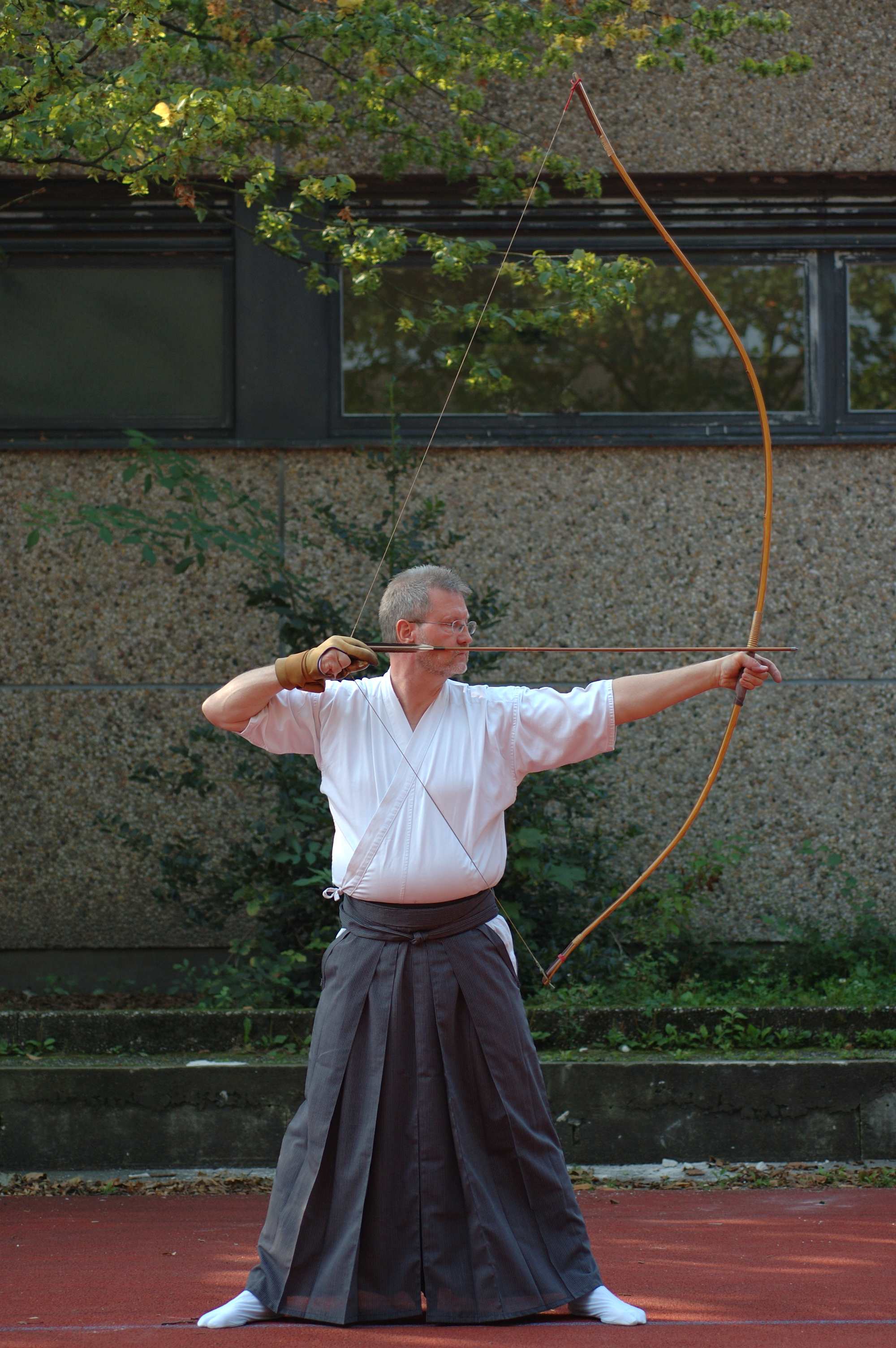
Cambridge Massachusetts, February 23, 2014: I grab a Japanese bow, walk to within two meters of a target, and inexpertly bury two arrows into it. Thus began my excursion into the meditative / martial art of kyūdō. There’s some background info on kyūdō and my “First Shot” ceremony in this blogpo.

However, 18 months later, I moved to Pittsburgh, where the lack of a kyūdō group forced me to step away from the practice. Seven years passed.

When Inna and I were recently evaluating cities to move to, kyūdō was an important consideration for me, and I checked out the local groups when we visited Raleigh/Durham, Denver/Boulder, and Austin. So when we finally moved to Austin, one of my first stops was Austin Kyūdō.

My Second First Shot

My Second First Shot

In Japan, there are several schools of kyūdō, each with their own slight differences in philosophy, terminology, and technique. Of those, there are only two that are active in the United States. There’s the All Nippon Kyūdō Federation, which I’ll shorten to ANKF, that came out of a postwar attempt to unify all the diverse styles into one common form. That’s what’s typically taught as an activity in Japanese high schools. The other presence in the US is the Heki-Ryu Bishu Chikurin-ha school, which I’ll call Zenko, which is one of those older schools, traditionally headed by the Shibata family of bowmakers to the Japanese nobility, and which was supported somewhat by the Shambhala organization.

Sadly, there’s some rivalry and mutual condescension between these two schools. While that might make more sense back in Japan, it seems pretty counterproductive here in the US, where the differences seem trivial and – since neither has much of a following – a spirit of mutual cooperation would benefit everyone.

All this pertains to me because my practice at Byakko Kyudojo back in Boston was in the Zenko style, but Austin Kyūdō is affiliated with the ANKF. So I’m effectively switching schools and starting over. While there is a Zenko group in Houston with occasional practices in Austin (Emiko Kyudojo), it makes sense for me to get back into kyūdō with the more active local group and consider returning to the Zenko fold after developing a greater level of proficiency.

From the perspective of an American and a novice, the differences between ANKF and Zenko are few, but worth enumerating. Philosophically, Zenko is more focused on the internal, meditative aspect of archery (which appeals to me), and seems more focused on individual practice rather than coordinated group shooting. And – being run by a family of traditional bowmakers – Zenko requires practitioners to use bamboo bows, whereas ANKF is happy to use composite bows that are cheaper, more forgiving, and require less care. ANKF has also added formal ranks, requiring written exams and shooting demonstrations to advance in levels.

With that as background… After arriving in Austin, I learned that Austin Kyūdō was holding a six-week beginners’ course. Between a seven year layoff and joining a different school, that “starting over” route made sense for me. I joined two other newbs for their training series, which culminated on Saturday April 1th with our “First Shot” rite… Which was actually my second First Shot ceremony, having been through Zenko’s equivalent back in 2014, as described up top.

While it’s wonderful being a full-fledged kyudoka again, I’m far from satisfied with my first shot. While passable, my form wasn’t up to my own expectations, so I have plenty of “stuff” to work on.

But I was also put off because my hands are too large for any of the group’s dojo-owned gloves for students. In addition to a bow and arrows, a kyūdō-specific glove is an absolutely essential piece of equipment, since it is the glove that actually holds the bowstring when it is drawn. For my first shot, I wound up borrowing another student’s brand-new glove, and the bow just wasn’t cooperating with it.

While I always intended to send away to Japan and invest in my own custom-made glove, the lack of a dojo glove to practice with has made that purchase a pressing need. The fabrication and shipping will take 2-3 months, during which I really can’t do any shooting, either at distance or at a close-range practice target, as in the photo above.

Despite that frustrating delay, there’s still a lot I can work on in the meantime, so that when my glove arrives I can dive back into practice with diligence, energy, and more confidence in my form.

This is a question that has followed me for most of my life. From the college employer who had no idea what I did for him; to Inna’s family and friends who wonder how I spend my copious free time, since I don’t work. It’s a question even Inna herself can’t answer, despite having lived with me for six years!

What do you wanna do with your life?

That question – what do you do? – confuses me, because I make no secret of it; there’s evidence plastered all over my social media.

I suspect that people are confused because I don’t push myself and my interests forward in verbal conversations. I’m more of a listener, allowing others to guide the conversation, and will only talk about myself after people express interest in what I’m up to; although most people will naturally direct conversations toward their own interests.

And then some of my closer friends avoid delving into my interests because they know that once I do get that implicit permission, I’ll talk about them enthusiastically and at length. Kinda like when you open up one of my blogposts… There’s a reason why my writers’ group always cautioned new members with, “That’s Orny… Don’t encourage him.”

On a side note, my interests tend to be very long in duration and deep in nature. It might take a while before I commit myself to something, but when I decide to do it, I insist on doing it well and thoroughly. I will not half-ass anything I do; this is one of my core values as a person.

So let me attempt to answer that eternal question: what does Orny do, anyways?

Number one: cycling. I ride up to 10 or 20 hours a week, either solo, group rides, or major events, both outdoors as well as on the indoor trainer through the winter. And that doesn’t include time spent on bike cleaning, maintenance, repairs, and performance analysis. Cycling is my passion.

Number two: meditation. I spend 2-4 hours a week in meditation, and another couple hours listening to dhamma talks. About twice a month I lead two different meditation groups, and must put time into researching, developing, practicing, and delivering my own dhamma talks. Sometimes I’ll go off on weeklong silent retreats, and I’ve always got plenty of dhamma reading to do. The philosophy and practices behind Buddhism are a central part of who I am.

Number three: investing. My former employment at Sapient gave me enough capital to consider living free of the working world. However, that means my “full-time job” is to invest my finances wisely and safely, and provide financial advice to Inna. So I devote a ton of time to reading financial news and books about investing. I keep tabs on the market daily, both because I want to be aware of my opportunities and, frankly, I enjoy monitoring my success. Financial self-sufficiency and independence are life goals that were drilled into me by my parents.

Number four: the Pan-Mass Challenge. I’ve ridden this annual fundraiser for the Dana-Farber Cancer Institute sixteen times and raised $119,000 for cancer research. You have no idea how much time that fundraising effort requires: the countless emails, tracking contacts (and writing my own database to manage it), chasing down corporate matching gifts, et cetera. For many years, it alone was a full time job from May through August. But this has been one of the most fulfilling things I have done.

Number five: learning Japanese. This winter I’ve put 10-15 hours a week into this newest intellectual challenge I’ve committed to. Characteristically, I’ve attacked it with energy and dedication. Academic learning and developing new skills are lifelong pleasures, and this is their current form. There’ll probably be a separate blogpost on this sometime later.

Number six: my relationship with Inna. It should go without saying that a lot of time goes into sharing our lives together and helping one another out. Partnership and family have always been a challenge for an introvert and loner like myself, so this is where a lot of work needs to happen.

So those are the big things.

Now fill in the remaining gaps with some of my more episodic background interests. Between my general and cycling blogs I write two or three dozen posts per year. I devote time to artistic interests in both photography and videography. I find time to enjoy a number of simulcast anime series and follow MLS soccer and the New England Revolution as well as the US national team.

And there’s always plenty of household duties. I’m fairly fastidious about my living conditions, and my responsibilities include vacuuming, laundry, garbage & recycling, car maintenance, computer maintenance, and cat feeding, grooming, litterbox, and exercise (if you only knew!). Plus grocery shopping and cooking for myself every day. And then in the background is researching our future move away from Pittsburgh.

That’s my life every day. If you ask me, I think the question shouldn’t be “What does Orny do?” but more like “How does Orny possibly do all that?”

It’s been a year, so let’s debrief about my experience as a drone aircraft owner/operator.

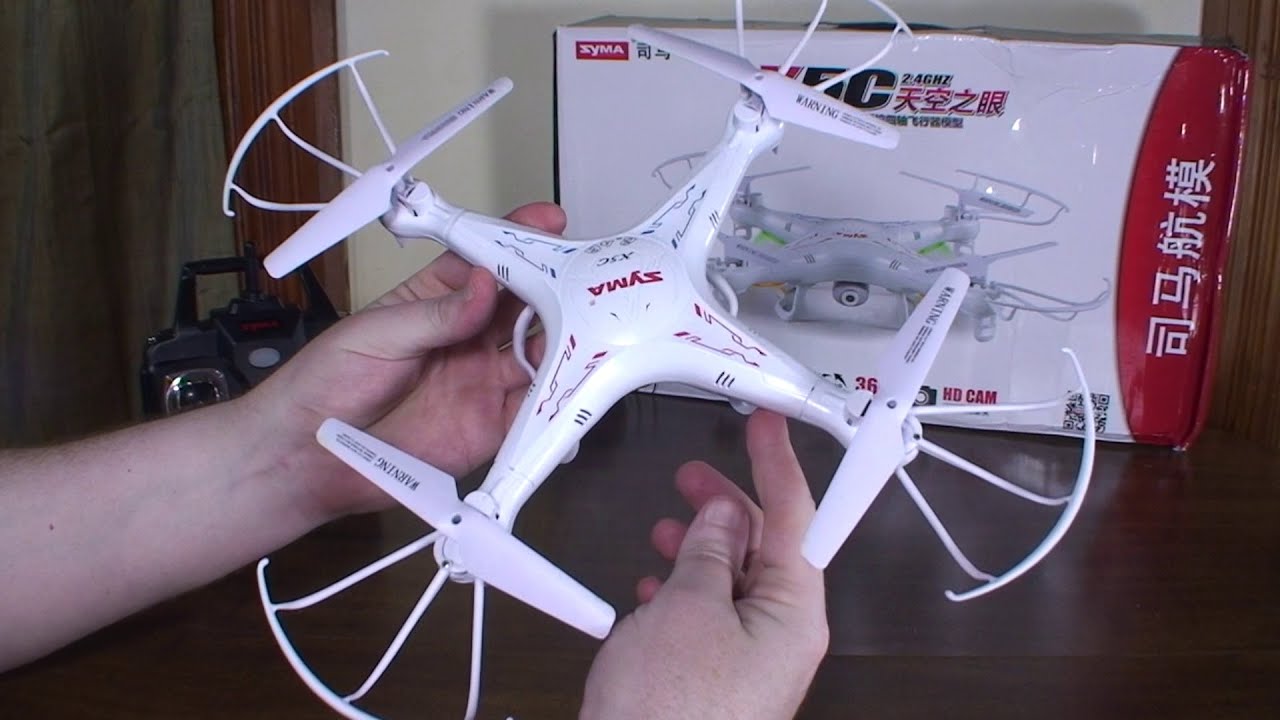
I’m not terribly good at spatial orientation in three dimensions, so I bought a cheap $50 quadcopter, mostly to see whether I could develop the skills to become a competent remote operator before dropping real money on a quality drone. The craft—a Syma x5c—had a low-quality video camera, but no live video feed or stabilization or other advanced features. And it was light enough to elude most FAA regulation.

Syma quadcopter

Syma quadcopter

Over the winter I flew it around our apartment in an effort to learn fine control, but of course that was pretty limited in terms of the flying I could do. I did get the cat’s attention, tho.

Meanwhile, I educated myself on the existing regulations for drone pilots. What I learned is that you are not legally allowed to fly a drone, period.

That might be overstating the case, but just barely. You cannot fly one within five miles of any airport or hospital. You cannot fly over any public property, including schools, parks, ballfields, streets, cemeteries, etc. You can’t fly over other people, nor on private property without the owner’s permission.

After thinking it through, I think there’s only two places you might be allowed to fly.

I haven’t seen anything prohibiting operating directly over an unregulated body of water like a large lake or river. Of course, that’s not the best place for an unskilled pilot to operate an electronic device with limited radio controller range and a very short battery life… Bloop!

Or theoretically you could operate on private property that’s more than five miles away from any airport or hospital, with the owner’s expressed permission. Which is a resource I don’t really have any access to.

So, basically, I haven’t used my quad outside at all.

No, I did take it outside just once and flew around the tiny cement driveway between our apartment house and the next. That sucked, because the quad’s light weight meant it drifted about in the wind, which increased the danger of crashing into one of the buildings (larger drones are much more stable in the wind). And I was probably still violating some law about flying too close to people’s windows.

There are UAV clubs that rent flying space for group events, but they expect dues, and are for enthusiasts with expensive professional or racing rigs costing hundreds if not thousands of dollars; they’re not accommodating of newbies just learning to fly with cheap, off the shelf toy-store equipment.

So my big aerial adventure was an unmitigated failure. I guess that explains why you never see drones around, even though their prices have come down to the point where anyone could afford one.

It feels a lot like getting a shiny new bike for Xmas as a kid, but having to store it in the attic until all the snow melted and you could ride. Except in this case there’s no summer to look forward to, because recreational drone use will never be allowed to get off the ground.

If you’ve spent much time with me, you probably discovered that I mark my paper money and track where it goes using the Where’s George? website. And you’ve probably asked yourself, “Why?”

There’s no good answer actually, other than boredom and curiosity.

In 2004 I was between jobs and had nothing better to do, and I remembered having seen one of the very first Where’s George? marked bills at work back in 1998. I thought it might be interesting to see where my cash went, so I registered and started entering the serial numbers of all the currency that passed through my hands.

However, I quickly learned that doing it ad hoc would be a huge pain. I found it much easier to make one trip to the bank every month or so, pulling out $200 in $1 bills and another $200 in $5s. In order to get more bills into circulation, I tended to avoid using $10s and $20s, but I did drop a fair number of $100 bills off at casinos!

Whenever I traveled, I’d spend the bills I’d entered in Boston, so that someone who found my bill in Las Vegas or Pittsburgh or St. Thomas could see where it had come from. Then I’d pick up more cash to bring home, since it would be equally interesting for people in New England to receive bills from faraway places.

Over the past ten years, I entered 17,600 bills, 95 percent of them $1s and $5s, totaling about $64,500 worth of currency. Most of those were entered in Boston or Maine or Pittsburgh, but I’ve entered bills in many other locations, including Las Vegas, St. Thomas, the Caymans, Puerto Rico, Korea, Scranton, and Boise!

Marked bill

Out of all those bills, 1,450 of them have been subsequently entered (1,600 times) by someone else, which is about a 9 percent hit rate. On average, I get a hit every other day. Since I don’t mark my bills very conspicuously, few of my bills get hit multiple times; only 14 of them have been entered by three different people after my initial entry.

My bills have been hit in every county in Connecticut and Rhode Island, but I still haven’t gotten the needed Martha’s Vineyard hit to complete my home state, or the one remaining (Coos) county in New Hampshire.

My bills have been hit in every US state except five obscure ones: Alaska, Arkansas, Montana, Wyoming, and North Dakota.

Beyond our borders, my bills have been re-entered in Canada, Puerto Rico, the US and British Virgin Islands, Anguila, Bermuda, England, Ireland, France, Germany, the Philippines, Cambodia, and Australia (my farthest traveler went 10,500 miles to Melbourne).

My longest “sleeper”—a bill that resurfaces after a long time with no activity—was spent at a restaurant in Scranton in 2006 and showed up at a grocery store in the same town around Christmas 2013, more than seven and a half years later!

If you really want to know more, here’s a link to my Where's George? profile.

While all this was going on, I discovered that the most active Where’s George? users get together in regional “gatherings”. I attended a number of local meet-ups in the early years, and got to know Hank, the site’s irascible creator. But there haven’t been any gatherings in Boston for years.

Over the past six months, I’ve been looking critically at where I invest all my time, energy, and attention, and I decided to stop entering new bills into Where’s George? on March 25th, my tenth “Georgeaversary”. The date was convenient, and the decision pretty inevitable.

Why inevitable? Well, it’s like this… When you first start “Georging”, all kind of interesting things happen. The first time one of your bills gets “hit” (entered) by another person. Your first out-of-state hit. Your first hit in another country. Getting a hit in every county in a state. And so forth. But over time, those milestones become less and less frequent. And as I said, it no longer offers the social opportunities it once did.

Plus it’s a bit silly. It’s not the kind of hobby that would impress a girlfriend or your co-workers; yet it can be a rather difficult one to hide from them, if you ever go out to lunch together!

Ultimately, it came down to whether I was getting enough entertainment out of the hobby to make it worth the investment of time spent entering and marking bills… And in the end, that answer was unequivocal.

So now it’s on to other things.

As I step away from some of my older hobbies, it looks like kyūdō—the Japanese martial art of archery—might be a new activity that arises to take their place.

People who know me will realize that when I commit to an interest, I dive into it with a unique intensity and dedication. Looking back, I’ve had numerous interests which I pursued for years and sometimes decades, such as Tolkien fandom and fiction writing during my youth, or cycling and meditation as an adult.

But every five or ten years, I step back and reevaluate my hobbies and how they fit into my life. Often I can tell when a chapter of my life is about to end because I feel that my interests aren’t helping me grow in the direction I want to go in. It’s at those times that I’ll suddenly walk away from things I’ve been devoted to for years, such as when I left my writers’ group after running it for more than a decade. At the same time, I feel myself looking for what new interests might come along to replace the old.

In the past year or two, I’ve set the groundwork for dropping two time-consuming hobbies. I’ve already publicized that after fourteen seasons, 2014 will be my last year riding in the Pan-Massachusetts Challenge, which will free up a lot of time I’d otherwise spend fundraising. In addition, I will soon stop tracking my money using the Where’s George website, after a ten-year run. These were great activities, but it’s finally time to move on.

Knowing that this would free up time and energy, I started kicking around ideas for what I might enjoy doing next: something I could get involved with that would also appeal to the very different person I have become.

And the first thing that seems to have arisen is kyūdō.

kyudoka

Kyūdō is a meditative martial art devoted to the traditional Japanese form of archery. It’s surprising that kyūdō is not widely known in the US, because it is extremely popular in Japan, where archery and its equipment are viewed as highly sacred. Kyūdō has been refined and distilled into a highly reflective, meditative practice, as reflected in the first western book on Japanese archery. Eugen Herrigel’s 1948 “Zen in the Art of Archery” was wildly popular and was the first book to use the now-popular moniker “Zen and the art of…”

So why have I been drawn to kyūdō? It’s hard to explain, but it boils down to six attributes that appeal to me: it’s social, meditative, physical, elegant, familiar, and Japanese.

Although the focus of the form of kyūdō is internal, participation and instruction are offered in the context of a small, friendly martial arts dojo of mixed ages and genders. This is imperative to me, since social life and connection is revealing itself as the primary project of my fifth decade of life.

I probably don’t need to belabor how kyūdō’s meditative focus complements my longstanding contemplative practice. As a form of meditation that involves a fair amount of movement, Kyūdō seems to nicely fit in the gap between rather sedate walking meditation and full-bore regular life.

For years, I’ve been looking for some technique for integrating physical exertion and meditation, which initially led me toward an exploration of yoga. However, being in a room filled with women in tight skinsuits—all rolling around on the floor in provocative positions—wasn’t especially conducive to internal exploration. Kyūdō allows and incorporates a focus on the body without the detrimental distractions.

However, like the asanas in yoga or the forms in tai chi, kyūdō is strictly choreographed. And when control of the human body and its motions is combined with the natural geometry of the bow, bowstring, and arrow, kyūdō epitomizes elegance and grace: attributes that I strive to embody.

And archery has always appealed to me. Even as a child, archery was my favorite activity at summer camp, and over the years I became pretty skilled at it. And in my medieval recreationist days I bought and used a very powerful English longbow, as well.

And for whatever reason, I seem to be in a phase where Japanese stuff is interesting, so it fits into that, as well.

So as you can see, kyūdō actually complements my interests quite nicely.

Practices are both convenient and a bit of a stretch. During the winter, they use an indoor aikido dojo in Union Square, which isn’t easily reached by mass transit, but is manageable. And in the summer they’re out in Lincoln, which would be really difficult, except that’s just one town over from where I would be training during a regular weekend bike ride, so I’ll probably combine the two.

I first started looking at their website around Thanksgiving, and saw that they were running a new student “first shot” training at MIT in January. However, it filled up before I could sign up.

So two weeks ago I showed up at the dojo just to observe. Fortunately, another new guy was there, and apparently we comprised enough interest for them to schedule another first shot training the following week. So I returned for a second visit and received instruction on most of the form from Joyce and Randy, with the expectation that I’d get to perform my first shots the next time.

This past weekend, I returned for part two of the training. Although the other new guy wasn’t around, I received additional instruction from Joyce, and then Don covered some more details before encouraging me to step up and take my first shot.

To put that into perspective, in Japan new students often take weeks, months, or sometimes years drilling the techniques before they’re allowed to shoot. Due to Americans’ typical impatience, our school has disposed of that, but it’s still a big milestone.

So I felt some anxiety as I stepped up and went through the movements and fired two arrows. When we move outside, we’ll fire at targets 28 meters away, but indoors we shoot at cardboard bales from a distance of about ten feet. I managed to remember most of the steps, but forgot to flip my right arm back upon my first release; I corrected it for the second.

What was interesting to me was how intensely the body experienced it. When I stepped away, my heart was racing and I was breathing heavily. I think much of that is due to the selfconsciousness of taking my first shot under the sensei’s gaze, combined with the physical stress of drawing the bow and the loud thunk of the arrow striking the target.

Of course, I haven’t mastered anything as yet. It’s frustrating but entirely predictable that some of the things I do wrong are common both to kyūdō and cycling, such as tensing and hunching my shoulders. And I also need to pay better attention to keeping my body facing perpendicular to the target, rather than turning toward it.

But it was successful! I’d followed the forms and properly fired and lodged my arrows into the target. So at least I’ve got the basics down.

Over time, I hope to embody some of the elegance that you can see in some of the YouTube videos or Vimeo videos about kyūdō. And if I stick with it, perhaps someday you’ll even get to see a photo of me in a hakama!

Checking my friends list today, someone posted an article to the rarely-used [livejournal.com profile] singlemalt (Scotch whisky) community I subscribe to.

So I thought about it and realized that it’s been two months since I’ve had any kind of drink. Not that it’s really all that strange, since I never drank very much anyways, but the last occasion was kind of memorable, in an unpleasant way.

I went ahead and unsubbed from the singlemalt community. Then I removed from my list of interests: Belhaven, Highland Park, Scotch, Scotch ale, and Scotch whisky. Whoa! Or should that be “Woe!”?

Actually, yesterday I was cleaning out the fridge and threw out my last precious can of Belhaven Scotch ale. Rabbie Burns would throw a hissy.

I’m not sure what to do with my remaining cache of Scotch, tho. I suppose I’ll just gift it around.

My life has undergone a lot of transitions this year. But that’s kind of a sizable change in my self-definition

Frequent topics