Twelve days in Austin. It was the best of times; it was the worst of times. Our goal was to secure housing, so let’s see how that went…

Prologue

When I left Boston in 2015, my goal was – after fifty New England winters – to move somewhere beyond the clutches of the Snow Miser. The reason behind my temporary stopover in Pittsburgh was to test whether Inna and I could make a partnership work (which we happily have done, for the past seven years).

Between our differing requirements and a lengthy delay due to the Covid-19 pandemic, we took years to decide where we’d like to relocate to. But after a visit this past April, we finally found a location we could both agree on: Austin, Texas.

The next step was a followup trip to look for an apartment. When Inna’s Austin-based Circling community scheduled a four-day workshop for mid-November, we decided to extend that visit to two weeks, spending the balance of our time house-hunting, then flying back to Pittsburgh on Thanksgiving Day.

Walking the Path

Walking the Path

Q2 Stadium

Q2 Stadium

360 Bridge from Mt. Bonnell

360 Bridge from Mt. Bonnell

Mt. Bonnell NOTICE

Mt. Bonnell NOTICE

Wendel Interior

Wendel Interior

Wendel Interior

Wendel Interior

Wendel Backyard

Wendel Backyard

Wendel Brook

Wendel Brook

Sat November 12: Travel

Our flights down (via O’Hare) were fine, with only minor drama when our motel prematurely charged Inna’s credit card for our entire stay before we’d even arrived!

Wanting to be as central as possible, the motel we booked was located right underneath the main I-35 expressway. It was a dark, musty affair that was pleasantly inexpensive, except for the day of the University of Texas football game, when the daily rate jumped from $80 to $300!

Meanwhile, Google Maps did its best to keep us on our toes by insisting we take “Exit 236: Dean Keeton Thirty-Second Minus Thirty-Eight and a Half Street”. I’m not sure but I think that would be “Negative Six and a Halfth Street.”

After pizza at Love Supreme, we made supply runs to Dollar General and Trader Joe’s.

The evening was completed by the Pan-Mass Challenge announcing this year’s fundraising total: $69 million. That is the single biggest donation that the Dana-Farber Cancer Institute has ever received. But it raised questions in my mind about how and whether I will be able participate in the event an 18th time next year, after our relocation to Texas.

Sun November 13: House-Hunting Day 1

Sunday was surprisingly cold (-2°C). We would have a few nice days in Austin, and a few showery ones, but temperatures were mostly a bit cooler than normal.

We headed to our first house appointment and met up with Alexandria, the awesome real estate agent we were using as our point person. We visited four units (4801 Ave. H, 1700 Perez St., 2200 Spring Creek, and 8607 Dawnridge Cir.), and accidentally checked out another from the outside (1126 Hollow Creek). Three were clear “nos”. Perez felt dark and a bit small but was a maybe, and Dawnridge wasn’t bad except it was quite a ways out of town.

After the shortest “30-minute wait” we’d ever experienced, we had lunch a the Bouldin Creek Cafe followed by a relaxing stroll down the bike path along Barton Creek. Then back to the motel to look at tomorrow’s itinerary.

Dinner was Chinese from TSO, a strip mall take-out joint where the door surprisingly opened directly into the kitchen, with no real pretense at a commercial “front”.

Mon November 14: House-Hunting Day 2

We hit three houses on a rainy Monday. 1309 Corona was cheap, dark, and claustrophobic. 11633 River Oaks was just way too far out, and next to a future development project…

And 3510 Wendel Cove. After two days of everything being on the flat, its hilly neighborhood was a bit of a surprise. After seven years cycling in insanely hilly Pittsburgh, I jokingly cried, “Veto!” when we encountered a short but steep rise on Hart Drive on the way in. But it only got worse, as the house was at the bottom of a very steep cul-de-sac. In spite of that, I really liked the house. Inna was a little more skeptical, since it felt a little dark and awkward, but we put it on our list of possibilities. More about that later.

With house-hunting wrapped up, we lunched at Clay Pit, our favorite Indian place, then stopped at the Book People bookstore. Unfortunately, Inna slipped and injured her ankle in the wet parking lot, so we spent some extra time coming down from that. I took the opportunity to pick up Sayadaw U Tejaniya’s “When Awareness Becomes Natural”, plus volume one of the “Cat Massage Therapy” manga as a gift for our tireless catsitters back home. I quickly read the latter in-store while Inna rested.

Inna requested a quick trip to Amy’s Ice Cream, then we stopped at the H-E-B grocery for an ace bandage and two frozen peas “ice packs”. We returned to the motel and let Inna rest and treat her painful ankle while researching more houses to visit.

Tue November 15: House-Hunting Day 3

On Tuesday morning, Inna’s foot was extremely painful and wouldn’t bear weight, so our first order of business was buying her a walking cane at CVS.

We only saw two places that day, because our third (on Blueberry Trail, aka “Blubbery Troll”) had been taken off the market that very morning. 1403 Springdale (aka the Pizza Hut) was decrepit due to being designated a historical property, and thus highly regulated. And 5202 Downs was an interesting but cheap and idiosyncratic modern unit (with 6-foot ceilings upstairs!) that someone had plunked down in their backyard as a cash grab. I bumped my head three times during the viewing!

Then, with the rain having passed overnight, Inna wanted to go back to Wendel Cove to check it out on a sunnier day, since it seemed to be our reluctant top pick. We spent a lot of time hanging around and thinking it through before coming to the conclusion that it was probably our top choice so far. Our showing agent, Alexandria, was incredibly patient and helpful, as she’d been all week.

I captured and showed Inna a video of the little stream that runs through the backyard that reminded me of my childhood home back in Maine. Coincidentally, Inna had also received a video: her mother had sent one of Pittsburgh enduring its first snowfall of the year. The timing of the contrasting videos made a silent but persuasive point.

As we left, we drove down a tiny private road off the cul-de-sac with another five houses (one displaying a Buddha statue). There were three deer hanging out in the road, and they showed absolutely zero fear as we drove up and turned around. That probably means no vegetable garden for us!

Then we drove around to get a feel for the area. We stumbled into a very shishi neighborhood called North Cat Mountain, and randomly drove up a street called Ladera Norte that was extremely reminiscent of Pittsburgh’s infamous Dirty Dozen hills. In fact, it features in Austin’sTour das Hugel, a 200 KM bike ride that includes 3,600 meters of climbing, which took place a week before we arrived.

We ate lunch at the Galaxy Cafe on Mesa Drive, then ice cream at the Amy’s in the Arboretum. Then we test-drove from Wendel Cove to Hyde Park, where Inna’s Circling studio and my meditation group are located, which was shockingly quick and easy.

We chose to spend the rest of the day at the motel, to give Inna’s foot a rest. We considered filing an application to lease Wendel Cove that night, but held off after Alexandria told us there wouldn’t be any benefit to being the first applicant. Instead, we both spent time scouring Google Maps and adding interesting features to our map of the neighborhood. At this point, I felt pretty good about where we were in the process.

Wed November 16: The Bad Day

Inna had a terrible night, so I let her sleep in late. Her foot was still bad, we were running out of house rentals in our price range, and the anxiety of making such an important decision was weighing on her.

We did look at one owner-listed place – 5113 Stone Gate – but it was a little run-down. We drove around Hyde Park a little bit, but Inna remained somewhat anxious, so I decided to bring her up to Mount Bonnell, a wonderful overlook that I’d been to a couple times, but was new to her. Being outside and seeing the expansive vista over the Colorado River seemed to ground her again.

Unfortunately, things went poorly from there. We tried to get dinner at one Ethiopian place, only to find it permanently closed. And a second one – in a windowless trailer – looked like an abandoned strip club. We finally stopped for dinner at the Oakmont Cafe on 38th, where we paid $60 for absolutely terrible food.

After that, we gave up and drove back to the motel. Inna called and messaged friends for support, which helped a little bit. But aside from Mount Bonnell, it had been an exhausting and emotional day.

But our trials weren’t over. At 2AM we were jolted awake by a group of four men slamming doors and screaming their lungs out in a foreign language outside our door and in the room next to ours. It was intensely aggressive and went on for more than an hour. It was so terrifying that I got out of bed, hid our computers, got dressed, and sat up with Inna’s cane in my hands in case I needed to defend us. Needless to say, we were both sleep-deprived and nerve-shattered.

Thu November 17: Solo Wandering & Mariposa Sit

After four days of house-hunting, we switched gears. I dropped Inna off at her Circling studio for the first day of a four-day workshop. So I had four days on my own, and my own list of things I wanted to accomplish.

My first stop was Wendel, where I walked up Wendel Cove and down Hart Lane and back, just to experience the hills. There were some people outside, a grey and white cat loped across the yard, and a cyclist passed me after coming down the next street over (Westside Drive).

Next I drove 5 miles up to Q2 Stadium, where Austin FC, the local MLS team, play. I stopped in their team shop and picked up a tee shirt and a magnet, feeling uncomfortably unfaithful to my beloved New England Revolution.

Two miles over, I checked out the Trek store on Research Boulevard, where Nathan and Dino gave me some great information about local rides, and even other shops! They suggested I also peek into the Specialized shop that had apparently sprung up in the Domain® pedestrian mall since our previous scouting trip six months ago. I got a good vibe from the place, and hope to join the group rides they run every other Saturday.

Another two-mile drive brought me to the Domain®, which was really difficult to park in. The Specialized store was tiny, but serves as a corporate anchor while they look for a larger space for a full-service shop, since Trek had bought out the shop that was their former Austin HQ. They too offered lots of awesome ride pointers, and specifically recommended the Hill Country Randonneurs.

Then it was time to meet Inna, because we were going to use her lunch hour to visit one last house – the intriguing 5308 Sendero Hills – which had repeatedly put us off due to “renovations”. It was indeed just as bizarre as we’d thought, with its very own palm tree, a big unbroken wall facing the street, chicken coops, exposed cinder blocks in the interior, and the residue of shattered windows in one bedroom! But it was both too far out of town, too expensive, and way too much space for us.

After returning Inna back to her workshop, I checked out the Anime Pop shop, which had the usual manga plus a wall full of figurines. Then the H-E-B in Allandale and early dinner from Sap’s Thai. It’s worth noting for future reference that half of Austin’s Thai restaurants serve entrees that are meat-only, and half serve the expected meat/veg mix; I’ll have to memorize which.

I went to Mariposa Sangha’s Thursday evening meditation and dhamma talk, which – like the one I attended in April – was led by Paul Schlaud, who remembered me from that visit after prompting. The topic was gratitude, and – as in April – I once again got the last comment of the night in.

Afterward, I picked up Inna and we headed back to the motel. Our neighbors were still there, as evinced by the stench of pot, but they were a little bit quieter this night.

Fri November 18: Day Off & Applying Ourselves

I dropped Inna off at the studio again. After a couple days to think it through, she seemed ready to file an application for Wendel Cove.

I spent the day hanging around, cleaning up the motel room and delighting in reports of heavy snow squalls in Pittsburgh. I enjoyed having no errands, no driving, and no rushing around. It was nice and quiet for a time after our neighbors moved out, until they were replaced by some anime girls playing loud rap music that triggered a throbbing headache.

I picked Inna up in the evening and made a quick stop at the Central Market before going back to the motel. Inna told off the neighbors and I made to turn in before she hauled me back out of bed to complete the frustratingly-long online lease application process, which was so invasive that it even required us to supply our body weights! Then the secondary application for our cat, which required both front- and side-view photographs, as well as proof of vaccinations, which was stored at home, 2,300 kilometers away. Frustrating and insulting!

Then it was my turn to have a restless, anxious night. At least the neighbors didn’t blast their tunes when they came home in the middle of the night…

Sat November 19: Half-Day Retreat

After surviving the night, my morning highlight was finding an active infestation of ants in our bathroom. At least it wasn’t bedbugs…

After a visit to the motel office, I dropped Inna off at the Circling studio early and headed off to Mariposa, where I’d signed up to join their monthly half-day retreat, which in this case was on cultivating kindness. In my emotional state, five hours of meditation was either exactly what I needed or the worst thing I could do to myself.

When I arrived, I met Carolyn Kelley – their lead teacher – for the first time, which was pleasant. Although I didn’t really know any attendees, they seemed to comprise a mix of all levels of meditation experience. During the periods of walking meditation, I chose to do standing meditation, which Carolyn asked me to explain in the end-of-day discussion. My response was that for me, being in an unfamiliar building with unfamiliar people would have been awfully distracting, pulling me out of a meditative mindset. Overall it went well, and it was great to finally touch base with Carolyn.

Afterward I picked up a pen at “Paper Place” to replace the Pilot G-2 I’d lost somewhere along the line, and some food at Central Market.

Returning to the motel, I noted that no one had fulfilled our morning request to spray the room for ants, so I chased down a staffmember and stood over him while he sprayed. Fortunately, the insecticide they used wasn’t too stinky…

While Inna spent the evening at karaoke with her Circling friends, I ate my “cowboy casserole” – a mediocre dish of pasta, chicken, and picante sauce – and figured out my plan for Sunday. Then Inna returned and we enjoyed a blissfully quiet night after Inna had skillfully negotiated with the motel staff to not put anyone in the neighboring room for a couple nights.

Sun November 20: Anime Austin

After dropping Inna off for her final workshop day, I made a quick run to Book People to see if they carried the Barron’s financial newspaper (nope).

Then it was out to a Holiday Inn to check out the last day of the Anime Austin convention. It being 10:45am on a Sunday, there were very few people around, and most of the vendors weren’t there yet, so I just wandered around the tables, seeing what was available. It was mostly just acrylic charms and artwork, and the tee shirts were the only thing that I might consider picking up for myself. The panel discussions weren’t really of interest, so after browsing the area I decided to leave. It was a waste of my admission fee, but I don’t mind spending the money to support the hobby.

Next stop was the Barnes & Noble at the Arboretum, where I finally found a Barron’s (they were stored behind the cashiers). I sought out a Circle K convenience store to fill the rental car with gas, but had to find a second one when the first one had apparently closed.

Then a quick stop at Randall’s, which appears to be H-E-B’s main competitor, before hitting up Panda Express for lunch. But the Panda Express didn’t have my preferred dish (black pepper chicken), so I punted and stopped at Fire Bowl Cafe, which offers fresh stir-fry with your choice of carb, meat, veggies, and sauce. It was a delight to finally get some vegetables into my system.

I spent the afternoon at the motel before meeting Inna at the Circling Studio, where I briefly went inside to be exhibited to her friends. Then “dinner” at Amy’s Ice Cream and back to the motel, where a new set of neighbors’ television kept us awake late into the night.

Mon November 21: World Cup & Rest Day

While Inna slept in, I woke up at 7am to watch the first World Cup footy match in Group B: England vs. Iran, which was a 6-2 blowout.

We had pretty much exhausted both the local rental listings and our stamina, and there wouldn’t be many new listings showing up on Thanksgiving week. And with an application already filed for Wendel Cove, we essentially suspended our house hunt. So we had three full days left to fill before our flights home.

At 1pm I watched USA give up a disappointing draw to Wales in their first game. They would eventually advance from the group stage but be eliminated in the “round of sixteen”.

When I taunted Inna with the prospect of visiting Austin without hitting up her favorite Mexican restaurant, the inevitable happened, and we wound up having a huge and delicious dinner at Lupe’s just off Mopac.

During our meal we received our first of several followup information requests regarding our application; this one asking for my drivers’ license, a second month of pay stubs from Inna, and clarification that she wasn’t switching jobs. Inna aborted her evening plans (meeting up with Steven and a Circling session) in order to respond.

Around 11pm a woman started screaming her head off in one of the nearby units, but that thankfully lasted only about 45 minutes before quieting down.

Tue November 22: Killing Time

We woke to another information request: this time for a note from Inna’s boss on company letterhead, confirming that they would let Inna keep her job. The already-frustrating application process was truly out of control.

Having done most of the running around I wanted to do, I let Inna drive the day’s agenda. With limited parking downtown, I dropped Inna off to visit her employer’s local office. It was three floors with a very open street-level entrance, with kombucha on tap and many social and friendly people, which was an improvement over what we’ve seen in other cities.

We stopped at the Vegan Nom food truck in East Austin, then crossed the river to visit the Cosmic Cafe and Beer Garden and Summer Moon Cafe. Then back to the motel for an afternoon nap.

At 7pm I drove her to the Circling Studio for an evening session, while I picked up pad cashew from the Pad Thai restaurant. Then fetched Inna, a quick stop for Mozarts at Central Market, and home.

Wed November 23: Last Day

Although it was quiet overnight, it was my turn for an anxiety-filled night, which wasn’t helped by yet another information request from the leasing agent, requiring us to enter our online banking usernames and passwords! What the fuck? What an incredibly worrying, exhausting, invasive, and demeaning experience.

Inna’s plan was to visit two Circling friends, so I dropped her at the first and went back to the motel. Then I picked her up and dropped her at the second, planning to have lunch and visit a local comics/game store.

My first stop was Thai Fresh, which was inexplicably closed. My second stop was Shake Shack on Lamar, but there was no parking nearby. What’s a guy gotta do to get a meal in this town?

I punted and drove down to Tribe Comics, but spied Jersey Mike’s Subs in the same strip mall, so picked up a chipotle cheese steak before responding to yet another information request; this time verifying our intended lease date. Meanwhile, Tribe Comics seemed like a pretty good and friendly game store, although it saddens me that strategy games and miniatures have almost completely disappeared.

After picking up Inna, we gassed up the car in preparation for tomorrow’s departure and made a final dinner out of the “safety provisions” we’d bought days earlier.

And around 5:30pm we received an email from Wendel Cove’s management company saying “CONGRATULATIONS! YOU ARE APPROVED!” Of course we didn’t have a lease – that would be a lengthy and equally exhausting next step – but we were well on our way to taking up residence in a brand new home in Austin!

And it was a wonderful and ecstatic moment to end our trip on.

Thu November 24: Thanksgiving Homecoming

Between Inna’s still-painful foot, it being Thanksgiving Day, and Austin-Bergstrom’s reputation for long lines, we packed up early and made our way to the airport, doing our usual dance of dropping Inna at the Departures curb with luggage while I circled back around to return the car and hoof it back to the terminal.

Despite both of us getting spot-checked by the TSA, we got our gate 2½ hours early, so we grabbed morning snacks and I went and checked out the terminal’s outdoor patio.

Our layover was in Washington Dulles, where we had to walk from one terminal to another. Inna’s foot held up well; she declined a passing people mover, but we were still glad she’d brought her cane along. I “enjoyed” a Thanksgiving dinner of a Terminal C Pizza Hut personal cheese.

The flight into PIT was short, I retrieved the car, and we made our way home to an enthusiastic reception from the Biggie. But an hour later one of our electrical breakers decided the Thanksgiving holiday would be a great day for a fatal failure, leaving us without power except for some jerry-rigged measures taking advantage of our current apartment’s unbelievably random electrical system. Patchwork repairs would take four days to be fully completed.

That, too, was kind of a poignant way to punctuate our trip.

3510 Wendel Cove

With the trip covered, let me tell you a little about the new place.

First, the basics. 2 bedroom 2 bath 2 floors, 1,530’, built in 1986, 2-car garage. Rent is appreciably less than the other houses we looked at, which is a big bonus coming from the very inexpensive place we currently occupy.

It’s a somewhat modern, idiosyncratic, open layout, with a fireplace and a bizarre towerlike second-floor “flex room” overlooking the open living area below, and which will probably serve as someone’s office. One bedroom, bath, and the flex room are all on the second floor. The somewhat dated kitchen is a little segregated from the open space, which is good for my sensitivity to cooking smells. Lots of big windows and natural light, but shaded by a number of trees. A small deck, back yard, and a brook that runs behind the property.

Other little bonuses are that there are windows (that open!) in both showers, and the only wall we share with the other half of the house is the back wall of the garage. It seems safe and free of the animal and insect problems that one has to consider when living in Texas.

It’s very close to the Mopac expressway, but quiet because it’s in a cul-de-sac, with a sizable hill in-between. It’s very near our desired destinations, and there are lots of nearby attractions, including shopping, library, groceries, post office, medical and vet.

It’s in a neighborhood labelled as “Highland Hills”, between the better-known Allandale and the Northwest Hills. It really feels like a suburban oasis, while being within an easy couple miles of everything you might need in the city. And it’s about a 8 KM bike ride to my meditation center, or about 11 KM to downtown, using the Shoal Creek trail.

The only minuses I could list would be that the interior is almost unbroken beige; one of the shower windows was very poorly and amateurishly painted over; and we’re going to have to figure out how we can set up the space to provide the kind of together-but-apart work spaces we’re used to in our current place. And I should also mention the rather absurd hill, which presents a minor psychological obstacle in leaving home.

Epilogue

So there were some real challenges this trip, especially the noisy motel we stayed at and the insanely invasive and humiliating lease application process. There was also Inna’s painful foot injury, which ironically paralleled my slicing my finger open on a broken glass in the middle of our earlier visit last April.

But in the end, our quest to find an acceptable place to land in Austin was successful. I outright love the house, and despite Inna’s initial skepticism, it has grown on her, too.

As of this writing, we’ve only just gotten the lease signed – which was a whole separate story – and is only the first of a huge number of massive to-dos before we are finally settled in. But it’s still an immense step on our way to new lives in a new city. We’re excited to make a home of it!

This is a question that has followed me for most of my life. From the college employer who had no idea what I did for him; to Inna’s family and friends who wonder how I spend my copious free time, since I don’t work. It’s a question even Inna herself can’t answer, despite having lived with me for six years!

What do you wanna do with your life?

That question – what do you do? – confuses me, because I make no secret of it; there’s evidence plastered all over my social media.

I suspect that people are confused because I don’t push myself and my interests forward in verbal conversations. I’m more of a listener, allowing others to guide the conversation, and will only talk about myself after people express interest in what I’m up to; although most people will naturally direct conversations toward their own interests.

And then some of my closer friends avoid delving into my interests because they know that once I do get that implicit permission, I’ll talk about them enthusiastically and at length. Kinda like when you open up one of my blogposts… There’s a reason why my writers’ group always cautioned new members with, “That’s Orny… Don’t encourage him.”

On a side note, my interests tend to be very long in duration and deep in nature. It might take a while before I commit myself to something, but when I decide to do it, I insist on doing it well and thoroughly. I will not half-ass anything I do; this is one of my core values as a person.

So let me attempt to answer that eternal question: what does Orny do, anyways?

Number one: cycling. I ride up to 10 or 20 hours a week, either solo, group rides, or major events, both outdoors as well as on the indoor trainer through the winter. And that doesn’t include time spent on bike cleaning, maintenance, repairs, and performance analysis. Cycling is my passion.

Number two: meditation. I spend 2-4 hours a week in meditation, and another couple hours listening to dhamma talks. About twice a month I lead two different meditation groups, and must put time into researching, developing, practicing, and delivering my own dhamma talks. Sometimes I’ll go off on weeklong silent retreats, and I’ve always got plenty of dhamma reading to do. The philosophy and practices behind Buddhism are a central part of who I am.

Number three: investing. My former employment at Sapient gave me enough capital to consider living free of the working world. However, that means my “full-time job” is to invest my finances wisely and safely, and provide financial advice to Inna. So I devote a ton of time to reading financial news and books about investing. I keep tabs on the market daily, both because I want to be aware of my opportunities and, frankly, I enjoy monitoring my success. Financial self-sufficiency and independence are life goals that were drilled into me by my parents.

Number four: the Pan-Mass Challenge. I’ve ridden this annual fundraiser for the Dana-Farber Cancer Institute sixteen times and raised $119,000 for cancer research. You have no idea how much time that fundraising effort requires: the countless emails, tracking contacts (and writing my own database to manage it), chasing down corporate matching gifts, et cetera. For many years, it alone was a full time job from May through August. But this has been one of the most fulfilling things I have done.

Number five: learning Japanese. This winter I’ve put 10-15 hours a week into this newest intellectual challenge I’ve committed to. Characteristically, I’ve attacked it with energy and dedication. Academic learning and developing new skills are lifelong pleasures, and this is their current form. There’ll probably be a separate blogpost on this sometime later.

Number six: my relationship with Inna. It should go without saying that a lot of time goes into sharing our lives together and helping one another out. Partnership and family have always been a challenge for an introvert and loner like myself, so this is where a lot of work needs to happen.

So those are the big things.

Now fill in the remaining gaps with some of my more episodic background interests. Between my general and cycling blogs I write two or three dozen posts per year. I devote time to artistic interests in both photography and videography. I find time to enjoy a number of simulcast anime series and follow MLS soccer and the New England Revolution as well as the US national team.

And there’s always plenty of household duties. I’m fairly fastidious about my living conditions, and my responsibilities include vacuuming, laundry, garbage & recycling, car maintenance, computer maintenance, and cat feeding, grooming, litterbox, and exercise (if you only knew!). Plus grocery shopping and cooking for myself every day. And then in the background is researching our future move away from Pittsburgh.

That’s my life every day. If you ask me, I think the question shouldn’t be “What does Orny do?” but more like “How does Orny possibly do all that?”

When we love someone, we hold their story within our hearts. When they pass, it’s incumbent upon us to bring that story forth and hold it shining like a gemstone for all to see.

Thus, I have to tell Grady’s story.

Two years after my first cat passed away, I was ready to add a new member to my household. In September of 2007 I went to the MSPCA’s Angell Memorial shelter and met a little gray cat. When I petted him, he had a very loud, easy purr, and I decided that he was the one.

The tag on his cage said his name was “Grady”, which is strange, because the previous owner had written “Grey” on the info sheet when she surrendered him. Of course, the tag also said he was “about 3 years old”, when the owner had said “one year”.

Grady
Grady perched
Grady belly
Grady boxed
Grady's neighborhood
Grady leaps
Grady snuggling
Grady Schemes
Grady begging

I’d thought I was getting an adult cat, but he really wasn’t much more than a kitten, and he had the energy and temperament to match. In the early years, he would often full-on attack me, drawing blood mostly with his teeth. When I got an animal behaviorist in, she tried to play with him until he was exhausted, but after 90 minutes of that without pause, she declared him “99th percentile”.

It got to the point where I was almost convinced that I would have to get rid of him, but we persevered, and I found that putting him in isolation when he misbehaved finally got the message through. He even figured out that if he really needed to play, he could come up to me, sit up on his haunches, and beg with his hands together. And if I wasn’t paying attention, he could tap my elbow with his paw first.

Play for him meant jumping for bouncing ping pong balls or leaping for potholders tossed like frisbees. He even played with little toy cars, rolling them around on the hardwood floor! But his favorite toys were the rubber wristbands that used to be popular; he’d run and chase them, then chew them up until they were destroyed. If you threw his stuffed toy pheasant, he’d run after it at full tilt, grab it with his forepaws, and do a complete somersault before administering a killing bite and bunny-hop kicks.

As he matured, he mellowed and came to trust me completely. Of course, whenever I came home, I could expect him to trot up and meet me at the door. He’d come snuggle any time I was on the couch, or nestle in the crook of my arm as I sat up in bed reading. If I was working at my desk, he’d come drape himself over my shoulder. We even got to the point where I could reliably hold him in my arms and rub his belly.

He was a good leaper, jumping across the kitchen from the island counter to the top of the fridge. He’d also jump several feet up and grab onto “his” particular part of the brick wall separating the kitchen and living room, or atop his scratching post. Every time I was on the toilet, we’d have to play grab-tag in the gap beneath the bathroom door. With people and loud noises, he was absolutely fearless… He had only one mortal fear: tinfoil!

Another daily ritual was feeding time. He was fed twice a day by an automatic feeder, and really knew how to tell time! Two hours before dinner, he’d start nosing around. With an hour to go, he would constantly prowl around. With 20 minutes left, he was downright agitated. And as feeding time neared, he’d pace around the feeder in high excitement, often biting it. I told him, “Don’t bite the device that feeds you!”, but that particular lesson didn’t seem to sink in very well. I think he knew exactly what it meant when I sang the “It’s almost time!” dinner song for him.

Speaking of music, Grady had both his own song, poem, and a special rhyming haiku. The song goes like this:

Grady, Grady, Grady cat:
Him not no average little ’fraidy-cat,
But him meows like a little lady cat…

His poem is:

My cat is full of grayness,
From his whiskers to his anus;
It seems to be quite painless.

And that rhyming haiku? Voilà:

My cat’s named Gradle;
He ate a raisin bagel:
It wasn’t fatal.

Perhaps his most unique trick was this: when he was watching you, if you held your hand out and rubbed your fingers together, his eyes would slowly close, as if from happiness. Very strange, but cute!

I’ve included a few good photos in this post, but I really suggest checking out all of Grady’s photos on Flickr. There are some real special pictures in that collection that capture his personality.

None of that, of course, says much about what he meant to me. Let’s just say he was a dear, dear friend, who made every day much better than it would have been without his warm presence.

So, what happened, and why is he gone?

On September 4th, we celebrated the seventh anniversary of his adoption with the traditional wet food treat. He was due for inoculations, so six days later I took him to the vet for his annual checkup. At that point, everything seemed fine, and continued that way for the following week.

The eighth day after his vaccination was Thursday the 18th, and he was his usual active self. The next day, he was lethargic and (for the only time in his life) ambivalent about food. I decided that I’d bring him to the vet if he didn’t improve overnight.

Since he didn’t improve, I brought him in to the vet first thing Saturday morning. He had quite a fever, so they kept him until 4pm, giving him IV fluid and antibiotics.

At the end of the day, he hadn’t improved, and since the vet was closing and wouldn’t be open on Sunday, they advised me to bring him to the animal hospital at Angell Memorial: the same shelter I’d adopted him from.

After an anxious cab ride, I brought him into Angell Saturday night. The doctor planned to run a bunch of tests and give him more fluid and antibiotics, which meant Grady would probably be in the hospital for a couple days.

Sunday his temperature had come down a little, but he wasn’t eating. All the tests they ran came back with only minor variations from normal. More tests needed to be done.

On Monday morning his temperature was back within the normal range. Monday afternoon I got a call from the doctor saying that he seemed normal and stable, but he still wouldn’t eat for them. Given that, she suggested I bring him home, in hopes that he’d be more comfortable and more liable to eat in a familiar environment. I just needed to wait a couple hours for them to get him ready to go, until 8:30pm.

At home, I cleaned out his food, water, and litter containers, in hopeful anticipation of his return. At 8pm, just as I was getting ready to leave, I received a telephone call from the woman who was getting him ready. “He’s in respiratory arrest. Do you want us to resuscitate him? We need an answer right now.”

What? But his fever had broken! The vet had pronounced him stable! Four days previously, he had been a lively and happy cat! And he was only eight years old! This wasn’t supposed to happen!

I was utterly staggered. Grady had spent three days in the hospital, but they had absolutely no idea what was wrong with him. The woman on the phone tried to be tactful while reminding me that even if they resuscitated him, it was likely to be only a temporary, short-term thing. Could I ask Grady to go through more trauma than he’d already endured? Was this his way of telling me that he’d had enough?

In the end, I took it as a sign that it was time for me to let him go. I told them not to resuscitate. They called back five minutes later to tell me that he was gone.

Grady—my lovely baby!—was gone!

I spent most of that night howling the horrible animal pain I felt. The comments I got from friends on Facebook were helpful, albeit to a limited extent. The next day, when I talked to the doctor, I agreed to spend the money to perform a necroscopy seeking answers about why he died.

Ultimately, the necroscopy was of no more use than any of the veterinarians who had treated him. Grady had a few minor health issues, but they found nothing life-threatening. Was his death due to a reaction to his vaccines? Was there anything the vets didn’t do (or anything they did) which contributed to his demise? There was simply no evidence to base an opinion on.

So now he’s gone, and we will never know why. It sucks mightily that we had such a short time together. I was so happy, and I really expected to have a lot more than just seven short years with him.

One of the most difficult emotions is my sense of responsibility for his unexpected and premature death. I mean, I used to look him in the eyes and tell him, “I *own* you…” And he trusted me so meekly when I brought him to the vet for his checkup. And yet, twelve days later he was dead, despite my feebly ineffective good intentions. And his well-being was 100 percent my responsibility. That guilt tears me up from the inside.

The condo, without him and all the cardboard boxes, the toys strewn all over, the food, water, and litterbox: it feels as if I’ve had a roommate move out. The place is silent and empty and lifeless. It might seem odd that living alone feels so radically different than living alone *with a cat*, but so it is. While my friends’ sympathy certainly helps, life just isn’t the same without my lovable little guy.

Seven weeks before Grady’s illness, I rode in my last Pan-Mass Challenge, and spent Sunday night after the ride at my hotel in Sandwich, on Cape Cod. Monday morning, my support person and I went and explored the Sandwich boardwalk, a quarter-mile foot bridge crossing a tidal marsh, connecting a parking lot to the town beach. After storm damage, it had been rebuilt in 1992 and again in 2013 with money raised by allowing people to purchase inscriptions in each wooden plank of the deck.

As we walked along, we read a sampling of planks. As I neared the beach end of the boardwalk, my eyes landed on one which simply read: ♥ U GRADY. Whatever the original intention had been, the plank reminded me of my little roommate, whom I hadn’t seen for four days. For all the feelings that reminder of him evoked, I stopped to snap a picture of it.

I didn’t know then that Grady had only a few weeks left to live.

That photo I impulsively took is now a very poignant memory and perhaps a fitting memorial in honor of my trusting and faithful little roommate, for whom I held so much affection, and who had brought so much warmth and joy into my life. Blessed be, my little one! I’m so, so sorry.

(heart) U GRADY

Back in 1995, I left my job running a mainframe for a medical software company and joined a small but growing local IT consulting company. Their ambitious corporate tagline was: Changing the Way the World Works.

It’s not often that an individual can have that kind of impact, but earlier this month I was presented with photographic evidence that I found both deeply touching… and deeply humorous.

During my seven years with that consulting company—Sapient—we grew from 100 people to 3600, had a public IPO, and were named to the S&P 500. I was one of their first web developers, who helped them transition from just client-server IT projects to doing their first large-scale e-commerce, banking, and stock brokerage websites.

Fenway Green Monster

Today Sapient employs over 12,000 people globally, and (for whatever reason) they’ve chosen to sponsor the Boston Red Sox. While that tagline seemed awfully ambitious for a 100-person company back in 1995, one of the visible signs of Sapient’s success at “changing the way the world works” is the recent presence of their corporate logo adorning that most famous edifice in Major League Baseball: Fenway Park’s Green Monster.

That kinda freaks me out, but it is also a reminder that I had a part in something that really did have a major impact on the world.

During my tenure at Sapient, I started riding in the Pan-Mass Challenge, a fundraising bike ride for the Jimmy Fund. The PMC has been a partner of the Boston Red Sox since 2003, and each year they devote one game to recognizing the PMC and its riders. And in recent years, that has included unveiling a huge PMC logo on the Green Monster.

Having been part of the PMC for 14 years—in the process, raising over $100,000 for cancer research, treatment, and prevention—that recognition means a lot to me.

So I was pretty heartily amused when I saw the photos from this year’s PMC Day at Fenway Park. There in huge script for all to see are two of the biggest accomplishments of my life—the Pan-Mass Challenge and Sapient—right next to one another on the biggest billboard in professional sport.

Obviously, I can’t claim sole responsibility for those two organizations’ work, but I can take pride in having made a meaningful contribution to each, and that those contributions have helped create thriving organizations that will continue to have positive impacts on the world.

But I still think it’s funny as hell whenever I see those two logos out there in left field, right next to one another. Life sure is strange!

How does one find the words to eulogize a true hero: a dear friend, a tireless mentor, a great benefactor, and a true inspiration?

When I did my first Pan-Mass Challenge charity ride back in 2001, my coworker Jeremy—who was doing the AIDS Ride—told me about a group training ride starting at Quad Cycles in Arlington. “It’s run by this guy named Bobby Mac… You have to meet him!”

So one weekend I went out and rode with them. Bobby was a charismatic older guy who was the obvious center of the group. He’d bark out endless advice about how to ride, always interjecting a characteristic bit of self-deprecating humor or belting out snippets of songs from the 60s and 70s. He’d shamelessly (but harmlessly) flirt with the ladies, who all adored him. On the road, he always stayed with the slower riders, mentoring them and offering helpful advice for how to both survive and enjoy whatever charity rides they were training for.

Bobby Mac made riding fun.

Bobby Mac
Bobby Mac with Johnny H
Bobby Mac at Ferns during the Tour de Mac
Bobby Mac
Ornoth with Bobby Mac
Bobby Mac

Like so many other neophyte riders, I started out wearing canvas cargo shorts and a tee shirt, riding a heavy, flat-handlebar “hybrid” bike. Over the course of thirteen years with him, Bobby sculpted me into a spandex-clad veteran roadie who rides 10,000 kilometers a year on his carbon-fiber road bike and has raised over $100,000 for cancer research.

But I am just one person out of hundreds and hundreds of riders whom Bobby has encouraged over the years. Himself an inveterate charity rider, he and his team of “Quaddies” were often top fundraisers and volunteer crewmembers for several of the largest charity rides in the area. If you added up all the good works performed by Bobby Mac and the legions of riders he has encouraged, the sum total would be staggering.

As you can imagine, Bobby Mac was a huge part of the local community. He recorded several PSAs on behalf of charity rides and local cycling advocacy. No matter where we went, we’d always run into people who knew him. Whether you were a cyclist or not, it seemed everyone was friends with Bobby Mac. No matter who you were, he made it very easy to feel like you were his best friend.

We also loved Bobby for his idiosyncrasies. It was a mark of seniority if you could say that you’d seen him ingest anything other than Cytomax sports drink. Back when the ride stopped at Kimball Farm, Bobby proved that his popularity extended even to barnyard animals, as “Buff the Powerbar-Eating Goat” would run up to the fence to greet him and receive a treat.

As he aged, Bobby suffered from macular degeneration which gradually eroded his eyesight. I once watched him nearly ride straight into a sawhorse barrier that a road crew had put up when one of our regular roads was temporarily closed. It was a mark of real trust if Bobby let you lead him through a charity ride on unfamiliar roads he hadn’t already memorized.

Due to his worsening eyesight, we all feared that Bobby would eventually be unable to ride. Knowing that his time was limited, in 2006 we organized the first Tour de Mac, a special ride in his honor, complete with tee shirts, rubber wristbands, and an award presentation for the guest of honor. In 2009 we held another ride to celebrate his 60th birthday, which I recorded with an emotional writeup and video. Everyone loved Bobby, but despite repeated operations to maintain his vision, we all harbored silent fears about how much longer he would be able to ride.

However, Bobby wasn’t destined to live long enough for his eyesight to fail him. Three weeks ago, Bobby went into the hospital, suffering from pancreatic cancer that had metastasized. It was terminal, and last night he passed away in his sleep at home.

When his diagnosis first became public knowledge, the hospital’s staff very quickly learned how special Bobby Mac was. They weren't prepared for the hundreds of his friends who came to visit his bedside. The nurses put up signs, limited the duration of visits, and still more people kept coming, sometimes queueing up in shifts of ten at a time outside his hospital room.

The first time I visited him in the hospital, I had something special I wanted to share with him. When a rider surpasses $100,000 in fundraising, the Pan-Mass Challenge gives them a silver pin with the PMC logo as a lifetime achievement award. I had received mine six weeks before Bobby went into the hospital, after 13 years of riding and raising money for the Dana-Farber Cancer Institute.

I wanted Bobby to know about that accomplishment, and how it was due in large part to his inspiration. And that if I was only one of hundreds of riders he’d encouraged, then he’d achieved a whole lot of good in this world. His characteristically self-effacing response was to shrug off his role and emphasize mine, saying that I had long been the most dedicated of his charity riders.

It’s bitter irony to me that the man who was my hero and inspired me to ride the Pan-Mass Challenge was taken from us by the very disease I’ve raised so much money to combat. It goes without saying that this year—my final PMC ride—will be dedicated to the memory of my hero: Bobby Mac. It will be a very emotional ending when I reach the Provincetown finish line for the final time and lift my bike over my head, consciously copying Bobby’s signature victory salute.

With his innate charisma and his natural role as the center of a circle of people, Bobby reminded me a lot of my father, or what he might have been, if my father had been motivated by kindness and generosity. In that way, Bobby has been a role model for me, an inspiring example of what a fatherly male figure could be—and could accomplish—in this jaded, selfish world.

There’s one particular exercise in Buddhist meditation called “Brahmavihara practice”, wherein we use visualization to cultivate our capacity for friendliness, compassion, and joy in others’ happiness. Typically, we start by directing compassion toward someone whom it’s easy to feel affection for, then slowly work our way to people we feel ambivalent about, and then challenge ourselves to work with people we find difficult or hateful. But we start with someone who is often referred to as our “benefactor”.

Years ago, when I started that practice and was asked to identify someone whom I felt unalloyed affection for—someone whom I considered my benefactor—one person’s name immediately jumped to mind: Bobby Mac. Bobby was my exemplar of friendliness, affection, compassion, and generosity. In my opinion, Bobby was the absolute embodiment of the concept of a “benefactor”.

Bobby’s presence and personality made everyone’s world feel much more friendly, much more optimistic. He put a whole lot of love and goodness into the world.

And he took a whole lot of love and goodness with him when he left: both the love of his many friends which was directed toward him in his final years, and also the love and goodness that have gone out of this world with his passing. For everyone who knew Bobby Mac, the world feels a little colder and more lonely without his energetic encouragement and his incorrigible smile.

Here’s to you, my friend, my mentor, my benefactor, my inspiration, and my hero. As you enjoined us at the start of every ride, we will do our best to “ride with love in our hearts and smiles on our faces”, thanks to you, Bobby Mac.

I won’t belabor the ask, but if you wish to make a donation to fight cancer in Bobby’s memory and sponsor my PMC ride, you can do so here.

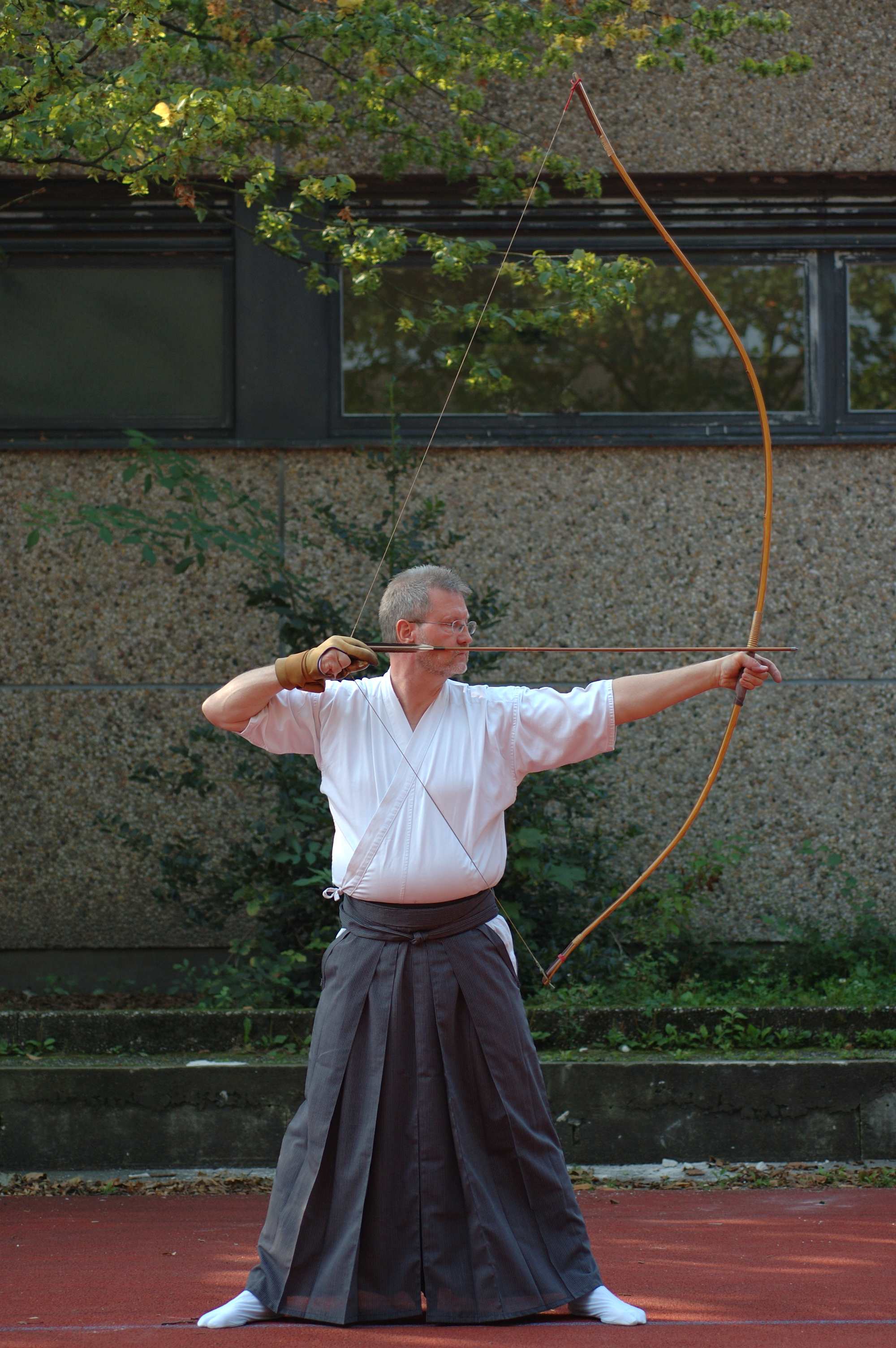
As I step away from some of my older hobbies, it looks like kyūdō—the Japanese martial art of archery—might be a new activity that arises to take their place.

People who know me will realize that when I commit to an interest, I dive into it with a unique intensity and dedication. Looking back, I’ve had numerous interests which I pursued for years and sometimes decades, such as Tolkien fandom and fiction writing during my youth, or cycling and meditation as an adult.

But every five or ten years, I step back and reevaluate my hobbies and how they fit into my life. Often I can tell when a chapter of my life is about to end because I feel that my interests aren’t helping me grow in the direction I want to go in. It’s at those times that I’ll suddenly walk away from things I’ve been devoted to for years, such as when I left my writers’ group after running it for more than a decade. At the same time, I feel myself looking for what new interests might come along to replace the old.

In the past year or two, I’ve set the groundwork for dropping two time-consuming hobbies. I’ve already publicized that after fourteen seasons, 2014 will be my last year riding in the Pan-Massachusetts Challenge, which will free up a lot of time I’d otherwise spend fundraising. In addition, I will soon stop tracking my money using the Where’s George website, after a ten-year run. These were great activities, but it’s finally time to move on.

Knowing that this would free up time and energy, I started kicking around ideas for what I might enjoy doing next: something I could get involved with that would also appeal to the very different person I have become.

And the first thing that seems to have arisen is kyūdō.

kyudoka

Kyūdō is a meditative martial art devoted to the traditional Japanese form of archery. It’s surprising that kyūdō is not widely known in the US, because it is extremely popular in Japan, where archery and its equipment are viewed as highly sacred. Kyūdō has been refined and distilled into a highly reflective, meditative practice, as reflected in the first western book on Japanese archery. Eugen Herrigel’s 1948 “Zen in the Art of Archery” was wildly popular and was the first book to use the now-popular moniker “Zen and the art of…”

So why have I been drawn to kyūdō? It’s hard to explain, but it boils down to six attributes that appeal to me: it’s social, meditative, physical, elegant, familiar, and Japanese.

Although the focus of the form of kyūdō is internal, participation and instruction are offered in the context of a small, friendly martial arts dojo of mixed ages and genders. This is imperative to me, since social life and connection is revealing itself as the primary project of my fifth decade of life.

I probably don’t need to belabor how kyūdō’s meditative focus complements my longstanding contemplative practice. As a form of meditation that involves a fair amount of movement, Kyūdō seems to nicely fit in the gap between rather sedate walking meditation and full-bore regular life.

For years, I’ve been looking for some technique for integrating physical exertion and meditation, which initially led me toward an exploration of yoga. However, being in a room filled with women in tight skinsuits—all rolling around on the floor in provocative positions—wasn’t especially conducive to internal exploration. Kyūdō allows and incorporates a focus on the body without the detrimental distractions.

However, like the asanas in yoga or the forms in tai chi, kyūdō is strictly choreographed. And when control of the human body and its motions is combined with the natural geometry of the bow, bowstring, and arrow, kyūdō epitomizes elegance and grace: attributes that I strive to embody.

And archery has always appealed to me. Even as a child, archery was my favorite activity at summer camp, and over the years I became pretty skilled at it. And in my medieval recreationist days I bought and used a very powerful English longbow, as well.

And for whatever reason, I seem to be in a phase where Japanese stuff is interesting, so it fits into that, as well.

So as you can see, kyūdō actually complements my interests quite nicely.

Practices are both convenient and a bit of a stretch. During the winter, they use an indoor aikido dojo in Union Square, which isn’t easily reached by mass transit, but is manageable. And in the summer they’re out in Lincoln, which would be really difficult, except that’s just one town over from where I would be training during a regular weekend bike ride, so I’ll probably combine the two.

I first started looking at their website around Thanksgiving, and saw that they were running a new student “first shot” training at MIT in January. However, it filled up before I could sign up.

So two weeks ago I showed up at the dojo just to observe. Fortunately, another new guy was there, and apparently we comprised enough interest for them to schedule another first shot training the following week. So I returned for a second visit and received instruction on most of the form from Joyce and Randy, with the expectation that I’d get to perform my first shots the next time.

This past weekend, I returned for part two of the training. Although the other new guy wasn’t around, I received additional instruction from Joyce, and then Don covered some more details before encouraging me to step up and take my first shot.

To put that into perspective, in Japan new students often take weeks, months, or sometimes years drilling the techniques before they’re allowed to shoot. Due to Americans’ typical impatience, our school has disposed of that, but it’s still a big milestone.

So I felt some anxiety as I stepped up and went through the movements and fired two arrows. When we move outside, we’ll fire at targets 28 meters away, but indoors we shoot at cardboard bales from a distance of about ten feet. I managed to remember most of the steps, but forgot to flip my right arm back upon my first release; I corrected it for the second.

What was interesting to me was how intensely the body experienced it. When I stepped away, my heart was racing and I was breathing heavily. I think much of that is due to the selfconsciousness of taking my first shot under the sensei’s gaze, combined with the physical stress of drawing the bow and the loud thunk of the arrow striking the target.

Of course, I haven’t mastered anything as yet. It’s frustrating but entirely predictable that some of the things I do wrong are common both to kyūdō and cycling, such as tensing and hunching my shoulders. And I also need to pay better attention to keeping my body facing perpendicular to the target, rather than turning toward it.

But it was successful! I’d followed the forms and properly fired and lodged my arrows into the target. So at least I’ve got the basics down.

Over time, I hope to embody some of the elegance that you can see in some of the YouTube videos or Vimeo videos about kyūdō. And if I stick with it, perhaps someday you’ll even get to see a photo of me in a hakama!

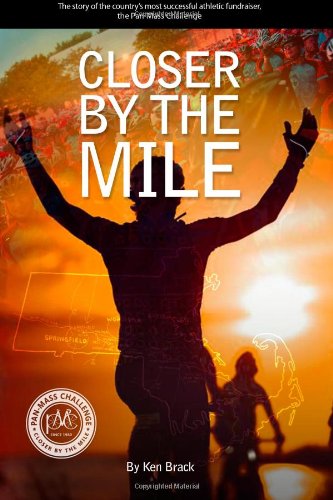
So someone finally wrote a book about the Pan-Mass Challenge.

If you are one of my friends who care about (or are just curious about) the event, you might be interested in picking it up. It’s short—just 150 pages—with a handful of greyscale photos. It’s inexpensive too—just $9 at Amazon!—and the author is giving 75 percent of the profits back to the PMC.

Front cover

The writing is first-person and informal. While that makes it readable, the author rambles around each chapter, covering diverse topics with no real focal point, yielding a book that also has no coherent theme other than the experience.

But to be fair, the PMC—the event—is all about that experience. The entire weekend is intensely emotionally charged, and that’s something that is nearly impossible to convey in words. This is astutely summarized in a quote from one teen rider, “When you explain it to a friend they sort of know what it is, but until they’re there, they don’t really know.”

Sure, there’s the obligatory nod to the event’s long history, including how the idea came to the founder during a ride in Boston’s Arnold Arboretum, how he ran the event for fifteen years from his father’s dining room, how everyone reacted to the first rider fatality, finally getting permission to use the campus of the Massachusetts Maritime Academy as an overnight stop, and the event’s phenomenal growth.

And there’s plenty of interesting factoids. On PMC weekend, riders will pedal a collective three-quarters of a million miles. 70 percent of riders return to the event each year, and scores of PMC kids rides serve as a farm club for the main event, iculcating future generations into a culture of philanthropy and caring about others.

Combine all the other single-event athletic fundraisers in the nation, then multiply that by 3.5—that’s what the PMC raises every year. Having passed 100 percent of rider-raised money through to the charity, the PMC constitutes 60 percent of the Jimmy Fund’s revenue and—at 20 percent of the Dana-Farber Cancer Institute’s entire budget—is DFCI’s largest single source of funding.

All this enables Dana-Farber to conduct over 700 clinical trials and 350,000 outpatient visits per year. But more importantly, the PMC gives Dana-Farber the power and security to do the impossible. The PMC has directly underwritten research that led to treatments and cures for rare pediatric cancers that threaten the lives of a thousand kids per year, a hundred kids per year, even just 32 kids per year.

The book tells the stories of a number of these kids, including the PMC’s poster boy: Jack O’Riordan, who at one year of age was cured of Wilms Tumor, which only six children had at that time. And how, after cheering on PMC riders for 14 years, he finally was old enough to do the ride himself (despite a broken leg).

The book also includes stories from the more than a hundred Dana-Farber staffmembers who ride, and gives a pointedly realistic assessment of Lance Armstrong’s single visit to the event in 2011, shortly before his confession as a doper and resignation from his own cancer-related charity.

Many of the people in the book provide quotes that further illustrate the attitude and atmosphere the event creates.

“There are widows and there are orphans, but no word exists for a parent who loses a child.” -One 17-year rider’s fundaising email

“At first when I get the call my heart goes out for the family; it’s so hard. But then my heart soars because they’ve found the right place, the right team.” -A pediatric oncologist who rides

“To the world you may be just one person, but to one person you just may be the world.” -One of hundreds of signs lining the route

“You’re never done, you’re never done with the event.” -A 25-year volunteer

For me as a 13-year rider, the book left me with mixed feelings. I so want to be able to share with others what the PMC experience is like. Although the book relates a handful of very emotional narratives, it’s simply impossible to capture all the amazing and heart-wrenching and grace-laden stories in an event that spans hundreds of miles with 5,500 participants, 3,000 volunteers, countless roadside spectators, and a quarter million sponsors over 33 years.

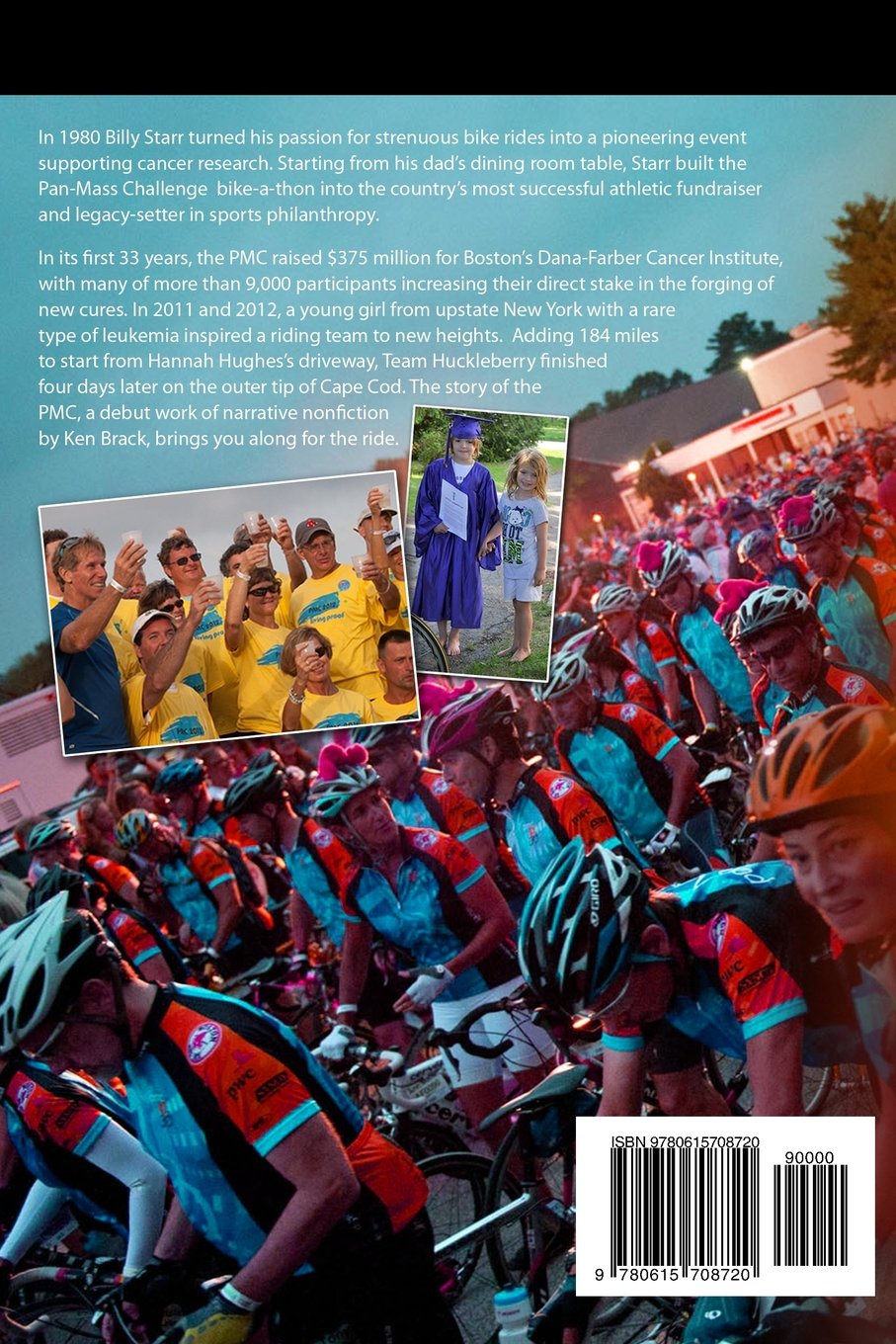
Back cover

One of the difficult things to capture about the PMC is the emotional impact. All weekend long, you’re primed, because you never know when you’ll see something that instantly moves you to tears, whether it be to the heights of inspiration or the depths of despair. Will it be the kid holding an “I’m alive thanks to you!” sign? Riding next to a Red Sox or Patriots player? Or exchanging greetings with an 80 year-old rider, or an amputee riding with only one leg?

Will it be hearing the story of someone who has raised a quarter million dollars, or a rider with a loved one’s photo or dozens of ribbons with names pinned to their jersey? The tandem bike with an empty seat, representing a lost loved one?

Will it be the sincerity and passion with which hundreds of people lining the route thank you for riding? Or watching the tens of thousands of people—riders, volunteers, sponsors, supporters, patients and their families, doctors, and nurses—who have come together to make a real, meaningful difference in each others’ lives this often impersonal and uncaring world?

As a longtime writer myself, I don’t envy anyone who tries to capture and communicate the PMC experience, in whatever medium. So I won’t criticize the author for falling short of 100 percent success. But I’m very glad he did it, and I think it’s well worth the $9 for anyone who has ever felt attachment to this singular and irreproduceable event.

And, of course, if you have yet to sponsor my upcoming 13th PMC ride, now’s the time!

The following is a letter from the President of the Dana-Farber Cancer Institute to the PMC organization.

I have chosen to share it with you and my sponsors to give you a better idea exactly how the money we raise is spent, and how vitally important it is to their lifesaving mission. And, of course, so you too can receive the thanks you deserve for your support of my ride.


Dear Fellow PMC Members:

First, thank you from the bottom of my heart. Thank you on behalf of so many who work so hard to conquer cancer, and even more people who count on us to do just that, and on behalf of everyone at Dana-Farber and all of the people who depend on us. You, individually and collectively, have been absolutely phenomenal. The financial support that you have provided has enabled groundbreaking research that has saved lives and will ensure that we will be able to save more lives in the future. Of equal importance, is the extraordinary spirit and positivity that you bring to your effort. This is enormously uplifting, motivating, and sustaining to all of us who work on the frontline of trying to conquer cancer.  You are right there with us, and that is enormously heartening. I thought it would be a good time to update you about what is going on in the world of cancer research and what your incredible support is doing to allow cancer research to move forward at Dana-Farber despite one of the worst external environments in the history of medical research.

Among the most important things unrestricted funds supports is our ability to recruit and retain the world's most incredible faculty of cancer care givers and researchers. You have met many of them; Nadler, Demetri, Winer, Partridge and more. Nearly all of them are here because we were able to use the unrestricted support that you provided to invest in their recruitment and to support their early work, work at the cutting edge, before it was a "sure enough bet" to be funded by the National Institutes of Health or other agencies. Indeed, these faculty members have become so important and prominent that they are the target of enormously attractive recruitment packages from many other institutes. Because of the PMC's record breaking support last year, I was able to use these funds to support retention programs that kept them here to continue their work. PMC support helps convince them that we can commit the resources they need to make the maximum impact on cancer outcomes on now and in the future at Dana-Farber.

PMC funds support work for ground-breaking, out of the box projects by our investigators in their own research programs; other funds allowed us to invest in key equipment such as state of the art sequencing and imaging facilities. One of the world's first small imager Cyclotrons, a multimillion dollar piece of equipment needed for the imaging capabilities at the frontiers in research, is being used on more mouse models in cancer. It was partly funded by the PMC. To get the remaining funding, we were able to leverage your support to obtain matching funds from the Commonwealth of Massachusetts. We now have the finest animal imaging facility in the country used to study mouse models of cancer, and we will make it available to collaborators within Harvard, and outside to the biotech and pharmaceutical world.

This past Friday, I had the honor of presenting the Osler Young Investigator Award to Dr. Kimberly Stegmaier, one of our rising faculty stars who was supported in her early work by the funds that you raised. She is now a world class developer of novel agents for the treatment of childhood leukemias and neuroblastoma using innovative genomic technologies that we used PMC funds to support. PMC funds allowed us to purchase equipment and collaborative services both at Dana-Farber and the Broad Institute. This has sustained a unique collaboration between two world-class institutions in the conquest of cancer.

This past spring, Drs. Ken Anderson and Paul Richardson and their collaborators from the Medical School and the pharmaceutical industry received the highly prestigious Warren Alpert Award from Harvard for their work in developing novel therapies at record speed. These have been the driving advances resulting in the tripling of survival time for patients with multiple myeloma. A significant amount of the funds that made this work possible came from PMC teams that have ridden in support of Drs. Anderson and Richardson. Perhaps even more importantly, some of the very earliest work of this group, working before its value was apparent, was supported by unrestricted funds that were generated by the PMC.

These are just a few of many examples that provide tangible proof that you are allowing us to forge ahead in very difficult times. In virtually every one of our disease centers and our departments, there are young investigators whose careers were launched by funds raised by the PMC. In every one of our cores and centers, equipment, expert scientists, computational capabilities, expensive supplies and expert personnel are there because we are able to support them with PMC funds. Every one of our clinics and clinical trials are supported by your funds.

You truly are marching with us on the front lines in the war to conquer cancer. It seems almost impossible to do even more than you are doing. However, if ever there was a time for even more effort and generosity, it is now. The federal government allowed "sequestration" to happen, this has resulted in a cataclysmic cut in the NIH budget. Cancer research is disproportionately affected. In addition, Massachusetts and federal healthcare and payment reform are reducing clinical reimbursements.  And, in this time of highly constrained resources, competition from many other worthy causes for traditional forms of philanthropy is more intense than ever.  It is only through the PMC that we can hope to remain aggressive and optimistic about making a difference in the lives of patients with cancer and saving even more lives in the future. Thank you as always for the incredible work that you do on our behalf.

Sincerely,

Edward J. Benz, Jr., M.D.

Prologue

I never really had a bucket list—a list of adventures I wanted to have before I die—mostly because as I identified things I wanted to do, I found ways to do them.

In fact, when I finally did sit down and make an attempt at a bucket list, I found 42 things that I had *already* done, and only eight that were still outstanding! Bucket list: you're doing it wrong!

Of those eight I hadn't done, three required travel to San Francisco. So it made sense to book a flight to the Bay Area and knock off a third of my bucket list in one single trip.

The first item on the list was the Buddhist Bicycle Pilgrimage (BBP). Many years ago, I heard about this two-day, 140-mile ride that started in Marin County, north of San Francisco, which visited several dhamma centers. Naturally, I was drawn to this event that combines two of the most important parts of my life, and I began making plans to attend. However, I'm not good at scheduling solo travel, and the plans never came together.

The second thing I wanted to do was visit a meditation teacher named Gil Fronsdal who runs the Insight Meditation Center (IMC) in Redwood City, south of San Francisco. When I first started getting interested in Buddhism, I downloaded (without exaggeration) thousands of dhamma talks by various teachers, but the person I felt most connected to and inspired by was Gil. Again, for years I envisioned myself going to California to express my gratitude and to speak on behalf of the listeners who have benefited from his wisdom as encapsulated in the talks he's freely offered online.

It seemed fateful that my ex-wife Linda also lives in the same town: Redwood City. We hadn't communicated in nearly 20 years when out of the blue she friended me on Facebook two years ago. Interpreting that as an invitation to communicate, I pinged her to see whether she would be interested in getting together to catch up. After all, I'm not the type to drop from my life someone whom I once cared a great deal for. That was my third major goal.

But it still took me more than three years to put this trip together. Why? A large part of it was my nervousness about making solo traveling plans. I like to have everything planned out and certain beforehand, and that wasn't going to happen on this trip, between having to arrange flights, three hotel stays, transporting my bike or renting one, finding a tent and sleeping bag, renting a car, getting transportation back to the start once the ride was over, and so forth.

I was also discouraged when one of my dhamma friends, after expressing interest in tagging along for the pilgrimage last year, backed out once I started making plans.

Ironically, another dhamma friendship was the catalyst that got me to finally make firm plans this year. A couple of people were hanging around the Cambridge Insight Meditation Center (CIMC) after a talk one night, chatting about cycling, and this guy Peter started telling me about the BBP. I mentioned my travel trepidations, but he encouraged me to go. He'd done it several times, and was helping out with the planning this year, since he splits his time between east and west coasts. He offered to answer any questions I had, and that helped me get over my blockage about travel.

So after this year's Pan-Mass Challenge, I pulled the trigger and made all the arrangements. I was headed to California, and was finally going to accomplish all three of these longtime goals!

Friday, 28 September 2012

San Quentin, I am in you!
Rental Bianchi
Cal Park Hill Tunnel
Ornoth at Spirit Rock
Sae Taw Win
City of 10,000 Buddhas
Ornoth sits at City of 10,000 Buddhas
A Crossroads
Abhayagiri
Summer Kisses Winter Tears
Insight Meditation Center

Thursday after work I came home and made my final preparations, then turned in… briefly! I had to get up before 3am in order to grab a cab to Logan for my 6am flight. 3am is bad enough, but if you convert that to west coast time, I had gotten out of bed before midnight!

As I said goodbye to the Gradle and locked the door behind me, I had a very strong sense that I was embarking on a pilgrimage. Sure, there was the Buddhist Bicycle Pilgrimage that would take place over the weekend, but there was a larger, personal pilgrimage that began when I left home, and which would include getting to California, sitting with Gil at IMC, and also hopefully seeing Linda. This larger pilgrimage turned out to be a very real and meaningful experience, as you'll see if you read on.

My 6am flight to SFO went well. When I'd checked in on Thursday, I'd opted to receive my boarding pass on my mobile phone, so United had sent me an email that contained a scannable QR code. While I was nervous about how that would work at the TSA checkpoint and at the gate, they had scanners set up and it all worked flawlessly. Very cool.

What was even cooler was that on a nearly full flight, there was an unoccupied seat between me (window) and the guy in the aisle seat, so that gave us the opportunity to stretch out a bit. Score!

I arrived at SFO at 9:30am, picked up a silver Mazda MX-3 rental car, and headed north, passing over a completely socked-in Golden Gate Bridge. I arrived in Marin County well before I could check into my hotel, so I tried going over to the Corte Madeira REI, where I'd reserved a tent and sleeping bag. Along the way, I grabbed some drinks and snacks at a Safeway, then picked up my camping gear with no problem.

Then I drove ten miles out to the town of San Anselmo, where I'd reserved a bike at 3 Rings Cycles. They were really friendly, which led me to conclude that the rest of California might not be as cliquey as San Francisco. They hooked me up with a red and white Bianchi Infinito. Oddly, it was a carbon bike, but with low-end Shimano 105 components. But it would do for the weekend.

For all this driving around, I used my Android phone's built-in navigation app. It impressed me, doing everything a dedicated car GPS would do, including verbal directions. It was a big win, and I relied on it all week.

I drove back to the hotel and they allowed me to check into my room early. That gave me time to take the bike out for a test ride, and I knew just where I wanted to go.

A block from the hotel was the newish Cal Park Hill Tunnel, a dedicated bike path tunnel through a mountain, which created a connection between Greenweir, where my hotel was, and the city of San Rafael. I moseyed down there and pedaled my way through the tunnel. While it wasn't a really long tunnel—about a quarter mile—it's damned long for a bicycle-only tunnel, enough so that my GPS gave up trying to get a satellite signal. I passed through it, rode a bit further on, adjusted the bike's seat, and then rode back. Pretty cool!

A mile in the other direction was California's San Quentin State Prison. I made my way down there and took a photo which I posted to Facebook, saying, “San Quentin, I am in you… uhhh.” Well, I thought it was funny! The bike checked out okay. Nothing spectacular, but it was pretty and serviceable.

After a trip to CVS to get drinks, I discovered a little (20-person capacity) Thai restaurant called Tha Siam in the commercial development across the street. I had chicken himaparn, which was heavily spiced, along with some good brown rice. I was feeling kinda headachy, tho.

Back at the hotel, I showered, wrote out the BBP route on cloth tape to attach to my bike's top tube, unpacked everything from flying mode and repacked it for cycling and camping mode, and paid my monthly bills (it was payday, after all).

That was when I got the email from Linda. Her response to my email announcing my trip had been cool: I've been working crazy hours and barely have time to sleep, and won't know my schedule until the day you arrive. Well, I'd arrived, and her followup wasn't any more receptive: My boyfriend's uncomfortable and I have to take his feelings into consideration. Basically, I'd come 3,000 miles to her doorstep, and she had turned me away.

So… Here was the first curveball of my trip. It wasn't entirely unexpected, but it was still tremendously disappointing. I was hurt, and it was a challenge dealing with all the emotions that her rejection brought up. How much should I trust her words, versus the message between the lines? And even if I believed her, hadn't she learned better than to date jealous, controlling guys? I didn't know what to think or how to respond; I knew that I couldn't respond right away, and that meant not replying until after the ride.

So I'd have material to think about and practice with during the hours in the saddle. But I already knew that I could do so with a clear conscience: I had made a sincere offer out of kindness, and I had to let go of any expectation of how that offer would be received or what the result would be.

Still, it wasn't a restful night.

Saturday, 29 September 2012

It was also another short night, as I had to get up before 5am. Thankfully, that's 8am Eastern time, so it wasn't too painful! I checked out of the hotel and drove ten miles out to Woodacre and the Spirit Rock Meditation Center. Upon arriving, I assembled the bike in the pre-dawn darkness, and loaded my backpack, tent, and sleeping bag onto the gear truck.

After I and about a hundred other riders checked in, we had a brief sitting in their VFW-like “community hall”, followed by a dhamma talk by Julie Wester. She talked about what a blessing it was to be able to combine two activities that you are passionate about, and how cycling and meditation were a natural fit due to the need to be focused and aware in the present moment. I found it an interesting and moving speech, but I was emotionally primed, having made such a substantial effort just to get there.

She also talked about the pilgrimage's “theme”: the four bases of success, or the Iddhipadas. They are: desire or intention, effort or energy, application of mind, and investigation or wisdom. As they went over them, I thought about how those are a formula for success in any effort. The pilgrimage focused on one base every half-day, and since Saturday morning's topic was desire or intention, we were encouraged to reflect on the desire that had brought us here, and what we intended to get out of the pilgrimage.

We were dismissed around 7:30am and everyone left at their own pace. I chatted with Peter before mounting up and moseying down toward the main road, where I waited for a group of riders to go by. When I rolled out, I thought I was toward the back of the pack, and I wasn't paying much attention as I passed six or eight other riders. I was putting a little energy into it, because it was misty and cold, and because I was glad to have something physical to take my mind off Linda's email.

The first segment reminded me of Scotland. There weren't any huge hills, but there were lots of small ones, and they were *steep*! I'd be riding along, hearing cows lowing, and look up into the mist and see them munching away on a hillside that climbed (or dropped) 400 feet, right next to the road! The countryside was dramatic; I wish it had been less misty, and light enough to see more of it along the way.

An hour later, I saw people sitting at the side of the road, and the route arrows pointed at them, so I turned off. Apparently this was the first rest stop. After a bit of chat, they clued me in that the food was set up behind a nearby building, so I moseyed down there.

The odd thing was that a handful of people there started cheering for me. Apparently I was the first rider to enter the rest stop! Huh! I thought I was toward the middle of the pack.

I had been headachy all morning and hadn't eaten anything for breakfast, so I grabbed a couple grapes and a bit of a bagel. After a porta-potty stop, other riders were coming in, so I continued on, hooking up with two other riders.

What I didn't know at first was that they weren't BBP riders; they were locals. We chatted for a number of miles, which included the biggest climb of the whole ride. It was hard, reminding me of New Hampshire's Crawford Notch. The descent that followed wasn't that impressive, but I gapped my local friends and rode on alone.

At the base of the descent, I turned onto a road that led up the flat floor of a valley dotted with working farms and vineyards. Right at the corner, near a farmhouse, I saw four really big crows standing by the side of the road. But they were *really* big… and had kinda bald heads… And then it hit me: there's fucking vultures lining the route! Vultures! As I rode by and gasped my amazement, they just stared back at me. *That's* something I've never had to deal with back east! And apparently it's not normal out west, either, because people talked about it later, in camp.

Just before 10am, about the time the next rest stop was supposed to show up, I saw a guy in a truck unloading a table and drinks and figured this was the place. Well, it wasn't; he was a support person for a tour put on by REI, supporting a pack of Welsh tourists! I rode on, but didn't go far, because our people were set up just around that corner. Again, I was heralded as the first guy in.

I had a cookie and some grapes, but didn't stay long at that stop because it was overrun with hornets. I exited the stop with the two guys who had come in after me, both of whom were wearing yellow jerseys. I pulled them along for a few miles, but when I rotated off the front, one stopped for a bio-break, and the other stopped to strip off some clothing, because the temperature was climbing into the 70s.

So there I was again, riding solo off the front! The primary land use in the valley was farming, and it was a very pastoral setting. I saw trucks in the fields, distributing hay for the cows' breakfast, and had to swerve to dodge cow-patties in the road. These two segments smelled richly!

I was glad when the route dove sharply and then turned onto a main road. I had to be careful crossing the road, because we had intersected the route of pro racer Levy Leipheimer's Grand Fondo, which had over 7,500 riders. Fortunately, we were going in opposite directions, and our route veered onto a bike path less than a mile later.

The path led me through the town of Sebastopol, and a few streets later (at 11:23am) I was at the lunch stop: the Sae Taw Win Dhamma Center. It was no surprise to the volunteers staffing the stop that I was the first rider in. I had already earned the epithet “jackrabbit” and comparisons to a speedy rider named Max from previous years.

It was beautiful out: sunny and comfy, but a little chilly in the shade. I took up a bench in the sun and did some self-massage, working out the stiffness in my muscles. Having gotten my appetite back, I gobbled a couple brownies along with some grapes, and sampled a box of Chicken in a Biskit crackers, which I haven't seen since high school.

The main feature of Sae Taw Win is the cedi, the Ananda Suriya Metta World Peace Pagoda, a mirrored and crowned stupa, surrounded by smaller cedis sponsored by Burmese families, which you can see in the associated photo, above.

Before we left Sae Taw Win, we had a dhamma talk by one of the teachers, Carol Meredith. I found it interesting, because while they're in the same Theravada lineage as most of the instructors I've known, they're a distinctly Burmese lineage, rather than a Thai one. I was surprised when she told us that they don't teach sitting meditation, but focus on bringing practice into students' regular lives, which sounds similar to the goals of CIMC, as an urban center.

They begin by teaching five main precepts: present-moment awareness, tranquility, awareness of likes and dislikes (which connected to Saturday morning's theme of “desire”, and also reminded me of my old vedana practice), then judgement, and clinging; all this before they continue on to the Eightfold Path.

After the talk, I joined a line waiting for the bathroom, which included the guy who had founded the ride, eleven years earlier. They were talking about how Saturday afternoon was the hardest part of the ride, something I'd heard before, but which made no sense to me. We were already more than 50 miles into an 85-mile ride, with all the climbing behind us (except for one kicker at the end). The remaining 30 miles looked flat, and there was no wind. So I asked… And was told that it was hard because of the heat, and because one already had fifty miles in one's legs.

Well, that didn't dissuade me, and I'd already had a long rest, so I made my way back onto the road. The “base of success” for Saturday afternoon's segment was effort, so I applied some.

The ride continued through farmlands and vineyards, and the valley heated up to 80 degrees. One moment of concern came as a pickup truck came flying around a corner toward me. As it leaned into the corner, the porta-potty in its bed rocked, sloshing liquid across the road in front of me. That's legitimate cause for concern!

I hit the next stop before 2pm. I wasn't the first person in, but one of the first three. The segment hadn't been bad, and I was eating up the miles, but it was warming up. It felt good to have temperatures back in the 80s, since at the end of September they're over back in Boston.

I'd been riding on rough roads; I think California figures that since they have such good weather, they can lay down some macadam and never revisit it again. I thought my bike was making more noise than it ought, but I couldn't isolate it until I heard a metallic plink. As I rode on, nothing seemed amiss until I saw that the binder bolt holding the headset cap had vibrated out, and by now it was far enough behind me that I'd never find it.

That bolt controls how much play the headset bearings have; without it, the headset would be loose and make a lot of noise. In theory it could even shake apart, but there wasn't anything I could do about it but ride on, a little more gingerly than before.

Later, as I was laboring up a small slope, one of those two guys in yellow—the one riding a flat-bar single-speed—blew past me like a rocket. Wow! I guess someone has better legs than me! The other guy was also ahead of me, but I passed him when he flatted, just short of the next stop.

That stop—the final one before we got to the overnight campground in Cloverdale—was just eight miles from the finish. We chatted with the volunteers who'd been leapfrogging us all day, and then the three of us rode on.

I knew the climb up to the campground was a beast, and it was. Single-speed boy powered ahead of me again, while the man who had flatted fell behind. The climb reminded me of Great Blue Hill, climbing 400 feet in a mile. The temperature had broken 90 degrees, as well, but the views across the valley were nice.

The road turned briefly downslope, arriving at the Wine Country KOA campground. We checked in at the office, where I spotted an ice cream freezer and picked up a Klondike bar. We arrived around 4pm.

I grabbed my tent, sleeping bag, and backpack from the gear truck and wandered down to the camping area, picking a spot beneath an overarching tree next to a dry stream bed. Then came a challenge: figuring out how to set up the dome tent I'd rented. I had a couple mis-tries, then remembered that the woman at the office had mentioned they would be giving away snow-cones twenty minutes after we arrived, so I went up there and got some slush. It wasn't very good, but it was welcome after a long, dusty day in the saddle.

Returning to the campsite, I figured out the tent and got it up. Remembering that there were a hundred riders behind me, I grabbed my shower gear, stuffed my wallet into the front of my cycling bib shorts, and walked off toward the showers.

The shower wasn't great, but it was delightful given the circumstances. I brought my stuff back to the tent, then returned to fuel up on some snacks before dinner. When dinner came around (mostly pasta), it went down well as I sat around talking to a couple girls and one talkative old man who'd driven one of the SAG vans.

By then it was 8pm, and time for the evening's ceremonies. Two Buddhist monks from our eventual destination—Abhayagiri Monastery—offered a guided meditation and dhamma talk.

The meditation was interesting: the monk had us compare our level of stress while sitting to that earlier in the day, when we were riding, then compared to a quiet woodland, then just the bare earth, then the planet, empty space, and pure void. he was trying to illustrate that in meditation, one shouldn't go straight to peacefulness and avoid stress, but to look back to find the source of stress and learn to avoid it in the future.

As a bright full moon rose, the dhamma talk that followed focused on the four bases of success and their usefulness in guiding meditative practice. By then, I was getting past my disappointment with Linda, and starting to figure out how I could respond in a way that honored both her freedom of choice and my emotions. After the dhamma talk, the pilgrimage leader gave some announcements, but started out by calling me out by name as the rider who had come from farthest away.

Then it was time for a well-earned sleep. I retired to my tent and climbed into my sleeping bag. It was the first time I'd camped out since Linda and I attended medieval recreationist events 20 years back. I managed to get adequate shut-eye in between tossing and turning, but it was far from anything I'd call a full night's sleep.

Sunday, 30 September 2012

The morning wasn't too cold, and I didn't shiver too much during the 6am meditation sitting offered by the monks. Fortunately, breakfast was served inside the campground's little dining hall, so I warmed up there. I finished and packed up my camping gear and was throwing it on the truck when I realized that I didn't have my wallet on me. In fact, I didn't have my wallet anywhere. I searched the office and the showers and all over the campground, but after 45 minutes I had to give up and ride on. Either it would show up in my bags or at the campground office, or it wouldn't. There was nothing I could do, so at 8am I rode out at the back of the pack, as some deer watched from the hillside.

There's no denying that I was upset about the wallet. If it didn't turn up, I was in deep shit. When the ride was over, I had to re-check into the same hotel I'd stayed at Friday night. Then check into another hotel in Redwood City for Monday and Tuesday. And I had to return my rented camping gear and bike, and the car I'd rented. And how was I going to convince the TSA to let me fly home without any ID? I was fucked.

With that as background, I pushed myself hard in the first segment of the ride, in order to work out some nervous energy. I caught up with my friend Peter, but blew past him, in no mood to chat. Then we turned onto the divided Highway 101 for a long climb. At least I was alone, so no one heard the continuous invective that I vented.

At 9am I pulled into the first rest stop. I was cooked after exerting myself. The highway riding wasn't great, but at least there were no steep climbs; the whole day was one long, shallow, unvarying 50-mile climb, much like some of the roads on the Mt. Washington Century. The worst part of riding on the highway was the rumble strip that took up about a foot of space along the breakdown lane.

The morning was sunny but cool, with a headwind, and the countryside—beyond the leveled highway—was rolling hills. Physically, I felt okay; my legs were fine except for lack of power on the hills, but I wasn't having a great experience with the rental bike's saddle. And, of course, my lost wallet was predominant in my thoughts. I can't say I was an exemplar of that morning's success factor of “application of mind”.

I rode for a while with a kid who had grown up in Connecticut. Then, by quarter of ten, I was in Ukiah and passed through the ornate archway into our lunch stop: the City of Ten Thousand Buddhas. A former state mental institution that had 70 buildings covering more than 700 acres, the center is a huge campus. It was founded by a Chinese chan (zen) master Hsuan Hua and serves as a center for Mahayana Buddhism and ethical education.

Upon arriving, I changed into my “modesty attire” (long pants for men, long skirt or sarong for women). After more riders arrived, we followed the chief Reverend Heng Sure into their amazing Buddha Hall, which indeed contains 10,000 Buddha statues.

He explained that they, too, do not do sitting meditation, but practice prostrations, leading us through their method, which includes the use of padded “kneeling benches”. He then proceeded with his dhamma talk, which focused on intention and ethics (sila). He had the delivery of a comedian, and ended by playing his banjo (!) and leading us in a song about repaying our parents' kindness. I found it more than a bit strange, but well-intended.

That done, he tromped us over to the dining hall for a prodigious and much-needed lunch, which included grape juice from their vineyards. When I finished, I went back to the gear truck, got rid of my modesty clothing, and set out a little before 1pm on the final 20 miles of the ride.

By 1:45 the temperature had climbed past 93 degrees, and the noontime sun was beating down on the exposed road. I was feeling used up, and was happy to see the final rest stop in a park, where I was once again the first rider in. I stole some ice for my water bottle, then poured a cupful of water over my head as other riders came in.

Then I set out one final time. I didn't want the ride to end, but I also wanted to see Abhayagiri Monastery. And my butt wanted to say farewell to that uncomfortable saddle.

The climb up to Abhayagiri is tree-lined and quiet, and gave me some time for reflection. But soon enough the route arrows pointed me up a ridiculously steep driveway to the gear truck, where I was the second rider to arrive. Pilgrimage complete!

After arriving, I made for the shower, which was wonderful on such a blazingly hot day. The monks had set up big fans with reservoirs that sprayed a fine watery mist as a form of natural air conditioning. They also were giving away books, including their 2013 Forest Sangha Calendar, and a huge tome of “The Collected Teachings of Ajahn Chah”, a respected and influential Thai teacher.

I opened up both my tent and sleeping bag to see if I could find my wallet in there, but no luck. The monks also gave us a brief tour of part of the steep and heavily-wooded grounds in their pickup truck. Half their land was donated to them by the founding teacher of the City of Ten Thousand Buddhas, which is remarkable because he comes from a completely different lineage.

The pilgrimage's closing ceremony included twelve robed monks chanting for us. Some of the chants I recognized, but they went beyond my repertoire. It was kind of funky having them chanting for us. Then a brief dharma talk, which included a reinforcement of the idea that concentration practice isn't simply to achieve some altered state of consciousness, but is primarily in the service of present-moment awareness.

Then we were done, and our chartered bus was waiting to take us 140 miles back to civilization. I loaded my stuff on board and we pulled out just before 6pm. With everyone talking about the ride, I was surprised at how loud a bus full of contemplatives was! Meanwhile, I was anxious to get cell phone signal so that I could check to see if the campground had left me voicemail, which they hadn't.

That meant no wallet for me. I was anxious to get back to town, but that was foiled when our bus driver, trying to avoid highway traffic, took a random exit and drove off into the night on some back roads. We were out there for a long time, but eventually we got back to Spirit Rock and unloaded all our stuff from both the bus and the gear truck. Of course, since I had been the first to load my bike onto the truck, it was the last one out. But I packed up the car and headed back to San Rafael.

Walking into the same Marriott I'd stayed at Friday night, I was dusty, hot, tired, beat, dehydrated, sleep-deprived, and I just wanted to get to my hotel room so that I could crash in a real bed, get a decent night's sleep, and shower. But because I couldn't produce a credit card, the aging front desk lady turned me away. She wouldn't even take the $150 I had in cash (I'd left it in my bag in the car) as a deposit until the morning, when I could get to a bank. Unless someone could fax her a credit card authorization, she wasn't going to issue me a room. I tried messaging my friend Rena, the only person I knew on the west coast who might have access to a fax, but she didn't respond.

It was 11pm on a Sunday night, and there was nothing I could do, and no one I could call, since it was 3am on the east coast. I called Bank of America, who canceled my old cards and issued me a new one, but who wouldn't authorize a charge until I received the new one in the mail, which I had sent to the hotel I'd be staying at on Monday.

So I was fucked. I walked back out to my car and changed into long pants and grabbed my sleeping bag. It was going to be a long, sleepless night sitting alone in a rental car. It had been decades since I'd had to do anything like that, and I was stunned that Marriott, Bank of America, and American Express had all turned their backs on a customer in the midst of a travel emergency. It seems branding only goes so far.

Monday, 1 October 2012

So after biking 140 miles, I got to “sleep” in the car. Fortunately, between the stupid bus detour and trying to get into the hotel, at least a third of the night was already gone by. And the long hours at least gave me time to think about what I was going to do to un-fuck myself.

I figured getting a bank branch to let me access my savings account was my only hope, and I had two things working in my favor. First, the bike shop I'd rented from had photocopied my drivers license on Friday. They didn't open until 11am, but at least they had it. On top of that, I could talk to the concierge of my apartment building and get him to go into my condo, find my passport, and fax that to me. Hopefully that would be enough to convince BofA to let me raid my savings to pay for everything, and hopefully enough to convince the TSA to let me board my flight home. If that all worked out, I might be able to un-fuck myself. The last thing I wanted to do was fall back on the few friends I had in the area.

Finally morning came. I waited until 7am to go back into the Marriott, in hopes that a shift change would eliminate the evil desk woman from the equation. It did, although her replacement wasn't much more receptive. However, she eventually agreed to receive a fax, and I got in touch with the concierge at my building. Unfortunately, it wasn't the regular guy, but one of the less-experienced replacements. I walked him through getting into my apartment and finding the passport, and he said he'd fax it. Then he reported getting a busy signal. I checked with the desk lady, but their fax was fine, and receiving. Another busy signal. Okay, probably the guy has no idea how to run the fax machine. Why me?!? Try adding a 1 before the fax number! After another twenty minutes I was about to throw a fit, when the desk lady walked over with a fax in her hand. A fax with my picture ID on it!

The sense of relief I felt was overwhelming, and after thanking her profusely and dismissing her, I teared up. This piece of paper was going to get me into the bank and past the TSA. After a very long day of trial after trial, after hours and hours of being focused and purely functional and trying to manage my situation, one door had finally opened for me. With a little more luck and persistence, I should be able to kick open a few more.

The next stop was Bank of America. Thanking all the gods that be for smart-phones and websites, I knew that there was a nearby branch that opened at 9am.

Arriving a little early, I searched the car, because I thought I'd dropped something underneath my seat. I found some change I'd spilled and a mini sticky note with a woman's handwriting which read, “Summer kisses winter tears”. That sounded poignant enough at the time, so I pocketed it, but I later discovered that it's the title of an Elvis song. Its lyrics even vaguely echo some of my feelings about Linda:

Summer kisses, winter tears
That was what she gave to me
Never thought that I'd travel all alone
The trail of memories

Happy hours, lonely years
But I guess I can't complain
For I still recall the summer sun
Through all the winter rain

When the branch opened, I let the queue of people at the door go ahead of me, then brought my case to the teller. When she greeted me by asking how I was doing, my response was, “I'm doing horrible. But hopefully you can make it all better.”

Upon explaining my situation, she called her manager over. I proffered my passport, my electrical bill, my mortgage bill, and a paycheck stub. She asked me to recite my DOB, my home address, and a few recent transactions. The final test was the easiest: I didn't have my ATM card, but the teller keyed the card number in and asked me to enter my PIN. Hah! You think that's a challenge? With that, I was able to leave the branch with $2,500 cash in hand. A second door had opened.

Now I could pay for all my rental stuff: the bike, the camping gear, even the car, plus my hotel for the next two days. After executing according to my plan, things were now under control. After the baseless feeling of having no ID, no cash, no credit cards, and no place to stay, I was back to the familiar—and now trivial—feeling of baselessness of travel. And the only remaining question was the TSA.

My next appointment was at 10am, when REI opened. I had a few minutes, so I grabbed some breakfast at a Safeway. As soon as REI opened, I returned the camping gear, which was pain-free because the rental charge had already gone through on the old card. Easy-peasy! I even took a few minutes to browse through the store before leaving for my next task.

After a short drive out to San Anselmo, I unpacked the bike and brought it to 3 Ring Cycles, where at 11am the owner unlocked the shop for me. I told her about the missing stem bolt, which was no big deal. I told her about the wallet, and before I could go further, she recalled that she'd photocopied my license and offered to give me that. I told her how helpful that was going to be, and thanked her profusely. Finally, she too had charged my old card already, so there was nothing left to settle up with for my rental. Sweet! Getting that copy of my license was another key piece of the puzzle.

Now to execute the next step in my recovery plan: report the lost wallet to the police. Fortunately, 3 Ring is right across the street from the San Anselmo PD, so I strolled over and asked to file a report. As I told them, normally I wouldn't consider bothering the cops with something so trivial, but I'd called United's help line the previous night to ask what the procedure was for lost IDs, and I'd been told that I should be okay if I had photocopies of a drivers license and a police report. I had to wait a solid half hour for an officer to show up, but he took a report and gave me the document I needed. That's the sound of one more door opening. In theory, with all the documents I had, I should be able to convince the TSA to let me fly home!

My original plan had been to ride a local 30-mile loop down to Tiburon before returning all my stuff, then have lunch with former coworker Aditi in Oakland. Well, I'd had to punt on the Paradise Loop, but I wasn't far behind schedule for Aditi. I'd already alerted her to the possibility that I'd have to cancel, but I called back and left a message that I was on my way. Rather than take the Golden Gate back to San Francisco, I took the long Richmond Bridge across the bay to Berkeley and down to Oakland, again with thanks to the Android navigation app.

After pulling up in front of her house, I tried calling her, texting her, emailing her… No response. Well, I had some time to kill, so I consulted my map and walked down to nearby Lakeside Park on Lake Merritt, where I found a big gazebo with power outlets I could use to charge my battery-depleted phone. I hung out there for an hour, watching kids play Friend or Foe, then walked up and down Grand Avenue looking for something to eat. Knowing I was still dangerously dehydrated, I picked up a bottle of Gatorade and a bag of chips and walked back to the car.

It was 90 minutes since I'd arrived, and I was disappointed that I wasn't going to meet up with Aditi. Furthermore, after already missing Linda, I was depressed about being blown off by another connection I'd planned to make. I climbed into the car and was just putting the keys in the ignition when she called. She came walking up a minute later, and we went up to her apartment to let my phone charge, then down to a nearby Whole Foods to eat and chat.

I'm so glad I got to meet up with her, because I wanted to talk to her about her meditation experience. I'd seen her mention going to Spirit Rock on Facebook, and since they're my clan, I wanted to know more about her experience: what she thought, what she'd gotten out of it, and whether it was something she was continuing.

Without getting too personal, she told me that her experience there had been deeply transformative, and had helped her turn her life around. I could tell from the way she talked and the words she used that she had absorbed the teachings.

It was inspiring for me to hear how she'd taken to the dhamma, and it was awesome sharing this new connection with someone I used to know reasonably well. Our conversation was without question one of the high points of my trip. And that renewed connection and the good fortune that she's experienced in the past few months really moved me.

It was at this point that I began to reflect on what I was getting out of the larger pilgrimage: my trip to California. Pilgrimages often feature unexpected trials and highlights, and I was certainly having both, from the lows of Linda's email and losing my wallet and being turned out of my hotel to discovering the joy and wisdom that my old friend was experiencing through her newfound meditation practice. I was indeed on a journey, with all the challenges and growth and joys that implies. And I still had 48 hours left in California, and lots of plans to fulfill.

Aditi and I moved to a little cafe where I had a cola and we continued our conversation. However, the clock kept ticking, and I wanted to get on the road before rush hour, because I had an appointment to keep in Redwood City, 45 minutes away. I grabbed my phone, we said our goodbyes, and I hopped the interstate southbound, crossing back across San Francisco Bay on the seven-mile San Mateo Bridge, which had almost no traffic.

At 5pm I pulled into the Holiday Inn Express and went to check in, only to be told that they had no record of my reservation. Oh, joy! Well, I pulled out my confirmation sheet, and the girl at the desk told me that there were no less than *five* Holiday Inn Express' on El Camino Real in Redwood City, and that mine was another half mile down the road.

That resolved, I went to the real hotel. They were anxious to see me, because they knew that my credit card had gone bad, but they were happy to take my cash-in-hand, along with a $100 security deposit. And with that, I finally had a hotel room! Going up there, I even had not one but *two* beds! What decadence, after sleeping in the car the previous night, and a campground the night before!

After hitting the bathroom, I knew what was next on the agenda: fluid replacement, and urgently! I went to a convenience store across the busy El Camino Real and spent $13 on Gatorade, water, cola, orange juice, and a bag of ice, and proceeded to scarf down as much as I could. I breathed a sigh of relief at finally having things back under control, then proceeded to dump all my stuff out of my bags and started rearranging. But then it was time to leave again!

At 7:30pm on Monday evenings, Gil Fronsdal leads a sitting and dhamma talk at IMC: the Insight Meditation Center in Redwood City. As I mentioned above, Gil is one of my dhamma heroes, and meeting him was one of the main goals of my trip. In addition to Monday's talk, I also planned to attend a Wednesday morning half-day retreat with him.

IMC was a quick two-miles up El Camino. I found parking and walked over to a low, church-looking building on a quiet semi-urban corner just two blocks off the main drag.

After milling about their reception area / walking meditation room and checking out their printed materials, I went into their meditation hall, grabbed a bench, and took up a spot on the floor, which unlike CIMC is carpeted. My 45-minute sitting was surprisingly tranquil, given the absolute chaos of the preceding 24 hours, but perhaps some of that was attributable to finally feeling like I was in control of my situation, and also fulfilling my longtime goal of sitting with Gil.

Next came his dhamma talk. My visit coincided with the first in a series of talks on the Eightfold Path that Gil was starting. While he planned to devote one evening to each of the path factors, this first session was an overview of this central Buddhist teaching. One of the things that I most admire in Gil is his ability to take something like the Eightfold Path, which he has talked about dozens if not hundreds of times, and come up with something fresh and insightful to say about it. He's quite a talented speaker. If you're interested, you can play or download that evening's dhamma talk.

During the announcements, one woman had indicated that she would answer new people's questions, so after the talk I cornered her. I'd emailed IMC a couple times, asking to reserve time for a teacher interview with Gil during the Wednesday morning retreat. I'd received replies, but no solid confirmation, so I wanted to make sure I was on Gil's interview schedule. She suggested I ask Gil, so once he was through with the usual post-talk questions, I introduced myself and expressed my interest in reserving a time for an interview.

What I hadn't expected was his response. He jumped up from his cushion and said, “Well, let's go do it right now!” I was taken by surprise, and as he led me out of the meditation hall, I immediately started trying to recall all the things I had thought about covering with him. However, it became apparent as he rifled through a drawer in the reception room that he'd meant to sign me up for a time, not actually conduct the interview, which was where my mind had gone! Whew! I penciled my name in the first slot and thanked Gil profusely for his help.

That done, people were disbanding, and I made my way back to the car. It was 9:20pm, but I still had one more activity planned for this ridiculously overbooked day. I called my old friend Rena, who reported that she was on her way to the hotel to meet me. So I drove back and only had to wait a few minutes before she arrived.

Rena is one of my loyal writers from back when I ran the DargonZine online fiction magazine, and it has probably been five years since I saw her. We hung around the hotel room and chatted for a good 90 minutes, just catching up. She asked about my Buddhist involvement, so I explained some of that, and then we talked about how things are going for her. As with Aditi, she's been through some rough times, but has made some awesome, positive changes in her life that I was delighted to hear about. It was nice of her to drive over to the hotel from her home in Half Moon Bay, and it was nice to end the day with another great visit with an old friend I haven't seen in years.

We could have talked much more, but Rena knew I was sleep-deprived and emotionally exhausted, so she kindly made her exit at 11pm. I climbed into bed, looking forward to my first night in a bed in three days, and my first full night's sleep in five days.

Tuesday, 2 October 2012

Originally, since there was nothing going on at IMC, I pictured Tuesday would be the day I spent visiting with Linda and perhaps Rena. But with Linda bagging out and Rena busy with work, I found I had the entire day free. So Tuesday was officially dubbed “recovery day”.

So yes, I slept a full eight hours, which was such a treat! Then I got up and took a good, long shower. I also shaved and brushed my teeth for the first time in days. It felt like such luxury! Then I went down to the hotel lobby, where they had a hot breakfast on offer. I stuffed myself with scrambled eggs, a cinnamon bun, and cereal. I was starting to feel almost human again!

I spent almost the entire day in the hotel room. I downloaded the GPS logs of my bike ride, and ran all my (very stinky) bike gear and dirty clothes through a load of laundry. Since it was now October, I closed out my Pan-Mass Challenge fundraising database and updated my annual fundraising charts with this year's total. I gassed up the rental car and downloaded my boarding pass for the next day's flight home to my phone. I called BofA to request a replacement ATM card, and was overjoyed when the replacement Visa card I'd ordered Monday night arrived in a Fedex envelope. I caught up on Facebook, posting that “Losing one's wallet while traveling feels remarkably like having one's nuts placed in a vise.”

I even sent out a reply to Linda's email which hopefully expressed my profound disappointment while acknowledging that she was free to choose not to meet up.

And I also took my remaining wad of cash and entered it all into Where's George. Now that I had a working Visa card, I figured that if I didn't use all the cash here, it would make a good stash to bring down to Foxwoods for a birthday casino trip.

So with all that stuff going on, before I knew it 5pm had rolled around and it was time for supper. I walked down to an Indian place called Suraj, a huge sprawling place which featured surly waiters and was overrun with unruly children.

Returning stuffed to the hotel, I re-packed all my belongings, since upon waking I would be headed to the half-day retreat, and then from there straight to the airport for what I hoped would be my flight home. I thought I was prepared for the TSA, but I couldn't be certain. Despite a good night's sleep, I was still bone tired, and you can't imagine how much I was looking forward to getting back to my home in Boston!

Wednesday, 3 October 2012

Due to all the craziness in my sleep pattern over the previous week, my body had no idea why I shouldn't be up at 5:30am on Wednesday. That was okay, because I'd gone to bed at a reasonable hour, and it gave me time to pack up and vacate my hotel room. But not without another hot breakfast, which this time included french toast!

I checked out of the hotel and showed up at IMC about a half hour before the retreat began at 9:30am. In fact, as I got there, I spied Gil taking the garbage out to the street! I also was cornered and interrogated by an elderly Filipino woman who was very vocal about being a Catholic, but who was interested in meditation. I tried to give her much support and comfort as she was able to accept, then went inside for the sitting.

Interviews began after the first 45-minute sitting period, and I followed Gil into a small but sunny interview room. Since his online dhamma talks had played such an important part in my philosophical development, my goal for our interview was merely to express my deep gratitude to him. At the same time, I was bearing similar messages from other people he didn't know, and I felt like I should represent the larger body of unseen people his talks have influenced over the internet. So I started out with that, although that didn't take very long to communicate. Gil seemed genuinely attentive and quietly appreciative of the input.

That segued naturally into my history of practice as well as my challenges. I articulated the two biggest questions in my practice, which include the role of concentration practice and the predominance of emphasis on the jhana states in the canon suttas, and my dilemma of what to practice with, when I'm usually tranquil enough that no major issues come up to demand my attention.

Now, having listened to so many of his dhamma talks online, I think of him as a ridiculously wise and gentle person, and an exemplary male role model, so I value his input. What he said was very important to me. His overall response was that he affirmed where I was heading and how I was approaching things, and that it was appropriate and good to have some of those kinds of open questions about practice.

The one big question that he posed to me was where I thought my practice was going. He didn't offer any more clarification than that, so I expressed my skepticism about nibbana as some achievable final end-state, leaving that as another of my open questions. From there I went to the more practical level of whether I was headed toward monastic practice or chaplaincy or teaching or hospice work, and there too I said I was leaving those open, to develop if and as they would. I added that caring for an elderly parent was the most immediate challenge on my horizon.

When asked what motivates me to practice, the answer I gave was threefold: to alleviate my own suffering when it happens, to craft healthier and more compassionate relationships with the people around me, and to reach my deathbed with a deep sense of ethical satisfaction with my actions and life choices.

One genuine moment of humor came when I explained to him the challenges I'd faced during the bike pilgrimage when I'd lost my wallet. His response was that I missed an opportunity; instead of sleeping in the car, I could have just stayed at Abhayagiri and joined the monastery as a monk!

So I came away from the interview very pleased. I felt satisfied that my expression of gratitude had been received, and that Gil and I had connected in our discussion of my practice. I really felt good about it.

After a brief period of walking meditation and the second 45-minute sit, Gil offered a few thoughts to the retreat group, and then we spent a few minutes cleaning the center; I cleaned up the cubbies where they store meditation benches and zafus, then helped clean the floor of the reception area. Then we sat down for an informal lunch where I chatted with a few folks who wanted to hear about practice in Boston. Then it was 1pm and I took my leave as Gil encouraged me to return again sometime.

Now it was back to logistics mode. After grabbing some snacks at a convenience store, I drove up to the airport, where I was able to return the rental car with only a minor delay to redirect charges to the new Visa card. Then the shuttle train to Terminal 3, where I got in line for security: hopefully my last hurdle to getting home!

At the head of the line, the TSA agent had me step to the side and called his manager over. I gave him everything I had: a photocopies of my passport and drivers license, electric and mortgage bills, and paycheck stub. He had me recite my address, and then reluctantly said I could go through. I was in!

The only question I had left was the multi-tool I'd brought for cycling. Somehow it had gotten through security in Boston, even though it had a knife blade as one of its many attachments. Well, it went through in SFO too, so I grabbed my stuff and strode out into the terminal at 2pm, thinking myself home free. What a relief!

With a full two hours until my flight, and having had nothing to eat at IMC, I grabbed a $14 hot ham sandwich and fries and a lemonade at one of the airport lunch counters. It was pricey, but it went down well, and it was the only substantial food I'd get all day.

Then it was boarding time. I was actually going home! Boarding took forever due to the predictable human moron factor, but as I was standing in the aisle at one point a seated passenger looked up at me and said, “I know you. I read your Pan-Mass Challenge blog!” It is surprising enough that anyone reads my stuff, but to remember my name (having seen it on my PMC-issued backpack) flabbergasted me. It was another welcome moment of pleasure and humor on a trip that had more than its share of grim seriousness.

But I wasn't free of misfortune yet. As I approached my row, I saw that a woman in the aisle seat had plunked her two children in the the other two seats, including mine. “I'm sorry, but can you please switch seats, so that we can be together?” Sadly, as a caucasian male, in that situation I'm not permitted any answer other than, “Yes”. Once gaain it seems that being a member of “the privileged gender” is anything but.

So her child got the window seat I'd reserved, and for the next six hours my 6-foot 4-inch frame was wedged into a middle seat between a fratboy and a Middle Eastern man, one of whom had yet to discover the proper use of deodorant, with a brat behind me screaming and kicking the back of my seat. Even getting in twenty minutes early did little to help make the flight a pleasant one. But I had one inarguable consolation: I was home!

Not that home was anything to write home about. It was cool and dark and drizzling in Boston at 12:30am, and the ramp to Storrow Drive—the quickest way home—was closed. In California it had been sunny and 90 degrees all week, and I sure missed the sun. But I missed my bed more, and I was given a very enthusiastic welcome home by the Gradle.

My long and extremely eventful pilgrimage was over!

Epilogue

So first let's review my explicit goals for this trip.

The Buddhist Bike Pilgrimage was a great experience. The sites we stopped at were very interesting, and the dhamma talks surprisingly useful. The people were wonderful, and I wish I'd spent more time just riding and chatting with folks. And you just couldn't beat the weather. Would I do it again? If I was in the area yes, but it's too expensive a trip for me to make a special trip out there from Boston. The hotels especially add up really fast. But I'm very glad I did it, because it really was a memorable and rewarding experience.

Meeting and sitting with Gil at IMC was an absolute treat. He remains a wonderful role model and someone I respect tremendously. My only regrets are that I only had a couple days with him, and CIMC never seems to invite him to visit. His wisdom, gentleness, and insight are deeply inspiring, and I'm very glad I made the time to finally meet him.

Being unable to meet Linda was a big disappointment, because I was really looking forward to seeing how she'd changed and matured from the woman who walked out on our marriage twenty years ago. I of course have to respect her decision, but I'm deeply saddened that after all this time she's still uncomfortable enough for it to be a barrier to any friendship. But I'm satisfied that I made a sincere effort to reach out, and that's the only thing within my control.

Besides my stated goals, a lot of things happened that led me to view this trip as a pilgrimage unto itself, beyond the bike pilgrimage. And like any pilgrimage, it didn't play out the way I expected it to.

The adversity I encountered was very destabilizing. Beyond Linda's rejection, coping after losing my wallet was a major challenge. And being turned away by my hotel and being forced to sleep in the car was the kind of real low that I hadn't experienced in decades. I was also discouraged when I showed up at Aditi's and she wasn't around. So the trip featured a number of trials that provoked a whole lot of anxiety, which provided several unasked-for opportunities for growth.

But pilgrimages also include unexpected joys, too. Rena's visit was delightful, doubly so because I wasn't sure it was going to happen. Then there were just a ton of surprises related to the dhamma. As I mentioned, the talks that were part of the pilgrimage were surprisingly both pertinent and interesting, and meeting Gil was deeply inspiring. But the biggest surprise was hearing Aditi's story and the unexpected way the dhamma had played a part in her life, which I found truly touching.

Pilgrimage isn't just about getting to the destination; it's about the journey. When you undertake a pilgrimage, you open yourself up to serendipity, demonstrating a willingness to learn and grow through the joys and sorrows and challenges and victories that the journey provides.

I hadn't realized or expected that when I left Boston, but I experienced it throughout my California trip. It wasn't what I expected; it was both far better and far worse. But in the end I grew wiser and more experienced as a result, and hopefully I can bring that growth back to Boston and my everyday life, along with the memories gained during an extremely eventful and unforgettable trip.

I find myself in the mood to record a brief rundown of the major events of 2011.

In terms of my Buddhist practice, a few nice things happened. I completed a year of dedicated compassion practice, I became a paying member of CIMC for the first time, I began volunteering to read announcements at Wednesday evening dhamma talks, I continued attending CIMC’s Long-Term Yogis practice group, did another sandwich retreat, and attended our kalyana mitta group’s first weekend retreat. My daily practice thrived, partially due to finding time to sit during my lunch hour at work, and partially thanks to the mild competition fostered by the Insight Timer Android app, which allows one to earn badges and see how often one’s Facebook friends are sitting. Overall, I am comfortable with my meditation practice and happy with the results.

As alluded to, I also went back to work after a 2-year hiatus. Like any job, the new gig has its ebb and flow of both rewards and annoyances, but the influx of cash is certainly welcome. And despite having to overcome frequent outbreaks of stupid amongst my coworkers, I am getting to do the frontend design and development work that I enjoy. Unfortunately, it’s the longest commute I’ve had in a long time, but during the summer that gives me the opportunity to get some weekday bike rides in.

On the cycling front, the miles I gained by commuting didn’t quite offset the fact that working for a living meant I couldn’t spend summer days riding, so this year my mileage dropped from 5,000 to 3,000. But the income gave me the opportunity to do a long-needed complete overhaul of my bike and buy a new mapping GPS cyclo-computer. And I still did all my major events, racking up seven centuries, only one less than I rode in 2010. Notable rides included a rainy Jay Peak in Vermont with my buddy Jay, and a rainy three-state century with Paul and Noah. And I even had a training question published in the online magazine RoadBikeRider.

This year’s Pan-Mass Challenge was very memorable, as well. I began the season by attending my first PMC Heavy Hitter banquet and also the dedication of the PMC Plaza that comprises the entrance to Dana-Farber’s brand-new Yawkey Center for Cancer Care. I shared the ride itself with Jay, who enjoyed his first PMC. And despite riding on a loaner wheel because I discovered cracks in mine at the last minute, I still did my fastest Saturday ride ever. After the ride, I was delighted to find that a photo of me leading a paceline occupied the PMC Home Page for more than three months, and then was used again in a thank-you advertisement that Dana-Farber placed in 105 local newspapers throughout Massachusetts. Being the PMC’s poster boy and attending the dedication of the PMC Plaza both made me immensely proud of the years of work I’ve dedicated to the PMC and the Dana-Farber Cancer Institute.

Despite all that, I have to say that I was frustrated by this year’s cycling season. This was the first time that I had clearly lost ground against my riding buddies, who admittedly are 20 years younger than I am. I don’t know whether that fall-off was because my competitive spirit has lessened, because work prevented me from training more, because of the natural fall-off due to aging, or whether there might be something more serious going on. All I know is that some of my rides (especially the Climb to the Clouds and the Flattest Century) were really painful, unpleasant slogs this year.

In the same vein, this was the first year where I felt that my health had declined. I found myself fighting frequent intense headaches that often included nausea and vomiting, especially when I traveled (which turned the Flattest Century and Jay’s Labor Day ride around Mt. Wachusett into terrible experiences). I also noticed that I sometimes experience cardiac issues when riding flat-out, where I feel a sharp, intense pain in my chest and my heart rate drops by about 15 bpm for 30 to 60 seconds. These have, of course, been added to the list of things that I need to bring to my PCP, but they’re also the first indications that my body is starting to decline. Which brings me right back around to my spiritual practice!

In other noteworthy events, I observed my tenth anniversary of buying my condo, and remain extremely pleased with that. I got to see the Cars perform live, which was truly a once-in-a-lifetime event. I got around to making ice cream flavored with Pixy Stix candy with SweeTarts bits mixed in, which was fun but not quite the confectionery orgasm that I was hoping for. And I decided to punt on my planned trip to California for the second year in a row; the good news being that I am more committed than ever to making it happen in 2012.

Speaking of which, I’m not making too many plans for 2012, but there are already some themes emerging. I’m going to spend a week on the Riviera Maya (outside Cancun) with Inna. I’m finally doing my first residential meditation retreat at IMS (5 days). I’m once again going to try to make California happen in September. Of course I’ll be doing my 12th Pan-Mass Challenge and probably Outriders, but I also hope to do some new cycling events, such as the Mt. Washington Century, the Eastern Trail Maine Lighthouse Ride, and/or the Buzzards Bay Watershed Ride.

So if things work out, 2012 will be an interesting year, too. With just nine hours until it begins, here’s hoping!

Sometimes you’re fortunate enough to know when something historic is about to happen. When I heard that there was going to be a formal dedication of the PMC Plaza at the Dana-Farber Cancer Insitute’s new building, I had to be there.

Think about it: Dana-Farber—the place where chemotherapy was invented—hasn’t opened a new clinical building in 36 years. At that rate, it’s an incredibly rare honor to have the building’s main entrance named for your organization. It is a very concrete, tangible method of recognizing how important the Pan-Mass Challenge is to the Dana-Farber’s mission of curing and eradicating cancer.

PMC logo in light
DFCI President Benz & PMC President Starr
PMC Plaza
PMC's Billy Starr speaking
PMC Plaza ribbon cutting
Full Photoset

Leading up to the dedication, details were difficult to come by. I knew the date, and was tipped off to the time earlier that day. Although I hadn’t planned it out, I left work early so that I could swing by my place and grab my camera.

I wasn’t even sure the event was going to happen. Most of New England was under a thunderstorm and tornado watch. The sky was ashen, with a fierce wind blowing debris around the streets of Boston. As I descended the stairs to catch the subway from Copley to Longwood, a deafening thunderclap rattled the headhouse and the lights flickered. If the ceremony hadn’t been canceled, at least there’d be a dramatic backdrop for it!

Arriving at Longwood, I saw that the celebrants were gathering inside the lobby of the new Yawkey Center for Cancer Care building. Uninvited and underdressed, I pulled my camera out and made like I was supposed to be there. I later learned that due to space constraints, only 20-year-plus PMC riders had been invited, due to space constraints. But no one challenged the guy behind the camera, a mere 10-year rider, and I wasn’t about to let such a historic moment pass me by. My one nod to propriety was that at least I didn’t eat any of the hors d’oeuvres!

So I played photographer, and got a few good pictures out of the deal. I even got a bit of photographer-level access to the bigwigs, which amused me.

The sense of being on observer of history was reinforced during the speechifying. This recognition was arguably the most important moment in the entire history of the Pan-Mass Challenge, and it was a moment of deepest pride for me, standing there in a new building that the PMC’s donation was the lead gift for. In his remarks, Dana-Farber president Dr. Ed Benz articulated for the first time the astounding next milestone in the PMC’s fundraising road: a third of a billion dollars.

I won’t say much about the plaza itself. There are three granite planters/benches with “Pan-Mass Challenge Plaza” engraved that separate it from Brookline Avenue. There are dozens of granite pavers in a long line, each one representing one of the towns that the PMC route passes through. There’s two standing arcs of granite that comprise a sculpture called “Tandem”. And a plaque, which reads:

PMC PLAZA
This plaza is dedicated to the Pan-Massachusetts Challenge (PMC): to its cyclists, volunteers, and donors whose life-affirming efforts through the decades have provided critical support for cancer research and patient care at Dana-Farber Cancer Institute. Tandem is a tribute to the indelible bond between the PMC and Dana-Farber and reflects the extraordinary impact when two vital organizations work in tandem.

Yeah. Being part of an organization with that kind of power to do good: that’s something to take pride in. And as the inscription says, it’s not just about the riders. It’s the partnership between the riders, the thousands of volunteers, and a quarter million people a year like you who sponsor riders. And that’s just the PMC’s side of its partnership with Dana-Farber, its doctors and researchers, support staff, and cancer patients and their families.

I’m deeply proud to be one part of that extended family.

The Emperor of All Maladies

I also recently plowed through Siddhartha Mukherjee’s “The Emperor of All Maladies: A Biography of Cancer”.

This is an imposing book. The text runs to 470 pages, and there are no less than 60 pages of back-notes. It’s quite a lengthy read.

On the other hand, the reviews I’d read were all effusively positive, calling it touchingly personal, citing its approachability, and even using the phrase “page-turner”.

I generally agree with that assessment. It’s very engaging and readable, deftly melding the author’s first-person experiences in his oncology residency with interesting stories of man’s early history with this disease. It goes on to add more depth to cancer’s more familiar recent narrative and solid insight into the current state of the art. Although the later chapters tend to rely a bit more on technical jargon, Mukherjee keeps things moving so that the reader doesn’t lose interest.

Part of the reason why he undertook this work was because as a neophyte oncologist, he was so buried in the tactical concerns of fighting the disease that he was unable to answer his patients’ more strategic-level questions about where we are in the overall battle and whether the increased attention of recent years has translated to improvements in prevention, treatment, and outcomes.

Throughout its long course, the book hits on most major forms of cancer—lung, breast, leukemia, Hodgkin’s Disease—and several obscure ones. For a time it follows the search for a single root cause, touching on carcinogenic chemicals like Asbestos and cigarette smoke as well as the cancers precipitated by viral infections like HPV.

But if I had to single out the primary theme of the book, however, it would have to be the hubris of physicians throughout the ages in misunderstanding and underestimating cancer, as well as overestimating their ability to cure it with a single, massive intervention.

In Rome, Claudius Galen attributed the disease to an overabundance of an unknown and unobserved liquid called “black bile”, setting our understanding of cancer on a wrong track for the following 1500 years.

Next up were the surgeons, whose simplistic answer to recurrent breast cancer was to cut deeper and deeper, until the standard preventative practice was to remove the entire breast, the lymph nodes, the muscles of the chest, the clavicle, several ribs, and part of the lung. Better to cut too much than too little, right?

As surgery began to give way to chemotherapy in the 1950s, the next group of oncologists fell for the same old “more is better” fallacy, prescribing massive doses of multiple drugs, eventually concluding that the best policy was to completely destroy the patient’s ability to generate new blood cells, then rebuild it by transplanting new stem cells (either one’s own, harvested before treatment, or transfused from a donor).

Even today, with the mapping of the human genome and gene therapy providing an historical breakthrough in cancer treatment, geneticists have once again fallen into the same mental trap as Galen did 2000 years ago, of thinking that this new technology would spell the end of cancer. Cancer is an incredibly deft, diverse, adaptive, and opportunistic disease, and its defeat is just not going to be that simple.

Despite all these unfortunate missteps, each generation of treatment has produced significant improvements in outcomes. Surgery, chemotherapy, radiation, gene therapy, targeted drugs, and combinations of these can each be the right treatment for the right patient.

And Mukherjee’s book does do a wonderful job depicting some of the fortuitous coincidences that led to the discovery of these new treatments. For example, who knew that a humble jar of Marmite was the key that unlocked the broad spectrum of chemotherapy drugs that have saved so many lives?

Aside from the knowledge that cancer was the result of uncontrolled growth, it wasn’t until the past twenty years that we actually began to understand exactly how and why cancer works at a cellular and genetic level. Before 1970, oncologists could only develop treatments by trial and error. But armed with our new understanding of what cancer is, researchers can now identify cancer’s specific biochemical vulnerabilities and start developing therapies such as Herceptin that precisely target those weaknesses.

In the end, the reader comes away from the book with a much better understanding of why cancer is so difficult to combat, and that each person’s instance of cancer is so unique that it requires an entirely individual treatment.

As a Pan-Mass Challenge rider, I was proud to discover how central Sidney Farber, the Dana-Farber Cancer Institute, and the Jimmy Fund have been. They take center stage in much of Mukherjee’s narrative, as does Mass General, MIT, and the American Cancer Society.

Before I picked up the book, I saw Dr. Mukherjee at an author talk he gave at the BPL. I took the opportunity to ask him whether the recent discovery that the human genome is not identical in every cell had any implications for gene therapy.

Between his response and my readings, it was clear that it isn’t the human genome that matters so much as the characteristic modifications cancer makes to it. By designing drugs that recognize and respond to the unique cancerous fingerprint of a particular genetic alteration, it is possible to starve tumors or at least deactivate their growth. The challenge right now is to catalog those fingerprints and discover drugs that match them.

It’s probably true that you need some curiosity about cancer or medicine to get through this book. But those with sufficient interest will find it informative, entertaining, and very readable.

This year’s birthday wasn’t the greatest piece of work I’ve ever experienced. Woke up with a sore throat that presaged the cold I’d deal with for the following weeks. Made the usual pilgrimage to Foxwoods (where I lost for the first time in three years) and visit to Purgatory Chasm, which was cold and grey but pleasant enough, then a big grocery run, since I had free time and a rental car. Got myself Thai takeout from Montien, which was nice, but it outta be, at $21 for an app and one entree. Then watched some anime on Hulu. Woo-hoo.

The following morning I was in full-on head cold, and off at 8am for the first day of my annual “Sandwich Retreat” at CIMC. The “sandwich” means 12-hour meditation sessions on both Saturday and Sunday of two consecutive weekends, with 3-hour evening sessions on the five weekdays “sandwiched” in-between.

Sudafed FTW, baby. That’s the only way I got through those nine days of head cold hell. I was a coughing, drooling, snotting, sneezing, gagging, nose-blowing, mouth-breathing ball of unhappy. Highly recommended way to spend a long meditation retreat.

In the middle of the week I somehow managed to convince myself that it’d be a good idea if I biked 20 miles out to the Pan-Mass Challenge office to pick up the sneakers that were this year’s premium for people who reached the $6,300 Heavy Hitter fundraising level. The next day (Thursday) I had such a massive relapse of sinus pressure and headache that I skipped that evening’s retreat session, which was actually okay, since there were no group discussions that night, only sittings.

This was my fourth Sandwich Retreat, but it was the first time I stayed at CIMC the whole time. In previous years, I spent periods of walking meditation roaming the streets near the center, whereas this year I stayed indoors and stuck with the formal walking practice. I also spent this year’s 90-minute lunch breaks napping in CIMC’s lower meditation hall, rather than going out and sitting on the steps of Cambridge City Hall.

In fact, the only time I went outside I just sat on a bench in the yard, captivated by the bizarre moire patterns made by passing cars’ hubcaps, viewed through the gaps in CIMC’s slatted wooden fence.

And unlike prior years, when I’d pick up food from outside, this year I actually stayed and ate the vegetarian meals CIMC provided. Depressingly, all four lunches were some form of vegetarian stew, but they were paired with brown rice and bread, which I was able to fill up on. And please, people: raw green beans aren’t tasty or elegant; for chrissake cook those suckers!

The biggest challenge I had was with my “yogi job”. This year I was again assigned to end of day cleanup. It’s a two-person job, and my good buddy Mark signed up to be my parter. Except on the first day, he didn’t show up for it. And the second day, he left early. Then he didn’t even show up for the second Saturday and Sunday. I was kind of stunned that he’d stiff me like that, but some of it was misunderstandings that were later clarified, and thankfully other yogis stepped up and helped me out.

One of the things that makes the Sandwich Retreat unique is the “homework” we are given: something to practice with throughout our regular weekdays, which we can then share with others during the evening sessions. This year we were asked to notice when we were feeling resistance to life as it is, note what conditions caused it, what emotions and mind states it manifested as, and how it evolved and changed once we noticed it.

What almost no one (including me) realized was that this was the exact same homework as last year’s Sandwich Retreat! Ironically, I think a lot of what I observed during the week this year was nearly the same as things I’d observed last year!

Being unemployed and living alone, I wasn’t interacting with a lot of other people, which limited the number of opportunities I had for resistance to come up. The ones I did notice were subtle and ephemeral, like the briefest irritation when I had to wait for a line of cars to pass before I could walk across the street. Such irritations arose and disappeared so fast that I couldn’t really examine them. In the end, I decided that the source of my irritation was some kind of unmet expectation, followed by an immediate reset of my expectations. “Oh! There’s a line of cars. I guess I have to wait.” As soon as I adjusted my expectations, the resistance passed and I was much more patient with the situations.

Naturally, my cold provided me with an opportunity to practice with resistance. On Monday, when I described how acknowledging my irritation lessened its power over me, Larry commented that stopping those problematic mental proliferations actually leaves more energy for the body to fight off infection (or other maladies). Sadly, that didn’t help me during Thursday’s relapse, when mindfulness of my irritation did absolutely nothing to alleviate my physical symptoms and the misery that came with them.

During our sitting meditation periods, I spent most of my time doing karuna practice: the compassion work that I began last month and plan to continue for a full year, similar to the metta practice I did last year. I feel like it is both more meaningful to me and a more productive practice than metta, so I’m really enjoying it so far.

As if exploring resistance and developing compassion weren’t enough to work with, I spent my two teacher interviews grilling Narayan and Michael about my felt sense of anatta (non-self), free will, and the nature of the observer.

I think a lot of it revolves around whether the act of observing life as it plays out is something undertaken by some independent entity within, or whether it’s just another thought process. Because that determines who is in control.

Basically, if everything (including my feelings, thoughts, and actions) is purely conditioned, then I don’t see myself as having the western idea of free will. And that, in turn, causes the Buddhist concept of “non-self” to make more sense to me. If there’s no free will, there’s no independent actor making choices, and if there’s no independent actor making choices, how can there be such a thing as free will?

That was my basic thought process, and I wanted to run it by our guiding teachers to see if they thought it was (a) a useful line of inquiry, and (b) a reasonable understanding of the Buddhist view of reality. However, as is typical in these situations, their responses left me with many more questions than answers.

I first talked with Narayan, who said it was a meaningful line of inquiry, because it relates directly to Wise View: the first and foundational element of the Noble Eightfold Path. She also agreed that all thoughts and feelings are conditioned, but disagreed with the idea that the observer is just another thought.

She asserted that there is something within us that allows us to influence our actions, to alter the conditions that are the input to our decisionmaking process, but she described it in terms of a process, an action, a “mystery”, and a way of “be-ing”. She even described it as our innate “Buddha nature”, that seed of the unconditioned within us all.

She also didn’t think that “free will” was necessarily the best way of thinking about it, since there’s no way of definitively knowing whether we have free will or whether it’s just an illusion. Thus, the question of the degree to which we are able to make free and conscious choices is similar to the questions the Buddha described as “not useful” in the Cula-Malunkya Sutta.

Narayan acknowledged that there was a seeming contradiction in the idea that all thought, feeling, and actions are conditioned, while man still has the freedom to influence his thought patterns, make decisions, and take independent action. After the interview, I felt that contradiction was something I would have to sit with and examine at length.

I also felt it might be useful to spend some time trying out the idea that everything is conditioned and there is no such thing as free will, just to see how it differs from our default and predominant world view that we are independent actors.

After that, I really wanted to talk to Michael about it, since Narayan seemed to have directly contradicted something I’d heard from him, that the observer really was just another (conditioned) thought process. So a week later, I talked to him.

Rather than answer my question directly, Michael came back with an alternate question. For him, it isn’t the question that’s important, but what is driving the question. Why does the question need to be answered? Does it tell us something about the person asking the question? As a parting shot, Michael suggested that universal questions like this can tell us a lot about the individual’s relationship with the unknown. It wasn’t what I wanted to hear, but it was definitely more food for thought.

So when the time came for the final day’s feedback session, I talked a little bit about the scattered nature of examining three things at once: the karuna/compassion practice I was doing during the sitting periods; the homework, which concerned itself with resistance and aversion; and my teacher interviews, where I grilled them about non-self, the nature of awareness, and my relationship to it. I didn’t even mention our homework from the Long-Term Yogi group, which has to deal with interpersonal connection and Wise Speech. Still, I felt like I made progress on all those fronts.

Despite being sick, I wasn’t as mentally fatigued this year as in previous years, when I was absolutely exhausted. Part of that is attributable to being unemployed, but I also made a conscious effort to be more relaxed in my practice during the sittings, which I’m sure helped. The only day I felt truly wrung out was the final day, which was okay with me.

Those of you who have sponsored me on previous Pan-Mass Challenge charity rides have my profound thanks once again.

On the other hand, if you have not sponsored my ride, this year’s 2010 Pan-Mass Challenge would be the perfect time to start. Why? Read on…

This year, you can both sponsor my ride and not spend a lot of money doing it, because I really need your help. This year I’m trying to get 100 people to sponsor me, so even a $5 donation will help me reach my goal. If you can afford a five dollar donation, please consider it, because it will really help me out.

As you probably know, the PMC is a two-day, 200-mile bike ride across Massachusetts that raises money for life-saving cancer research and treatment via the Jimmy Fund and the Dana-Farber Cancer Institute. Over 5000 people ride, over 3000 people volunteer, and a quarter million people sponsor riders each year, and 100 percent of every dollar goes directly to the Jimmy Fund, which has earned 9 consecutive 4-star ratings from Charity Navigator.

Since I began riding the PMC in 2001, outpatient visits and infusions at Dana-Farber have more than doubled, and the number of clinical trials available to their patients have increased by 80 percent. Thanks to the help of people who sponsor riders, the PMC provided the single largest donation in Dana-Farber’s 7-year, “Mission Possible” campaign, enabling them to reach their billion-dollar fundraising goal a year early. Construction is well under way on Dana-Farber’s new, 14-story Yawkey Center for Cancer Care, which will open next year. These are all the direct results of the quarter billion dollars raised by PMC riders.

On top of that, 2010 marks a big milestone for me: this will be my tenth Pan-Mass Challenge. I hope you’ll help me celebrate a decade of cycling -- and raising over $60,000 for cancer research—by sponsoring me this year.

Finally, in order to put the “challenge” back into the Pan-Mass Challenge, this year I’m going to do a true “pan-Massachusetts” ride for the first time. While the PMC covers 200 miles over two days, it only goes two-thirds of the way across the state. So in order to ride all the way across Massachusetts, I’ll be biking an extra hundred miles through the Berkshire hills on the day before the PMC kicks off, making it an arduous three-day, 300-mile expedition.

You can see me talk a little more about these goals in the video that follows at the end of this post.

I hope those are enough reasons for you to consider putting five bucks in my hat.

Remember, with my 100-sponsor goal in mind, even a tiny donation will make a meaningful contribution to my goal. Please make a donation to the Jimmy Fund at this web page:
 
       http://ornoth.PMCrider.com/

And if you want to read about this year’s training or look through my writeups, photos, and videos from previous years, those can all be found via http://www.ornoth.com/bicycling/

Please help out. And thanks!

Those of you who have sponsored me on previous Pan-Mass Challenge charity rides have my profound thanks once again.

On the other hand, if you have not sponsored my ride, but have the means, this would be the perfect time to start. With the economy forcing many former sponsors to tighten their budgets, it would really, really help if I could get a few new sponsors to make up for some of this year’s shortfall.

On August 1st, I will line up for my ninth Pan-Mass Challenge. However, I’m doing something a little different this time. Instead of sending you yet another long email with the same familiar talking points, this year I’ve put together a video that will hopefully communicate how important the PMC is. Here it is:

Last year the PMC donated a total of $35 million to the Jimmy Fund, and I raised a record $12,000. In this, the Pan-Mass Challenge’s 30th year, the sour economy has forced me to reduce my goal to simply surpassing the $6,700 Heavy Hitter level. If I raise that much, I will also exceed $50,000 in lifetime fundraising, which is an achievement I’ll take great pride in.

Regardless of whether the economy is good or bad, hundreds of thousands of Americans continue to die of cancer each year. I hope you will support my fight against cancer by making a donation to the Jimmy Fund at this Web page:

http://ornoth.pmcrider.com/

And if you’d like to look through my writeups, photos, and videos from previous years, or keep updated on this year’s training, those can all be found on Orny’s Cycling Page.

Thanks for reading, and I hope to hear from you soon!

I’ve always been a big fan of maps and mapping. I can remember living in Portland (see below), and making a map of the streets in the neighborhood. That’s pretty early, because we moved out of Portland when I was eight years old. I had a whole collection of topo maps by the time I was thirteen, and I one of the first people to own a handheld GPS, back back in March 2000 when Garmin produced its first model. And, of course, I’ve stayed on top of Internet-based mapping technologies from Etak to Mapquest to Google Maps and MS Live Search. I wrote my first Google Maps mashup as soon as the mapping API was released.

However, the mashups I created have been somewhat superceded by new functionality that Google has added to Google Maps, including the ability to share maps, if you so desire. So here’s a few of the maps that I’ve put together, in case you’re at all interested:

Ornoth’s House
A pointer to where I live, Boston’s former Hotel Vendome. Mostly this one’s just somewhere I can point people if they need directions.
 
Places I’ve Lived
A plot of all the places where I have lived, which are all in Maine and Massachusetts.
 
Places I’ve Visited
A general view of some of the places that I’ve visited. It’s only really valid at the state/city level.
 
DargonZine Summit Locations
These are the places where my magazine has held its annual writers’ gatherings. Virtually all of them are located in a place where one of my writers lived at the time.
 
Pan-Mass Challenge
The route of my annual Pan-Mass Challenge charity ride. The route varies slightly from year to year, so it’s not perfect, but it’s close, and will give you an idea where we go.
 
Flickr Map
This one’s actually a mashup hosted by Flickr, but it’s a nice geographical plot of the photos I’ve uploaded to my Flickr account.
 

Up, date!

Jun. 30th, 2007 06:02 pm

Time for a quick general update. Things have been pretty good of late.

On the work front, I’m not at the client site anymore, which is really nice. Still working for that big lingerie retailer, which is mostly okay. The other day I learned what a tanga is. Sadly, not through a hands-on demonstration.

And I’ve changed roles on the project from business analyst to UI engineer, which is great; I like to balance my work experience between business, creative, and technical roles/tasks.

Got my first performance review last week. It was pretty glowing, which is gratifying, considering I was instrumental in pulling this project out of the hole it had dug itself. The few criticisms I received were mostly about how we as a team could have better handled a couple issues, rather than any individual shortcomings, which was also encouraging.

Being at the home office also means I can go down to the Haymarket to buy produce on Fridays, which has really surprised me. Last week was typical: I got 10 limes, 6 bananas, and a quart of strawbs for $4; the limes alone would have cost me $10 at the grocery store in my neighborhood! The savings at Haymarket is just ludicrulous, and I’ve been eating a whole lot more produce lately as a result.

The other thing I’ve done for work is recreate an improved version of the foosball ranking application that we used to run at my last job. It runs off the Elo ratings system that’s used in ranking chess players, so it has a bit of advanced maths to it, but it also lends a bit more credibility. I’m pretty happy with it, and so far it’s been pretty popular with the boys at work.

A week or two ago I got an email out of the blue from a nonprofit that wants to use one of my photos for a member mailing, and potentially have me do a multi-location photo shoot for their website. Paid! Granted, I’m not gonna charge much at all, both because they’re a nonprofit and I can use it to build up my portfolio. And it’s got me learning about how to price photos and effectively negotiate copyright rights. So that’s very cool, but it doesn’t deserve more press than that until it’s a done deal. It’d be sweet to be able to say I’m a paid photographer, in addition to being a paid writer and award-winning poet!

Bought new luggage, too. I liked my old red wheeled Kenneth Cole duffel, but the fabric had torn, so it needed to be replaced. It only survived the trip to Las Vegas thanks to copious last-minute application of Gorilla Tape. I couldn’t decide between the larger or the smaller Samsonite wheeled duffels, so dang, I bought ’em both, and still paid half of what one Tumi bag would have cost. And they’re a very pretty royal blue, which makes me happy.

Went to the dentist for… uh… the first time since I was laid off by Sapient. I have to go back in a couple weeks for xray results and a real exam, but the hygienist seemed to think things were actually very good. I’d been fearing much worse.

My assistant editor is preparing and sending out the next issue of DargonZine. It’s wonderful that I don’t have to, although he’s taking his time at it for someone who set a goal of getting nine issues out this year. Still, I don’t envy him; it’s not bad when you know the process, but it’d be quite involved for someone not familiar with how it’s done and the dozen or so technologies behind it.

There’s a mess of health and bike stuff to talk about, but it’s all going to go into [livejournal.com profile] ornoth_cycling, where it belongs.

Except for this one comment. By the end of this year’s PMC ride, I’ll have raised around $26-$29k for the Jimmy Fund. Thinking about that, it’s kind of staggering. That’s enough money to buy a pretty decent car, or pay $1200 per month in rent for two years. It just staggers me that my friends have been so incredibly generous. Then you think about the 5,000 other people who ride each year, who have similar fundraising stories, and you get an idea of how massive an impact the PMC has on the Dana-Farber’s ability to advance the state of cancer treatment and prevention.

That’s a great thing to be a part of, and a nice note to end on.

Frequent topics