When I heard that a tour featuring Devo and the B-52s was going to visit Austin, I knew it was a must-see. Both bands’ songs can be hit-or-miss, but their best ones are exceptional. From the moment I saw them play on the Merv Griffin show on October 16, 1980, Devo – for whatever reason – were a formative part of my adolescence. But opportunities to see them have been extremely rare; I had to wait 28 years before I finally managed to catch them headlining a Boston show in 2008… And I’ve waited nearly two more decades for my next opportunity!

B-52s Love Shack

B-52s Love Shack

Devo Jocko Homo

Devo Jocko Homo

Devo Going Under

Devo Going Under

The timing wasn’t great, tho. The Austin show was on Saturday November 1, the night before the Livestrong Challenge: a 100-mile bike ride I was signed up for. I started the day of the show by laying out all my ride gear, then made my way to a photoshoot at Livestrong headquarters with my Team Kermit friends. Then an early dinner of takeout Thai food, which was accompanied by ominous thunder.

With threatening weather surrounding Austin, I took hope from a rainbow I saw on the drive to the Circuit of the Americas Formula 1 racetrack where the open-air show was being held. I got there really early to score good parking, but was “asked” to stay in the car due to lightning in the area.

I promptly ignored that “request” and walked the kilometer to queue up at the main entry gate, along with the most disappointing selection of humanity I’ve seen in a long time. It was 6pm: about an hour before the gates opened, and two hours before showtime.

By 7pm there were obvious lightning bolts and thunder, and the skies opened up for about 20 minutes, absolutely soaking everyone. Security told people to take cover in their cars or a distant parking garage, but I obstinately hovered nearby and waited.

After having stood around idly for two hours as the storm abated, we finally were let into the venue at 8pm – the original show time – and were told the performers would go on at 9pm. I grabbed some paper napkins from a vendor to dry off my soaking wet seat and waited: chilly, damp, and shivering.

They dispensed with the opening act – Lene Lovitch – and the B-52s came on at 9pm, which would have been their normal time slot. I like the band, and am especially fond of lead man Fred Schneider’s distinctive vocals and quirky lyrics. Their set included the upbeat “Cosmic Thing”, plus several of their less distinctive, melodic songs that I tend to ignore, and I was disappointed that they passed over the edgier “Channel Z”. And it would have been nice to include something from Fred’s solo career, like “Monster” or even “Coconut”. Overall, they put on a passable show. I’m glad I got to see them once.

I’ll mention here that a couple, seated two rows in front of me, decided to stand through the entire set, which meant I had to do so as well, if I wanted to see anything. So between the wait outside the venue and the concert, I stood in place for an agonizing 4½ hours… on the evening before a 100-mile bike ride!

After the stage was rearranged, Devo came on and also played for an hour. I had low expectations, since they’re known for never changing their setlist or show, but they’d updated some of their visuals and delivered the songs with more energy than you’d expect if you thought of them as a one-hit wonder from four and a half decades ago. They played personal favorite “Going Under”, but not the newer “Mind Games”, and they did not perform “Beautiful World” or their cover of “Satisfaction”. Despite my concerns, they delivered a fast-paced, very satisfying show.

After the bad weather and delays, I was delighted that both headliners were able to take the stage and perform their full sets without having to truncate the show. Scratching the opener was the ideal response to the weather situation.

The Germania Amphitheater at the Circuit of the Americas has a reputation as a horrible place to see a show, mostly because of the long walk between parking and the entry gate, how far it is out of town, and how much of a cluster it is to get into and out of. I found it tolerable, and I somehow managed to get out pretty easily after the show.

Getting home and ready for bed around 1am left me just four hours to sleep before my pre-ride wakeup alarm. And even the bonus hour of sleep I’d get from the autumnal time change that night meant that Sunday was gonna be a grim day in the saddle. But that’s a story for another blogpo

Imagine a Smurf. Little blue guys in white pants and cap singing “La la, la-la la la…”

Now imagine a disease-infected Smurf with black skin, clenched fists, and angry red eyes, whose only actions are hopping around, shouting “Gnap!”, and biting other Smurfs on the ass (which then turns the victim into another Black Smurf).

That was actually the premise for a 1963 comic by the Smurfs’ creator, Peyo. In it, all the Smurfs wound up turning into Black Smurfs – even Papa Smurf, who was working on an antidote – but the world is saved when the Black Smurfs cause Papa Smurf’s lab to explode, scattering his in-progress antidote into the air, where it does its job of resetting the plot.

That story was also adapted in the 1981 Hanna-Barbera Smurfs cartoon, although they chose to depict the infected Smurfs as purple rather than black. Perhaps appropriately, the episode debuted on Halloween of that year.

I found this rare collectible Black Smurf figurine in 1982 in a tourist gift shop called The Smiling Cow in Camden, Maine, while on a date with my first girlfriend, Jean. I didn’t know its background at that time, but the uncharacteristically angry and Black Smurf figure (literally?) screamed to be purchased. It’s been a conversation piece and highlight of my memorabilia box ever since.

I’m pretty sure that the Black Smurf figurine was quickly recalled, or at least discontinued, making it something of a rarity and a collectible. Pretty interesting, if more than a little bit dubious.

Black Smurf figurine

Reflecting back on the hundreds—if not thousands—of concerts I've been to, there are a couple that stand out as tremendously disappointing, and they have quite a bit in common.

Yes 9012Live shirt

In September 1984 I saw Yes in Portland ME, touring in support of their immensely popular 90125 album. My date and I wound up leaving toward the end of the show when she freaked out after losing a treasured piece of jewelry.

A year later, my future wife and I were at the very first show in Rush's Power Windows tour, coincidentally also at the Portland civic center. We were at the edge of the stage when—during their single "Big Money"—fake dollars bearing the band's portraits rained down from the rafters above us.

These were both widely-known and unquestionably talented groups near the height of their popularity, with a huge back catalog of hits, videos in constant rotation on MTV, and deep-pocketed promoters. So why did these shows suck so badly?

Some of the problem stems from the collision between high expectations and a very pedestrian reality. But beyond that, in both cases the band members simply stood there and played their stuff, with no movement, no emotion, no stage presence, and no connection with the audience whatsoever. Despite their immense reputations, they just phoned it in.

It doesn't help that the albums were heavily overproduced, very characteristic of the mid-1980s. The early use of sound samples reduced much of the performance to triggering pre-recorded bits in sync with a click-track. That left damned little room for improvisation, spontaneity, or even variation.

I know some people see a band to hear them perform their repertoire in a familiar way. But I don’t see any point to a live, in-person performance when the band’s involvement is reduced to mechanistically playing a note-for-note reproduction of what appeared on the album. The music was obviously incredibly tedious for the bands to play, which sucked all the energy and excitement out of the crowd.

The best thing I can say about those shows is that they both had cool concert tee shirts. The kind you’d wear around to show everyone that you’d seen this really cool tour… Even though it had been about the most disappointing show you’d ever seen.

Neil Peart money

With everything else that’s going on, I figured I’d kill some time with a more spontaneous, stream of consciousness post.

It’s purely conjecture, but one of the things I think people enjoy about my blog is when I relate stories about experiences that might be a little uncommon. And since most of my friends and readers are younger than I, one way to do that is to talk about when I was young. Here’s one such story.

I suppose everybody can probably identify with the experience of hearing a particular song for the first time and knowing that from that point forward, everything would be different. I have been fortunate to live through several such episodes, but one that happened back in middle school in the early 1970s has always stuck with me.

Imagine, if you will, a time long before music used computers and digital signal processors. Beyond that, imagine a time before synth-pop, before synthesizers had even been invented. A time when “keyboards” meant only one of two things: a piano or a harpsichord.

It was a time when music was looking for a new direction. Led by the Beatles, the protest music of the 1960s had given way to a muddy, directionless jumble of drug-addled metal, drug-addled glam, and inane balladic mainstream pap like “Hey Jude” and “Let It Be”. Even the Beatles lost their vision, gave up, and went off in separate directions, seeking the elusive new sound that would appeal to an increasingly disaffected audience.

That’s what music was like in the 70s, when I was in grammar school: Elton John against Black Sabbath. ABBA versus Alice Cooper. Hall & Oates and Kiss. The BeeGees and Judas Priest.

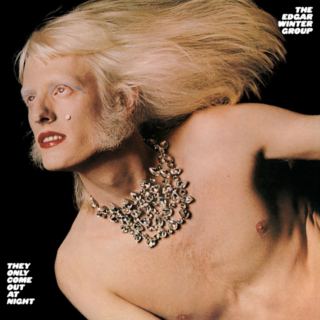
It was in that environment that I went off to school one morning and got pulled aside by Burd, one of the class delinquents. He was playing a recording for a group of kids: Edgar Winter Group’s “Frankenstein”.

It was heavy. Ridiculously massive guitar hooks, topped by a funky sax solo as well as a call-and-response drum solo. It was crazy heavy, but melodic, upbeat, and emotional. But featured on top of it all was this strange new wonky sound I’d never heard used this way before: the synth.

The frontman—albino musical prodigy Edgar Winter—penned the track to specifically highlight the potential of the synthesizer as the lead instrument in a composition, a role it had never previously been used for. He was the first person to strap a synth around his neck for use on stage, which would eventually lead to the development of the keytar.

As soon as I heard “Frankenstein”, I knew music had changed. The synth was so different and so plastic, at one time being an incredibly flexible artistic tool, but also capturing the increasingly sterile, dehumanized nature of life in America. The fact that I’m writing about that song today—more than forty years later—is an indicator for how powerfully it affected me.

Within a few short years, artists around the globe picked up the synth: Kraftwerk, OMD, Gary Numan, Brian Eno, the Cars, Ultravox, Devo, and of course the Buggles. By the end of the 70s, the synthesizer had done what the Beatles couldn’t. It had finally given music a new identity: New Wave synth-pop; a new medium: the music video; and a new channel: MTV.

I might not have foreseen all that hanging around before class that morning, but I knew that song represented a major change in the musical landscape. And I wanted more. Thankfully, lots of people felt similarly, and the synth became the signature instrument of the 80s.

Listening to “Frankenstein” today, I’m just as moved as I was as a child. Sure, camp has accreted on the outfits, the hair, and the symphonic style of the 1970s. But the composition and execution still retain most of their original energy and power.

If it doesn’t seem quite that impressive to you today, that’s probably because musicians have been following in Edgar Winter’s footsteps for the past forty years. But trust me, back then, this was fresh, innovative, and unlike anything we’d ever heard before.

So that’s one of the things I remember…

This one is two of my favorite stories. Really!

As far as I can tell, there are only about five Liscomb Streets in the US: one in Los Angeles, two in Texas, one near Detroit, and the only one anywhere near me: a tiny little side street in Worcester, Mass.

Way back when, on January 4 1989, I drove from Maine down to Massachusetts for an interview with a company called MediQual in Westborough. A couple weeks later, they’d given me my very first post-college job offer.

Inadvertent wheelie

When I next drove down it was to look for apartments. Of course the first thing I did was grab the local paper, the Worcester Telegram, to look for apartment listings (this was way before teh Intarwebs). I picked up the January 27th issue, and on page two, a picture caught my eye: the one you see (badly) reproduced at right. Apparently the driver of the sanding truck was trying to go up a really steep hill in Worcester, when his load shifted and the truck popped a permanent wheelie. It was left on its back, pointing straight up in the air!

Now that’s pretty damned funny in its own right, but if you read the caption, you’ll see that it happened on none other than Liscomb Street! Now, how improbable is it that on the one day that I went down to scout out apartments—the only time I’d ever even seen that newspaper— there’d be a picture of something like that happening on that street? C’est impossible, non?

And now for the rest of the story…

My wife and I lived in Shrewsbury for several years, only two miles from Liscomb Street. Then things started going south. One night I returned from a business trip to find Linda packing. She was off to live with a girl friend of hers. I bet you can’t guess where this friend of hers happened to live…

Yup. Linda, who had of course taken the name “Liscomb” when we married, left me and took shelter with a friend who had an apartment on none other than Liscomb Street! That must have been incredibly bizarre…

So those are my two Liscomb Street stories, both of which seem ludicrously implausible to me. It’s all a bit surreal, but every word of it is true, BIOFO!

I guess it’s kinda funny that I don’t talk about DargonZine much here, since I’ve always considered DZ my life’s work. I guess I figure most people aren’t interested in the daily travails of running an Internet writing group.

But it’s been a long, long time since I last plugged the zine, and my friends list has turned over quite a bit, so I think it’s about time to let you know what it is, and what’s been going on. But first, in case you somehow know me but don’t know about DZ, I’ll give you the standard overview.

DargonZine is the longest-running electronic magazine on the Internet, and probably the longest-running writers’ group on the Internet, as well. I started it back in 1984—yes, twenty-two years ago—in order to bring aspiring writers together. The magazine prints free amateur fantasy fiction, but it’s really just the vehicle for the writing group. It’s one of those collaborative anthologies (aka “shared worlds”), but it’s low on magic and crazy stuff, and there’s a heavy emphasis on quality of writing.

So that’s the background. Now for the current news. We just sent out DargonZine 19-4, which is the climax—but not quite the end—of a major three-year, fourteen-writer collaborative storyline called The Black Idol. We started working on it at our 2003 Writers’ Summit in Austin, and it has filled 14 issues since the first story came out in DargonZine 18-1.

It’s the biggest and most successful collaboration we’ve ever attempted, and I’m really proud of the writers who put it together. But you can read more details about the arc and how I feel about it in the DZ 19-4 Editorial. Suffice it to say that it’s a major milestone, a staggering accomplishment, and a sign of the next step in the magazine’s evolution.

If you’re interested in DargonZine, you can get full issues or just new issue notifications via our Subscription page, or subscribe to our RSS feed. But LiveJournal users get a special deal: you can add the user [livejournal.com profile] dargonzine_feed to your friends list and have announcements of new issues show up right on your friends page. Painless and very handy, I must say; I hope you make use of it!

Although you probably couldn’t tell from the content of my journal, DargonZine is a major part of my life, and has been for nearly a quarter century, and the people who have been part of it are among some of my closest friends. I’m honored that over the years, many people have valued it enough to devote their time and energy to it.

There’ll be another DZ-related post in the near future, in all likelihood, as I’ll be heading off to Cincy for our annual Writers’ Summit in a few weeks, to reconnect with my clan and see what we can come up with as a followup to the tremendous Black Idol story.

Well, this one has some potential to be interesting. Let’s see what we get.

Who is your mobile phone provider, and how many minutes are in your plan?
I actually just reevaluated my plan, and decided to stay with Sprint, since their service is generally okay, and a known quantity. I changed from 300 weekday minutes to a measured service, so I don’t have a fixed number of minutes, and I changed my nights and weekends start time from 9pm to 7pm.
 
What program do you primarily use for instant messaging?
I use Trillian. I put up with its bugginess and UI idiosyncracies in order to get coverage on five different IM systems plus IRC. I just wish their stuff was better written.
 
Who do you send and receive text messages from most?
At home, where I do 83% of my instant message traffic, Xine, Jeanie, Rhonda, and Sheeri constitute approximately 52% of my IM traffic. At work, Xine, Jeanie, Matt, Inna, Greg, Will, and Dave represent 73% of my usage.
 
What area code do you live in?
My location used to be 617, but area codes are no longer tied to geography in this area.
 
What year did you first get an e-mail address and do you still use it?
My first email address was a numeric student account obtained in the fall of 1982. It expired about a year or two later, as I moved from that limited student account to a “vanity” account with full system privileges.

While the date is approximate, this is essentially the 20th anniversary of my founding of FSFnet, the electronic magazine which evolved into DargonZine. It’s by far the longest-running electronic magazine on the Internet, and its mission—to help aspiring amateur writers improve their craft—has been my real “life’s work”.

What follows is an email that I sent to our writers’ discussion list in observance of this event. I thought it appropriate both to archive it here as well as to share it with anyone who is interested, as it is without question one of the most significant events of this year for me.

With that said, here’s the message…

Going to college in northern Maine isn’t very pleasant, especially in the dead of winter. The sun has fully set by 4pm in the afternoon. The average daily temperature is 18, made worse by the wind that sweeps the bare, exposed hilltop university bare of anything but ice. The nearest town is twenty miles away; the nearest city, over 235.

Perhaps that’s why the students and computer center staff at the University of Maine were at the forefront of the nascent BITNET network, back in 1984. Desperate for any contact with the rest of the world, UMaine saw the development of the first Internet chat machine, the second automated network information service, the first registry of network users, and a half dozen of the Internet’s first electronic magazines. Perforce, we became the leading edge of the burgeoning international computer network; there wasn’t much else to do, after all…

I recall well the day that I had the idea for a BITNET-based fantasy magazine. It was between Christmas and New Years, during that lull between semesters when there’s no one on campus. Even the hardcore hackers I hung out with had stayed home due to an immense blizzard. The only people around were myself and one of the computer operators, a friend and fellow writer who came out of the glassed-in machine room to chat.

About six years earlier, I had been responsible for putting out an collection of poetry, art, and fiction for the New England Tolkien Society, a premium annual to complement our cheap monthly newsletter. I wondered whether an electronic magazine focused on fantasy and science fiction could garner enough submissions to survive. My friend Murph, the computer operator, was enthusiastically supportive, and even promised a story or two. So within a day or two I distributed what I called “FSFnet Volume Zero, Number Zero”, a bare, baldfaced plea for submissions, which went out to 100 people in our BITNET user registry, the Bitnauts List, who had listed fantasy or science fiction as an interest.

The response was very encouraging. Submissions started coming in from a handful of interested parties, and one interested reader designed a much better masthead than the one I’d used initially. After an early dip down to about three dozen subscribers, readership steadily grew into the hundreds. At the end of our first year, I brought our many separate writers together for the first time and proposed a radical concept: a collaborative milieu that would permit us to write related stories, sharing characters and places and events.

My motivations and expectations when I founded FSFnet were really twofold. First, I wanted to write. Second, I wanted to find other writers who were interested in talking about writing.

FSFnet and DargonZine achieved and far exceeded those goals. Looking back at it, my goal of merely talking to other writers seems a bit unambitious. In the interim, DargonZine has become a dynamic family, featuring both lifelong friendships while warmly welcoming new members. Even today, after the advent of bulletin boards, the World Wide Web, cellular telephones, and all manner of pervasive computer- and network-based technology the social aspect of the project remains one of the most powerful, vital aspects of our mission.

But there have been so many surprises along the way. Over time, the quality of our writing and our critiques have consistently improved. I’m proud to look both backward and forward and feel a great sense of pride in some of the tremendous works that I’ve had the honor of publishing. We’ve helped a lot of writers, and in return they’ve shared with us some truly wonderful works of fiction.

Of course, quality is often matched with quantity, and I don’t need to tell you about the volumes of writing we’ve printed. I never in my wildest dreams imagined that I would ever look back and count four hundred stories. Anyone who has tried to go back and read all our back issues knows firsthand that we’ve printed enough material to fill about two dozen paperback books.

And then, of course, there’s longevity. If you’d told me in 1984 that I’d still be putting this beast out when I turned 41, twenty years later… Well, that would have been quite a surprise.

Another thing that has surprised me along the way is how much people have sincerely cared about the magazine, as reflected in their comments, their demonstrations of emotion, and the effort they’ve put into making it work. The devotion and faith that our writers have had for the project has probably been the most humbling thing in the project to me, because it’s really touching that people believe so strongly in something that I had a part in creating and continue to guide.

And the final surprise for me has been that DargonZine has become, to some degree, as what I’d call a “leadership engine”. The project long ago became much more work that one person could administer. For many years, our writers’ devotion has prompted them to accept responsibility for small projects that further enhance the project’s purpose. As they execute those projects, they learn how to express their visions of the future, build consensus behind their initiative, get and keep the ball rolling, and bring it to fruition. Whether it’s running a Summit or updating our maps or character descriptions or whatever, it’s been rewarding for me to give our writers a place to test their leadership skills: practice using skills which might aid them in their careers and interactions in other organizations.

There has, of course, been a great deal of change in the past twenty years. Back in 1984, the Internet didn’t even exist! Even the networks that would eventually combine to create the “network of networks”— ARPAnet, Usenet/UUCP, BITNET, Decnet, and others—were little more than a dozen sites each. Email existed, but no World Wide Web. No electronic images existed in any fashion; text was the only interface, and email was the only way to communicate with another computer user. No compact discs, no cell phones, no laptops, no PDAs, no MP3 players, no ATMs, no GPS, no digital cameras, not even color computer screens. We still had computer card punches and readers at UMaine, and most students preferred to work on paper-based DecWriter terminals because they didn’t trust monochrome CRTs. Today’s technology environment is as different from 1984 as the Wright brothers’ flyer is from the Stealth Bomber.

On the other hand, some things just don’t change at all. In many ways, DargonZine’s challenges remain the same as they were on day one: having an adequate number of writers and enough submissions to fill a regular publishing schedule. And then as now, readers are really more of a side-effect than a priority.

And, just as that December day was back in 1984, today is actually a unique and pivotal moment in our history. In a matter of weeks, we will finally break the longest spell we’ve ever gone without an issue, and we’ll do so by publishing the first of many Black Idol stories, which is itself one of the most important events in our long history. We are desperate for new writers, and hopefully the publicity that the Black Idol generates will bring in a new wave of writers who will become the project’s backbone for the future. Our Web site desperately needs an overhaul. We need to bring in new readers to replace those we’ve lost over the past years. Both the arc and Dafydd’s epiphany have gotten us thinking about how to collaborate more closely and more effectively. After failing to get our new writers involved, as evinced by the number of people who are getting dropped in the current participation review, we are completely reassessing the value and tactics of our mentoring program. After years of just coasting along, happy with the status quo, we are currently both in great peril, and on the verge of tremendous changes, and it’s definitely an interesting time to be part of the project.

For more than a decade we’ve owned the right to call ourselves “the longest-running electronic magazine on the Internet”. But every single day we increase that longevity record. The fact that we’ve been around a decade longer than virtually any other online publication further underscores how very special what we do really is.

Since day one, I’ve known where to lay the credit for the magazine’s success. Here are some quotes from FSFnet 0-0, that initial mailing wherein I defined what FSFnet would be. I think they were absolutely prescient, because an unimagineable twenty years later, these statements are just as true as they were that wintry evening back in 1984:

FSFNETs success depends on reader contributions and efforts.

Please, FSFNET can only work if people are willing to contribute to it.

The more people who read it, the more people will submit quality work, >the better FSFNET will become.

This is your fanzine, more than it is mine. It is up to you to keep it >going. I have merely brought you together. Now it is your turn.

Some of you have been here virtually since day one. Dafydd (my erstwhile editor, most prolific writer, and overall curmudgeon), Jon (my conscience and good friend), and Jim (my last surviving co-founder and recurrent agitator). There’s simply no way that I can say enough to thank you for how much you’ve helped the magazine survive and thrive. People have long looked up to you as the soul of the project, and I do, too.

Some of you—Rena, Pam, Victor, and others—came on board in a wave a few years ago, and you have all pulled a lot of weight. You joined the project and thought of yourselves as newbies, but you very quickly were asked to become project leaders, and you’ve done an excellent job, rejuvenating the project when it was at a point much like today, when we needed new ideas and energy to replace the departure of several outgoing veterans. I thank you all, because you’ve taken on so much. The project survived and came out of that stagnant period stronger than ever, and the zine is what it is today because of your hard work.

Our newest crop of published writers includes Liam and Dave, and I couldn’t be happier with you guys. You, too, have provided an infusion of energy when the project really needed it, and you have also stepped forward to become leaders, like the generation before you. I hope that you stay with us for the long haul, because we really need active new writers with a passion for improving the way the magazine works, and I really see you as agents for positive change. You’re the people with the insight to ensure that we set up policies and procedures that enable us to effectively integrate and inspire the new writers who will be showing up in the coming months, and that’s the most important job anyone can do right now.

And the new folks who haven’t been printed yet. You haven’t been part of all this history, but I really hope that you will help create DargonZine’s future, because DZ’s success is very much more in your hands than it is our veterans. There’s always turnover in the project, even amongst the Old Ones, and we’re always looking for people with the vision to help us improve the project, and the enthusiasm to make it happen. I really hope you make the effort to be active in the group, because you are really what the project’s all about, and you’ll have to step up and help lead us soon enough.

For each of you, I want to thank you for what you’ve done for the project, whether you’ve been here twenty years, twenty months, or twenty weeks. As I said twenty years ago, all I’ve done is give you a forum; DargonZine’s success—and it has been a phenomenal success, achieving far more than I ever anticipated—has been entirely because you cared about it, believed in it, and worked for it.

As I have said countless times, DargonZine isn’t my creation. Sure, I had a couple good ideas a long time ago, and I send out the emails and crack the whip to keep everyone moving, but ultimately DargonZine could survive very easily without me. On the other hand, there would be absolutely nothing were it not for dedicated writers like you.

Together, we have created something amazing, something that has lasted longer than anything of its kind. We have learned a ton from one another and helped amazing number of writers, and we’ve created a very tight-knit community. I’m honored to be one of the people within this circle, and I thank you for everything you’ve done to make it what it is today, and to create the future that I see before us.

So please join me in raising a glass to twenty years of collaboration and camaraderie. Then get back to your story or your critique queue, so we can get started on our future!

Frequent topics