… or “nihonjin ni henshin”: inexpertly translated as “turning Japanese”. This is the story behind my attempt to learn the native tongue of the rising sun.

Obviously, the first question is “Why?” and it’s not that easy to answer.

Turning Japanese cover image

I’ve had some relationship to Japanese culture as far back as high school. I practiced kyūdō – Japanese meditative archery — for several years and hope to resume again. I’ve also dabbled with taiko: Japanese drumming. There’s a slight Buddhist connection, tho Zen is rather distant from my own meditative lineage. Despite approaching 60, I still watch anime (usually subtitled). Even something as mundane as the virtual cycling app I train with, which recently released a Tokyo-themed expansion, provides lots of signage for a Japanese language student to decipher.

Another big reason why I am attempting this now is because physical limitations reduced the amount of indoor cycling I could do over the winter. So with more time on my hands, I could attack one of the most time-consuming things on my long-term to-do list.

As an aside, the other big pastime I undertook over the winter was improving my investing by doing a lot of reading about how to interpret corporate financial reports: balance sheets, income statements, and cash flow statements.

Other than just killing hours over the winter, learning Japanese provides a great intellectual challenge. I’ve always loved – and been reasonably good at – picking up foreign languages (French, German, Russian) and alphabets (runic, Cyrillic, plus calligraphy). Although to be honest I think I might have opened Pandora’s box in tackling a language made so difficult by formal and non-formal modes, slang, regional dialects, and of course three different alphabets, including kanji. Still, it’s a great way for an older guy to stretch his neurons. And if I really enjoy it, I can always look into formally testing myself by taking the standardized five-level JLPT language exam(s).

The next question is how I’m attacking it.

So far my primary tool has been the (Pittsburgh-based) Duolingo phone app. Theoretically they’ve taught me about 1,200 words, which is terrific, but it does have some shortcomings. My active vocabulary is trailing my passive vocabulary, and I find I rely too much on the hiragana pronunciation hints rather than learning the kanji characters in words. Part of the problem is just how the app is set up, and part of it is because the gamification elements set up incentives that aren’t always in the best interest of the student.

I’ve also made use of YouTube, where it’s easy to find tons of language instruction. Although I don’t feel especially loyal to any one channel, the one I’ve relied on most is Japanese Ammo with Misa.

And no Japanese student can avoid the elephant on the bookshelf: the Genki textbooks. I’ve downloaded electronic copies of their third editions, but haven’t used them much yet. If I find them useful, I’ll spring for the print copies.

There are other resources that I am not using yet, including local language programs, online tutoring like Italki, and local Japanese language learner meetups.

I seem to have a fair number of friends who have learned Japanese, including one guy whose former wife was a Japanese native. But I’m sad that my high school friend Mark died before I took this up. He moved to Japan after college, where he married a Japanese woman and taught English for thirty years. I’m sure he would have been amused and happy to support me and host a visiting traveler.

I’ve already alluded to how it’s gone. I’ve been putting in ten to fifteen hours a week, and I’m enjoying it and making steady progress. Although like any language, the complexity ramps up substantially as you start tapping into more complex (and realistic) grammatical structures. And learning a few thousand pictographic kanji characters is a bear.

But it’s been fun, and hopefully I’ll become competent enough to actually interact with other Japanese speakers in person sometime in the future.

Singapore

May. 1st, 2018 09:39 am

Just twenty-four hours after I landed in Kuala Lumpur, Inna turned me around and we flew out of KL for a weekend expedition to Singapore.

This blogpost covers just that weekend side-trip. You can read about the rest of my two weeks in Malaysia here, and our other weekend side-trip to Thailand in another separate post, here.

Saturday, 17 March 2018

We got up early Saturday morning for an hour-long cab ride back to the airport. After being dropped at KLIA’s main terminal, we discovered that our airline, Scoot, flew out of the separate KLIA2 terminal. We had some stress and confusion finding the train between terminals, but eventually got there and passed through customs, where I added a Malaysian exit stamp to my passport. Along the way, we passed a saffron-robed Buddhist monk, which delighted me to no end.

Singapore at Night from Dragonfly Bridge

Singapore at Night from Dragonfly Bridge

Sands & Helix Bridge

Sands & Helix Bridge

Supertrees at Night

Supertrees at Night

Inna & the Merlion

Inna Posed at the Merlion

Selfie with Supertrees

Selfie with Supertrees

Bear Necessities

Rocking Out to the Bear Necessities

The Flowers & The Trees

The Flowers & The Trees

Cloud Forest Dome

Cloud Forest Dome

Sands Framed

Sands Framed

Sakura

Sakura in the Flower Dome

Roof Pool Skyline

Enjoying the Roof Pool Skyline

Singapore Panorama

Singapore Roof Pool Panorama

Full Singapore Photoset

As we’d find at other airports, there was no central security checkpoint at KLIA2. Instead, you go through security screening at the entrance to each gate. That meant waiting in the airport hallways until the checkpoint was manned an hour before the flight, and until then you couldn’t get through to the copious seating at the gate. It seemed inefficient and inconvenient.

After a 90-minute flight—which felt trivial to me!—we were on final approach when I noticed the dozens of cargo ships moored in Singapore’s harbor. We landed, passed through customs to get our passports stamped, changed money, and stepped aside for a casual breakfast at a place called Paris Baguette.

At less than two degrees north latitude, Singapore is only 85 miles north of the Equator. That’s farther south than some parts of Brazil! And also a new record for the furthest south I’ve ever traveled. Yay!

We picked up some MRT tourist passes and hopped a train into town. We successfully made a couple transfers, while Inna marveled at the changing indicator LEDS on the train’s subway map, and I “marveled” at the natives’ indifference toward body odor; Singapore may be clean, but its citizens still stink! We exited into a strange semi-outdoor shopping plaza (South Beach Avenue) and dragged our bags a few blocks in the ultra-humid heat to our hotel: Naumi.

Naumi is one of those chic boutique hotels, and its interiors are an interesting example of trend-conscious but user-unfriendly design. There’s an immense glass foot (sculpture, apparently) in the lobby. The room numbers were hidden, lighting controls were unintuitive, and the electric windowshades were difficult to control. Both the shower and bathroom had glass windows into the living area, which only turned opaque at the flip of a switch… and the switch was eerily located on the *outside* of those rooms, rather than the inside! Having set out early that morning and lugged our belongings around all day, Inna and I both collapsed and siestaed from 2 to 6pm.

When dinnertime sneaked up upon us, we faced our first decision, and a difference of philosophies. I figured we should consult a map and decide where to eat before leaving; Inna wanted to walk toward the Singapore Flyer ferris wheel and pick something up at random along the way. I skeptically gave in, and off we plodded, down the street, through two malls, all the way to the Flyer, without seeing anything to eat that we could agree on.

Although the Flyer—the second tallest ferris wheel in the world—had been Inna’s destination, there weren’t any people around, and it appeared idle. There was no obvious indication, but we’d later learn that a couple weeks earlier they had shut it down due to “technical issues”, and it would re-open two weeks after we left. Disappointing, but not the end of the world.

A bit grumpy from flying, humidity, walking, and lack of dinner, we regrouped along the Marine Promenade and made our way slowly across the Helix Bridge toward the famous Marina Bay Sands hotel and Inna’s main objective for the weekend: the Gardens By The Bay.

There we faced more confusion as we tried to navigate toward the Gardens. We walked around the Sands, then back through it, then around again, and finally found ourselves at a landing across a small lagoon from the Gardens, whose man-made 165-foot Supertrees were captivatingly lit up in their regular evening light show. We sat down and rested our weary feet and watched the end of the show, then fought against the flow of a huge crowd across the Dragonfly Bridge to a tall platform that offered a closer view of the Supertrees and the walkway—suspended in mid-air 75 feet off the ground—that encircles them.

By then it was after 9pm and the walkway had closed, so we reluctantly turned back toward the Sands, which was still a chore to get around. Eventually we gave up and hopped a cab back to the hotel. Still hungry, we arived just before the restaurant’s 10:30pm closing time. I had a tasty rogan josh, but Inna was sickened by the acrid smell of the chemical air freshener the hotel used, so she ate quickly and headed straight upstairs. While the Trees were nice, it had been a tiring and trying evening for both of us.

That night I could only sleep from about midnight to 4am. Inna woke up and we had a nice conversation before she fell back asleep, and I used the early morning time for my daily meditation.

Sunday, 18 March 2018

Sunday—our only full day in Singapore—we headed out early to try to beat the heat. The plan was to walk to a quick photo op at the nearby Merlion statue, then hop a cab and spend the balance of the day exploring the Gardens By The Bay in detail. However, barely a block into our walk, Inna announced that she was already getting cooked by the heat and humidity.

I convinced her to carry on, and we kept to what shade we could find as we walked through the WW2 War Memorial Park, past the Theatres On The Bay, and down some stairs to the Waterfront Promenade, a short way from the Merlion.

Visiting the Merlion was my idea: the one thing I wanted to see in Singapore. Not because it’s particularly impressive; rather the opposite. It’s a bit of a story…

Although I’m not much of a mass media maven, one of my side interests is anime. One show that was running at that time was called “A Place Further than the Universe”, wherein four Japanese high school girls join a scientific expedition to Antarctica. In Episode 6, which aired a couple weeks before my trip, they spend a couple days in Singapore, which is depicted in realistic detail, including the Sands, the Flyer, the Theatres, the Gardens, and much more.

At 6:15 into the episode, one of the girls expresses particular interest in taking a posed shot in front of the Merlion statue, which is famous in Japan for being one of the “Three Major Disappointments of the World”. While getting their shot, the girls express chagrin that it’s just not as disappointing as they had heard. With that as background, the one thing I wanted to be sure to do in Singapore was recreate their photo.

When we arrived, I just about spewed myself because the Esplanade, the footbridge across the harbor, and the platforms around the Merlion were all absolutely jammed to overflowing with—who would have guessed it?—Japanese tourists!

Between the walk, the heat, and the crowds, Inna wanted absolutely nothing but to find a cab and go somewhere else. Trying to be sensitive to that, I quickly positioned her, got something close to the image I wanted, and got out. It’s unfortunate that we couldn’t enjoy it in the moment because it was all so rushed in our desperation to leave.

A quick cab ride later, we arrived at the Gardens By The Bay and found a little cafe for breakfast. I had a raspberry donut while Inna regained her spirits thanks to their air conditioning.

From there, we went back out into the hotness to walk around and explore the grounds. I spent some time exploring the cactus section, while Inna danced along to the sound of Disney’s “Bear Necessities” song being played at their kiddie splash fountain. We took our time and did a full circuit of the park, which included an immense sculpture of a floating baby, some interesting topiary, a mushroom den, and lots more. Leaving aside the obscene giant baby, the plantings and displays were satisfying and creatively done.

We bought tickets for the two massive greenhouse exhibits: the Cloud Forest and the Flower Dome. The former was absolutely breathtaking, beginning with a 115-foot waterfall, climbing up a 140-foot forested mountain, then descending down a suspended walkway encircling the mountain… all man-made and within the greenhouse dome! It deserves a much longer writeup, but the photos will convey the experience far better than I could describe.

After successfully exiting through the gift shop, we secured a table and had lunch at a nearby restaurant. I had a spaghetti carbonara, which seems to be a staple tourist dish in Southeast Asia. By the time we finished, some taiko performers (Japanese ritual drummers from the local group Hibikiya) had begun performing, which amused me because I was already signed up to take a four-week taiko class myself beginning four days after I got back to Pittsburgh (which you can read about here)!

The taiko group were part of the Gardens’ spring sakura matsuri (the Japanese cherry blossom festival). Inna and I made our way into the second greenhouse—the Flower Dome—where a chorus was singing amidst dozens of cherry trees, with an incongruous bonus anime cosplay demonstration taking up a far corner.

Besides the sakura, and as compared to the Cloud Forest, the Flower Dome’s displays were somewhat mundane: simple regional collections from succulents to baobabs to a “California garden” featuring such exotic plants as thyme, beets, pumpkin, and carrots!

With heavy legs after a long day of wandering, and tired of fighting the increasing crowds, Inna and I decided to bolt, walking back through the Sands hotel and taking another cab back to our hotel, where we rested and downloaded our pictures.

Instead of wandering around at random looking for food, I made an executive decision, choosing a nearby Swensons, an American franchise ice cream shop. We’d walked past one in the Singapore airport, which had brought back memories of being taken to a Swensons in NYC’s Greenwich Village on one of my first dates with my ex-wife. The dinner was mediocre, and very expensive for what we got.

Completely spent, we walked back to the hotel and crashed.

Monday, 19 March 2018

After my first lengthy sleep since arriving in Asia, we had the morning to kill before our late-afternoon flight back to Kuala Lumpur. I decided to mosey up to the 10th floor to spend some time in the hotel’s rooftop infinity pool. There was a wonderful view of the Singapore skyline, and in the distance you could clearly make out the profile of the Merlion statue and the jet of water he spews out into the harbor. Eventually I was joined by a couple Japanese girls taking selfies, and Inna came by and hung out for a while. I was surprised to see a tall high-rise where people had long poles projecting outward with clothes hanging from them like clotheslines.

As I air-dried, I suddenly realized that after leaving a snowy Pittsburgh, I was sunbathing, at the Equator, on the day before the vernal equinox, when the sun passes directly above the Equator. I took a few minutes to appreciate that fact and catch a few extra sunbeams before rejoining Inna downstairs.

After packing, we checked out and walked back through the shops at South Beach Avenue, opting to have lunch at an Italian place called Atmastel, where I had a delicious ziti in tomato cream sauce with sweet sausage. Between the call of nature and my curiosity about Singapore’s reputed fastidiousness, I stepped outside to a public bathroom and found it had a push-button electric sliding door, heavy HVAC and scenting, and was of course spotlessly clean.

We took the train back to the airport, returned our MRT passes, then killed some time at a Krispy Kreme (egad!) before making our way through the computerized immigration stations. Having gotten through first, I watched as Inna navigated the automatic stalls and unintuitive fingerprint scanner. Sadly, no exit stamps from Singapore for my passport. Hanging around outside our gate (due to the at-gate security checkpoints), Inna decided to try one of those free leg-massage chairs, making the most diverse set of faces I’ve seen in ages, ranging from pleasure to confusion to horror!

On the flight back to KL, I did my daily meditation, which garnered me two “achievements”: 60 consecutive days of sitting, and 1,200 days total. Arriving at KLIA2 and getting another Malaysian entry stamp, I exchanged my Singapore dollars while Inna hit a convenience store, then we cabbed back to her hotel. I had my first Malaysian dish at the hotel restaurant: nasi lemak (aka chicken drumstick in curry gravy with coconut rice). Then we went back upstairs and turned in.

My overall impression of Singapore is that it’s attractive, comfortable, artsy, and very expensive. For the most part, I felt at home, since English is the primary language. Surprisingly, the widely-publicized police state wasn’t visible, and seems to have succeeded at making the place cleaner and nicer than anywhere else I’ve been. I particularly noted the lack of sirens being heard, as compared to other large cities I’ve visited.

Despite a lot of fatigue and some irritability, we both enjoyed Singapore, and are glad we went. The architecture was a constant highlight, and the Gardens By The Bay were amazing.

While I’ve shared a few good photos here, be sure to check out my full Singapore photoset. Then get Inna’s perspective in her own Singapore Day 1 and Day 2 blogposts.

As mentioned above, you can continue reading about the rest of my trip in my separate Malaysia blogpost, as well as the side trip we made to Phuket the following weekend in my Thailand blogpost.

Malaysia

Apr. 30th, 2018 12:08 pm

Visiting Southeast Asia has always been on my bucket list. Fanatsizing about going maybe someday was easy; but I’ve never had the courage and initiative to start making it happen. So when Inna agreed to a (minimum) six-month work assignment in Kuala Lumpur (Malaysia), I had to make the most of the opportunity and visit her there. And so the trip was planned.

In the end, I wound up going for two weeks in the middle of March, spending four days in Malaysia, three days in Singapore, three more days in Thailand, and the equivalent of four full days flying there and back.

This post covers those travel days and my time in Malaysia. It’s the wrapper story that surrounds followup posts about the weekends we spent in Singapore (here) and Thailand here, which warranted their own separate writeups. Doing that splits my trip report into three digestible, reader-friendly sections, and lets me organize and post more photos from each of those adventures.

But first things first: Malaysia!

Wednesday, 14 March 2018

Kicked off the trip with two Facebook status updates. Since I’d be spending all of 3-14 (aka Pi Day) flying, I made a universally underappreciated comment about spending “pi in the sky”. But I also dredged up a pertinent quotation from Led Zeppelin’s classic “Ramble On”:

Now’s the time, the time is now to sing my song.
I’m goin’ round the world—I got to find my girl.
On my way…

With Inna at Suria & Petronas Towers

With Inna at Suria Mall & Petronas Towers

Petronas Tower from Somerset Roof Pool

Selfie at Somerset Roof Pool with Petronas Tower

Petronas Tower from Somerset Ampang

Petronas Tower from Somerset Ampang

Somerset Ampang from Petronas Towers

Somerset Ampang Roof Pool from Petronas Tower

Petronas Towers

Petronas Towers from KLCC

Petronas Towers

Petronas Towers from KLCC

Petronas Tower 1 Top

Petronas Tower 1 Top from Tower 2

Kuala Lumpur Panorama

Big Kuala Lumpur Panorama

Full Malaysia Photoset

The drive to Pittsburgh’s airport was uneventful other than dealing with freezing temperatures and snow showers. My flight to Chicago’s O’Hare was delayed half an hour due to a broken headset and the need for de-icing. On our final approach to O’Hare, we flew for miles next to another jet that landed seconds before us on a parallel runway. Conveniently, my flight from Chicago to Tokyo had also been delayed 40 minutes because the plane hadn’t arrived.

It’s funny how much can transpire on a 13-hour flight. I stayed awake in order to sync my sleep pattern up with Kuala Lumpur, which is exactly 12 hours off from Pittsburgh time. I kept an eye out for aurorae, which were active following a solar storm, but I saw none. Flying All-Nippon Airways (ANA), I tried the Japanese version of curried rice for the first time, and cold noodles in a light sauce. I had a brief scare when I lost my reading glasses on the floor in a fully-darkened cabin. But the highlight of the flight was getting a fabulous nighttime shot of the lights of snow- and ice-bound Nome, Alaska from 34,000 feet.

Jumping the Date Line requires a new timestamp, so:

Thursday, 15 March 2018

After doing the Date Line time warp, I arrived in Tokyo late Thursday night. It was my second time in Asia, and the first since a work assignment in Seoul in 2008. Back then, my connections were also in Tokyo, although this transfer was at Haneda, rather than Narita. I arrived to lots of Facebook Likes and a welcome exchange of messages with Inna.

It was an easy process—but a long walk—to my next gate, where I charged my devices and did a little exploring. My most noteworthy observation: to alert oblivious pedestrians that something’s behind them, instead of mechanistic beeping, the little terminal golf-carts at Haneda play the tune of Disney’s “Heigh-Ho” song from Snow White.

My third flight of the “day” took off just after midnight, which means another date stamp:

Friday, 16 March 2018

Another eight uncomfortable hours in flight.

Having gone sleepless for more than 40 hours, I was unhappy and barely functional. One highlight was flying over the Philippine island of Palawan, although I was on the wrong side of the plane to see it.

At the end of my three-day flying ordeal, we finally approached Kuala Lumpur International Airport (KLIA). But as we were about to touch down, the pilot gunned the engines, climbed, and performed a complete go-around for another try at landing. I couldn’t make out the explanation they offered, but I think they mentioned the control tower. Kind of disconcerting.

After de-planing, the first stop was customs and immigration, where I garnered my first “cheese”: our shorthand term for the reward at the end of the long lines. One of my goals for this trip was to accrue some new passport stamps to join the lonely one from Mexico back in 2010 before my current passport expires. Happily, I received a Malaysian entry stamp, then found my luggage, bought me some Malaysian ringgits and a prepaid taxi voucher, and hopped a cab.

Obviously, Malaysia is a foreign place to me, and it’s also a Muslim country, so I was primed for things to be different. This was most apparent when I noted that every announcement over the airport PA ended with the phrase: “… and have a Happy Jenni”. I was surprised that I’d apparently landed in the middle of some kind of major holiday, whatever “Jenni” was. But eventually Inna and I figured out that it was just an odd pronunciation of what they were really saying: “Have a happy journey”!

That was followed by an hour-long taxi ride from the suburban airport to the heart of KL’s business district and Inna’s hotel: the Somerset Ampang. After leaving a snowy Pittsburgh, I reveled in the humid, tropical heat and the sight of lush hills full of palm trees. Having landed at 7am Friday morning, Inna had just begun her normal workday, so after getting into her empty suite I unpacked, tested out the roof pool on the 22nd floor, then enjoyed a long-anticipated shower. From the pool, I could see one of KL’s two Petronas Towers, knowing my baby was working right over there, on the 75th floor.

Having worked a half day, Inna came home around 4pm. It was the first time I’d seen her in two months, and it was a nice reunion, although by then I was staggering due to sleep deprivation. She kindly guided me through dinner (teriyaki chicken) at the hotel restaurant (Souled Out). After 50 hours without sleep, I finally collapsed into bed, while Inna stayed up and conscientiously booked our last-minute flights and hotel in Singapore. I’m grateful for her help, because I was in no condition to execute, and without her diligence, my trip would have been a lot less eventful and memorable.

The next morning, less than 24 hours after I landed, I was back at KLIA where Inna and I hopped another flight to Singapore. We explored the town on Sunday and returned to KL Monday night. We had an amazing time, but the events of that side trip will all be related in a separate blog post devoted to that weekend in Singapore.


Tuesday, 20 March 2018

Having returned to Kuala Lumpur Monday night from our long weekend in Singapore, Tuesday morning Inna returned to work at her office in the Petronas Towers. While she engaged in a regular work week, I had the rest of the weekdays to myself.

After spending two days flying to Asia, followed by the weekend’s side trip, I was still exhausted. My Tuesday plan was to relax all morning, catch up on my email and web reading, and hit a grocery to get some foodstuffs.

In what would become my daily ritual, I went up to the roof pool around 10am for a leisurely swim and some early sunbeams, then came back down to shower. Although on Tuesday I tried out Inna’s window-side jumbo-size tub, which I mostly fit into. In the afternoon, I scampered across a major intersection to the nearest grocery-esque store and stocked up on fluids and snack foods, including a knockoff-brand Pringles potato chip in “green curry” flavor… not recommended!

After work, Inna took me to Pavilion, one of KL’s many malls, to have dinner at Wild Honey, her favorite breakfast place (yup, pancakes and sausages for dinner), then ice cream at Baskin Robbins, and an interesting dollar store called Daiso Japan. While I enjoyed the shopping, that part of KL is all huge malls populated with international luxury brands, and I’d hoped for something with more local flavor.

We were back home and in bed before the equinox hit at 15 minutes past midnight.

Wednesday, 21 March 2018

Wednesday was accidentally another rest day. After seeing Inna off, I had my swim and did more catching up online. While I was enjoying 90-degree Equatorial warmth, Pittsburgh had received ten inches of snow, with temperatures in the 20s and 30s: far below climate normals for late March. So sad!

I planned to hop a 2pm shuttle, do some more shopping, and then visit Inna at work, but she let me know that she was going to be working in a locked room, isolated and without communication, until at least 5:30pm, so at the last minute I decided to punt. In the end, I just hung around the hotel, relaxing.

Although I’d originally hoped to catch the Tour de Langkawi—a professional bike race—the following weekend, Inna counter-proposed flying to Thailand and playing with tigers, something she’d discovered from a coworker. It was ridiculous how stoked she was about playing with big cats, and I definitely wanted to share that experience with her. So later that evening Inna booked our tickets for Phuket. We were both very excited.

Thursday, 22 March 2018

The next morning, in addition to my obligatory morning swim and sun, I did a load of laundry. It was my first time using a combined washer-dryer unit, and it was fine, other than the inconvenient 5-hour cycle time.

Hoping to execute my aborted plan from the day before, I grabbed my dSLR and walked through the KLCC Park that stood between our hotel and the Petronas Towers. I took my time, finding ample places to compose photos of the iconic buildings.

Of course, there’s a mall (called Suriya) at the foot of the towers, so I made my way to my shopping target: a Japanese bookstore called Kinokuniya. I browsed the cycling and extensive manga collections, but in the end I gravitated toward the section on Buddhism. I found many familiar books on vipassana by authors that included my teacher Larry Rosenberg, Gil Fronsdal, Ajahn Brahm, Goenka-ji, Jack Kornfield, Tara Brach, Sylvia Boorstein, Sharon Salzberg, Ajahn Sumedo, and others. In the end, I picked up three titles: “Bear Awareness: Questions and Answers on Taming Your Wild Mind” by favorite teacher Ajahn Brahm; “Vipassana Meditation as Taught by S. N. Goenka” by his student William Hart, and “Buddhist Ethics” by Hammalawa Saddhatissa.

After finding nothing else of interest in the mall, I met up with Inna, who got me free visitor access to the tower and took me up to her working space on the 75th floor (of 88). There I met several of her coworkers and clients, took a few panoramic photos of the KL skyline, and hung around until Inna was ready to leave.

From there, we had dinner at Ben’s, a restaurant in the Suriya mall, where I had yet another pasta carbonara. Despite Southeast Asia’s reputation as a culinary destination, I didn’t find anything special to recommend it. But the couch was comfy, and we had a nice view of the evening light show in the fountain between the towers and the park.

Inna’s coworkers pinged about going out for drinks, but, already eating, we demurred. However, on our way out of the mall, she spied a couple friends on the escalator. After we lost them on their descent, one of them (Freddy) tracked us down. He graciously took a couple photos of Inna and I in front of the fountain lights, and the three of us hung out for one round of drinks before he ambled off toward Jalan Petaling, one of KL’s Chinatowns, while Inna and I caught a quick cab home.

Friday, 23 March 2018

With more air travel scheduled for Saturday, I declared Friday another rest day. After my swim, I had lunch at the hotel restaurant, got a few hotel errands done, and tried to nap.

Inna went out with her coworkers after work, so I just hung out. When she finally came home, she stayed up late booking her flights for a May trip home, which will be followed by a family reunion in Florence, and then back to KL.

The next day we would hop a plane to continue our adventure with a long weekend in Phuket, again returning Monday evening. You can read about that side trip in my Thailand blogpost.


Tuesday, 27 March 2018

I had a mere 12 hours between returning to KL Monday night from our long weekend in Phuket, Thailand, and my departure flight back home the next morning.

I roused myself at 4am Tuesday to say goodbye to Inna, then slipped out into a rainy morning. After a long, characteristically pensive cab ride to KLIA, I quickly got through customs, acquired my third Malaysian exit visa stamp, hopped the Pittsburgh-like train between the landside and airside terminal buildings, and waited for my flight to Tokyo.

On board, I couldn’t sleep, and instead composed an email to Inna with thoughts about our visit. Seven hours later, landing this time at Narita airport, I was pleasantly surprised to see the runway lined with sakura: cherry trees in blossom, a favorite symbol of Japan. While waiting for my next flight, the Japanese televisions showed news reports about the progress of the cherry blossoms, rightfully a matter of national import.

Two hours later, while boarding my flight to O’Hare, my seatmates asked me if I would move to another row so they could co-parent their screaming progeny. Citing a 36-hour journey, I outright refused, unless they could provide me a window seat with a bulkhead I could lean against to sleep. Even for Buddhists, compassion for others is no more important than self-compassion. They eventually found someone who would switch; that person took only the aisle seat in my row, which left the middle seat unoccupied! What a blessing on a 12-hour flight!

I’d need every possible chance for sleep, because their breeding experiment wailed like an ambulance, accompanied by coughing fits from a handful of passengers who sounded 87 percent dead from tuberculosis. Unable to sleep, my fortitude was down to zero when we finally reached O’Hare.

In Chicago, I had to go through immigration and customs, re-check my bag, take a train between terminals, and pass through another security checkpoint. Fortunately, I had a three-hour layover, and managed it easily. I found myself dangerously wobbly and close to passing out, even after downing a small pizza. After more than 24 hours without sleep, I was back in the sleep deprivation zone, and desperately needed to get myself home and in bed.

Happily, the flight from Chicago to Pittsburgh was short and quiet, and my checked luggage was spat out onto the conveyor just as I approached the carousel. I dragged my bags out to the car, loaded myself up, and drove home to an enthusiastic reception from a very lonely—but something short of tiger-sized—cat.

Malaysia wasn’t quite what I expected. Before I left, my biggest concern was that Malaysia, as a strongly Muslim nation, complete with calls to prayer broadcast over loudspeakers, would feel extremely alien. But what I found was a surprisingly diverse, cosmopolitan society.

English might not be the primary language amongst Malays, but it’s present. They use the English alphabet, so (unlike Thailand) you can eventually learn Malay words by reading them. But if you rely on English, be aware that their spelling is idiosyncratic if not downright creative. You might figure out how to get to the universiti or a katedral or the sentral rail station. Or you can catch a bas or a teksi to the konvensyen center or the muzium of tekstil. Or relax at the rekreasi park or the golf kelab, which is in another seksyen of town. And make sure you ask for extra sos for your food.

Having found itself awash with oil money, Malaysia shows the inefficiencies of rapid growth, with a melange of modern high-rises displacing dilapidated and uninspired neighborhoods that had themselves only recently overtaken outright jungle. It’s an ethnically and economically segregated society, and what I saw of it—mostly downtown malls—lacked any connection to its history or locality.

To be fair though, I did a poor job exploring KL, lacking the time or motivation to venture beyond the bland, characterless malls and the immediate temptation of our hotel roof pool.

Epilogue

Having been through the details in this and subsequent blogposts, let’s take a step back and review the big picture.

I’m particularly challenged by international travel, or more properly not knowing the local language. That wasn’t a major factor, as there was plenty of English in use.

Despite that trepidation, I’m delighted to have added nine new pieces of “cheese” to my passport: three pairs of Malaysia entry and exit visas, another pair from Thailand, and an entry stamp (only) for Singapore. Plus two connections on the ground in Tokyo, as well. Great success!

Beyond that, I set new records for the farthest I’ve traveled south and west. I somehow survived ten flights totaling 22,000 miles and 50 hours in the air, plus uncounted hours of the usual airport runarounds. And despite all that travel, I happily didn’t contract any illnesses.

On the other hand, because I couldn’t sleep, each transcontinental flight amounted to staying awake for two consecutive all-nighters. Doing that twice in two weeks would be a major trial, even for someone half my age! Although I was nearly delirious due to sleep deprivation, not sleeping did make it easier to deal with jet lag, despite the 12-hour difference meaning daytime was suddenly night and nighttime suddenly was day.

Contrary to the warnings I was given, I found it much easier traveling east, because I got home in the evening and could immediately collapse in bed, whereas on my outbound trip, I had arrived at 7am and had a whole day ahead of me before I could (or should) go to sleep.

With only four days in KL, and three each in Singapore and Phuket, I was a little disappointed that I didn’t have the chance to do any biking, or visit more than one Buddhist vihara, and little local food or shopping. I’ve been spoiled by my trips to Scotland and St. Thomas, where I had weeks—if not months—to explore and get to know my destination, which I vastly prefer. With Inna based in KL, I should have devoted more than two weeks, but I’d been a little apprehensive, and didn’t want to distract her from work, either.

Of course, that was all balanced by the wonders we did experience, such as Singapore’s Gardens By The Bay, Phuket’s Tiger Kingdom, and swimming in the Andaman Sea. I have some amazing photos and memories that I’ll always treasure.

And I enjoyed swimming in the hotel roof pools each morning. Though I felt a little awkward doing so, the epitome of the idle rich white man. After all, I had nothing better to do than travel from snowy Pittsburgh to Southeast Asia to lie around all day and absorb the equatorial sun while everyone else was working their mundane day jobs. Coming from middle-class roots, I’m just not comfortable with the idea of such conspicuous self-indulgence.

Beyond the passport stamps, the tropical sun, and the exotic sights, the main reason behind my trip was spending time with Inna, seeing how she was making out, and doing what I could to relieve some of the familiar stress that comes with working abroad.

Fortunately, over the weeks and months, Inna has gotten comfortable with her clients and confident in her role and what’s expected of her. So many elements of her project remind me of my half-year deployment in St. Thomas, which was strenuous, amazing, and absolutely off-the-charts ridiculous. The day she left Pittsburgh, I wrote that “I’m incredibly proud of her career progress”, and three months later, that sense of pride has only increased. She’s been kicking ass, and it’s awesome to see.

I’m surprised that despite the equatorial heat, Inna has taken to Kuala Lumpur, to the extent that she might be open to extending her stay. I will, of course, be very interested in how that question resolves itself in coming months.

Continuing the topic of stress, this trip was a test for Inna and I, and our ability to work together under challenging conditions. We made it harder for ourselves by not discussing our plans for our two weekends until the absolute last minute. I’m particularly thankful for her willingness to handle the arrangements for Singapore and Phuket while I was comatose in bed trying to catch up on sleep.

As with any partnership, we each had our moments of difficulty and irritability to work through, but in the end we made a great team, helped one another out, achieved most of what we wanted to do, and built an immense pile of memories together that we can share and cherish.

I don’t like her living on the opposite side of the planet, but it did afford me the opportunity and the impetus for a once in a lifetime trip: one I’d dreamed about for years. I’m glad to have taken that rare opportunity, and to have shared such a memorable experience with the woman I love.

Having read this through, if you’re interested, here are links to more images and text about my trip.

Four days after returning from Asia via Tokyo, I undertook a new adventure: Japanese ritual drumming—or taiko—in the form of a four-week beginner’s workshop offered by local group Pittsburgh Taiko.

Big drums have been used in Japan for centuries in religious rituals and to inspire troops in battle. However, kumi-daiko—the current style and form of performing in ensembles—wasn’t established until 1951 by an inventive Japanese jazz drummer.

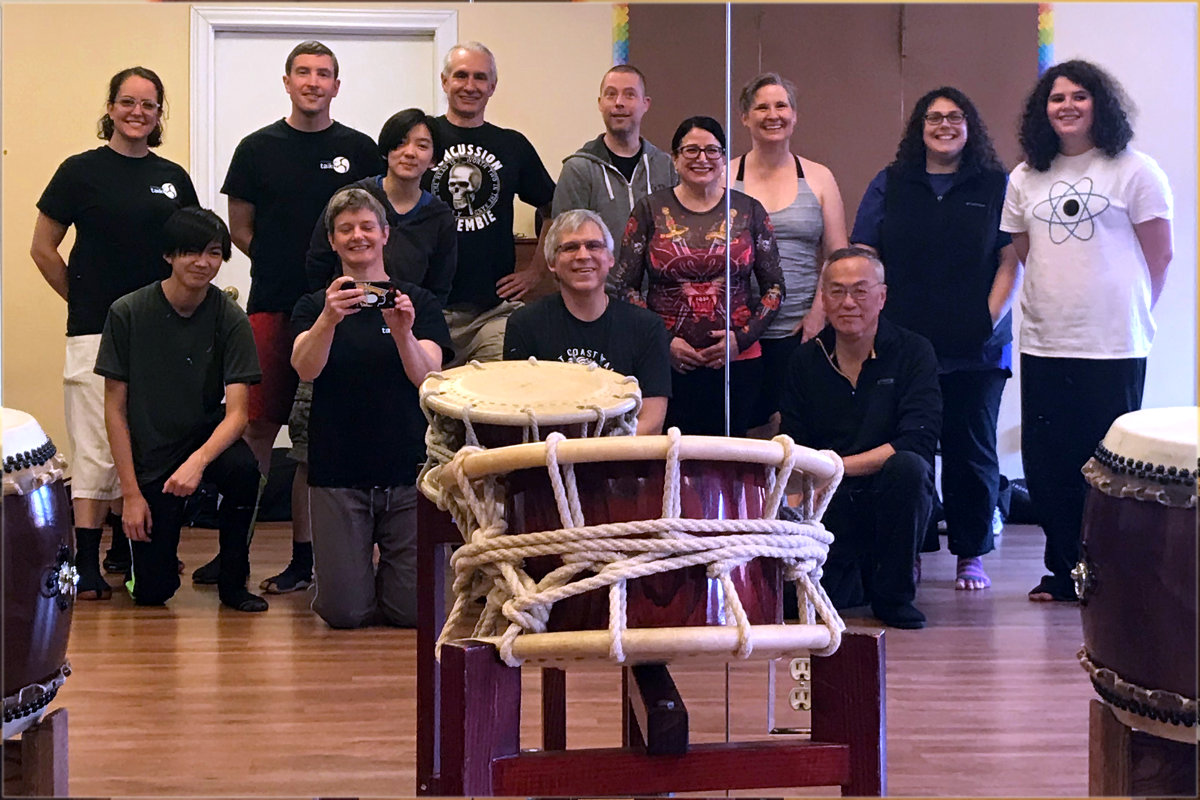
Taiko Beginners Workshop

Taiko Beginners Workshop

My first exposure was seeing the local group Pittsburgh Taiko perform at the local lunar new year celebration back in 2016. A month later, Inna and I went to see them perform alongside Japanese-American taiko master Kenny Endo.

I’ve always been a fan of percussion (except for vibraphone, which hardly qualifies). I’ve done my share of playing around, including both West African hand drumming as well as rock kit, so I was intrigued.

When that local group offered a beginners workshop in the fall of 2016, Inna and I registered. However, when it rolled around, I was in Maine to caretake my dying mother, and in my absence Inna, who is also into drumming but has no affection for things Japanese, opted to sneak out halfway through the first session.

However, a year and a half later, I saw them again at this year’s lunar new year, and learned they were going to offer another beginners workshop, which I was finally able to attend. We had 10-12 students, which matched the approximate number of people in their performance group.

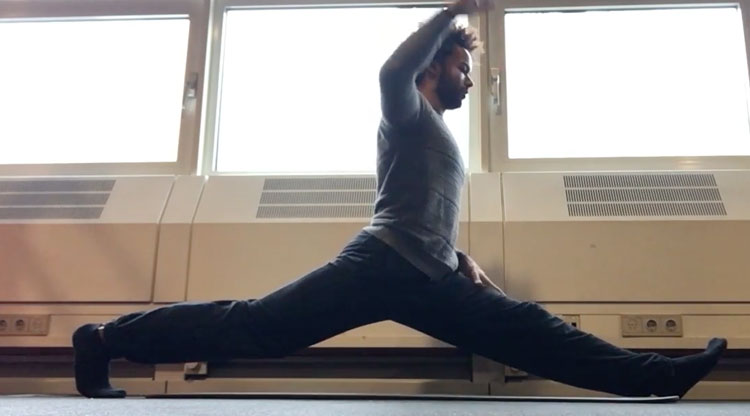
The first sessions were painful. One of the first things I learned is that your stance is supposed to result in your hips being at about the same height as the barrel-like chudaiko drumhead. Since that isn’t much more than two feet off the ground—and impossible to adjust—it resulted in my essentially having to play while performing a front split. Neither comfortable nor stable for someone of my height! That was reinforced by four days of severe DOMS that followed the session, thanks to my woefully underdeveloped cyclist’s arm muscles.

Week two started with even more pain. Although the group does some warmup exercises before playing, they illogically start with ballistic exercises like jumping jacks, and only do gentle muscle stretches afterward, which is backwards and dangerous. Going from a cold start straight into an exercise that involved simultaneous hopping and kicking caused me to severely pull a calf muscle. Initially that injury made even walking difficult, and kept me off the bike for two full weeks.

We started making progress in that session, when we were introduced to the first two lines of the standard practice piece called “Renshuu”. However, after staying to watch the experienced group prepare for an upcoming performance, I noticed the discouraging ring of tinnitus.

In week three we learned most of the rest of Renshuu, and we took the opportunity to record video of the teachers playing it, so that we could practice at home, which was helpful.

Things started coming together for the fourth and final class. We spent some time going around the room round-robin style, giving everyone a chance to play improvisational one-measure solos. I can’t say mine were particularly great, given my lack of familiarity with the instrument and its playing style.

We also played Renshuu through a couple times before the teachers sat down and had us (as a group) play it for them in formal performance style. As you would expect of any Japanese art form, taiko isn’t simply about making music as a group; it’s also about synchronized and choreographed movement, elegance, and visual appeal. Our first “performance” went reasonably well, and marked an emotional peak for the class.

Beyond the drumming, one of the things that appealed to me about taiko was its potential as an exercise in mindful movement, much like my kyūdō (Japanese archery) practice did back in Boston. In that respect, it was half successful. At first, I was too busy trying to understand the rhythms and use the correct hand; but the more familiar I became with each piece, the more attention I could spare to focus on my body, my stance, and the timing and expressiveness of each movement. It might become a meditative exercise at some point much further down the road to proficiency.

Which brings up the obvious question about whether I will continue with it. Taiko would suffer with the same limitation as kyūdō: it’s not a core priority. When we talked about the possibility of a followup workshop, I found myself reciting a litany of dates I couldn’t make: two weekends in Italy with Inna’s family, two more for a meditation retreat, and that doesn’t even include all my summertime cycling events! I’d like to continue and will make an effort, but I won’t have much success until the end of the busy summer season.

Of course, continuing would also raise the question of public performance, which isn’t something I’m particularly comfortable with, either. A nice idea, but realistically my lack of any inherent musical ability will out, and I’d rather that not happen in front of a knowledgeable audience.

All the same, it was an interesting experiment and experience, and hopefully something I can make room for during months that are a little less packed with more important “interesting experiences”!

As a man who tries to be sensitive to gender issues, I want to address one way that I think women and men both unconsciously perpetuate marginalization of women.

You might not think one’s given name could be the source of judgement and marginalization… but you’d be wrong.

It might sound like an incredibly minor nit, but what could be more core to one’s identity than the very name you use to refer to yourself, and the names you use for others?

Girly cheerleader

Consider the difference in how you respond to a man who calls himself “Robert”, versus if he introduced himself as “Robbie”. Even if you’re looking at the same individual, most of us will have a meaningfully different initial impression of someone depending on whether he is introduced to us as “Billy” or “Willie” or “William”.

The underlying cause goes at least as far back as Latin, if not earlier. In Romance languages, words that end in open syllables (ending in a vowel sound like “Billy” and “Robbie”) are almost always grammatically feminine, while words ending in consonant sounds (closed syllables) like “Robert” and “William” are usually grammatically masculine.

Don’t get confused by the labels “masculine” and “feminine”. Those just represent two classes of words. I’m not saying that “Robbie” is really a girl’s name, or that “Janet” should be a boy’s name. At least not directly…

However, in Romance languages—and thus in Western society overall—the grammatical feminine has often been applied to things that are cute, small, young, informal, trivial, and (in gender terms) feminine. As a result, when we hear a name that ends in a vowel sound, we tend to ascribe those attributes to the person.

Calling someone “Scotty” is not just a less formal way to address “Scott”; because names ending in open syllables carry this historical baggage, it also carries with it the idea Scotty is more diminutive or more childish or less serious than Scott. And it isn’t much of a leap to infer that Scotty himself is inferior, subordinate, and less capable than his “older brother” Scott. Just as Robbie is less adult than Robert, and Jimmy is less professional than James.

This becomes an even greater concern when applied to women. We have very different preconceptions when we meet a girl named “Chrissie” than a woman named “Christine”, or “Shelly” versus “Michelle”. When a woman’s name ends in an open syllable, the association with grammatically feminine attributes like smallness, informality, and youth becomes really problematic. They didn’t call her “Buffy the Vampire Slayer” because it’s a strong name; they used it because (in contrast to her occupation as a Slayer) it’s such a weak, fluffy, impotent, “girly” name.

What’s worse is that we as a society still prefer to name women something cute and feminine, automatically hampering our daughters’ chances of being taken seriously right from the maternity unit. And even then, women will often choose to abbreviate their name into a “cute” nickname that ends in an open syllable.

When I first wrote this article, I looked at my employer’s “About Our Team” page. After removing the outliers from our India office, I counted up the names that end in open syllables, and grouped them by gender. What did I find? In a progressive software company, 73 percent of the women listed names that end in vowel sounds, while only 13 percent of men did. Our female employees were more than five times as likely to bear names associated with smallness, informality, and inferiority than their male coworkers.

I also checked out the most popular 100 given names for each gender over the past 100 years, thanks to this Social Security Administration page. While not quite as dramatic, the trend is inescapable. Women were 2.5 times more likely to have open-syllable names as men (56 percent to 23 percent).

Bottom line, we’re saddling our daughters with names that trivialize them from childhood through adulthood.

Of course, this only applies to Western society. The Japanese language doesn’t natively have closed syllables at all, which can cause some confusion among Westerners. It shows the extent of our bias that you might guess that Japanese people named Tomoya, Takeshi, Makoto, Kenichi, Junichi, Yuji, Katsumi, and Koki were female. They’re not; those are among the most frequently-used male names in Japan.

As a final parting shot, I encourage you to take a moment and consider your emotional response and preconceptions based on the following pairs of names. For me, the conclusion is absolutely clear that using a name which ends in a vowel sound is both trivializing and marginalizing, and something I’d suggest be avoided, especially by progressive-minded parents.

With sincere apologies to those of you who might already bear such names!

David Davy
Michael Mikey
Mark Marky
Samuel Sammy
Steven Stevie
John Johnny
James Jimmy
Harold Harry
Scott Scotty
William Billy
Robert Bobby
Michelle Shelly
Ann Annie
Christine Chrissy
Kim Kimmy
Catherine Cathy
Nicole Nicki
Susan Susie

Frequent topics