I had this entry all ready to go last week, but I couldn’t help but defer it when I saw that Friday the Thirteenth was coming. So now that it’s here…

Imagine this scenario: you’re the parent of a child in seventh grade. In the evening, you casually ask them how school went, and are told that English class had featured some students doing book reports. Did any of them stand out as particularly interesting? Well, one kid gave a ten-minute presentation on a book called “The Satanic Bible by this guy Anton Szandor LaVey, the founder of The Church of Satan

Yeah, that was me at thirteen years of age. The same year that Mrs. Bernier read “The Hobbit” and “A Wrinkle in Time” to our English class, I was getting my kicks by introducing my impressionable prepubescent peer group to LaVeyan Satanism.

This was suburban Maine in 1976, so to this day, I’m still surprised that there were no repercussions… at least none known to me.

I clearly remember hanging out in Mr. Paperback on my way home from school one day, looking for anything that piqued my curiosity. And there’s not much that’d capture a twelve year old boy’s attention faster than a black book titled “The Satanic Bible”, with the inverted pentagram of Baphomet on the front and back cover, with the latter serving as background for a crimson portrait of its grim-looking, goateed, bald author with a piercing gaze. I hope my grammar school classmates enjoyed my book report!

The book – along with LaVey’s followup piece, “The Satanic Rituals” – continued to provide a unique conversation piece that followed me through high school, college, career, all the way to the present day. And it paved the way for several other infamous occult acquisitions, including Robert W. Chambers’ “The King in Yellow”, Aleister Crowley’s “The Book of Lies”, Clark Ashton Smith’s “The Monster of the Prophesy”, and the Simon “Necronomicon”.

As for our dear Anton, he provided a lasting final connection with me by passing away on my birthday.

Cue the “Twilight Zone” theme

Bookshelf with LaVey's Satanism books

Say you were a young college student taking a programming class, and your aging computer science professor’s first assignment was for each student to write a program to print out their name and telephone number.

Struble's Assembler Language Programming

That wouldn’t be the least bit sus, now would it?

Apparently, back in 1984 it wasn’t! Lemme tell you a story…

I was recently bedridden with both a back injury and my first case of Covid. And having already purged many of my old books, I really had to stretch (metaphorically, of course) to find something to entertain myself with.

One book that followed me through my migrations – from Maine to (five different locations in) Massachusetts, then Pittsburgh, and finally Texas – was a college textbook that was highly cherished by most of the CS majors I knew back then: George Struble’s “Assembler Language Programming for the IBM System/370 Family”.

Yes, I was so bored that I started re-reading a 40 year old textbook on one of the driest topics in all of computer science, for a computer that no longer exists!

Chapter 1 is a snoozer (not unlike the rest of the book). It’s all about how mainframe computers used combinations of ones and zeroes to encode numbers and characters. Like any textbook, the end of Chapter 1 had a dozen exercises for the student to solve, to promote active learning and demonstrate a practical understanding of what’s been taught.

Here’s the text of Problem 1.3: (emphasis mine)

Each byte of storage in the IBM System/370 contains eight bits of information and one parity bit. The parity bit is redundant; it is used only to guarantee that information bits are not lost. The parity bit is set to 1 or 0 so as to make the sum of 1’s represented in the nine bits an odd number. For example, the character / is represented in eight bits (in EBCDIC) by 01100001. The parity bit to go with this character will be 0, because there are three 1’s among the information-carrying bits. The character Q is represented by 11011000, and the parity bit is set to 1, so there will be five 1-bits among the nine. These representations with parity bit (we call this “odd parity”) are also used in magnetic tape and disk storage associated with the IBM System/370. Using the character representation table of Appendix A, code your name and telephone number in eight-bit EBCDIC representations, and add the correct parity bit to each character.

That’s right: on just the third exercise in the entire book, Struble is asking the student to provide their personal contact info, presumably to their instructor. I can only imagine the repercussions if a professor presented this exercise to his or her class today.

To be fair, when Struble’s book came out (in 1969, then revised in 1974 and again in 1984) such an assignment simply wouldn’t have set off the red flags it does today. The author and his editors probably felt safe in the assumption that women wouldn’t be taking hard-core mainframe assembler classes. And for the odd exception, what harm could possibly come from a young coed revealing her phone number to an upstanding member of the academic community?

What harm, indeed.

I’m not one to condemn past generations for not living up to more modern social norms, but still… Today that exercise just screams of inappropriateness and invasion of privacy. For me, reading that was a head-scratching moment of astonishment from an unexpected source, a true blast from my past.

…Or Not

Jun. 28th, 2024 12:41 pm

It’s time to come clean and clear up a falsehood that I’ve been telling for decades. Ornoth is not my birth name.

I changed my legal name back in 1994. But ever since then, when someone asked where the name “Ornoth” comes from, I told them it was an old family name with no particular meaning or history or derivation other than prior use. I didn’t think it would be flattering or to my advantage to admit that I’d changed my name or to reveal its origin, so I very purposefully kept it hidden.

Why am I revealing this now? Well, at my age I no longer feel compelled to protect a career, a reputation, or a fragile ego. And in this time where people are allowed to redefine all aspects of their identities, a simple name change doesn’t carry the stigma it once did. And having first started using Ornoth as a moniker fifty years ago, there’s no question that making it my legal name was a good long-term decision. Looking back on it, it was one of the best decisions of my life.

Coat of arms of Orny (Switzerland)

Coat of arms of Orny (Switzerland)

If you want to know the whole story, you’re gonna have to sit down and allow your author to relate this story in the third person, present tense…

Journey with me back five decades to 1976: to a 6th grade English class. An awkward 13 year old kid named David listens attentively as Mrs. Bernier reads J.R.R. Tolkien’s children’s fantasy novel “The Hobbit” to the class. Within a year, the boy enthusiastically plows through Tolkien’s more ambitious three-volume followup: “The Lord of the Rings”.

By chance, around this time he sees a newspaper article about a slightly older kid named Gary: an internationally-known Tolkien fanatic who lives an hour away. They meet up, start recruiting others, and create the New England Tolkien Society: a group of adolescent fans who regularly get together for events that feature discussions, trivia, music, camping, cooking, contests, and costumes.

Along with their costumes, everyone’s got a Middle-earth alter-ego persona. Gary dresses appropriately as a Hobbit called Hidifons. There’s Elven maids named Lothiriel and Therindel, a bard named Dæron, a pack of irascible Dwarves, and a few dozen others.

So David needs to come up with a Tolkien-inspired persona and his “Hobbit name”. Consulting Ruth Noel’s book “The Languages of Tolkien’s Middle-earth”, he mashes together the Elvish words “orn” (meaning “tree”) and “loth” (“flower” or “blossom”) in an attempt to capture the image of the fragrant lilac trees that herald Maine’s brief spring. Thus, he announces himself to his fellow fans as “Ornoth”.

By nature extremely analytical, introverted, and solitary, a curious thing happens as our protagonist proceeds through his high school years. At Tolkien gatherings, he starts making friends, clowning around, acting silly, and flirting with the girls, who playfully shorten his nickname to “Orny”. Being outgoing is so completely out of character for him that he thinks of himself as having two separate and distinct personalities: one named David, who is a quiet, jaded, introverted loner; and the other named Orny, who is impulsive, energetic, and gregarious. “Ornoth” is also the name and persona that he carries with him when he begins attending medieval recreationist events put on by the Society for Creative Anachronism.

The awkwardness of maintaining two separate names and personalities comes to a head when he leaves for college, where he repeatedly winds up living with roommates who share the given name David. Partly out of simple convenience and partly to lean into his outgoing persona rather than the introverted one, he uses “Orny” throughout his college years. After using it for more than a decade, he has become more comfortable identifying as Ornoth – or Orny – than as David.

However, he has to revert to using his given name during the decade following college graduation, which brings marriage and a budding professional career. After several years of early success, both these endeavors flounder, as he is forced out by new management at work, and undergoes a divorce that is partially attributable to the cold dispassion of his predominant “David” persona.

The year was 1992; I was about to turn thirty, my life had fallen apart, and I longed to return to the carefree ease of my days in college and Tolkien fandom.

But this misfortune was also the watershed moment that spurred tremendous changes in my life. I reached out and reconnected with some of my old friends from college. I re-assumed leadership of the electronic writing project I’d left six years earlier. I grew my hair long for the first time and started hanging out in the Boston nightclub and music scenes. I got involved in the local BDSM and polyamory communities. I got an exciting and profitable new job at a cutting-edge consulting firm near M.I.T. where my skills were highly valued. I briefly lived with my old high school girlfriend before finally moving from the distant suburbs into the heart of the city. And I took up cycling again after a decades-long hiatus.

In all these different environments, I went by “Ornoth” or “Orny”, resurrecting the name that I identified with, that represented the kind of person I wanted to be, and which was used by all my friends, both old and new. At the same time, I finally started working to integrate the two halves of my bifurcated self-image: the methodical intellectual and the playful impulsive.

And it was time to finally leave “David” behind, a name that I found uncomfortable, that had unpleasant associations, and was only used by family members.

But my family provided an intimidating obstacle: telling my very conservative parents – who had given me my birth name, after all – that I wanted to legally change it. Fortunately, by then I’d gained the self-confidence to express myself firmly, so they couldn’t do much more than choose to ignore it.

So after nearly twenty years of using it informally, in late June of 1994 I went to probate court and had my name formally changed, taking Ornoth as my first name, and demoting “David” to one of now two middle names. As such things usually go, it was both an immense fundamental change and an anticlimactic formality.

That was thirty years ago this week, and there hasn’t been a single second when I’ve regretted it. Ornoth is who I am, who I have been for nearly all of my life, and how everyone knows me. “David” sounds as alien to my ears as Billy-Joe-Bob.

The only times I was the least bit equivocal about it was when I was introduced to someone new. When the inevitable “What kind of name is that?” question came up, I always fell back on a convenient lie: that it was just an old family name with no specific derivation. But today that equivocation officially ceases, as I take unapologetic and public ownership of this deeply meaningful life choice.

As you might imagine, having a unique name comes with advantages and disadvantages. For some people, it’s easier to remember a name that’s distinctive, but many folks require time and repetition to commit it to memory. So it has often gotten shortened to Orny, Orn, or even just O. People often mishear the ‘th’ and call me “Ornoff”; another common error is “Ornath”; and sometimes people misread a printed ‘rn’ as an ‘m’ and see “Omoth”. Such is the price we pay for being unique.

On the other hand, picking a username is a breeze; I’ve never had to resign myself to being “DAVID783” or the like. Googling has revealed that there are small towns called Orny in both France and Switzerland (see the latter’s coat of arms in the image above), and at least one person in Germany has Ornoth as a surname. And there are several fantasy- and gaming-related websites using Ornoth as the name of a fictional character, which always feels a bit ironic.

Having thought of myself as Ornoth for half a century, it’s not just a part of me; it is me. But so is the entire story of how it became my name: its origin, etymology, and literal meaning; its central role in my social and emotional growth; how I reclaimed it as part of a major mid-life revitalization; and how it prompted me to finally stand up to parental authority.

And while I’m very happy that today literally everyone knows me as Ornoth, I’ve always self-consciously kept all that backstory hidden. But the story behind my name is one that deserves to be claimed and celebrated, and I’m happy to share it with you today on this personally meaningful anniversary.

With everything else that’s going on, I figured I’d kill some time with a more spontaneous, stream of consciousness post.

It’s purely conjecture, but one of the things I think people enjoy about my blog is when I relate stories about experiences that might be a little uncommon. And since most of my friends and readers are younger than I, one way to do that is to talk about when I was young. Here’s one such story.

I suppose everybody can probably identify with the experience of hearing a particular song for the first time and knowing that from that point forward, everything would be different. I have been fortunate to live through several such episodes, but one that happened back in middle school in the early 1970s has always stuck with me.

Imagine, if you will, a time long before music used computers and digital signal processors. Beyond that, imagine a time before synth-pop, before synthesizers had even been invented. A time when “keyboards” meant only one of two things: a piano or a harpsichord.

It was a time when music was looking for a new direction. Led by the Beatles, the protest music of the 1960s had given way to a muddy, directionless jumble of drug-addled metal, drug-addled glam, and inane balladic mainstream pap like “Hey Jude” and “Let It Be”. Even the Beatles lost their vision, gave up, and went off in separate directions, seeking the elusive new sound that would appeal to an increasingly disaffected audience.

That’s what music was like in the 70s, when I was in grammar school: Elton John against Black Sabbath. ABBA versus Alice Cooper. Hall & Oates and Kiss. The BeeGees and Judas Priest.

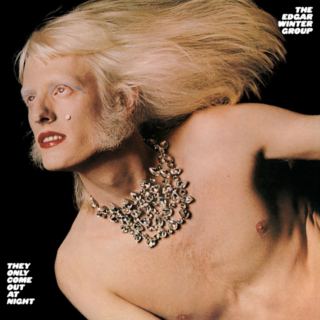
It was in that environment that I went off to school one morning and got pulled aside by Burd, one of the class delinquents. He was playing a recording for a group of kids: Edgar Winter Group’s “Frankenstein”.

It was heavy. Ridiculously massive guitar hooks, topped by a funky sax solo as well as a call-and-response drum solo. It was crazy heavy, but melodic, upbeat, and emotional. But featured on top of it all was this strange new wonky sound I’d never heard used this way before: the synth.

The frontman—albino musical prodigy Edgar Winter—penned the track to specifically highlight the potential of the synthesizer as the lead instrument in a composition, a role it had never previously been used for. He was the first person to strap a synth around his neck for use on stage, which would eventually lead to the development of the keytar.

As soon as I heard “Frankenstein”, I knew music had changed. The synth was so different and so plastic, at one time being an incredibly flexible artistic tool, but also capturing the increasingly sterile, dehumanized nature of life in America. The fact that I’m writing about that song today—more than forty years later—is an indicator for how powerfully it affected me.

Within a few short years, artists around the globe picked up the synth: Kraftwerk, OMD, Gary Numan, Brian Eno, the Cars, Ultravox, Devo, and of course the Buggles. By the end of the 70s, the synthesizer had done what the Beatles couldn’t. It had finally given music a new identity: New Wave synth-pop; a new medium: the music video; and a new channel: MTV.

I might not have foreseen all that hanging around before class that morning, but I knew that song represented a major change in the musical landscape. And I wanted more. Thankfully, lots of people felt similarly, and the synth became the signature instrument of the 80s.

Listening to “Frankenstein” today, I’m just as moved as I was as a child. Sure, camp has accreted on the outfits, the hair, and the symphonic style of the 1970s. But the composition and execution still retain most of their original energy and power.

If it doesn’t seem quite that impressive to you today, that’s probably because musicians have been following in Edgar Winter’s footsteps for the past forty years. But trust me, back then, this was fresh, innovative, and unlike anything we’d ever heard before.

So that’s one of the things I remember…

What if you could go back to high school and have just one day for a do-over. One chance to go back and interact with those kids in a different way, without all the fear and risk. With more patience and a healthy sense of compassion. What would that look like?

Let me tell you about my weekend…

Friday afternoon I grabbed a rental car and drove back to Maine. I had a quick dinner with family, which was surreal enough, considering my brother and niece were visiting from British Columbia. But this post isn’t about my ambivalence regarding family…

After dinner I checked into my hotel and drove over to Margarita’s Mexican restaurant for the first of two gatherings of people from my high school class. Friday night was essentially a small pre-party before Saturday night’s main event, which would be the first reunion I’d ever attended.

After wandering around I finally recognized the organizer, Jamu (names will be altered to protect those who pretend to innocence). Thankfully, she was someone I knew, so it was nice to chat with her for a while. She also introduced me to the twenty or so people who had come, and was kind enough to hang with me while I dipped my toes in the edges of the proverbial social quagmire.

Over the next couple hours I talked a lot with Dido (a woman I’d never interacted with at school), and Debo (about yoga), and twin sisters Mave1 & Mave2. The likely highlight of the evening was a conversation with Rodi, who seemed reasonably interesting. But I got put off when I tried to talk to Kelo, the girl (woman) who used to sit behind me in homeroom.

If you’d known me in high school, you probably would have been surprised (as I was) to discover that I probably spent 80 percent of my time talking to women, rather than men. I guess I’ve gotten much more comfortable relating to women on the whole. It’s not really a huge surprise for the “me” that I am today, but it’s a pretty dramatic change from the “me” I was back then.

I did have brief conversations with a couple guys: Tola (our mothers are friends) and Deki (who has apparently become as rabid a Tolkien fan as I used to be when I was in high school).

Except for Jamu, I hadn’t known any of these folks in school, but it was nice to talk with them nonetheless. Apparently the people I remembered best weren’t showing up until Saturday’s official gathering. But it still wound up being a nice evening, and I was (surprisingly) one of the last people out the door at the end.

Two observations… Passing around the class yearbook, it became abundantly clear that all of us needed reading glasses, and none of us had brought them. And even in that small group, two of the women had recently been through cancer treatment.

That was Friday. After sleeping very poorly, on Saturday morning I got up early and headed out for a 40-mile bike ride from Augusta to Manchester, Readfield, Belgrade, and back. Since my annual charity ride is only two weeks away, I had to find some way to spend some time in the saddle.

I swung through the old family farmstead, which some time ago was bought, torn down, and replaced with a state government office building. I remembered picking wild strawberries in the fields, my first “hunting” trips in the woods out back, the old apple tree at the edge of our huge vegetable garden, the stand of pines out front, and the camp that my grandfather built. They’re all gone; the only thing that remains from my childhood (and my father’s) is a horrid-looking willow tree that everyone always hated. Figures!

The ride also included a lakeside rest stop in Belgrade, riding past the now-bare former site of Farnham’s (our favorite roadside farmstand), coming down Sand Hill at speed, and then the long and difficult workout climbing from the river’s edge up Winthrop Street to the airport. It was a nice ride, doubly so because it provided the only moments of and peace and “rest” (if you will) that I’d have all weekend!

After showering at the hotel, it was back to family-related activities, which featured sandwiches for lunch and then mini golf with mother, brother, and niece (yes, I won). I was incubating a headache, so I was grateful that my brother’s presence hadn’t drawn any additional family members. Even so, I pled fatigue and went back to the hotel for a quick nap before freshening up for the party.

Way too soon, it was time for the main event: the official high school reunion. I showed up fashionably on time, and did my best to step into socializing mode.

Ornoth's reunion

Again, I talked to more women than men, and there were a lot more folks that I actually remembered. The inseparable Nihe & Kamcca agreed with my observation that the inestimable Mr. Ayotte had taught us as much about life, philosophy, and wisdom as he had French.

To my chagrin Anqui and Diru (one of the few alumni in the Boston area) both firmly agreed that I was definitely not attractive in high school, but that I was cuter now. Oof!

Among the guys, I talked to Chrise and Ticho. Both of those could have been awkward conversations, but went fine, which was cool. Ticho works in Boston, and has been playing out in a band on and off over the years.

And I finally got to shake hands with Scojo, one of my earliest childhood friends, whom I rediscovered a few years ago when I learned that he too is a cyclist and serious cancer fundraiser, having survived testicular cancer himself. He’d even ridden the PMC back in 2008, but we hadn’t been able to connect. So finally seeing him was certainly one of the evening’s highlights.

Although I had hoped to, I didn’t get much chance to talk again with Rodi. And I again had difficulty cornering the elusive Kelo. Toward the end of the evening that was remedied when out of absolutely nowhere she trotted up to me and tried to pull me out onto the dance floor! I resisted, but between wanting to connect with her and hearing someone near me say, “Oh just go on up,” I acceded. I was flattered that for some reason she had called on me, and it was definitely a highlight. Even if, as I now believe, she had done it purely for someone else’s benefit.

Ironically, notable absences included all the people that I was closest to during high school: the popular Mika, Josa, Jemu, Jere, Keja, Chila, Meho, and others. That was a bit of a disappointment.

Another disappointment is that I really didn’t make use of the occasion to plug my PMC ride. I really should have been more forward about asking for donations, but it just didn’t seem to be the right thing to do.

As the night wore on, I started feeling exhausted by the effort of being social, and took more time to sit back and watch others, which was pleasant in and of itself. I hadn’t talked to all of the 120 alumni who had come, but I’d certainly done the rounds. Between the conversation noise, the increasingly loud music, and the sheer freneticism of bouncing from person to person to person for four or five hours, on top of visiting family, I was feeling pretty overstimulated, and—after two days of heavy use—my voice was as done as I was.

With so many people to talk to, conversations couldn’t get as involved as they had been in the smaller group on Friday, so in that sense I preferred the pre-party, although it would have been cool to have more of my friends in that group, rather than all strangers.

Overall, the reunion was interesting from a number of angles. Given the passage of so much time since graduation, most of the cliques that once separated people have dissolved, so it was nice to be able to relate to folks from a place free of group identities and social stigma. Only a couple people were fixated on status and career, and just one boor had a blatant goal of recruiting others to support his specious business venture.

Would I consider going to another reunion? Well, overall this one was good, but I think I’d prefer the opportunity to sit down and get to know a smaller number of select people in more detail, rather than have a hundred shallow conversations with lots of strangers. And I did renew enough connections to reach out to the people I’m most curious about.

As for future reunions: I might do another large event, but I would hope that the organizers continue to support smaller adjunct gatherings, like Friday’s pre-party. Although I did enjoy reestablishing contact with people that I haven’t seen in decades, I certainly don’t need to dive back into that big melee anytime soon!

Just a quick note to observe the 25th anniversary of both the Space Shuttle Challenger disaster and my professional career.

The Challenger disaster is one of the few news events where I recall exactly where I was. At twenty minutes before noon on January 28 1986, I was at work.

Although I hadn’t finished my undergrad at UMaine, I had just begun working as a software engineer for the university’s parking, police, and fire departments, which were all housed in one old farmhouse on the edge of campus.

My Televideo 925 mainframe terminal was located just outside the police chief’s office, and when the news broke about the shuttle’s disintegration one minute into its flight, the chief called everyone into his office to watch the event on the television that he usually used for videotapes or presentations.

Three months earlier, in October of 1985, I had been fired from a job slinging sandwiches at 7-Eleven because I had actually read the manual on how to operate the cash registers. My buddy Mike Dow was doing database work for the parking department and brought me in to assist, since he and I had already done some volunteer work together on CSNEWS, one of the internet’s earliest information services. But the Public Safety gig was my very first paid programming job.

For that reason, the Challenger disaster is inextricably linked with the beginning of my professional programming career. A career which has now officially spanned twenty-five years.

It’s been quite a ride, but I won’t indulge in reminiscing about all the good and bad times along the way. I’ll simply say that I’ve learned a lot, developed valuable skills, had a lot of satisfying successes, made so many great friends, and had a ton of fun. It’s enough to make an unemployed guy want to go back to work!

But today isn’t about all those things. It’s really more about just taking a minute to say: Wow, twenty-five years!

I thought I’d share a favorite bit o’ Thomas Moore with you this evening. I absolutely fell in love with the first five lines of this back in my wandering college days, and I’m sure I used it as a sig back in the days. The original was published way back in 1817, but I find it holds great contemporary value, and is a choice bit of wisdom to ponder with the boys over a pint. And two decades later, I begin to appreciate that third stanza, which is an amusing counterpoint now that I’m “of an age”.

The time I've lost in wooing,
In watching and pursuing
   The light, that lies
   In woman's eyes,
Has been my heart's undoing.

Tho' Wisdom oft has sought me,
I scorned the lore she brought me,
   My only books
   Were woman's looks,
And folly's all they've taught me.

Her smile when Beauty granted,
I hung with gaze enchanted,
   Like him the Sprite,
   Whom maids by night
Oft meet in glen that's haunted.
Like him, too, Beauty won me,
But while her eyes were on me,
   If once their ray
   Was turned away,
O! winds could not outrun me.

And are those follies going?
And is my proud heart growing
   Too cold or wise
   For brilliant eyes
Again to set it glowing?
No, vain, alas! the endeavor
From bonds so sweet to sever;
   Poor Wisdom's chance
   Against a glance
Is now as weak as ever.

Okay, I admit it. I like stale cheese balls, okay? Is that so egregious? Can I help it if I like a little toothsome chewiness in that particular corn meal-based snack food?

I think I can trace this particular predilection back to college days, when Linda and I were so poor that generic store-brand cheese balls were about the only snack we could afford.

Come on… Say “Cheese”!

While the date is approximate, this is essentially the 20th anniversary of my founding of FSFnet, the electronic magazine which evolved into DargonZine. It’s by far the longest-running electronic magazine on the Internet, and its mission—to help aspiring amateur writers improve their craft—has been my real “life’s work”.

What follows is an email that I sent to our writers’ discussion list in observance of this event. I thought it appropriate both to archive it here as well as to share it with anyone who is interested, as it is without question one of the most significant events of this year for me.

With that said, here’s the message…

Going to college in northern Maine isn’t very pleasant, especially in the dead of winter. The sun has fully set by 4pm in the afternoon. The average daily temperature is 18, made worse by the wind that sweeps the bare, exposed hilltop university bare of anything but ice. The nearest town is twenty miles away; the nearest city, over 235.

Perhaps that’s why the students and computer center staff at the University of Maine were at the forefront of the nascent BITNET network, back in 1984. Desperate for any contact with the rest of the world, UMaine saw the development of the first Internet chat machine, the second automated network information service, the first registry of network users, and a half dozen of the Internet’s first electronic magazines. Perforce, we became the leading edge of the burgeoning international computer network; there wasn’t much else to do, after all…

I recall well the day that I had the idea for a BITNET-based fantasy magazine. It was between Christmas and New Years, during that lull between semesters when there’s no one on campus. Even the hardcore hackers I hung out with had stayed home due to an immense blizzard. The only people around were myself and one of the computer operators, a friend and fellow writer who came out of the glassed-in machine room to chat.

About six years earlier, I had been responsible for putting out an collection of poetry, art, and fiction for the New England Tolkien Society, a premium annual to complement our cheap monthly newsletter. I wondered whether an electronic magazine focused on fantasy and science fiction could garner enough submissions to survive. My friend Murph, the computer operator, was enthusiastically supportive, and even promised a story or two. So within a day or two I distributed what I called “FSFnet Volume Zero, Number Zero”, a bare, baldfaced plea for submissions, which went out to 100 people in our BITNET user registry, the Bitnauts List, who had listed fantasy or science fiction as an interest.

The response was very encouraging. Submissions started coming in from a handful of interested parties, and one interested reader designed a much better masthead than the one I’d used initially. After an early dip down to about three dozen subscribers, readership steadily grew into the hundreds. At the end of our first year, I brought our many separate writers together for the first time and proposed a radical concept: a collaborative milieu that would permit us to write related stories, sharing characters and places and events.

My motivations and expectations when I founded FSFnet were really twofold. First, I wanted to write. Second, I wanted to find other writers who were interested in talking about writing.

FSFnet and DargonZine achieved and far exceeded those goals. Looking back at it, my goal of merely talking to other writers seems a bit unambitious. In the interim, DargonZine has become a dynamic family, featuring both lifelong friendships while warmly welcoming new members. Even today, after the advent of bulletin boards, the World Wide Web, cellular telephones, and all manner of pervasive computer- and network-based technology the social aspect of the project remains one of the most powerful, vital aspects of our mission.

But there have been so many surprises along the way. Over time, the quality of our writing and our critiques have consistently improved. I’m proud to look both backward and forward and feel a great sense of pride in some of the tremendous works that I’ve had the honor of publishing. We’ve helped a lot of writers, and in return they’ve shared with us some truly wonderful works of fiction.

Of course, quality is often matched with quantity, and I don’t need to tell you about the volumes of writing we’ve printed. I never in my wildest dreams imagined that I would ever look back and count four hundred stories. Anyone who has tried to go back and read all our back issues knows firsthand that we’ve printed enough material to fill about two dozen paperback books.

And then, of course, there’s longevity. If you’d told me in 1984 that I’d still be putting this beast out when I turned 41, twenty years later… Well, that would have been quite a surprise.

Another thing that has surprised me along the way is how much people have sincerely cared about the magazine, as reflected in their comments, their demonstrations of emotion, and the effort they’ve put into making it work. The devotion and faith that our writers have had for the project has probably been the most humbling thing in the project to me, because it’s really touching that people believe so strongly in something that I had a part in creating and continue to guide.

And the final surprise for me has been that DargonZine has become, to some degree, as what I’d call a “leadership engine”. The project long ago became much more work that one person could administer. For many years, our writers’ devotion has prompted them to accept responsibility for small projects that further enhance the project’s purpose. As they execute those projects, they learn how to express their visions of the future, build consensus behind their initiative, get and keep the ball rolling, and bring it to fruition. Whether it’s running a Summit or updating our maps or character descriptions or whatever, it’s been rewarding for me to give our writers a place to test their leadership skills: practice using skills which might aid them in their careers and interactions in other organizations.

There has, of course, been a great deal of change in the past twenty years. Back in 1984, the Internet didn’t even exist! Even the networks that would eventually combine to create the “network of networks”— ARPAnet, Usenet/UUCP, BITNET, Decnet, and others—were little more than a dozen sites each. Email existed, but no World Wide Web. No electronic images existed in any fashion; text was the only interface, and email was the only way to communicate with another computer user. No compact discs, no cell phones, no laptops, no PDAs, no MP3 players, no ATMs, no GPS, no digital cameras, not even color computer screens. We still had computer card punches and readers at UMaine, and most students preferred to work on paper-based DecWriter terminals because they didn’t trust monochrome CRTs. Today’s technology environment is as different from 1984 as the Wright brothers’ flyer is from the Stealth Bomber.

On the other hand, some things just don’t change at all. In many ways, DargonZine’s challenges remain the same as they were on day one: having an adequate number of writers and enough submissions to fill a regular publishing schedule. And then as now, readers are really more of a side-effect than a priority.

And, just as that December day was back in 1984, today is actually a unique and pivotal moment in our history. In a matter of weeks, we will finally break the longest spell we’ve ever gone without an issue, and we’ll do so by publishing the first of many Black Idol stories, which is itself one of the most important events in our long history. We are desperate for new writers, and hopefully the publicity that the Black Idol generates will bring in a new wave of writers who will become the project’s backbone for the future. Our Web site desperately needs an overhaul. We need to bring in new readers to replace those we’ve lost over the past years. Both the arc and Dafydd’s epiphany have gotten us thinking about how to collaborate more closely and more effectively. After failing to get our new writers involved, as evinced by the number of people who are getting dropped in the current participation review, we are completely reassessing the value and tactics of our mentoring program. After years of just coasting along, happy with the status quo, we are currently both in great peril, and on the verge of tremendous changes, and it’s definitely an interesting time to be part of the project.

For more than a decade we’ve owned the right to call ourselves “the longest-running electronic magazine on the Internet”. But every single day we increase that longevity record. The fact that we’ve been around a decade longer than virtually any other online publication further underscores how very special what we do really is.

Since day one, I’ve known where to lay the credit for the magazine’s success. Here are some quotes from FSFnet 0-0, that initial mailing wherein I defined what FSFnet would be. I think they were absolutely prescient, because an unimagineable twenty years later, these statements are just as true as they were that wintry evening back in 1984:

FSFNETs success depends on reader contributions and efforts.

Please, FSFNET can only work if people are willing to contribute to it.

The more people who read it, the more people will submit quality work, >the better FSFNET will become.

This is your fanzine, more than it is mine. It is up to you to keep it >going. I have merely brought you together. Now it is your turn.

Some of you have been here virtually since day one. Dafydd (my erstwhile editor, most prolific writer, and overall curmudgeon), Jon (my conscience and good friend), and Jim (my last surviving co-founder and recurrent agitator). There’s simply no way that I can say enough to thank you for how much you’ve helped the magazine survive and thrive. People have long looked up to you as the soul of the project, and I do, too.

Some of you—Rena, Pam, Victor, and others—came on board in a wave a few years ago, and you have all pulled a lot of weight. You joined the project and thought of yourselves as newbies, but you very quickly were asked to become project leaders, and you’ve done an excellent job, rejuvenating the project when it was at a point much like today, when we needed new ideas and energy to replace the departure of several outgoing veterans. I thank you all, because you’ve taken on so much. The project survived and came out of that stagnant period stronger than ever, and the zine is what it is today because of your hard work.

Our newest crop of published writers includes Liam and Dave, and I couldn’t be happier with you guys. You, too, have provided an infusion of energy when the project really needed it, and you have also stepped forward to become leaders, like the generation before you. I hope that you stay with us for the long haul, because we really need active new writers with a passion for improving the way the magazine works, and I really see you as agents for positive change. You’re the people with the insight to ensure that we set up policies and procedures that enable us to effectively integrate and inspire the new writers who will be showing up in the coming months, and that’s the most important job anyone can do right now.

And the new folks who haven’t been printed yet. You haven’t been part of all this history, but I really hope that you will help create DargonZine’s future, because DZ’s success is very much more in your hands than it is our veterans. There’s always turnover in the project, even amongst the Old Ones, and we’re always looking for people with the vision to help us improve the project, and the enthusiasm to make it happen. I really hope you make the effort to be active in the group, because you are really what the project’s all about, and you’ll have to step up and help lead us soon enough.

For each of you, I want to thank you for what you’ve done for the project, whether you’ve been here twenty years, twenty months, or twenty weeks. As I said twenty years ago, all I’ve done is give you a forum; DargonZine’s success—and it has been a phenomenal success, achieving far more than I ever anticipated—has been entirely because you cared about it, believed in it, and worked for it.

As I have said countless times, DargonZine isn’t my creation. Sure, I had a couple good ideas a long time ago, and I send out the emails and crack the whip to keep everyone moving, but ultimately DargonZine could survive very easily without me. On the other hand, there would be absolutely nothing were it not for dedicated writers like you.

Together, we have created something amazing, something that has lasted longer than anything of its kind. We have learned a ton from one another and helped amazing number of writers, and we’ve created a very tight-knit community. I’m honored to be one of the people within this circle, and I thank you for everything you’ve done to make it what it is today, and to create the future that I see before us.

So please join me in raising a glass to twenty years of collaboration and camaraderie. Then get back to your story or your critique queue, so we can get started on our future!

Now we delve even further back into the archives, back to 1987, when I first got my hands on SLAM EXEC, an incredibly simplistic Mad Libs style insult generator. Well, being an industrious college student at the time, I promptly rewrote it (five times) to be the monster of all natural language insult generators, with over 35,000 data items and more than two dozen parts of speech! Here’s a small collection of some of the most interesting output it has produced…

  • Your pulsing erection reminds me of a sidewinder.
  • Go nibble that knish!
  • Your grin reminds me of a Tasmanian devil.
  • You dress like a hermaphroditic wonder.
  • Go participate in foolish sex habits with Sigmund Freud!
  • You make me want to be evil.
  • Fertility runs in your family.
  • Your sixteen foot tall hairdo reminds me of a tuba.
  • You dress like a bargain hunter.
  • Your cat is a zombie .
  • Even John Ritter's phlegm is smarter than you are!
  • If you weren't so happy, you might be hapless.
  • Go sit on a dradle and rotate!
  • Your undies reminds me of a missile silo.
  • The average man is your friend, the average man.
  • People like you belong in the inside of a trash compacter.
  • Youre too much of a nipplehead for me to deal with.
  • Go penetrate that pig, you big nig!
  • I saw you ingest a slug with Marie Osmond at the Ice Capades.
  • May you die toothless and doubting.
  • Oscar the Grouch is your tennis coach.
  • The Pope knows what you like to do with a centerfold's pectorals.
  • Didn't you drink too much NyQuil and cross-dress on Valentine's Day?
  • That bigamous Emperor Claudius knows what you like to do with Catherine the Great's protruberances.
  • You're a negative zero.
  • May an aardvark chew your lunch.
  • If you don't like it, go evolve!
  • I saw you get drunk on chloroform and be nice.
  • Excuse me while I go countersink a virgin.
  • You make me want to sober up.
  • Go participate in full frontal nudity with David Lee Roth!
  • You were gyped by your therapist.
  • You slept with a sheep for a placebo., honey.
  • Do something pointed with a machete.
  • Pope John Paul II swaggers exultantly.
  • No one sates the island of Lesbos.
  • Whatever procreates deteriorates.
  • Someone disturbs you; someone croaks.
  • Capn Crunch rejuvenates you.
  • Many blindly reproduce.
  • Cookie Monster binges.
  • None masturbate Jesus, closefistedly.
  • The root of all evil vibrates my wainscotting.
  • I saw you and Kenny Kinnikinnick, inventor of Gnip Gnop spew great green globs of greasy grimy rabid poisonous springbuck guts on Napoleon Bonaparte last week while Ray Charles watched.
  • Be disheveled by Dana Hershey, who loves to watch the grand opening of the television broadcast of the graduation of the Cookie Crook, who knows no such thing as separability, whose polytheism knows no bounds from Rodan College at the elimination of the Mongolian race, you skillful would-be UNIX-lover.

And if you’re really desperate, there’s a Web-based version still around, which you can find here.

What was...

...your first grade teacher's name?
Mrs. Schock.
 
...your favorite Saturday morning cartoon?
Back then, who knows? Probably the Bugs Bunny / Roadrunner Hour, Sabrina the Teenage Witch, Josie and the Pussycats, Pink Panther, and Hot Wheels.
 
...the name of your very first best friend?
I suppose that’d be Scotty and Shelly Littlefield. See, all these answers are sorta tentative, tho, in that we moved out of town when I finished 2nd grade, so first grade doesn’t really count for much to me.
 
...your favorite breakfast cereal?
No idea, although Qwisp was always good, and I was amsued to see it being reintroduced recently.
 
...your favorite thing to do after school?
It’s funny you should ask that, given my 2/12 posting about my afterschool visits to Patche’s to buy candy…
What does it say in the signature line of your emails?
-o
 http://users.rcn.com/ornoth/
 
Did you have a senior quote in your high school yearbook? What was it? If you haven't graduated yet, what would you like your quote to be?
In addition to including my proper “Ornoth” name, future plans, and whim, I cited my French teacher, who once said, “Vivre le Mort”.
 
If you had vanity plates on your car, what would they read? If you already have them, what do they say?
TRAIF
 
Have you received any gifts with messages engraved upon them? What did the inscription say?
Several. The ones I remember are a silver Tiffany pen with my initials for my fifth anniversary at Sapient, a silver Tiffany bookmark to commemorate the completion of the NYNEX BigYellow project, and most recently a pewter quaich from the host of the 2002 DargonZine Summit in Scotland.
 
What would you like your epitaph to be?
Artist

What was/is your favorite subject in school? Why?
In high school, I loved Diplomatic History with Mr. Bartholomew. He brought a goofy enthusiasm to the subject, gave us the best textbook ever (Bailey's "Diplomatic History of the American People" -- I still have an old copy that I stole), and involved us in classroom activities like playing Avalon-Hill's "Diplomacy" (still by far the best game ever invented) and the Model United Nations. It really tapped my already-strong interest in international politics, and set my course toward a bachelors in International Affairs. Honorable mention needs to go to M. Ayotte's accelerated French class, where he exposed us to the great Existentialists (Sartre, Camus) and Theater of the Absurd (Ionesco) in their native language.
 
In college, my favorite classes continued in this vein, including American Diplomatic History, International Relations, International Law, Islamic Fundamentalism, Cultures & Societies of the Middle East, Communist Government, Foreign Policy of the Soviet Union, Marxian Economics, History of Modern Japan, and so forth. Honorable mention also goes to my accelerated language programs in German and Russian, which were also a blast. It's really kind of a pity I never went to classes during college!
 
Although I've only been in art school for a year, so far my favorite courses there have been Typography and 2-Dimensional Design.
 
Who was your favorite teacher? Why?
I really didn't form many close associations with teachers. My seventh grade English teacher read "The Hobbit" to us in class, setting me on a path toward Tolkien fandom, zine publishing, the SCA, D&D, and most importantly fiction writing. I've already mentioned my two main high school influences: Bart and M. Ayotte. In college, I guess Lek Pyle, my Russian instructor, was a favorite because of his easygoing and goofy ways.
 
What is your favorite memory of school?
I don't have any particularly vivid memories of high school, but I do recall enjoying writing a 12-page term paper on "The Role of Antarctica in U.S. Foreign Policy" for U.S. Government, and also giving a speech on it for Speech class; both received A+'s, of course...
 
In college, there were many memories, but I guess one of the most personally meaningful was the day FSFnet (now DargonZine) was born. It was a Saturday afternoon in December, and the UMaine computer center was absolutely dead because of a heavy snowfall the previous night. With a light snow still falling, the only people around were myself and Murph, the computer operator who was on-duty in the machine room. We hung out for a while and he liked my idea of starting a fantasy and science fiction "zine" that would go out over BITNET. Eighteen years later, it's the longest-running electronic magazine on the Internet, and has transmuted into an all-fiction publication, dedcated to helping aspiring writers improve their craft through collaboration and mutual support.
 
What was your favorite recess game?
Well, dodge-ball will always be a particular favorite, due to its inherently violent nature, and the fact that, like tennis and racquetball, my reaction time and athleticism gave me a natural advantage. Kick-ball was the staple, though. During first and second grade I went to a school that had an immense boulder (think room-sized) on the grounds, and we used climb around on it.
 
What did you hate most about school?
There's really not much I hated about school, other than the constant mental discipline required. Really the only thing that sticks out as particularly unpleasant were the ritualized fights that took place in grammar school, around fourth or fifth grade. That always seemed really pointless to me.
 

Frequent topics