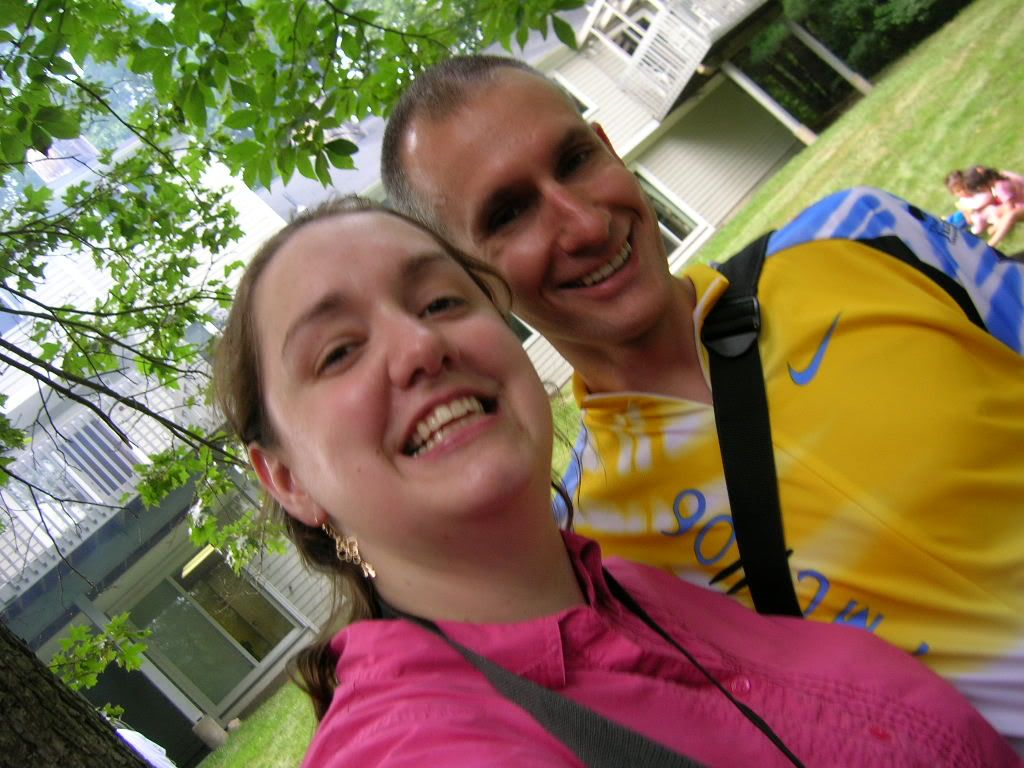
ornoth: (PMC Jacket)
2024-06-28 12:41 pm

…Or Not

It’s time to come clean and clear up a falsehood that I’ve been telling for decades. Ornoth is not my birth name.

I changed my legal name back in 1994. But ever since then, when someone asked where the name “Ornoth” comes from, I told them it was an old family name with no particular meaning or history or derivation other than prior use. I didn’t think it would be flattering or to my advantage to admit that I’d changed my name or to reveal its origin, so I very purposefully kept it hidden.

Why am I revealing this now? Well, at my age I no longer feel compelled to protect a career, a reputation, or a fragile ego. And in this time where people are allowed to redefine all aspects of their identities, a simple name change doesn’t carry the stigma it once did. And having first started using Ornoth as a moniker fifty years ago, there’s no question that making it my legal name was a good long-term decision. Looking back on it, it was one of the best decisions of my life.

Coat of arms of Orny (Switzerland)

Coat of arms of Orny (Switzerland)

If you want to know the whole story, you’re gonna have to sit down and allow your author to relate this story in the third person, present tense…

Journey with me back five decades to 1976: to a 6th grade English class. An awkward 13 year old kid named David listens attentively as Mrs. Bernier reads J.R.R. Tolkien’s children’s fantasy novel “The Hobbit” to the class. Within a year, the boy enthusiastically plows through Tolkien’s more ambitious three-volume followup: “The Lord of the Rings”.

By chance, around this time he sees a newspaper article about a slightly older kid named Gary: an internationally-known Tolkien fanatic who lives an hour away. They meet up, start recruiting others, and create the New England Tolkien Society: a group of adolescent fans who regularly get together for events that feature discussions, trivia, music, camping, cooking, contests, and costumes.

Along with their costumes, everyone’s got a Middle-earth alter-ego persona. Gary dresses appropriately as a Hobbit called Hidifons. There’s Elven maids named Lothiriel and Therindel, a bard named Dæron, a pack of irascible Dwarves, and a few dozen others.

So David needs to come up with a Tolkien-inspired persona and his “Hobbit name”. Consulting Ruth Noel’s book “The Languages of Tolkien’s Middle-earth”, he mashes together the Elvish words “orn” (meaning “tree”) and “loth” (“flower” or “blossom”) in an attempt to capture the image of the fragrant lilac trees that herald Maine’s brief spring. Thus, he announces himself to his fellow fans as “Ornoth”.

By nature extremely analytical, introverted, and solitary, a curious thing happens as our protagonist proceeds through his high school years. At Tolkien gatherings, he starts making friends, clowning around, acting silly, and flirting with the girls, who playfully shorten his nickname to “Orny”. Being outgoing is so completely out of character for him that he thinks of himself as having two separate and distinct personalities: one named David, who is a quiet, jaded, introverted loner; and the other named Orny, who is impulsive, energetic, and gregarious. “Ornoth” is also the name and persona that he carries with him when he begins attending medieval recreationist events put on by the Society for Creative Anachronism.

The awkwardness of maintaining two separate names and personalities comes to a head when he leaves for college, where he repeatedly winds up living with roommates who share the given name David. Partly out of simple convenience and partly to lean into his outgoing persona rather than the introverted one, he uses “Orny” throughout his college years. After using it for more than a decade, he has become more comfortable identifying as Ornoth – or Orny – than as David.

However, he has to revert to using his given name during the decade following college graduation, which brings marriage and a budding professional career. After several years of early success, both these endeavors flounder, as he is forced out by new management at work, and undergoes a divorce that is partially attributable to the cold dispassion of his predominant “David” persona.

The year was 1992; I was about to turn thirty, my life had fallen apart, and I longed to return to the carefree ease of my days in college and Tolkien fandom.

But this misfortune was also the watershed moment that spurred tremendous changes in my life. I reached out and reconnected with some of my old friends from college. I re-assumed leadership of the electronic writing project I’d left six years earlier. I grew my hair long for the first time and started hanging out in the Boston nightclub and music scenes. I got involved in the local BDSM and polyamory communities. I got an exciting and profitable new job at a cutting-edge consulting firm near M.I.T. where my skills were highly valued. I briefly lived with my old high school girlfriend before finally moving from the distant suburbs into the heart of the city. And I took up cycling again after a decades-long hiatus.

In all these different environments, I went by “Ornoth” or “Orny”, resurrecting the name that I identified with, that represented the kind of person I wanted to be, and which was used by all my friends, both old and new. At the same time, I finally started working to integrate the two halves of my bifurcated self-image: the methodical intellectual and the playful impulsive.

And it was time to finally leave “David” behind, a name that I found uncomfortable, that had unpleasant associations, and was only used by family members.

But my family provided an intimidating obstacle: telling my very conservative parents – who had given me my birth name, after all – that I wanted to legally change it. Fortunately, by then I’d gained the self-confidence to express myself firmly, so they couldn’t do much more than choose to ignore it.

So after nearly twenty years of using it informally, in late June of 1994 I went to probate court and had my name formally changed, taking Ornoth as my first name, and demoting “David” to one of now two middle names. As such things usually go, it was both an immense fundamental change and an anticlimactic formality.

That was thirty years ago this week, and there hasn’t been a single second when I’ve regretted it. Ornoth is who I am, who I have been for nearly all of my life, and how everyone knows me. “David” sounds as alien to my ears as Billy-Joe-Bob.

The only times I was the least bit equivocal about it was when I was introduced to someone new. When the inevitable “What kind of name is that?” question came up, I always fell back on a convenient lie: that it was just an old family name with no specific derivation. But today that equivocation officially ceases, as I take unapologetic and public ownership of this deeply meaningful life choice.

As you might imagine, having a unique name comes with advantages and disadvantages. For some people, it’s easier to remember a name that’s distinctive, but many folks require time and repetition to commit it to memory. So it has often gotten shortened to Orny, Orn, or even just O. People often mishear the ‘th’ and call me “Ornoff”; another common error is “Ornath”; and sometimes people misread a printed ‘rn’ as an ‘m’ and see “Omoth”. Such is the price we pay for being unique.

On the other hand, picking a username is a breeze; I’ve never had to resign myself to being “DAVID783” or the like. Googling has revealed that there are small towns called Orny in both France and Switzerland (see the latter’s coat of arms in the image above), and at least one person in Germany has Ornoth as a surname. And there are several fantasy- and gaming-related websites using Ornoth as the name of a fictional character, which always feels a bit ironic.

Having thought of myself as Ornoth for half a century, it’s not just a part of me; it is me. But so is the entire story of how it became my name: its origin, etymology, and literal meaning; its central role in my social and emotional growth; how I reclaimed it as part of a major mid-life revitalization; and how it prompted me to finally stand up to parental authority.

And while I’m very happy that today literally everyone knows me as Ornoth, I’ve always self-consciously kept all that backstory hidden. But the story behind my name is one that deserves to be claimed and celebrated, and I’m happy to share it with you today on this personally meaningful anniversary.

ornoth: (Default)
2015-06-14 05:56 pm

Hair Today

It’s been a long time since I had a normal men’s haircut.

I first grew my hair out long in 1991, soon after my wife left, and wore it long—sometimes down to my hips—for the next ten years. I was buying Pantene in two-liter jugs, but it was worth it. All the girls loved it, and the inevitable offers to brush it out or braid it were welcome at a time when I really needed some affirming attention. It was like discovering I had a hidden super-power!

The years passed, and my first grey hairs began to appear. They came in much coarser and wiry, and it didn’t make any sense to keep it long that way. I wasn’t even getting the girls anymore! So I figured it was time to get rid of it.

But before I did, I had one trick left that I wanted to try: I went and bleached the whole mane blond. It was ridiculously expensive and looked pretty terrible, but it was something I’d never be able to do again, so I went for it. To my friends’ consternation, it lasted about six months before I finally cut it down.

Naturally, I went from one extreme to the other, opting to keep my head close-shaved for the ten years that followed. Fortunately, my skull seems to be pretty reasonably shaped, so that look worked well for a long time, and it did a good job hiding the advancing grey.

Last summer, I decided to finally let my hair grow back out to a normal men’s length, so that I could get through the awkward intermediate-length stage while I was between jobs. I was finally beyond the point of trying to convince anyone of my youth, and I figured the grey would look “distinguished”, as my family have told me since childhood.

I grew up with the story that my father’s hair had gone grey by the time he graduated high school, and I’ve never known any adult on my father’s side of the family whose hair was anything but completely white. To me, it’s more surprising that my brother and I haven’t followed suit, staying salt-and-pepper the whole way. So although it wasn’t the greatest thing in the world, my going grey wasn’t any big, emotional trauma.

Ornoths hair

But growing it out last summer still presented a problem: it had been over twenty years since I’d had a normal men’s hair style. I had no idea what to do with normal hair, nor what my hair would do once it grew out!

So I kicked around ideas and experimented a little. I don’t want to have it long, because long grey hair looks horrible and ratty and sad, rather than distinguished. Think Riff Raff from Rocky Horror: not the image I want to cultivate! But I don’t want it too short either, because where’s the fun in that? Maybe I’d keep it short, except let it get a little longer in back, like a mullet? I dunno…

It was during one of those internal debates that I decided to look at the back of my head for the first time since I stopped shaving it. And that’s when I saw the great big thin patch on the top. Even after my hair has grown out very fully, I could still see my scalp! While I’m not bald (at this point!), there’s no arguing with the evidence that my hair has thinned. A lot!

If there’s one thing that doesn’t run in my family, it’s baldness. Although I did have two bald uncles, both of them married into the family and thus were not blood relations at all. The only cueball anywhere in my family tree was my maternal grandfather, Albert, whose name I inherited after he died a few months before my birth. I never even met the guy, yet I may have inherited his barren skull! Now that *would* be grounds for big, emotional trauma!

Is thinning hair that big an issue? Plenty of men wind up balding or with thinning hair, after all. And it’s not even a practical concern, because I just finished ten happy years with a shaved head, and I’d have no problem going back to that look.

Part of why it shocked me was that it was a sudden discovery, rather than a gradual one; I really hadn’t looked at my own artful dome since I stopped shaving it, so it was pretty disturbing to see it poking through the hair I’ve spent a year growing out.

And, of course, it’s another big chunk of undeniable (and sadly irreversible) evidence that I’m aging. Is aging such a bad thing? Well, I’ve spent most of my adult life taking pride in looking and acting as young as—if not younger than—my coworkers and friends. It’s been a big part of my self-image. But going bald really does put the lie to the saying that “You’re only as old as you feel”.

And writing about it doesn’t really help, either. This isn’t the kind of topic that you’d expect to read about if you visited a young man’s blog! And it’s not something I’d ever expected to write about, either…

I find that pretty ironic, because for me, aging feels a lot more like puberty than my teenage years ever did. As a teen, I was given several mysterious books full of frustratingly vague warnings of the confusing changes ahead for “our bodies”. I never did learn what all the fuss was about. Somehow, getting through adolescence never seemed like that big a deal, while the changes I’m going through now—dry skin, deteriorating eyesight, thinning hair, failing organs, ear and nose hair, skin tags, and other delights—are much more disconcerting than puberty ever was!

There’s one last little needling bit of irony, too. Years before the divorce and my accompanying decision to grow my hair long, my college friends got together and bought me my first CD player as a wedding gift.

Weeks earlier, in anticipation of that present, I’d gone into a CD store and bought my very first compact disc. Although CDs are old technology now, they were the big, exotic new audiophile thing back then. The store had the same bleeding-edge cachet as a 3-D printer “maker” shop might elicit today.

The album that had my attention at that time was an oldie even back then, but newly remastered and released on CD: Rush’s 1975 album, “Caress of Steel”. The memory of buying my first CD was burned into my mind during the two weeks I spent just staring at it while I waited to receive the gift I could use to actually play it!

One of my favorite tracks on the album… Well, Geddy Lee begins and ends it something like this:

I looked in the mirror today;
My eyes just didn’t seem so bright.
I’ve lost a few more hairs.
I think I’m… I’m going bald.
I think I’m going bald!

My life is slipping away.
I’m aging every day!
But even when I am grey.
I’ll still be grey my way, yeah!
ornoth: (Default)
2008-11-06 10:56 am

Hey, Four-Eyes!

Two weeks ago, as I mentioned in a previous post, I had my first eye exam in pretty much ever. Over the past year, my ability to resolve fine print has deteriorated noticeably. The only reason why I delayed the exam was to wait for work to implement its planned vision care benefit.

Ornoth's glasses
Ornoth's glasses

The exam itself was totally silly: the repeated requests to read an eye chart whose contents I easily memorized; the completely subjective comparison of different lens strength (is this one better or worse than the other?); the heinous regimen of eye drops and the absurdly dilated Powerpuff Girl eyes they left me with.

I can’t say I liked it, but then I’ve always been extremely squicky about eyes. I’ve always been a big swimmer, but I still refuse to open my eyes underwater. The eyes are very sensitive, and vision is just about the only thing I simply couldn’t live without.

The outcome was exactly as I expected: everything’s fine, except for a mild loss of near vision for small print, which means that after a lifetime of perfect vision, it is finally time for me to get reading glasses.

It’s ironic that my perfect vision is failing around the same time that two of my exes have had their extremely bad vision almost completely corrected with laser surgery. So in a strange twist of fat (sic), now they can see better than I can.

In laughable contrast to the exam was the ritual of selecting frames. Never having worn glasses before, I had almost no idea what I wanted. Meanwhile, the intern who did my exam and the office receptionist (both women) teamed up to run me through just about every set of frames in the building. It was like having a root canal done in one room, then stepping directly into a girly clothes-shopping spree in the next room: very dissonant.

I finally restricted the girls to just eight frames, then eliminated the ones that they liked that I didn’t, then picked the pair I thought looked okay and had the most reasonable fit.

Then yesterday I picked them up and had them adjusted. What do you think?

ornoth: (Default)
2008-07-22 11:31 am
Entry tags:

Easy, Breezy, Beautiful: Cover Girl

Views from the Vendome

With only eleven days until this year’s Pan-Mass Challenge ride, you can expect to start hearing a lot of PMC news.

This year’s fundraising letter will appear here in the next day or two, but don’t stress about the ride date, as I can continue fundraising for another two months.

However, the thing I wanted to mention in this post is that I was the cover story on the summer edition of “Views from the Vendome”, my condo’s newsletter.

Better still is that it came out last Tuesday, which coincided with a going-away party for one of our longtime concierges, Bob. Everyone I saw seemed to have already read the article and were all very enthusiastic. I’m hopeful that it’ll bring in a few contributions from the Vendome crowd, who haven’t been a big source of donations in the past.

If you’d like to see the article, click through to the PDF version of “Views from the Vendome”.

ornoth: (Default)
2007-09-18 04:21 pm
Entry tags:

FYI

I’m Ornoth.

And I approve this message.

ornoth: (Default)
2007-06-09 07:35 pm

Let’s talk about me…

I agreed to play this meme, so now I have to post.

The idea is this: Ask me, and I’ll pick three of your listed interests and three of your userpics and ask you to talk about them. Express your interest in a comment on this entry.

Here are the ones [livejournal.com profile] greatsword asked me to talk about:

Interests: bentmen, hand_drumming, vipassana.
Images: Righteous, sunglasses, puggle

Bentmen:

Back in the early 90s, shortly after my wife and I separated, I started hanging out with friends in Boston’s music scene. There were so many great local bands back then, and we managed to make friends with a few players, including an absolutely amazing guitarist named Eddie Nowik. Usually he played with a band called Crisis of Faith at the Plough & Stars, but he also played occasionally with a band called the Bentmen.

The Bentmen are hard to explain. They play rock with disturbing, eerie overtones. There’s some MP3s on www.bentmen.com and they’re also on iTunes. But the spectacle is the live show. The stage is decorated in the most bizarre fashion, and the band members come out in the most disturbing, scary outfits they can devise. They spray the audience with shaving cream and tempura paint (sic). They hook beanbag chairs up to leafblowers and spray the audience with feathers and little foam pellets. They toss out ice cream sandwiches, severed Barbie doll heads, and anything else they can procure. The venue gets utterly trashed, left knee-deep in refuse.

But beyond all that is the music; they’re all gifted, prominent musicians. They play very rarely, but when they do, it’s chaos, and quite a spectacle. You can see a few pictures I took at their most recent show (last October) here.

Hand Drumming:

About the same time as I started getting into the music scene, I developed a passion for drums. I bought a drum set and spent a lot of time playing around, despite knowing that I have an absolutely horrid sense of rhythm. I later replaced that with an electronic kit, which I still have. And the music store gave me a credit when I bought the e-drums, so I spent that on a set of bongos, although I’d already gotten into hand drumming by then.

I’m not sure when I picked up hand drumming or how. I guess I must have gone to a Cambridge Drum & Dance and liked what I saw, because I picked up a Remo “klong yaw”, which is sort of like a djembe, only taller. You can see it here. I also took a hand drumming course with Inna. Now I’ve also got Inna’s djembe at home, and some miscellaneous stuff, including a rain stick, claves, Boomwhackers, a bottled water jug, a didgeridoo, a cheap goatskin drum a friend brought back from South Africa, and probably some other stuff I don’t have readily in memory. But I’m still just a wannabe in every way…

Vipassana:

Vipassana generally refers to “insight meditation”, a sort of non-sectarian form of meditation derived from Theravada Buddhism, which itself is based around the Tipitaka, aka the Pali canon, the oldest, seminal Buddhist texts. The other Buddhist schools all include other texts which were developed later. Theravada itself seems pretty inocuous, without a lot of the saints and mythological and ceremonial stuff and hierarchy that you get in other sects. But Vipassana is even one level removed from that, which is why “insight meditation” is more generally accepted in the west, where people are all skitchy about anything smacking of religion.


Righteous

Righteous:

This shot was taken during the 2002 Dargon Summit in Scotland. We were taking a group guided tour of Sterling Castle, which was awesome, and here was this pulpit kinda place in the Great Hall. So while the tour guide was talking, I stood atop the pulpit while my buddy took the picture from below. The shot of someone (especially the editor) on a soapbox, pontificating, is a Summit standard, and I thought that’d be a good icon for when I’m feeling opinionated.


Sunglasses

Sunglasses:

This shot was taken at the 2003 Dargon Summit in Austin, Texas. The shot was taken by my Assistant Editor as I was piloting our rented party boat near Mansfield Dam on Lake Travis, while we looked for a swimming spot. That was the largest Summit gathering of all, and the inception of DargonZine’s immense “Black Idol” story arc, the biggest collaborative story we’ve ever written. I use this photo mostly when I wanna be like Joe Cool…


Puggle

Puggle:

That’s the Puggle! My kittykat! Puggle came to me along with two other cats and a four year-old when [livejournal.com profile] ailsaek moved in. When she moved out, I expressed the desire to keep the Puggle, and he and I lived together for a dozen years in great happiness and joy. He was a very important companion for me until his death of congestive heart failure on Christmas Eve 2005. The photo is cropped from this photo, whose caption is: So what if it’s a formal sitting? My foot itches! I used to use this one when I talked about the Puggle or cats in general.

Okay, so who wants in?

ornoth: (Default)
2007-05-22 03:17 pm

Five Years

5 years ago:
In mid-2002, I had just been let go after seven years of work at Sapient. I’d also just started my LiveJournal, and was about to leave for an amazing 12-day tour of Scotland with the DargonZine writers.
10 years ago: 1997
In mid-1997, I had just finished a four-month stint of grand jury duty, which was how I escaped a death march project at work. I had also just returned from the first open-attendance DargonZine Writers’ Summit, hosted by Jon Evans in Washington DC. My father was also suffering from terminal cancer.
15 years ago: 1992
In mid-1992, I moved from Shrewsbury to Natick, having separated with my ex-wife the previous summer. I was spending a lot of time clubbing and seeing bands with my buddies Barry and Sean.
20 years ago: 1987
In mid-1987 I was in my last year of school, and writing one of my favorite stories, “Legend in the Making”. I’d marry Linda and honeymoon at the SCA’s Pennsic war within a couple months.
25 years ago: 1982
In 1982 I was about to graduate from high school, and was in the middle of the first grand romance of my life, with Jean.
30 years ago: 1977
In 8th grade, I first read J.R.R. Tolkien’s “Lord of the Rings” and began writing my own derivative story. I also was a founding member of the New England Tolkien Society, and the editor of its annual literary journal, Mazar Balinu.
35 years ago: 1972
In 1972, having finished 2nd grade, my family moved from Portland to Augusta, Maine. This was the last year of my sister’s life.
40 years ago: 1967
In 1967 I was a pre-schooler. My family was living in Portland, Maine, having moved there from Gloucester, Massachusetts, where I had been born.
ornoth: (Default)
2007-04-21 07:09 pm
Entry tags:

Gimme Foodback!

So I’ve been posting here for over five years now. It’s time to get some feedback from you. Please answer honestly, and feel free to make additional suggestions in comments.

[Poll #970911]
ornoth: (Default)
2006-08-29 02:15 pm

A shot in the dark, part two

Floor plan

Over two months ago, in this post I gave you a one-week opportunity to select any element of my life that you might want me to photograph.

Thanks go to the people who responded. It wasn’t the most creative assignment I’ve ever had, since all the requests were for essentially the same thing. On the other hand, it’s produced a little mini-application that allows you to see a little bit about what my house is like, including, as requested, my favorite view and the contents of my medicine cabinet.

If you have any questions about any of the stuff you see, feel free to ask.

The only thing you asked for that this doesn’t cover is more pictures of me, which hopefully can be fulfilled with this.

Finally, my apologies for how long this took to turn around. Life’s been a bit of a slamdance lately, and my art has suffered because of it!

ornoth: (Default)
2006-05-11 08:32 pm

Woah Woah Woah FEEEEE Lings...

Nothing's Wrong

I recently read David Kundtz’s “Nothing’s Wrong: A Man’s Guide to Managing His Feelings”.

I guess the first thing to relate is why that book interested me. I grew up in a family where little to no emotion was visibly manifested. I was extremely introverted and intellectual. As an adolescent, I found myself becoming ever more angry, selfish, and hateful.

Then I started dating, which was an immensely transformative experience for me. I was confused by how impulsive my first girlfriend could be, and jealous of her stunningly carefree demeanor. I decided to try to incorporate this lesson into my life, thereby gaining a previously absent appreciation for beauty, nature, kindness, and humor.

Back then, I didn’t think the intellectual and the emotional halves of my personality could coexist, so I created separate, distinct identities for them. “David” was cold, calculating, and intellectual, while “Ornoth” was impulsive, open, and joyous. One or the other would be predominant for six months to a year, while the other popped up at odd moments, and then they’d reverse. In those days, someone close to me could see in my eyes when I switched gears. That took me through college and into marriage.

Despite all that, I guess the trend was for the cold intellectual to gradually reassert itself. My ex-wife’s parting shot to me was to give me a Mr. Spock tee shirt for my birthday, an unabashed reference to my lack of warmth toward her.

In the fifteen years since my divorce, I’ve changed more radically than I ever thought possible, but the basic disconnect with my emotions has persisted. I’ve worked hard to develop compassion and generosity, but no matter how hard I look, I can’t seem to detect what most women tell me is the essence of life: my emotions.

It’s undoubtedly a difficult thing for a woman to understand: that a man really doesn’t have the emotional range or insight into his emotions that is so basic to her. I can’t speak for any other men, but I don’t think I’m alone when I admit that I’ve spent much of my life honestly doubting whether I have any emotions at all, and whether I could ever detect any I had, however hard I try.

Thus, the book.

The first thing the book establishes is that men need a different vocabulary to talk about their emotions. Women’s emotions come from their hearts, but men feel things “in their gut”. By drawing attention to the body’s physical reactions, Kundtz actually echoed themes I’ve heard in my Buddhist studies, which emphasize the physical form and its state changes as the place to look for evidence of emotional activity.

The next logical step is, of course, for a man to become more aware of the changes in his body. That would seem like a potentially productive line of inquiry, although I found the way it was presented a bit unhelpful.

“The very first and vitally important thing you have to do in dealing with any feeling is really something that you must *not* do. Don’t bury it. Don’t run from it and don’t cover it over. Just stay in the moment and feel it. Just feel it. Don’t bury. Don’t run. Don’t cover. […] Got the idea? Just stay put; don’t run. Just feel.”

That kind of rhetoric does nothing to help those of us who have stopped, have looked, and found nothing. “Just take a few deep breaths and feel whatever you’re feeling” is not only an unhelpful tautology, but it’s also thoroughly frustrating for someone who has no idea how to “feel what they’re feeling”.

Kundtz talks about this ability to notice one’s feelings and says “Without this first step, all else is doomed”, but then turns around and says, “It might also be true that at any given moment you may not be feeling anything very strongly”. Well, duh. I can’t say I’ve “felt anything strongly” in years!

The underlying, common assumption is that men are all actively suppressing their feelings, because everyone has feelings, don’t they? As someone who is reasonably mature and has actively tried to sense my own feelings and come up empty, I find that a decidedly hurtful way to dismiss my difficulties. I may indeed have emotions, but don’t accuse me of being dysfunctional simply because my emotions are not as overt as a woman’s. Defining women as normal and men as inherently abnormal is both prejudicial and hurtful.

Beyond that, as Kundtz himself is quick to point out, “Nothing’s Wrong is based on the strong conviction that there is a direct and causal relationship between violent behavior in males and their repressed (buried) feelings.” If that were true, one might well expect me to be a mass murderer, given my longstanding and lack of emotion, which can supposedly only be explained by active repression. But it hasn’t happened yet, so far as I know.

Anyways, leaving that particular issue aside for the mo’, let’s turn back to Kundtz’s three-step program to male emotional fitness: notice the feeling, name the feeling, and express the feeling. Assuming I find some way to get past step one—the real problem—there’s still this final step of manifesting the emotion.

The next question is *how*. Okay, I’m feeling happy, and maybe I can even recognize that; now how do I make a conscious choice between the myriad ways of depicting that emotion in my actions? Should I skip and jump? Should I whistle a tune? Should I go buy a drink for a cutie at the pub? How do I choose? And don’t you *dare* tell me something useless like “whatever you feel like doing”, or I’ll rip your throat out. It’s not that easy.

When he starts to talk about expressing one’s feelings, Kundtz cites a 1998 Newsweek article that reads, “when people regularly talk or even write about things that are upsetting to them, their immune systems perk up and they require less medical care”. Kundtz interprets this as “The talking or writing is the third step. It externalizes the feeling.”

That’s actually extremely good news for me, because I do a *lot* of written self-expression, as the length of this entry attests. The very first thing I turned to when my wife left me was email. Ironically, even today my real-world friends criticize me because they see more of what’s inside me by reading my blog than by talking on the phone or hanging out with me. Another funny bit is that Kundtz not only mentions writing, but also specifically calls out cycling, poker games, exercise, and meditation as other avenues for self-expression, and those are all things I do quite a lot of.

Another interesting bit is how thoroughly Kundtz disses isolation. He opens one section with a quote from Men’s Health magazine which reads, “Lack of social connection is ’the largest unexplored issue in men’s health’”. He follows with, “If there is only one change that you make as a result of reading this book, please make it this one. *Please!* Determine somehow, some way, at some time to regularly get together with friends.” I found that kinda interesting, considering I’m really the epitome of the isolated bachelor, and have recently been pondering how to reach out and craft a few new meaningful friendships.

I don’t want to give you the impression that I disliked the book. It was reasonably interesting, and successful at raising all kinds of topics for reflection. I just wish there was a little more depth to his analysis of how to detect one’s own emotions. “Just feel what you feel” isn’t helpful at all, although I’ll start watching my physiological responses to see if they provide any clues.

One last bit, which is something of a tangent. In addition to the Mary McDowell quote I’ve posted about already, Kundtz also cites the following quotation: “When I do good, I feel good. When I do bad, I feel bad. And that’s my religion.”

I think that’s about the most eloquent statement of the Buddhist law of karma that I’ve ever heard. Satisfaction comes from taking moral actions, and immoral actions produce dissatisfaction. And I’m blown away that the speaker added “And that’s my religion” as a postscript. Can you guess who the quote was attributed to? I’ll give you a hint: he has a wretched hairdo and spends most of his time on $5 bills.

Imagine what might happen if we had a president today of a comparable ethical standard.

ornoth: (Default)
2004-08-18 11:54 am
Entry tags:

The Ornoth and his tail-slapping fun!

Every so often, I Google myself. I suppose everyone does it, but not everyone’s name is as completely unique as “Ornoth”.

The results are always educational. Usually, they boil down to four categories: my own sites or pointers to them, logs of emails I’ve sent to public forums, fantasy sites, and people who can’t muster the intellectual capacity to properly spell “ornithology”.

This year’s crop are particularly righteous, including two very different “Lord of the Rings” tie-ins and several deaths. Here’s a sampling…

A Good Day, Part II of II
“I must give thanks to the Gor’tog barbarian Ornoth. The fellow listened to the tale of my quest and kindly stepped aside to let me face the next manifestation of living stone.”
 
Ornoth the Barbarian! Let me hear the lamentation the women!
 
Chapter Two - The Warrant of Death
“There is a Scribe of Thentis, named Ornoth, who regards himself as something of a poet, a narrator …. he considers that he is the guardian of the morals of Gor and spreads malicious false hoods about me…”
 
Check out the subsequest chapters, as well! I think the assassin gets me in the end. And watch out for my malicious false hoods (sic)! Apparently I’m not the only self-styled scribe and poet…
 
Forgotten Realms Chronology 200-299
“A cousin of King Uth III and King Ornoth II of Uthtower and Yarlith respectively, Taman names himself Grand Prince and ruler of the city.”
 
Ornoth Junior? I don't theenk so. I’ll take “King”, tho…
 
L’Armée Tolkienienne: Nirnaeth Arnoediad
“Nirnaeth Arnoediad, Nirnaith Unoth, Ornoth, Dirnoth, Irnoth, la bataille des Larmes Innombrables”
 
In French apparently I’m a synonym for the Battle of Tears Unnumbered against big baddie Melkor.
 
The Ornoth By Marik
“Ornoth made a crack in the ground by slapping his mighty tail against the ground. […] But that wasn’t the end of Ornoth. His spirit went on only to inhabit the one known as Melkor. Melkor turned evil, and caused chaos that nobody could imagine.”
 
But in this LotR tie-in, not only am I The Ornoth, but I’m also an evaporated snake-beaver earthquake god who is the motive force behind big baddie Melkor! Priceless! G’wan, tell me more!
ornoth: (Default)
2004-03-12 11:40 am
Entry tags:

The Invisible Man

You’re all so fond of the “enter your name (or username) into images.google.com and post what you get” meme. Fine.

When I do that, I get 464 results, 461 of which are from my personal site or the DargonZine site.

Those three that are not from my sites, which don’t even begin to show up until image #160, are from my now-defunct Pan-Mass Challenge personal page for last year. They are a log-in button, an “eGift” (donation) button, and the thermometer bar chart that showed how much money I’d raised.

No, Virginia, there are no images for “Ornoth” anywhere on the Internet but my own sites. Okay?

ornoth: (Default)
2004-01-28 02:19 pm

Bored of the Rings

I think it's appropriate to post my thoughts on the collected Lord of the Rings movies here. As I say, I was a rather obsessive Tolkien fan back in high school, so I think these opinions are fairly authoritative. On the other hand, everyone and his mother are Tolkien scholars these days, and they're all pontificating about the movies, so perhaps these observations will be of little value to anyone but myself.

LORD OF THE RINGS: THE FELLOWSHIP OF THE RING

When I was young, I was a major league Tolkien fan. I was one of the founding members of the New England Tolkien Society and edited their annual literary journal, Mazar Balinû. Yes, I had a hobbit name, too: Ornoth Sûlhimdil Brandybuck.

My reaction to "the Fellowship of the Ring" movie is very favorable. They certainly did a far better job than Ralph Bakshi in 1978 or Rank-and Base (sic) in '80. For the most part, the movie took great pains to stay true to the book, and most of the depictions were absolutely right on. But you want to know what was missing, don't you?

Well, my biggest criticism is that the movie didn't capture the sense of wonder that I associate with high fantasy. While the scenery was impressive, it just didn't provide the almost spiritual beauty of the primeval Middle Earth.

On the whole, I was disappointed with the portrayal of Tolkien's Elves. They initially appear as powerfully angelic, but after their initial introduction, they settle down to be nothing more than men with funny ears. They're either too on or too off, when the reality should be something in the middle. The portrayals of Elrond and Celeborn were particularly disappointing.

Those were my biggest criticisms. Here are the minor nits:

  • Gollum's history as a proto-hobbit was lost
  • The encounter with Gildor the Elf in the Shire was removed
  • The evening at Farmer Maggot's was removed
  • Fatty Bolger, the house in Crickhollow, and the Hedge were removed
  • Tom Bombadil, Old Man Willow, and the barrow-wight were cut
  • The dance at Bree was altered
  • Finding the troll from Bilbo's adventure was left out
  • Gandalf's messages at Bree and Amon Sûl were cut
  • Why did they put the horse chase in slow-motion?
  • Arwen professing her love of Aragorn isn't supposed to come until later
  • Bilbo's volunteering to take the Ring was cut, absolutely amazingly!
  • There was no mention of the Elven Rings borne by Elrond and Galadriel
  • I expected Boromir to be larger, rounder, and more red-haired
  • Gollum following them out of Lórien and down the Anduin was not mentioned

But overall, they did a fine job adapting the book to a movie, and what you see is very true to the image that Tolkien created in his book.

LORD OF THE RINGS: THE TWO TOWERS

Unlike The Fellowship of the Ring, this movie strayed quite liberally from Tolkien's books, adding and deleting whole scenes, and altering the basic natures of characters. The most aggregious differences are that in Jackson's movie, Faramir succumbs to the lure of the ring, the Ents decide not to go to war, and Aragorn is missing and presumed dead for a while. While some of the differences were minor nits, some were very substantial.

Another major difference is that the movie ends quite a ways earlier than the books. The books include the reunion and confrontation at Isengard, Pippin and the palantír, and the subsequent separation again, as well as Frodo and Sam's trudge past Minas Morgul, the events at Cirith Ungol, and Frodo's capture while Sam bears the ring.

While some deletions must be made to keep the film's length reasonable, I can't understand why a director would take an immensely popular literary work and stray so far from the original as to add completely fabricated plot elements and dramatically alter the basic natures of important characters. There's no logic in that.

Here's the laundry list of noteworthy differences from the book:

  • In the movie, Pippin simply spits the Elven cloak clasp onto the ground, rather than working his hands free and running some distance from the main path of his captors. The descent into Rohan from the Emyn Muil was deleted.
  • The entire orc rivalry and Pippin's luring Grishnákh by pretending to have the ring was cut! An orc pursues the hobbits into Fangorn in the movie, whereas in the book, the hobbits chance upon Treebeard on a sunny ledge. In the book, Fangorn did not bring the hobbits to see "the white wizard".
  • There is no mention of the Entwives, no Ent-draught, and no appearrance of Quickbeam. Amazingly, in the movie the Entmoot decides not to participate in the war, contrary to the book!
  • Éomer gives the horses to the three hunters freely, rather than grudgingly and requiring Aragorn to return them to Edoras. Gimli has no apparent reluctance riding horses in the movie. Gimli's character in the movie is purely as comic relief, which really demeans his role and presence.
  • The loss of the horses and the three hunters' nighttime visitation by a white wizard were cut.
  • Unbelievably, Aragorn never tells Éomer or Théoden or Háma about Andúril or the fact that he is the rightful king of Gondor!
  • There is an actual fight in Meduseld's halls. Furthermore, Théoden's recovery is depicted much more along the lines of an exorcism, whereas in the book Gandalf mostly simply convinces the king to throw off Gríma's counsel! There is never any mention that Théoden's sword is stashed away in Gríma's quarters.
  • Éowyn doesn't lead the women and children to safety at Dunharrow, but tags along to Helm's Deep with the boys! The entire warg attack was not in the book, nor was Aragorn's fall and subsequent separation from the main host.
  • In the book, Elrond never sent any Elves to fight at Helm's Deep. There's no mention of Erkenbrand's forces. Aragorn sallies forth with Gimli, rather than Legolas. The appearance of the Entwood at Helm's Deep is cut.
  • Frodo and Sam's fall and the use of the Elven rope that was Galadriel's gift to Samwise to descend from the Emyn Muil was lost.
  • Sam's bumbling fall and near-detection at the gates of Mordor did not happen in the book.
  • In the book, Faramir refuses the ring, passing the test in the same manner as Galadriel. However, the movie twists it so that he lusts for the ring, and attempts to take Frodo and Sam back to Gondor! The entire attack on Osgiliath did not appear in the book.
  • The movie ends prematurely, without depicting anything about the reunion at Isengard, the confrontation with Saruman, Pippin and the palantír, the trek past Minas Morgul and Cirith Ungol, Shelob, or Frodo's capture and Sam's period as ringbearer.

Still, despite the rather liberal interpretation of a work that many people dote on, and the fact that even the book is mostly filled with battles or the ringbearer's plodding along, the movie was reasonably enjoyable. I suspect that it will wind up being much like the Fellowship, in that subsequent viewings will enable me to ignore the differences and enjoy it simply for itself. Furthermore, I suspect that like the Fellowship, the Two Towers will probably come out with an expanded DVD containing extra footage, which will hopefully include much of the substantial deleted material.

LORD OF THE RINGS: THE RETURN OF THE KING

If the Fellowship was “mostly true to the book”, and the Two Towers “strayed quite liberally” from them, the Return of the King was an outright butcher job.

It didn’t help that Jackson decided to end the Two Towers film far short of where Tolkien’s book left us. Because of that, Jackson had to fit an additional third of a book into the final, climactic Return of the King film, which itself contains enough material to exceed a single film. The result was a film that, despite running to three and a half hours, still gave us an emasculated Return of the King.

While that might sound a little hash given that Jackson’s slashing didn’t dramatically change the basic storyline, I think that anyone with the brazen audacity to attempt a LotR movie should endeavor to depict the books as faithfully as possible. While Jackson did significantly better than previous attempts, when push come to shove, literary fidelity lost out to expeditiousness and editorial caprice, resulting in a work that, despite beginning well, ended very poorly.

So what did Jackson do in Return of the King that was so egregious? Are you buckled in?

  • The entire confrontation between Gandalf and Saruman and the breaking of Saruman’s staff were deleted.
  • Rather than being thrown at Gandalf by Gríma Wormtongue, the palantír is found in a pool of water by Pippin.
  • Rather than looking into the palantír on the road alone, Pippin looks into it at Edoras, with Merry looking on.
  • At the time, Aragorn also grabs the palantír and looks into it, but no further mention is made of it in the movie. In the book, Aragorn later uses the palantír at Helm’s Deep to reveal himself to Sauron as the returned King of Gondor in order to further pressure Sauron to move before he is ready.
  • In the movie, Aragorn and Gandalf accompany Théoden to Edoras. In the book, Gandalf and Pippin leave before the company returns to Helm’s Deep or Edoras, and Aragorn goes to Dunharrow directly from Helm’s Deep.
  • In the movie, Gandalf is despondent at Edoras. Totally out of character.
  • In the book, Halbarad and the remnants of the Dúnadain join Aragorn at Helm’s Deep and go with him via Dunharrow on the Paths of the Dead, as do Elrond’s sons Elladan and Elrohir. They bring both the king’s standard and counsel from Elrond regarding the Paths of the Dead. All this was cut from the movie.
  • In the movie, the Grey Company’s horses bolted at the gates to the Paths of the Dead. In the book, they don’t.
  • Absolutely no mention is made of the corpse the Grey Company encounters on the Paths.
  • The book has Aragorn summon the Dead to the Stone of Erech, where they debate before joining him; the movie doesn’t mention Erech, and the debate occurs in the tunnels.
  • In the movie, the muster of Rohan takes place in Dunharrow, not Edoras.
  • The whole bit about Arwen going to the havens and turning back did not appear in the book. Nor did the ridiculous crap of her taking ill as a result of Sauron’s strength.
  • In the movie, Andúril is reforged and brought to Aragorn at Dunharrow by Elrond. In the book, it was reforged prior to the fellowship’s departure from Rivendell, and Aragorn bore it thence.
  • Throughout the movies, Elrond is depicted as selfish and negative, completely out of character.
  • The whole scene where Gandalf has Pippin light Minas Tirith's beacon never happened in the book.
  • Bergil and Beregond and their friendship with Pippin do not appear at all.
  • Prince Imrahil of Dol Amroth was removed entirely.
  • The movie had Pippin go with Gandalf to assist Faramir’s retreat from Osgiliath.
  • The song Pippin sings to Denethor (“Upon the hearth the fire is red”) only appears in the trilogy when the hobbits are leaving the Shire, between the encounter with the black rider that drives them off the road and their meeting Gildor. It is most emphatically not a plainchant. It is described as a walking song, and Pippin ends it in a particularly high and emphatic “And now to bed!”
  • What is up with Gandalf’s Kosmik Karate against Denethor? That wasn’t in the book and is totally out of character for Gandalf.
  • Beregond’s saving Faramir from Denethor was removed, and Denethor is amazingly accidentally killed by Gandalf. In the book, Denethor kills himself, with the palantír in his hands.
  • The movie barely even depicts one of the most important symbols of power: the lack of a dawn during Sauron’s strength, and the return of the light during his defeat.
  • The entire ride of the Rohirrim is deleted, including the Woses and Ghân-buri-Ghân.
  • In the movie, Éowyn and Merry and Faramir tag along for the march to the gates of Mordor. In the book, they are all near death in the Houses of Healing. Ioreth professes that the hands of the king ae the hands of a healer, and Aragorn confirms his royalty by finding some athelas and healing them before the march to the gate. While recovering back in Minas Tirith, Éowyn and Faramir’s romance blossoms. Amazingly, all this was completely cut from the movie.
  • The parley with the Mouth of Sauron was deleted.
  • The scene where Gollum tosses the lembas never appeared in the book.
  • It is totally and utterly out of character for Frodo to side with Gollum and abandon Sam, telling him to go home. Complete fabrication.
  • Sam’s following the orcs beneath Cirith Ungol is deleted, as is his lengthy use of the Ring and resulting reputation as a mighty Elf warrior. The Watchers outside Cirith Ungol are also completely deleted.
  • In the movie, Sam tells Frodo that he doesn’t expect there to be a return journey; in the book, Frodo tells Sam.
  • Frodo and Sam’s “capture” and forced march by orcs from Durthang was also completely deleted.
  • Aragorn’s final confirmation of kingship—finding a sapling of the White Tree—was also cut.
  • Sharkey/Saruman’s destruction of the Shire was completely cut, eviscerating the end of the book and the hobbits’ reputation as heroes within the Shire.

As you can see, Jackson only depicted about 60% of Tolkien’s final volume, and introduced some capricious and lamentable additions of his own devising. From the standpoint of capturing what Tolkien wrote, both in terms of specific details as well as the wonder and magic, Jackson’s Return of the King is a dreadful finale to a project that started out pretty promising.

As for the trilogy overall, it’s still a pretty good effort. Capturing Tolkien is not something that could be easily done, and Jackson made a far better showing than any previous attempt. Still, I think it became obvious that he’d bitten off more than he could digest when he moved a third of the Two Towers from the second to the third movie, and even a three and a half hour running time couldn’t accomodate the amount of material that needs to be depicted in order to do justice to the story.

Is it worth seeing? Yes. Is it faithful to the books? Moreso than any other attempt, but I’d say it only gets a C+ for fidelity. Is it an utter failure? No, Jackson did well within the constraints he was given.

In the end, I did enjoy the movies. They were entertaining, and I hope that they inspire yet another generation of fans who will accept fantasy as a valid literary genre, and then mature from more juvenile high fantasy to the more adult low fantasy that DargonZine publishes.

ornoth: (Default)
2003-10-30 07:55 pm

Friday Five #42

Yes, I’m early this week. I’m that good.

Those of you who pick up the Friday Five from my page might want to know that there’s an official Web site at http://fridayfive.org/, and there’s an RSS feed at [livejournal.com profile] fridayfive_feed that you can put on your friends page.

What was your first Halloween costume?
The first one I remember was a skeleton. Ha ha, look at the skinny kid in the skeleton costume.
 
What was your best costume and why?
Well, that’d have to be my SCA getup. As a member of the Verminssun clan of the barbaric Veassllurds, I got to prance around in nothing but a loincloth. The front half, including the fox’s head, covered my crotch, and the back half, including his bushy red tail, covered my backside. I got a lot of looks and many comments in that one.
 
Did you ever play a trick on someone who didn't give you a treat?
On Halloween? I doubt it.
 
Do you have any Halloween traditions? (ie: Family pumpkin carving, special dinner before trick or treating, etc.)
Really, no. Halloween, the Samhain cross-quarter day, my birthday, and the end of daylight savings—all depressing events—all come within a few days, and it always marks the beginning of the worst time of year for me. So generally I try to ignore it all and hang onto the last vestiges of summer’s happiness as long as I possibly can.
 
Share your favorite scary story...real or legend!
I’m really not a fan of gothic or horror type stuff, although I do have a few classics to point out that might be worth investigating. Clarke Ashton Smith and Lord Dunsany are both very good. Lots of people will mention Poe, but I particularly enjoyed one of his more obscure stories, the “Narrative of A. Gordon Pym”. Similarly, I think people will mention Bram Stoker’s “Dracula”, yet be completely ignorant of his most excellent “The Jewel of Seven Stars”. Many folks will no doubt mention Lovecraft, but frankly once I was familiar with his style I found him awfully predictable and formulaic.